



The Beneteau Evasion 34 is a compact pilothouse cruiser (often described as a motorsailer) introduced in the early 1980s and intended as a comfortable, capable club-to-coastal cruiser with strong seakeeping and easy-to-manage sailplan. Designed by André Bénéteau and built by Beneteau, the Evasion 34 sits in the maker’s family of pilothouse cruisers that emphasized sheltered steering, generous tankage and an arrangement that suits mixed power-and-sail use—exactly the sort of boat owners choose when they want protection from weather without giving up passagemaking capability. The model was produced in the early 1980s and has since circulated mostly on the used market, where it enjoys steady interest from private cruisers and owners who prize a protected cockpit and roomy interior rather than outright racing performance.
Design and Construction
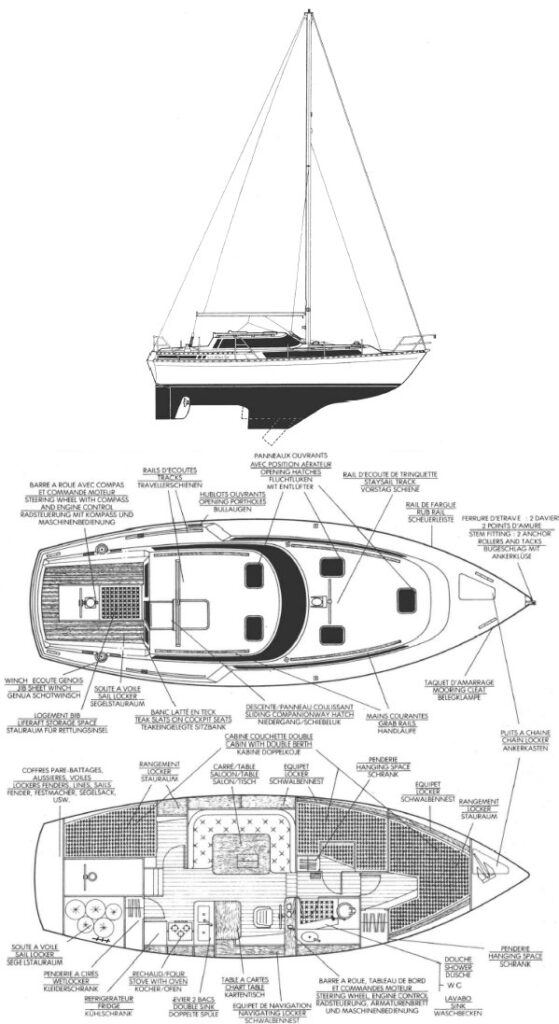
The Evasion 34 is fundamentally a fiberglass monohull with a moderate-displacement hull, a long fin keel (keel/centreboard variants exist) and a skeg-hung rudder—choices that aim to balance directional stability, protection for the rudder and repairability. The factory offered cutter and even ketch variants in some markets, but the common configuration is a cutter-rigged sloop with relatively conservative sail area, split headsails and an emphasis on easy reefing and sail handling from a sheltered cockpit or from the interior wheel. Construction follows Beneteau’s production methods of the era: hand-laid GRP hull with a finished wooden interior and molded deck structures; tankage and systems were generous for a 34-footer, which helped its appeal as a weekend or extended-cruise boat.
From an architectural standpoint the Evasion’s ballast-to-displacement ratio and comfort metrics point to a stiff, seakindly hull that sacrifices a bit of light-air agility for steadiness and payload capacity—useful if you want heavy tankage, cruising gear and a sheltered pilothouse. Practically, the skeg-supported rudder is easier to jury-rig or repair after grounding than a spade rudder, and the cutter rig reduces the need for frequent sail changes; conversely, older Beneteau production can show deck-core wear around fittings and through-deck hardware if not properly maintained, so a thorough survey that checks chainplates, deck cores and glassing is essential.
Performance
On the water the Evasion 34 behaves like a conservative coastal cruiser that will surprise owners with respectable passages when properly trimmed: she is reported as “very stiff” with a comfortable motion and a hull speed in the low-7-knot range—reasonable for a 34-foot cruiser of its era. The cutter rig and split headsails make it straightforward to balance in a breeze, and the protected helm options (inside pilothouse wheel plus cockpit) give confidence in shifty or rough conditions. For light-air performance she is not blitzing: her heavier displacement and smaller sail area compared to modern 34-foot designs mean you’ll typically rely more on engine drivability or sailing tactics (light genoas, staysail, or a code 0) in very light winds. Overall she’s described in contemporary reviews as a capable, forgiving passagemaker rather than a club racer.
Comfort and Accommodations
One of the Evasion 34’s strongest selling points is interior volume and ergonomics for its length. The pilothouse creates a bright, raised saloon with protected inside steering, good sightlines and generous headroom; factory layouts commonly include two cabins (a forward V-berth and an aft double), a practical galley and a roomy head—features that make extended cruising or a family cruise more comfortable than many open-cockpit 34s. Tankage (water and fuel) is ample for extended trips and the interior woodwork and joinery age attractively if maintained; many used boats on the market have had electrical and upholstery updates, which is normal and to be expected for a 1980s boat. If you are a couple planning liveaboard months at a time, the Evasion 34 can be made very liveable; for a family or crew of four on summer cruises it is roomy and pragmatic.
Safety and Practicality
Deck layout and the pilothouse give the Evasion practical safety advantages: the protected steering and raised companionway reduce exposure in wet weather, and the relatively high freeboard with good handholds helps move about on deck in a seaway. The ballast and hull form produce steady initial stability, and the skeg-hung rudder provides some protection during grounding incidents. That said, if your plan is true blue-water passagemaking you should budget for updates—standing rigging replacement, modern navigation/electronics and a professional inspection of deck core and chainplates—before committing to long ocean passages. For coastal to offshore cruising with sensible upgrades this design is fundamentally sound; for offshore work straight out of a broker’s slip you’ll want to be cautious.
Known Issues with the Dufour 31
Across owners’ reports and general Beneteau discussions the recurring themes for older Evasion and similar Beneteau models are age-related rather than design-fatal: potential for gelcoat blistering/osmosis in hulls that have spent decades in the water, deck/core degradation around through-bolts and chainplates if water has migrated, and the usual wear items of an older inboard diesel (Perkins units are common and well-loved but require attention to fuel systems and spares). Electrical systems, older electronics, and original upholstery are frequently renewed by new owners. Practical buyer advice: insist on a survey that specifically inspects the hull below the waterline, checks the prop/shaft seal, tests the chainplates and examines the standing rigging; common upgrades recommended are a full electronics refresh, fresh sails (or at least recent sail inventory), and attention to deck-to-hull intersections.
Market Availability and Pricing in the U.S.
The Evasion 34 is out of production and most hulls live in Europe and the Mediterranean; in the U.S. they appear occasionally but are far less common than Catalina, Hunter or later Jeanneau models. Typical listings in recent years show asking prices clustered in the low tens of thousands in Europe and the mid-range of the used small-cruiser market when found internationally—practical examples include advertised boats around $20,000–$60,000 depending on condition, equipment and region. If you are in North America you’ll usually find better availability and parts support for more common American designs, so expect that importing, transport or locating the right example will affect total cost and logistics.
Below is a comparison with similar sailboats from the same era:
| Model | LOA | Approx. Years Built | Typical Used Price (US, est.) | Main Differences |
|---|---|---|---|---|
| Beneteau Evasion 34 | 35.8 ft | Early–mid 1980s | **$20,000–$60,000** | Pilothouse/motorsailer layout, cutter rig, sheltered steering; heavier, more tankage. |
| Catalina 34 | 34.5 ft | 1985–2008 (Mk I / Mk II variants) | $25,000–$60,000 | Open cockpit, masthead sloop; very common in U.S., easy service/parts and owner-friendly layouts. |
| Jeanneau Sun Odyssey 34.2 | 33.8 ft | Early–mid 1990s / 2000s | $40,000–$80,000 | More modern hull sections, fractional rig, lighter displacement—better light-air performance and newer systems. |
| Dufour 34 (various) | ~34 ft | 1990s–2000s (various models) | $50,000–$100,000 (higher in Europe for recent models) | Contemporary cruising lines, often better performance–to–comfort balance; more recent constructions pricier. |
Beneteau Evasion 34 vs Catalina 34

The Evasion 34 favors a pilothouse, protected-helm cruiser philosophy: heavier displacement, cutter rig options and a skeg-hung rudder give it a steadier feel and more shelter in bad weather compared with the Catalina 34’s open-cockpit, masthead-sloop layout. In practice this means the Evasion is better for owners who prize protection and interior comfort for family cruising, while the Catalina typically serves owners who want simpler maintenance, better light-air acceleration and easier access to parts and aftermarket support in the U.S. The Catalina’s wider availability in American yards usually translates to lower local service costs and quicker resale; the Evasion trades that convenience for a more comfortable ride and a pilothouse that extends the sailing season.
► Learn more about de Catalina 34
Beneteau Evasion 34 vs Jeanneau Sun Odyssey 34.2

Compared with the Sun Odyssey 34.2, the Evasion is the more conservative, heavy-displacement choice: Sun Odyssey hulls tend to be more modern, with lighter displacement, fractional rigs and an emphasis on performance-comfort. That means the Jeanneau will usually be quicker in lighter winds and more nimble at the tiller, while the Evasion gives a more benign motion and superior shelter for rough weather. For a buyer deciding between the two, the Jeanneau suits those who want contemporary sailing behavior and newer systems; the Evasion more naturally attracts a sailor who values tankage, pilothouse protection and a solid cruising platform for family trips.
► Learn more about de Jeanneau Sun Odyssey 34.2
Beneteau Evasion 34 vs Dufour 34
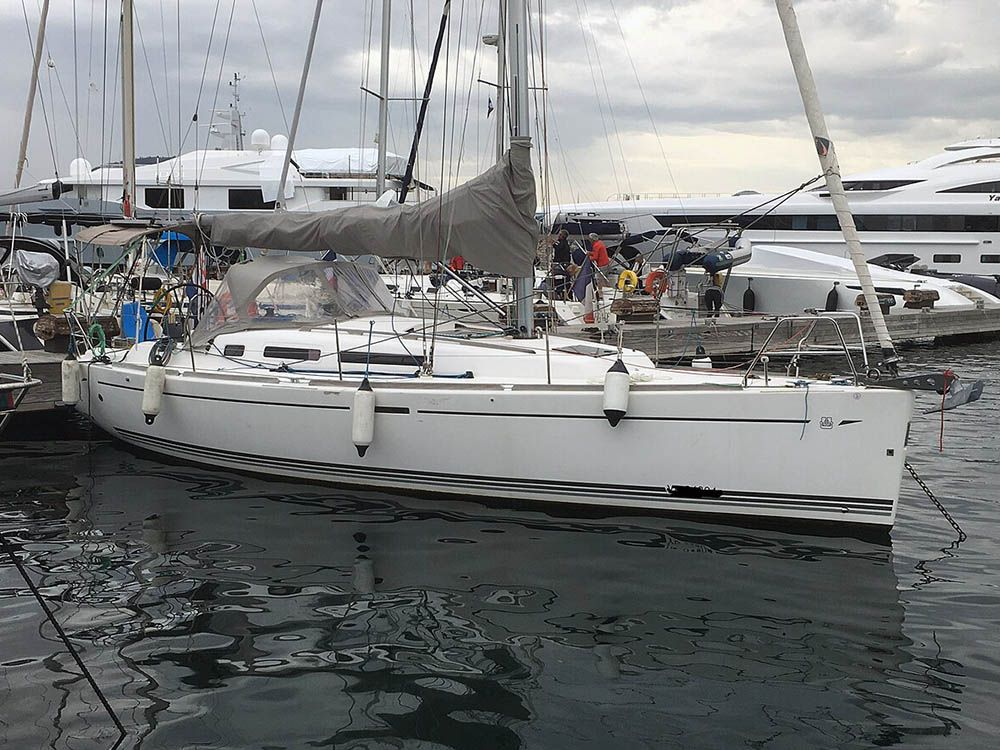
The Dufour 34 (especially later-series boats) leans toward a modern cruising-performance compromise with efficient hull shapes, deeper keels and more up-to-date systems, whereas the Evasion emphasizes traditional pilothouse comforts and motoring capability. Owners looking for club racing or faster passages will lean to the Dufour; those prioritizing in-saloon navigation, sheltered helming and generous storage will prefer the Evasion. Maintenance and refit expectations differ too: the Dufour’s newer designs and systems can mean higher initial purchase prices but possibly lower refit needs, while older Evasion hulls may require targeted upgrades (rigging, electronics, deck work) to maintain long-term resale value.
► Learn more about de Dufour 34
Maintenance Costs of an Dufour 31 in the U.S.
Below is a practical, commented estimate of typical annual ownership costs and notable one-time expenses you should budget for—figures are ranges because region, condition and usage drive costs.
- Mooring / Slip or Marina Fees: $1,200–$12,000 per year — (coastal marinas in high-demand areas like Newport or Miami sit at the top end; inland or off-season leases are cheaper).
- Insurance: $400–$1,800 per year — depends on cruising range, value and owner experience.
- Engine servicing (annual): $300–$1,200 — oil, filters, impeller and routine checks; larger repairs or gearbox work cost more.
- Antifouling & haulout (every 1–3 yrs): $600–$3,000 per haul/paint job — frequency depends on water type and sacrificial paints used.
- Standing and running rigging (inspection / small repairs): $150–$800 per year (inspection); replacement every ~10–15 years: $3,000–$7,000 depending on setup.
- Sails (maintenance / replacement): $200–$800 yearly for small repairs; new main + headsail replacement can run $2,500–$8,000 depending on cloth and cut.
- Electronics / navigation servicing or upgrades: $0–$5,000+ per year depending on whether you retrofit chartplotters, AIS, autopilot or repeaters.
- Survey, small repairs and consumables: $500–$2,500 per year — zincs, hoses, paint touchups, winterization.
Regional differences are significant: marina and storage fees dominate in the Northeast and Florida, while haulout and labor rates may be higher on the West Coast. As a rule of thumb, many owners budget roughly 5–10% of boat value per year to cover routine maintenance and reserve for larger items—this matches widely cited industry guidance on boating budgets. Some work is owner-doable (cleaning, varnish, basic systems servicing) which reduces cost; structural work, complex electronics or major engine work will require professionals and raise the total. For a 34-foot older cruiser like the Evasion the overall ownership cost tends to be medium within its size class: higher than a minimal weekender but lower than larger modern yachts, provided you buy a sound example and plan for periodic upgrades
Conclusion
The Evasion 34 is a characterful, well-built pilothouse cruiser that rewards owners who value interior comfort, sheltered steering and sensible, seakindly handling over sporty performance. Its strengths are a protected helm, good tankage, a roomy saloon and a hull that delivers a comfortable motion in a seaway—qualities that make it especially attractive to couples or small families intent on comfortable coastal cruising and occasional offshore passages with sensible upgrades. Weaknesses are largely those of age: potential deck-core or hull-blister issues, dated systems and the fact that examples are less common in the U.S. market, which affects parts access and resale liquidity. For a buyer prioritizing comfortable, weather-protected cruising and willing to methodically survey and update an older boat, the Evasion 34 is worth seeking out; as a coastal cruiser it delivers good value, and if you buy well maintained the resale can be steady among the right audience, though not as liquid as mainstream American 34-foot models.
Specifications
| Hull Type | Fin with rudder on skeg |
|---|---|
| Rigging Type | Cutter |
| LOA | 35.76 ft / 10.90 m |
| LWL | 29.20 ft / 8.90 m |
| S.A. (reported) | 664.13 ft² / 61.70 m² |
| Beam | 11.42 ft / 3.48 m |
| Displacement | 12,125.00 lb / 5,500 kg |
| Ballast | 4,850.00 lb / 2,200 kg |
| Max Draft | 5.09 ft / 1.55 m |
| Construction | FG |
| First Built | 1982 |
| Builder | Beneteau (FRA) |
| Designer | André Bénéteau |
Auxiliary Power/Tanks (orig. equip.) | |
| Fuel | 53 gals / 200 L |
Accommodations | |
| Water | 79 gals / 300 L |
Sailboat Calculations | |
| S.A. / Displ. | 20.20 |
| Bal. / Displ. | 40.00 |
| Disp: / Len | 217.41 |
| Comfort Ratio | 23.46 |
| Capsize Screening Formula | 1.99 |
| Hull Speed | 7.24 kn |
| Pounds/Inch Immersion | 1,191.50 pounds/inch |
Disclaimer
The considerations and analyses presented regarding the Beneteau Evasion 34 sailboat are of a general nature and are based on the available information and technical data on this model, interpreted to the best of our knowledge and understanding. It is important to note that the specific characteristics of any particular sailboat may vary due to custom modifications, maintenance performed, and conditions of use over time, among other factors. Therefore, the details and performance of the boat you are considering may not exactly match the information provided here.
We strongly recommend that, before making any purchasing or usage decisions, you conduct a detailed inspection of the boat in question, consult with nautical professionals and other sailors, and consider your personal needs, expectations, and capabilities. Each sailboat may have unique particularities that affect its performance and suitability for different types of sailing and sailors.
The information contained in this analysis should be used as a general guide and not as a definitive reference. Professional evaluation and personal inspection are essential to ensure that the boat meets your specific requirements and expectations.