


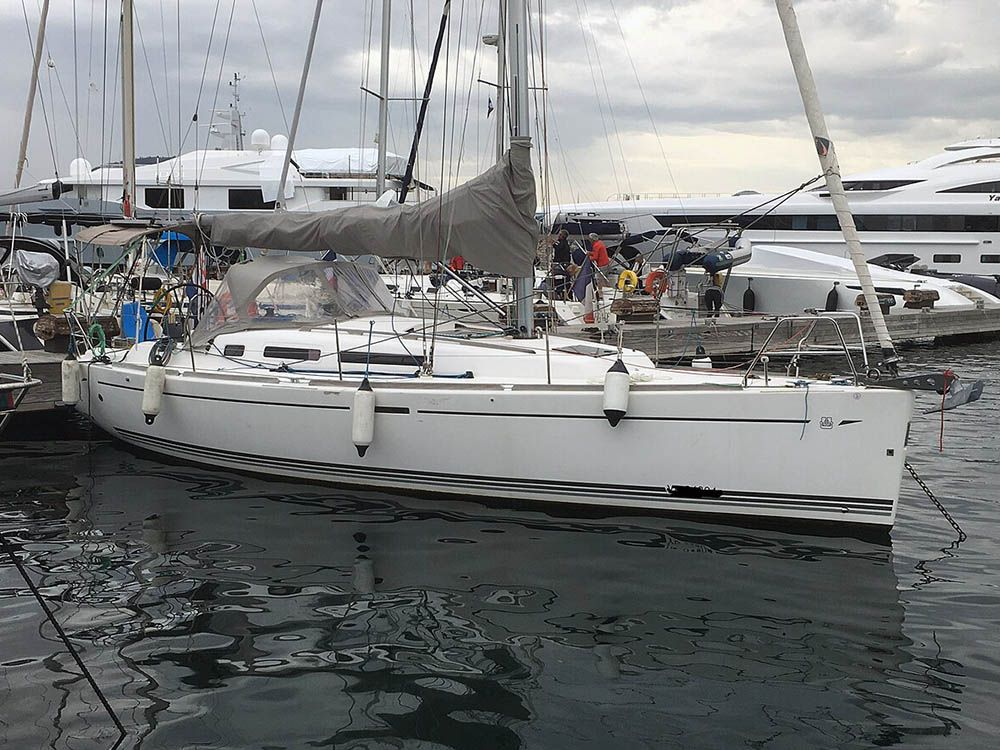
The Dufour 34 is a compact performance-cruiser that sits squarely in the sweet spot for sailors who want a boat that can both cover miles comfortably and still reward an active crew with lively performance. The name covers more than one generation — the original Michel Dufour designs from the 1970s and a much later, widely exported “Performance” generation penned by Umberto Felci and brought out by Dufour Yachts in the early 2000s — but this review focuses on the modern Felci-era 34 (often called the Dufour 34 Performance). That later model was aimed at the cruiser-racer market: owners who wanted a safe, well-built hull for family cruising that also plotted well on a race committee scoreline or an IRC/ORC handicap. Over the last decade this version has carved out a steady niche on the second-hand market — especially in Europe and the Mediterranean — and appears intermittently in the U.S. used market where buyers are typically private cruisers, weekend couples or small-family owners rather than heavy charter fleets.
Design and Construction
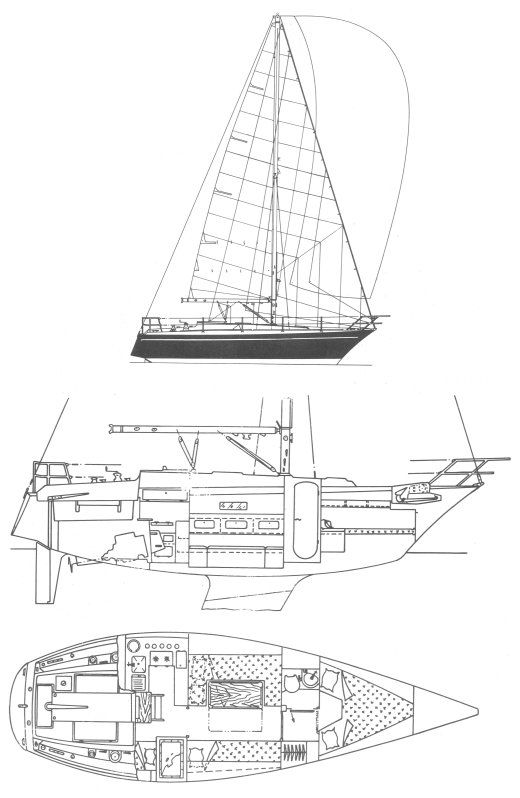
The modern Dufour 34 marries contemporary performance lines with practical cruising details. Hull form is relatively beamy for its length, with a moderate-aspect fin keel and a large, balanced spade rudder that gives a quick, positive feel at the helm; these traits favor lively handling and good control downwind while still allowing reasonable pointing to windward. The boat is typically rigged as a fractional sloop (easy headsail management, good mainsail power) and many examples are fitted with a performance-oriented mast and larger mainsail package, which helps when short-handed sailing is the norm.
Construction is fiberglass (GRP) with production techniques that in later builds included vacuum-bag lamination and careful resin control — a step up from older hand-laid hulls in terms of finish and weight consistency. Decks and interiors are conventionally cored in high-stress areas; chainplate and compression post layout follow standard naval-architect practice to keep loads predictable. Those choices make the boat reasonably durable and straightforward to repair (gelcoat and laminate repairs are familiar territory for most yards), but they also imply that buyers should check for local core saturation around fittings and chainplates on older hulls — the common weak point on many production cruisers. Good original construction and a neat factory finish are part of the Dufour appeal.
Performance
On the water the Felci-designed Dufour 34 generally feels faster than its length suggests. With a waterline and hull shape tuned for higher average speeds, sensible sail area and a relatively light displacement for a cruising 34-footer, hull speeds in the low 7-knot range are typical and cruising at 6–7 knots in 12–18 knots of wind is common for a well-trimmed boat. The big rudder and fine underwater sections give crisp maneuverability in close quarters and a confidence-inspiring response through waves; in a building sea the boat tends to be snap-responsive without being nervous, which is a practical advantage for family cruising.
Compared with pure cruising 34s of the same era the Dufour leans toward the performance end — it will accelerate quicker off the wind and reward sail trim — but it doesn’t demand the active crew of a one-design racer. Owners report it balances speed and seakindliness well: it doesn’t pound badly in short chop, and is forgiving in gusty conditions if reefing discipline is applied. For buyers who want a boat that will hold a club race result and also comfortably handle weekend passages, it sits in a compelling middle ground.
Comfort and Accommodations
Interior layouts were offered in a couple of variants (two-cabin, three-cabin, different head placements) and the design prioritizes sensible ergonomics over cavernous volume. Because LOA is only about 34 feet, the galley and nav station are compact — efficient for short-handed cruising, but tighter than what you’d find on larger family cruisers. Storage is sensible for weekend and coastal cruising; clever lockers and under-berth spaces make the most of the available volume, though long-term liveaboard couples should plan for smart stowage and maybe a refurbishment to optimize space.
Materials and joinery in the Felci-era boats are generally tidy, giving a pleasant, fairly modern feel belowdecks; many older examples today show owner-led modernization (new upholstery, galley upgrades, electronics) because the hull and structure age well while soft furnishings are often renewed. For a couple or a small family, the layout is comfortable for week-long cruises and weekend passages; for extended bluewater voyaging the boat can be made suitable but will require compromise in terms of spare parts and storage compared with larger bluewater designs.
Safety and Practicality
Deck ergonomics are aimed at practical cruising: wide side decks, a reasonably sheltered cockpit with deep seating and good grab-points, and a cockpit layout that lends itself to short-handed sailing with sheets led aft. Cockpit safety is generally good for a boat this size, and access to the swim ladder is straightforward for pleasant anchorages. The usual attention points for safety relate to hardware and age: check chainplates, through-hulls and the condition of lifelines and stanchion mounts on older boats.
In terms of range and systems accessibility, the engine compartments and saildrive/shaft spaces are reachable and designed for routine maintenance without removing major fittings — a real plus for owner-maintained vessels. For offshore passagemaking the Dufour 34 will do the job with conservative preparation (additional water capacity, redundancy in electronics and careful inspection of rigging), but as-built it is primarily optimized for coastal and short-offshore work rather than long, unsupported ocean crossings.
Known Issues with the Dufour 34
Owners and forum threads commonly call out a handful of recurring items on the modern Dufour 34: deck hardware and core checks around fittings, routine rigging wear, and the usual production-boat concerns such as localized gelcoat crazing or the need to replace older electronics. Osmosis isn’t universally reported as endemic to the later builds, but on older hulls or poorly maintained examples surface blistering can appear — so buyers should check for any evidence of blister treatment history. Prop selection and engine maintenance are other practical topics: some owners swap to a more efficient or quieter prop, and Volvo (or other small diesel) servicing histories are a frequent negotiation point in the used market.
Common recommended improvements from experienced owners include modernizing navigation electronics, fitting a more efficient fixed or folding prop, and thorough inspection (and often replacement) of standing rigging on boats with a decade or more since last renewal. Those upgrades are normal on any production boat of similar age and typically improve resale appeal as well as day-to-day reliability.
Market Availability and Pricing in the U.S.
The Dufour 34 (Felci-era Performance) is out of production and is only available on the used market; typical active listings for this generation appear more often in Europe, the Mediterranean and the Caribbean than in the continental U.S., although boats do cross into Florida, the Northeast and the West Coast from time to time. Pricing on recent listings for well-equipped 2003–2007 Performance models generally falls into the $60,000–$110,000 band depending on year, equipment, survey condition and location, while older 1970s/early-model classics (the original Michel Dufour lines) can trade much lower when restored or hull-aged. Sample listings and asking prices have ranged from the €60k–€100k band on European broker sites to near-$100k examples listed through international brokers, reflecting condition and outfitting differences.
Below is a comparison with similar sailboats from the same era:
| Model | LOA | Approx. years | Typical used price (U.S.) | Main differences |
|---|---|---|---|---|
| Catalina 34 | 34 ft | 1985–2000 | $20,000–$60,000 | Roomier interior for its age, simpler systems, very common in U.S. marinas |
| Beneteau Oceanis 343 | 34.5 ft | 2005–2012 | $40,000–$95,000 | Modern volume and layout, emphasis on cruising comfort, broader market presence in Europe/US |
| Jeanneau Sun Odyssey 34.2 | 34 ft | 2000s | $45,000–$100,000 | Good mix of comfort and performance, similar production quality and servicing footprint to Dufour |
Dufour 34 vs Catalina 34

Dufour 34 generally outpoints and accelerates better than a Catalina 34 of similar length because it was drawn with a performance bias: finer underwater lines, a bigger rudder and a fractional rig that favors mainsail drive. The Catalina tends to offer more interior volume and a more American-style cruising layout, which makes it more forgiving for owners prioritizing maximum liveaboard comfort and simpler systems.
From an ownership perspective, Catalinas are often cheaper to buy and easier to source spare parts for in the U.S., but the Dufour rewards owners who value sharper handling and higher average passage speeds — it will also typically hold its appeal for buyers who want a sportier used boat at resale.
► Learn more about de Catalina 34
Dufour 34 vs Beneteau Oceanis 343
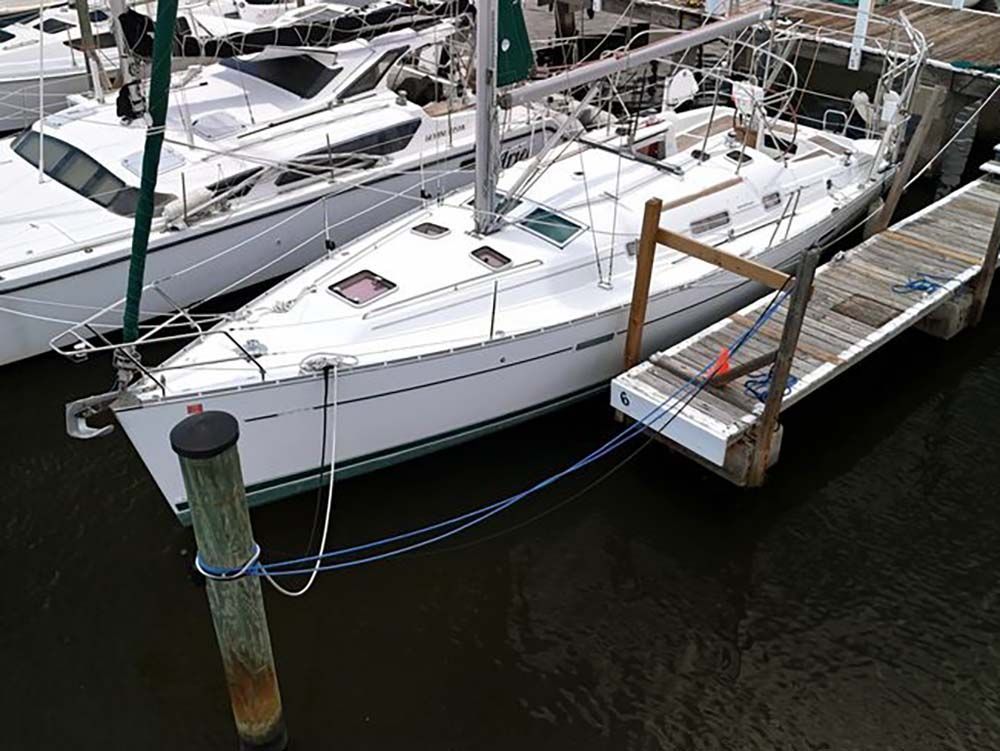
Compared to a Beneteau Oceanis 343, the Dufour leans a touch more performance-oriented in hull form and sail plan, while the Beneteau emphasizes interior volume and cruising ergonomics. Both boats are well-built production yachts of the 2000s, but the Beneteau’s layout often feels roomier and more “cruiser comfortable” out of the box.
For a buyer choosing between them, pick the Dufour if you value a snappier helm and a boat that can be tuned for club racing without sacrificing coastal cruising; choose the Oceanis if you want more living space and a softer, very user-friendly systems package for family cruising.
► Learn more about de Beneteau Oceanis 343
Dufour 34 vs Jeanneau Sun Odyssey 34.2

The Jeanneau Sun Odyssey 34.2 and the Dufour 34 sit in much the same market niche, and in practice differences are nuanced: Jeanneau models often offer slightly more cruising-oriented accommodations and an emphasis on easy handling, while the Dufour will give a marginal edge in performance and helm feedback. Both brands share similar production-era build methods and after-sales support in Europe, so maintenance footprints are comparable.
Buyers looking for an energetic weekend boat that still works for family passages may prefer the Dufour for its lively character; those who prioritize interior comfort and easy system access for cruising chores will find the Jeanneau a persuasive alternative.
► Learn more about de Jeanneau Sun Odyssey 34.2
Maintenance Costs of a Dufour 34 in the U.S.
Below is a practical, commented list of typical annual ownership costs you should budget for. Amounts are approximate and will vary by region, condition and how much work an owner does themselves.
- Mooring/Slip fees — (Varies widely: $2,000–$8,000 per year. Premium marinas in Florida/California cost more; summer haul and winter storage in New England adds seasonal expense.)
- Insurance — (Roughly $600–$2,500 annually depending on value, cruising area and coverage limits; coastal or offshore use increases premiums.)
- Engine servicing — (Annual service and winterization $300–$1,000; major service or gearboxes can run $1,000–$3,000.)
- Antifouling and haul-out — (Bottom paint and haul: $800–$3,000 annually depending on region and yard.)
- Standing rigging inspection/replacement — (Inspection ~$200–$600; full replacement every 10–15 years typically $3,000–$8,000.)
- Running rigging and sails (maintenance/repair) — (Annual minor repairs $100–$600; new cruising sails $4,000–$12,000 for a main and working headsail.)
- Electronics and batteries — (Routine battery replacement and small electronics $200–$1,500 per year; major navigation/electronics refit $2,000–$8,000.)
- Survey, repairs and replacement of wear items — (Budget a contingency: $1,000–$5,000 per year for unforeseen repairs, more if refit is planned.)
Significant one-time costs include a full sail replacement, major standing rigging change, or a substantial electronics refit — each of those can be several thousand dollars. Region matters: Florida/Caribbean owners typically spend more on anti-fouling and have higher slip fees but fewer winter haul costs; New England owners face higher haul/winterization bills and possibly higher repair shop rates. An owner who is mechanically capable and willing to do routine maintenance can substantially reduce annual costs; if you prefer professional services exclusively, budget toward the higher end of the ranges above.
Overall, for a 34-foot production performance-cruiser the Dufour sits in the medium annual cost band: not as cheap to run as an older, simpler 30-foot cruiser, but not as expensive as larger yachts or dedicated bluewater platforms. Good maintenance and sensible upgrades also help preserve resale value
Conclusion
The Dufour 34 (Felci Performance generation) is a compelling choice for sailors who want a compact yacht that blends rewarding on-water performance with practical cruising comforts. Its strengths are a lively hull and helm, contemporary build methods for its era and a layout that accommodates couples and small families well for coastal and short-offshore work. Weaknesses are the inevitable space compromises of a 34-footer (compact galley and nav area) and the common production-boat maintenance items that buyers must watch — chainplate/core areas, rigging age and electronics — all manageable but worthy of a careful pre-purchase survey.
For a buyer focused on coastal cruising with occasional club racing, the Dufour 34 is worth hunting down: it offers a real blend of speed, handling and usable accommodation that often gives better performance-per-dollar than some more comfort-biased contemporaries. If your primary criterion is maximum interior volume or simplest, lowest-cost ownership in the U.S., alternatives like the Catalina 34 or some Beneteau/Jeanneau layouts might be a closer fit; but if you prize sailing quality and a solid used-market profile in Europe and pockets of the U.S., the Dufour 34 is a sensible, reasonably resalable choice.
Specifications
| Hull Type | Fin with rudder on skeg |
| Rigging Type | Masthead Sloop |
| LOA | 33.63 ft / 10.25 m |
| LWL | 25.42 ft / 7.75 m |
| S.A. (reported) | 516.00 ft² / 47.94 m² |
| Beam | 10.75 ft / 3.28 m |
| Displacement | 11,023 lb / 5,000 kg |
| Ballast | 4,409 lb / 2,000 kg |
| Max Draft | 5.84 ft / 1.78 m |
| Construction | GRP |
| First Built | 1974 |
| Builder | Dufour (FRA) |
| Designer | Michael Dufour |
| Auxiliary Power | Volvo Penta MD 2 B, Diesel, 25 HP |
| Fuel Capacity | 22 gals / 83 L |
| Water Capacity | 48 gals / 182 L |
| Headroom | 6.40 ft / 1.95 m |
| S.A./Displ. | 16.73 |
| Bal./Displ. | 40.00 |
| Disp./Len. | 299.59 |
| Comfort Ratio | 25.84 |
| Capsize Screening Formula | 1.94 |
| S# | 1.73 |
| Hull Speed | 6.76 kn |
| Pounds/Inch Immersion | 976.41 pounds/inch |
| Rig Dimensions (I) | 43.60 ft / 13.29 m |
| Rig Dimensions (J) | 13.60 ft / 4.15 m |
| Rig Dimensions (P) | 38.20 ft / 11.64 m |
| Rig Dimensions (E) | 11.50 ft / 3.51 m |
| S.A. Fore | 296.48 ft² / 27.54 m² |
| S.A. Main | 219.65 ft² / 20.41 m² |
| S.A. Total | 516.13 ft² / 47.95 m² |
| Est. Forestay Length | 45.67 ft / 13.92 m |
Disclaimer
The considerations and analyses presented regarding the Dufour 34 sailboat are of a general nature and are based on the available information and technical data on this model, interpreted to the best of our knowledge and understanding. It is important to note that the specific characteristics of any particular sailboat may vary due to custom modifications, maintenance performed, and conditions of use over time, among other factors. Therefore, the details and performance of the boat you are considering may not exactly match the information provided here.
We strongly recommend that, before making any purchasing or usage decisions, you conduct a detailed inspection of the boat in question, consult with nautical professionals and other sailors, and consider your personal needs, expectations, and capabilities. Each sailboat may have unique particularities that affect its performance and suitability for different types of sailing and sailors.
The information contained in this analysis should be used as a general guide and not as a definitive reference. Professional evaluation and personal inspection are essential to ensure that the boat meets your specific requirements and expectations.