



The Beneteau First 31.7 is a compact cruiser-racer from Beneteau’s First line that was conceived to marry club-level performance with comfortable weekend cruising. Designed by the Finot/Conq group and introduced in the late 1990s and early 2000s, it sits squarely in the era when many production yards pushed for sharper hulls and lighter displacement on 30–32-foot boats, giving owners a boat that could be competitive on the race course yet liveable for a couple or small family. The model found steady demand on the used market—especially in Europe—because it packaged sporty lines, a modest displacement and a roomy cockpit in an easily handled 31-foot hull; today most boats available are pre-owned, sought after by club racers and active weekend cruisers rather than the charter market.
Design and Construction
The hull of the First 31.7 is a fairly modern, fin-keel form with a spade rudder and a relatively long waterline for the length overall, which helps it accelerate and hold speed in light to moderate airs. The production boats were offered with a deep fin (around 6.2 ft) and a shoal/shallower option (about 4.9 ft), and the standard construction is single-skin fiberglass hull with a balsa-cored deck and an internal structural grid—choices typical of production performance cruisers that aim to balance weight, stiffness and cost. These construction decisions translate into lively sailing (light hull = responsive) but also mean buyers should watch fittings and deck penetrations carefully: balsa core can tolerate decades of service if properly sealed, but poor bedding of stanchions, toerail screws or hardware additions is the usual path to deck-core problems. The keel/ballast typically uses cast iron, which keeps cost down but requires inspection and proper coating to avoid corrosion. Overall, the First’s build choices favor performance and resaleability—repairs are well-understood by yards—but some long-term maintenance items (deck sealing, keel maintenance) are more likely than on heavier, solid-fiberglass cruisers.
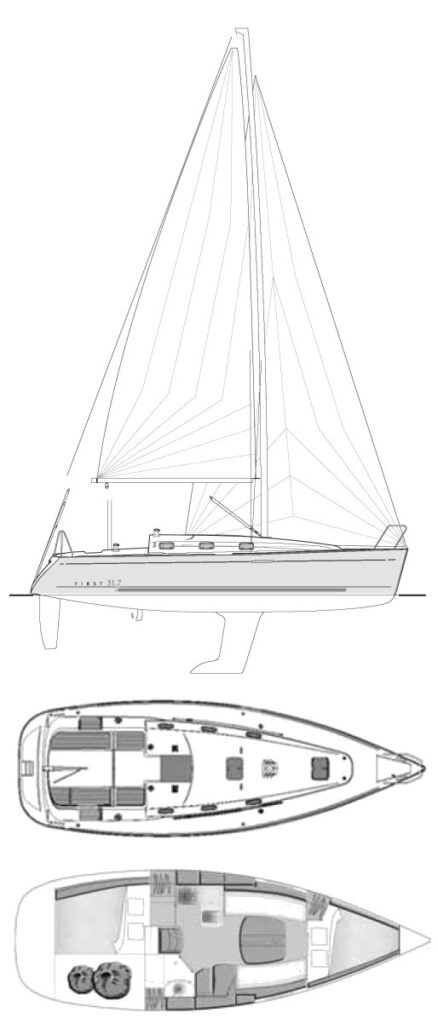
Performance
On the water the 31.7 has a reputation for being sprightly: it gets going in light winds, points respectably to windward, and feels lively off the wind where its relatively powerful sail plan and long waterline pay off. Owners report predictable behavior in a chop and easy helm balance under sail, with the shoal-keel versions trading a little pointing ability for shallower access. Compared with pure cruising 31-footers the First will generally feel closer to a spirited club racer — faster on reaches and more weatherly — while remaining manageable for a short-handed crew. For buyers who prize weekend performance, the First sits above typical cruising-first designs in responsiveness, though it is slightly more “involved” to maintain top performance (trim, sail shape, and rig maintenance matter).
Comfort and Accommodations
Below decks the First 31.7 was laid out with practicality in mind rather than luxury: a compact but functional galley, a saloon with usable berths, and either a two-cabin or more Spartan three-cabin layout on some boats. Headroom in the saloon is reasonable for a 31-footer and storage is decent for weekend cruising, but liveaboard comfort for a family over long periods will be a compromise—the boat prefers cruising couples or small families who value sailing performance as much as below-deck space. Ventilation and natural light are adequate for the era, and many owners choose to modernize interiors (upgraded cushions, galley improvements, electronics) to improve habitability—these are common and straightforward upgrades that tend to age the boat well when done sympathetically.
Safety and Practicality
Deck ergonomics favor active sailing: a roomy, well-drained cockpit and an arrangement that keeps winches and lines within reach for short-handed sailing make it practical for couples who single-hand portions of a cruise. The relatively high freeboard gives a drier ride and more interior volume but increases windage at dock—something to account for in tight slips. Access to systems is typical of production boats of this size: through-hatches and companionway access are reasonably good, but the compact mechanical spaces mean some servicing (e.g., engine or saildrive work) can be a little tighter than on larger cruisers. As built, the First 31.7 is best viewed as a coastal and offshore-capable cruiser when properly maintained and equipped; owners who want true bluewater passagemaking usually add extra grounding, redundant systems and robust electronics before committing to extended ocean passages.
Known Issues with the Beneteau First 31.7
Owners’ threads and broker notes highlight a few recurring maintenance themes rather than single design failures. First, the balsa-cored deck and how fittings are bedded is a common watch item—leaks around toerails, stanchions or winch bases, if ignored, lead to local core degradation. Second, the cast-iron keel and keel-to-hull interface require inspection and, in some older boats, sanding and epoxy coating or more thorough remediation to control corrosion and pitting. Third, routine age-related items—standing rigging, sail wear, and older instruments—turn up on listings as items replaced or recommended. Practically, many sellers list new standing rigging, replaced masts, or upgraded electronics as value-adds; common buyer recommendations include a folding three-blade prop for performance and vibration reduction, new instruments/simrad/GPS packages, and a careful survey focused on deck-core and keel condition. These are familiar, solvable issues for the informed buyer but they do affect purchase price negotiation.
Market Availability and Pricing in the U.S.
The First 31.7 is no longer in production and is mostly found on the second-hand market; most active listings are in Europe and the Mediterranean, though examples do turn up in the U.S. either through private import or from owners who sailed them across. In the U.S. the model is less common than mainstream American production cruisers, so inventory is thinner and regional availability concentrates where owners import and race — parts of the East Coast (including New England and the mid-Atlantic) and Florida see more Beneteau activity, while West Coast examples appear sporadically through brokers and private sales. Asking prices on recent international listings and broker ads tend to cluster in the mid tens of thousands of dollars (examples commonly quoted online sit in the ~$45k–$80k range depending on year, condition and equipment). For a U.S. buyer, expect to budget for transport, survey-found work and any U.S. compliance steps if you import a boat from Europe.
Below is a comparison with similar sailboats from the same era:
| Model | LOA | Approx. years built | Typical used price (U.S.) | Main differences |
|---|---|---|---|---|
| Catalina 310 | ~31 ft | late 1990s–2007 | $45,000–$70,000 (examples listed ~$47k–$65k). | More cruising-oriented interior volume and systems accessibility; less performance focus than the First. :contentReference[oaicite:7]{index=7} |
| Jeanneau Sun Odyssey 32i | ~31–32 ft | early 2000s–late 2000s | $50,000–$70,000 (common listings ~$55k–$64k). | Similar LOA and modern production build; generally a bit more cruising comfort and slightly heavier displacement. :contentReference[oaicite:8]{index=8} |
| Dufour 32 Classic | ~32 ft | late 1990s–2000s | $35,000–$60,000 (varies by year/condition). | European design priorities—comfortable below, solid build for cruising, slightly different motion and tuning than a First. :contentReference[oaicite:9]{index=9} |
Beneteau First 31.7 vs Catalina 310

The First 31.7 leans toward a performance hull form with a lighter displacement and a deeper keel option, so it will typically accelerate quicker and reward attentive sail trim; the Catalina 310, by contrast, was tuned toward comfortable cruising with a wider cockpit and systems organized for weekend liveaboard ease. In practical ownership terms that means a buyer who wants sharper handling and better light-air performance will prefer the First, while someone prioritizing simple maintenance access, roomy feel and docile handling in tight marinas may favor the Catalina.
► Learn more about de Catalina 310
Beneteau First 31.7 vs Jeanneau Sun Odyssey 32i

Both boats share modern production manufacturing techniques from the same era, but the Sun Odyssey 32i generally trades a touch of sport for greater interior comfort and slightly heavier displacement—resulting in a steadier motion and more storage for cruising gear. For a coastal cruiser who values interior appointments and lower-stress systems, the Jeanneau is attractive; for a buyer who wants to mix club racing with weekend cruising and prefers a more responsive helm, the First remains the better match.
► Learn more about de Jeanneau Sun Odyssey 32i
Beneteau First 31.7 vs Dufour 32 Classic

The Dufour 32 Classic emphasizes cruising comfort and traditional deck/coachroof ergonomics, which usually means a slightly more conservative sailplan and a design aimed at forgiving behaviour in a seaway; the First is sharper, with racing sensibilities showing in hull form and sail handling. If your priority is family cruising with fewer performance compromises, the Dufour will likely feel more “forgiving”; if you want a sprightlier passage or to contest local club races, the First offers the performance edge—at the cost of slightly higher attention to rig and deck maintenance.
► Learn more about de Dufour 32 Classic
Maintenance Costs of a Beneteau First 31.7 in the U.S.
Here’s a typical annual cost breakdown for an owner in the United States (numbers are rough mid-range estimates; regional variation noted below):
- Mooring / Slip or Marina Fees: $2,400–$9,000 per year (northern marinas and high-demand areas like the Northeast or California sit at the higher end).
- Insurance: $400–$1,200 per year depending on coverage, cruising area and owner experience.
- Engine servicing (annual): $300–$900 for basic service; more if saildrive or impeller replacement required.
- Antifouling/haul-out and bottom paint: $600–$2,000 (boats kept in warmer, fouling-prone waters such as Florida or the Gulf will trend higher).
- Standing rigging inspection / partial replacement: $0–$2,000 annually on average (full replacement every 10–15 years often runs $3k–$6k).
- Running rigging and sails (maintenance/repairs): $200–$1,500 per year; full sail replacement might be $4k–$8k for a main and jib if needed.
- Electronics & batteries (amortized): $200–$1,000 per year depending on upgrades (GPS, instruments, radio replacements are typical one-off upgrades every 5–10 years).
- Survey/one-time repairs (if buying): $1,000–$8,000+ depending on discovered issues (deck repairs, keel treatment, or major systems work can push costs much higher).
Regional notes: haul-out and yard labor costs are higher in New England and California than in many pockets of the Southeast or the Gulf. Warm, marine-growth heavy waters like Florida or the Gulf make antifouling and zinc replacement more frequent and expensive. Significant one-time costs to budget for include sail replacement, a full standing-rigging swap, major electronics refits, or deck-core repairs; a thorough keel-blast and epoxy coating (for a corroded iron keel) can be a five-figure job. Many owners can perform routine maintenance (engine service, zincs, basic varnish/gelcoat care) themselves, but specialized tasks—mast work, complex electronics, composite deck repairs—require professionals and increase ownership costs. Overall, for a 31-foot performance cruiser the First 31.7 sits in the medium range of annual ownership costs: not as cheap to run as a small weekend daysailer, but generally less expensive than larger bluewater yachts; a wisely timed resale can often absorb some of these investments because the First has a solid following.
Conclusion
The Beneteau First 31.7 is an intelligent compromise for sailors who want more performance than a typical production cruiser without stepping up to a highly technical race boat. Its strengths are a lively hull, usable interior for short-term cruising, and a design that rewards active trimming and occasional club racing; its trade-offs are the predictable maintenance items that come with balsa-cored decks and cast-iron keels, and a below-decks volume that is modest compared with cruising-first designs. For a buyer who values coastal cruising with the option to race or to cover ground quickly on weekends, the First 31.7 is worth seeking out—especially if you find a well-surveyed example with recent rigging and updated sails. For strictly family-first cruising or long-term liveaboard comfort, more cruising-focused models might give better long-term comfort; however, as a coastal cruiser with spirited performance and a named following, the First 31.7 generally holds its appeal and resale value for the right buyer.
Specifications
| Hull Type | Fin w/bulb & spade rudder |
| Rigging Type | Fractional Sloop |
| LOA | 31.53 ft / 9.61 m |
| LWL | 28.87 ft / 8.80 m |
| S.A. (reported) | 447.00 ft² / 41.53 m² |
| Beam | 10.60 ft / 3.23 m |
| Displacement | 8,267.00 lb / 3,750 kg |
| Ballast | 2,260.00 lb / 1,025 kg |
| Max Draft | 6.23 ft / 1.90 m |
| Construction | Fiberglass (FG) |
| Ballast Type | Iron |
| First Built | 1998 |
| Builder | Beneteau |
| Designer | Finot |
Auxiliary Power / Tanks | |
|---|---|
| Make | Yanmar |
| Type | Diesel |
| HP | 21 |
| Fuel Capacity | 8 gals / 30 L |
Accommodations | |
| Water Capacity | 42 gals / 159 L |
Sailboat Calculations | |
| S.A. / Displ. | 17.55 |
| Bal. / Displ. | 27.34 |
| Disp. / Len. | 153.38 |
| Comfort Ratio | 18.56 |
| Capsize Screening Formula | 2.10 |
| S# | 3.39 |
| Hull Speed | 7.20 kn |
| Pounds/Inch Immersion | 1,093.45 pounds/inch |
Rig and Sail Particulars | |
| I | 38.94 ft / 11.87 m |
| J | 11.29 ft / 3.44 m |
| P | 35.43 ft / 10.80 m |
| E | 12.80 ft / 3.90 m |
| S.A. Fore | 219.82 ft² / 20.42 m² |
| S.A. Main | 226.75 ft² / 21.07 m² |
| S.A. Total (100% Fore + Main) | 446.57 ft² / 41.49 m² |
| S.A. / Displ. (calculated) | 17.53 |
| Estimated Forestay Length | 40.54 ft / 12.36 m |
Disclaimer
The considerations and analyses presented regarding the Beneteau First 31.7 sailboat are of a general nature and are based on the available information and technical data on this model, interpreted to the best of our knowledge and understanding. It is important to note that the specific characteristics of any particular sailboat may vary due to custom modifications, maintenance performed, and conditions of use over time, among other factors. Therefore, the details and performance of the boat you are considering may not exactly match the information provided here.
We strongly recommend that, before making any purchasing or usage decisions, you conduct a detailed inspection of the boat in question, consult with nautical professionals and other sailors, and consider your personal needs, expectations, and capabilities. Each sailboat may have unique particularities that affect its performance and suitability for different types of sailing and sailors.
The information contained in this analysis should be used as a general guide and not as a definitive reference. Professional evaluation and personal inspection are essential to ensure that the boat meets your specific requirements and expectations.