



The Dufour 32 Classic is a small-to-mid-size cruising yacht from Dufour’s “Classic” line that was designed to deliver comfortable coastal cruising with respectable sailing manners. Launched in the late 1990s and produced into the early 2000s, the 32 Classic reflects the era’s French approach—efficient hull forms, well-finished interiors and a focus on usability for family crews rather than outright racing. Designed with input from J&J Design / Olivier Poncin and built by Dufour in La Rochelle, the boat was pitched at couples and small families who wanted a boat that was easy to handle for weekends but capable of stepping up to longer coastal passages when outfitted properly. On the used market the 32 Classic shows up most often in Europe (where many examples remain), with occasional appearances in North America through broker import or private resale; demand tends to come from private buyers and small-club cruisers rather than charter fleets.
Design and Construction
The hull is a modern fin-keel form with a spade rudder and a fairly generous beam for the length, giving the boat usable interior volume without sacrificing a lively waterline length. Dufour offered deep and shallow keel variants (and in some series a centerboard option), and the production layup commonly uses a fiberglass hull with a cored deck and an internal structural grid—construction choices that aim to keep weight down while preserving stiffness and finish quality. Those decisions make the 32 Classic feel responsive under sail and provide a relatively light displacement by cruising-boat standards, but they also place a premium on correct bedding of deck fittings and careful inspection of keel and compression areas during surveys. The yard’s production techniques (vacuum-assisted or controlled lamination on some runs, PVC or balsa core details on others) mean repairs are familiar to most yards, yet core-related leaks or a damaged mast step are the usual “watch items” for long-term owners.
Performance
In everyday sailing the Dufour 32 Classic sits squarely in the category of a coastal cruiser that likes to move: it accelerates readily in light airs, tracks well, and benefits from a moderately generous sail area that keeps passages comfortable without requiring constant reefing. The deeper-keel versions point and heave less in a chop; the shoal versions give better access at the cost of a small loss in windward performance—an expected tradeoff for this size and type. Compared with pure cruising contemporaries the 32 tends to feel a touch livelier and more engaging at the helm, but it is not a race-boat: owners typically praise its predictable handling and balanced helm, making it an attractive choice for sailors who want a boat that is enjoyable to sail day-to-day while remaining sensible for family cruising.
Comfort and Accommodations
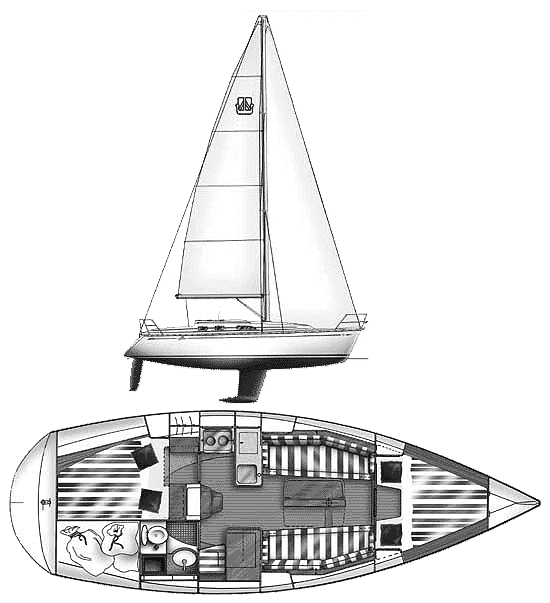
Below deck Dufour made sensible use of the nearly 11-foot beam: the saloon is roomy for a 32-foot hull, the galley is usable for provisioning, and there is a proper navigation table and a double aft cabin in the common two-cabin arrangement. Storage and tankage are generous enough for extended weekend cruising; headroom and ventilation are good for the era but not luxurious. For a couple or a small family the boat makes a comfortable coastal cruiser and can be adapted to short-term liveaboard use with modest upgrades (cushions, refrigeration, and modern electronics). Long-term liveaboard comfort will always be constrained by the boat’s footprint—the 32 Classic rewards owners who value a good sailing experience and acceptable below-decks ergonomics rather than a large-volume house-boat.
Safety and Practicality
Deck ergonomics are conservative and safe: wide side decks, an ergonomic cockpit and accessible winch placement make short-handed sailing feasible and reduce crew movement when conditions pick up. The boat’s mechanicals and systems are compact (typical for a 32-footer), which keeps weight low but means some servicing—engine access, wiring runs and the mast step area—can be fiddly in places. As built the 32 Classic is well suited to coastal and near-offshore work; owners who contemplate serious offshore passagemaking commonly add redundancies (upgraded batteries and charging, modern nav/comm, and reinforced grounding) and pay careful attention to through-deck bedding and keel condition before long voyages.
Known Issues with the Dufour 32 Classic
Problems reported by surveyors and owner forums are not exotic: the most frequent themes are leaks or softening around deck penetrations (mast step, stanchion and toerail bases), occasional depressed mast-plate observations and the general age-related replacement cycle for standing rigging and sails. The structural layout—cored decks and production cabinetry—means water ingress at poorly bedded fittings can lead to localized core degradation, so a careful pre-purchase inspection around the mast, winches and chainplates is a practical first step. Owners also reference the usual wear items for boats of this generation (sail chafe, instrument obsolescence, and occasional keel-interface work if iron keels show corrosion). Typical, commonly recommended upgrades are fresh standing rigging when age-appropriate, replacement or re-bedding of deck hardware if any signs of water intrusion exist, and modernizing electronics and propulsion controls; these are predictable owner-investments rather than model-specific catastrophes.
Market Availability and Pricing in the U.S.
The Dufour 32 Classic is out of production and is predominantly a used-market boat. Most current listings and brokerage stock appear in Europe (France, UK, Ireland and the Med), with U.S. examples appearing sporadically—typically as imported stock or private sales on the East Coast. Condition varies widely: you’ll find well-kept privately owned boats, some broker-refurbished units, and a few economy-priced projects; ex-charter examples are rarer for this particular model than for larger production cruisers. Based on recent listings across major broker sites and marketplace ads, a realistic U.S. buyer should plan on a ballpark range of $30,000–$55,000 for intact, survey-passed examples depending on year, equipment and recent refits; boats with significant repair needs or those offered in Europe for direct purchase can be found at lower prices, while upgraded or recent-survey boats command the upper end. Budget additionally for import, transport and a U.S.-side survey when buying from Europe.
Below is a comparison with similar sailboats from the same era:
| Model | LOA | Approx. years built | Typical used price (U.S.) | Main differences |
|---|---|---|---|---|
| Dufour 32 Classic | ~32 ft (9.96 m) | 1996–2004 | **$30,000–$55,000** (market and condition dependent) | Balanced coastal cruiser with a livelier feel than heavy cruisers; cored deck/detailing and several keel options. :contentReference[oaicite:7]{index=7} |
| Beneteau First 31.7 | ~31.5 ft | ~1998–2006 | $35,000–$80,000 (condition & rigging vary). | More performance-oriented hull and rig; slightly lighter displacement and typically more race-capable setup. :contentReference[oaicite:8]{index=8} |
| Jeanneau Sun Odyssey 32i | ~31–32 ft | early 2000s | $45,000–$70,000 (depending on year/equipment) | A bit more cruising-oriented finish and systems accessibility; generally a steadier motion and emphasis on onboard comfort. :contentReference[oaicite:9]{index=9} |
| Catalina 310 | ~31 ft | late 1990s–2008 | $45,000–$70,000 (strong U.S. dealer market) | U.S.-market friendly support, roomy interior and easy systems access; more cruiser-first than Dufour. :contentReference[oaicite:10]{index=10} |
Dufour 32 Classic vs Beneteau First 31.7

The Dufour 32 Classic emphasizes balanced cruising comfort with a nod to performance through an efficient hull and sensible sail area; the First 31.7 leans more toward a club-racer/cruiser hybrid with a lighter displacement and a hull tuned for sharper responsiveness. For a potential buyer this translates into a practical difference: choose the Dufour if you want a stable, comfortable coastal cruiser with straightforward systems and a roomier feel below, choose the First if you prioritize light-air speed and race-club competitiveness and are willing to invest more in sail and rig tuning to squeeze peak performance.
► Learn more about de Beneteau First 31.7
Dufour 32 Classic vs Jeanneau Sun Odyssey 32i

Both boats were built with domestic cruising in mind, but Jeanneau’s Sun Odyssey 32i typically prioritizes interior ergonomics and cruising systems slightly more than the Dufour, which often feels a fraction lighter and sportier under sail. This means that families who want maximum below-decks comfort, storage and a placid motion in a short seaway may favor the Jeanneau, while owners who want similar practicality but with a bit more responsiveness and simpler deck layout may prefer the Dufour—the maintenance profile is comparable, though both benefit from careful attention to deck bedding and rig checks.
► Learn more about de Jeanneau Sun Odyssey 32i
Dufour 32 Classic vs Catalina 310

The Catalina 310 represents the American production-cruiser approach: roomy, very serviceable systems layout and broad dealer support in the U.S., whereas the Dufour 32 Classic brings a European balance of sailing agility and refined finish for its size. For a U.S. buyer the practical considerations are clear—Catalina parts, support and resale familiarity are advantages that lower ownership friction; the Dufour rewards owners who value a slightly more European sail feel and who either source parts through brokers or import, accepting that some purchases may involve more logistics.
► Learn more about de Catalina 310
Maintenance Costs of a Dufour 32 Classic in the U.S.
- Mooring / Slip or Rack storage: $2,400–$9,000 per year depending on region and marina (New England/California at the high end).
- Insurance: $400–$1,500 per year (varies with cruising grounds, owner experience and declared value).
- Engine servicing (annual): $300–$1,000 (basic servicing, impeller, filters; saildrive service or transmission work increases cost).
- Antifouling / haul-out and bottom paint: $600–$2,500 per haul depending on location and condition of hull (warmer waters = more frequent haul-outs).
- Standing rigging inspection / replacement amortized: $0–$2,000 per year on average, with full replacements typically $3,000–$6,500 every 10–15 years.
- Running rigging, sails and canvas: $200–$2,000 per year for repairs and service; a new main + headsail package can run $4,000–$8,000 or more.
- Electronics / batteries amortized: $200–$1,500 per year; modern chartplotters, AIS and autopilots are common one-time upgrades.
- Survey / unexpected repairs (when buying): $1,000–$10,000+ depending on discovered issues (deck-core repair or keel-interface remediation can be significant).
Regional differences matter: haul-out and labor rates are highest in the Northeast and California; warm fouling waters like Florida raise paint/zinc frequency and cost. Typical one-time big items include a full standing-rigging swap, major keel or core repairs, or full electronics and solar refit. A reasonably handy owner can carry out many routine tasks (zincs, oil/filters, basic rig checks), but composite repairs, major engine work and electrical rewiring normally require professionals—this mix pushes the Dufour into a medium annual running-cost bracket for 30–33-foot cruising yachts. Given reasonable maintenance and periodic upgrades, resale tends to reflect condition strongly; well-kept examples generally command prices at the mid to upper end of the range.
Conclusion
The Dufour 32 Classic is a practical coastal cruiser that combines a comfortable, well-finished interior with sailing manners that are livelier than many cruising-first boats of its era. Its strengths are a usable saloon and berths, efficient hull lines that make passages enjoyable, and production-level construction that’s familiar to yards—its trade-offs are the usual care points for cored decks, mast-step/deck-penetration bedding, and the fact that the best examples are most common in Europe rather than widely distributed across U.S. marinas. For buyers seeking a capable coastal cruiser with the option to race modestly in club events or to cruise comfortably with a family, the 32 Classic is worth pursuing provided a survey confirms no core or keel-interface issues; for buyers whose priority is maximal interior volume, dealer support and U.S. parts ubiquity, American-market models like the Catalina 310 may be easier to maintain. In short: the Dufour 32 Classic is a solid, sensible boat for the coastal-cruising sailor who wants good sailing manners without a large-boat price tag—search deliberately, survey carefully, and you’ll often find that good examples are sound investments for enjoyable coastal ownership.
Specifications
| Hull Type | Fin w/bulb & spade rudder |
|---|---|
| Rigging Type | Masthead Sloop |
| LOA | 32.67 ft / 9.96 m |
| LWL | 27.16 ft / 8.28 m |
| S.A. (reported) | 602.00 ft² / 55.93 m² |
| Beam | 10.83 ft / 3.30 m |
| Displacement | 9,592.00 lb / 4,351 kg |
| Ballast | 2,640.00 lb / 1,197 kg |
| Max Draft | 5.58 ft / 1.70 m |
| Construction | Fiberglass (FG) |
| First Built | 1996 |
| Last Built | 2004 |
| Builder | Dufour |
| Designer | J & J Designs |
| Auxiliary Power | Volvo 2020 Diesel, 29 HP |
| Fuel Capacity | 25 gals / 95 L |
| Water Capacity | 48 gals / 182 L |
| S.A./Displ. | 21.41 |
| Bal./Displ. | 27.52 |
| Disp./Len. | 213.73 |
| Comfort Ratio | 21.55 |
| Capsize Screening Formula | 2.04 |
| Hull Speed | 6.98 kn |
| Pounds/Inch Immersion | 1,051.00 lb/inch |
Disclaimer
The considerations and analyses presented regarding the Dufour 32 Classic sailboat are of a general nature and are based on the available information and technical data on this model, interpreted to the best of our knowledge and understanding. It is important to note that the specific characteristics of any particular sailboat may vary due to custom modifications, maintenance performed, and conditions of use over time, among other factors. Therefore, the details and performance of the boat you are considering may not exactly match the information provided here.
We strongly recommend that, before making any purchasing or usage decisions, you conduct a detailed inspection of the boat in question, consult with nautical professionals and other sailors, and consider your personal needs, expectations, and capabilities. Each sailboat may have unique particularities that affect its performance and suitability for different types of sailing and sailors.
The information contained in this analysis should be used as a general guide and not as a definitive reference. Professional evaluation and personal inspection are essential to ensure that the boat meets your specific requirements and expectations.