


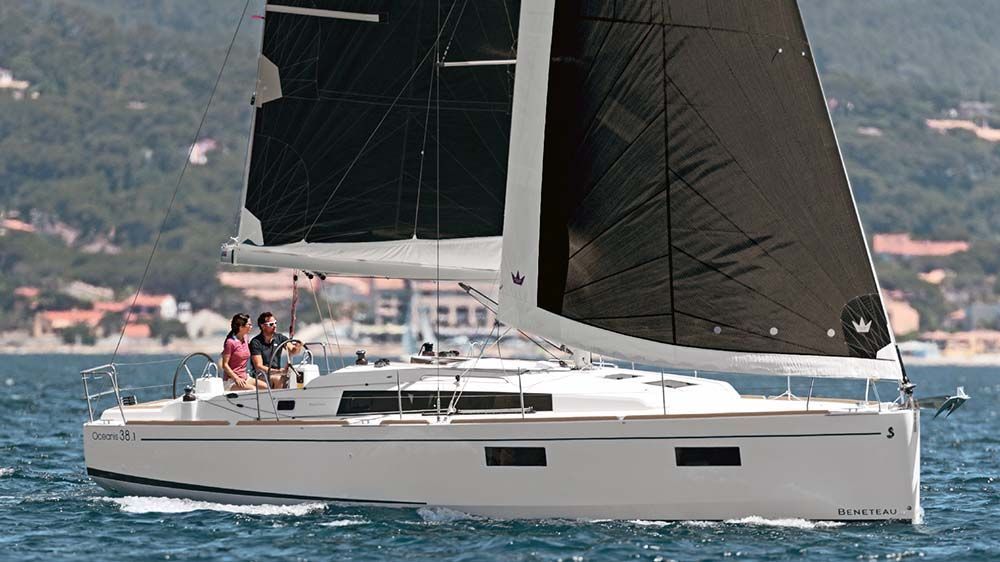
The Beneteau Oceanis 38.1 is a modern cruising sailboat launched by the French shipyard Beneteau in the mid-2010s as part of the Oceanis line, which emphasizes comfort, ease of handling, and versatility. Designed by the renowned naval architecture firm Finot-Conq with interiors by Nauta Design, the 38.1 was envisioned as an accessible, modular platform for coastal and medium-range offshore cruising. With its intelligent layout, sleek lines, and a strong balance between performance and livability, it appeals to a broad range of sailors—from couples and small families seeking weekend getaways to charter companies looking for durable, user-friendly vessels.
In recent years, the Oceanis 38.1 has gained solid traction on the secondhand market. It’s especially popular among private owners upgrading from smaller coastal cruisers and among charter operators seeking a manageable boat with a spacious interior. It also appeals to sailing schools thanks to its forgiving handling characteristics and modern systems.
Design and Construction
The Oceanis 38.1 features a modern hull with a wide beam carried well aft, twin rudders, and a plumb bow—elements typical of contemporary Finot-Conq designs. This form provides interior volume while enhancing form stability and downwind performance. The hull is constructed using hand-laid fiberglass with an injection-molded deck, contributing to overall strength and weight control. The standard configuration includes a fin keel with a bulb (deep or shoal draft options), which offers a good compromise between draft and performance.
The deck plan supports a simple sloop rig with a furling headsail and an optional in-mast furling mainsail, reflecting its cruising-oriented DNA. The spars are aluminum, and standing rigging is stainless steel, standard for its class. These design choices prioritize ease of maintenance, cost-efficiency, and predictable performance over exotic materials or high-tech fittings.
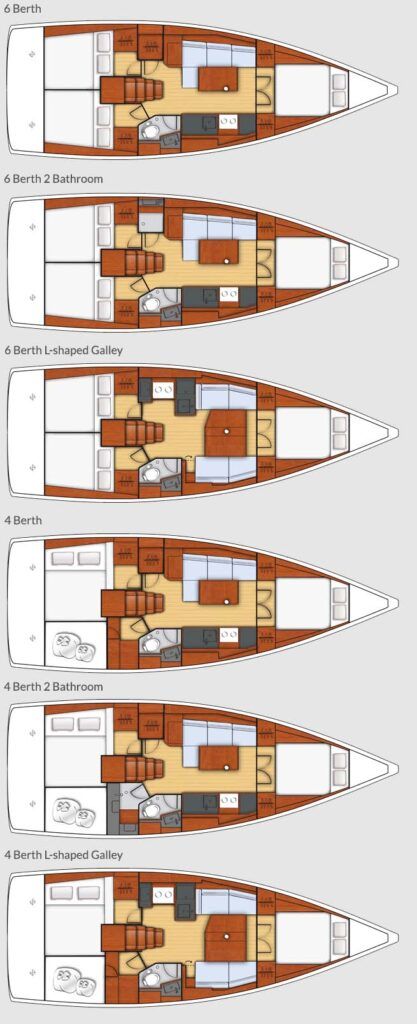
The interior layout is available in two or three-cabin versions, and it’s modular—Beneteau introduced a semi-customizable interior approach that allows owners to tailor features like galley placement and cabin configurations. This flexibility enhances resale potential and personal utility. Structurally, the boat includes an inner molded liner bonded to the hull, which adds rigidity but can complicate access for deep maintenance. However, overall construction quality is robust for its market segment, balancing price and durability.
Performance
Under sail, the Oceanis 38.1 performs respectably for a cruising yacht. Its beamy hull and twin rudders offer solid control, especially when heeled, and the boat tracks well even in gusty conditions. It’s not a racer, but it can maintain 6 to 7 knots in moderate breezes and perform decently upwind with proper sail trim. With the deeper keel option, its pointing ability improves notably, though still shy of performance cruisers.
The wide beam can make the boat feel initially stiff but also contributes to excellent form stability, which is reassuring in a seaway. The boat’s behavior in short chop or moderate ocean swell is predictable, though not overly dampened—comfort at sea is good, but not exceptional. Compared to similar models like the Catalina 385 or Jeanneau Sun Odyssey 389, the Oceanis 38.1 is competitive in speed and slightly superior in helm feel, thanks to its twin rudders.
For cruising couples or small families, it strikes a good balance between comfort and performance. It’s not designed for ocean racing or long passages without preparation, but it’s well-suited for coastal cruising and occasional offshore legs under watchful planning.
Comfort and Accommodations
One of the strongest suits of the Oceanis 38.1 is its interior layout. The boat feels significantly larger than its 38 feet would suggest, thanks to its wide beam and light interior palette. The two-cabin version offers a large owner’s suite forward, while the three-cabin layout is optimized for charter or family use. The head is cleverly split—sink and vanity on one side, shower on the other—which enhances utility.
The galley is available in two configurations: linear or L-shaped. Both are functional, with adequate counter space and refrigeration for extended cruising. Storage is generous throughout, and the saloon area can seat six comfortably. Ventilation is aided by multiple opening hatches and ports, making the boat pleasant in warm climates.
Under sail, ergonomics are decent—handholds are present but sparse in places, and the open-plan design can feel exposed in heavy weather. Still, for its intended use—coastal cruising, weekend getaways, or seasonal liveaboard—it offers excellent comfort and aesthetic appeal. Interiors hold up reasonably well over time, though high-use charter models may show wear on veneers and upholstery, which are modular and relatively easy to refresh.
Safety and Practicality
Deck safety is enhanced by the wide side decks, low coachroof, and substantial grab rails. The cockpit is protected and spacious, with twin wheels providing easy access to the swim platform. Visibility from the helm is good, though the large beam can make docking in tight slips challenging for new skippers.
The boat is manageable with a small crew or solo thanks to centralized sail controls and standard roller furling systems. It’s well-suited for coastal cruising and can undertake offshore legs if properly equipped with upgraded gear (liferaft storage, jacklines, radar, etc.). Access to systems like tanks, batteries, and engine is generally straightforward, though deeper service tasks (e.g., plumbing runs) may require patience due to the molded interior.
From a maintenance standpoint, the boat avoids exotic systems that would drive up costs. The hull-deck joint is reliable, and the systems are well-documented. These traits reduce ownership complexity and help the boat retain resale value.
Known Issues with the Beneteau Oceanis 38.1
Some known issues among Oceanis 38.1 owners include:
- Water intrusion at deck fittings, particularly around stanchions and the companionway, if poorly rebedded.
- Premature wear on interior veneers and cabin soles, especially in chartered models.
- In-mast furling systems (if installed) occasionally develop halyard wrap or furling jamming if not rigged properly.
- Engine compartment soundproofing may degrade with time, leading to higher noise levels under power.
- Molded liners can hinder access for upgrades or repairs to electrical and plumbing systems.
Common upgrades include adding a feathering propeller for better motoring efficiency, solar panels for extended cruising, and upgraded electronics (especially in pre-2019 models).stock sails with higher-performance cloth, and upgrading electronics for bluewater capability.
Market Availability and Pricing in the U.S.
The Oceanis 38.1 is no longer in current production, having been replaced by newer models in the Oceanis line. On the U.S. used market, it appears frequently, particularly in sailing hubs like Florida, the Chesapeake Bay, and California. Boats range from private use to ex-charter fleets—conditions vary, but many are well-kept due to their relatively young age.
Typical asking prices (as of mid-2025) for used Oceanis 38.1s in the U.S. fall between $150,000 and $210,000, depending on year, condition, and equipment. Compared to similarly sized cruisers, this is a competitive range offering strong value per square foot and solid resale potential.
Here’s a comparison with similar boats in the market:
| Model | LOA | Year | Used Price (USD) | Key Differences |
|---|---|---|---|---|
| Beneteau Oceanis 38.1 | 37’9″ | 2016–2020 | $150,000–$210,000 | Modular layout, twin rudders, modern interior |
| Catalina 385 | 38’2″ | 2012–2020 | $160,000–$220,000 | Traditional layout, single rudder, more conservative styling |
| Jeanneau Sun Odyssey 389 | 38’6″ | 2015–2019 | $145,000–$205,000 | Similar layout, slightly better upwind performance |
| Hanse 388 | 38’6″ | 2018–2022 | $180,000–$230,000 | Self-tacking jib, more modern design, higher price |
Beneteau Oceanis 38.1 vs Catalina 385

The Oceanis 38.1 emphasizes versatility and lighter handling, with a more modern hull shape featuring wide aft sections that increase interior volume and provide good stability at anchor. The Catalina 385, by contrast, has a more traditional hull design and rig, favoring durability and predictable motion, which appeals to sailors who prioritize long-term reliability over the latest design trends. While the Oceanis offers more flexible interior layouts and lighter, sportier sailing characteristics, the Catalina tends to deliver steadier tracking and a reputation for low-maintenance ownership. Buyers seeking a balance of comfort and classic American build quality may lean toward the Catalina, while those drawn to open-plan interiors and responsive performance in lighter winds will find the Oceanis more appealing.
► Learn more about the Catalina 385
Beneteau Oceanis 38.1 vs Jeanneau Sun Odyssey 389
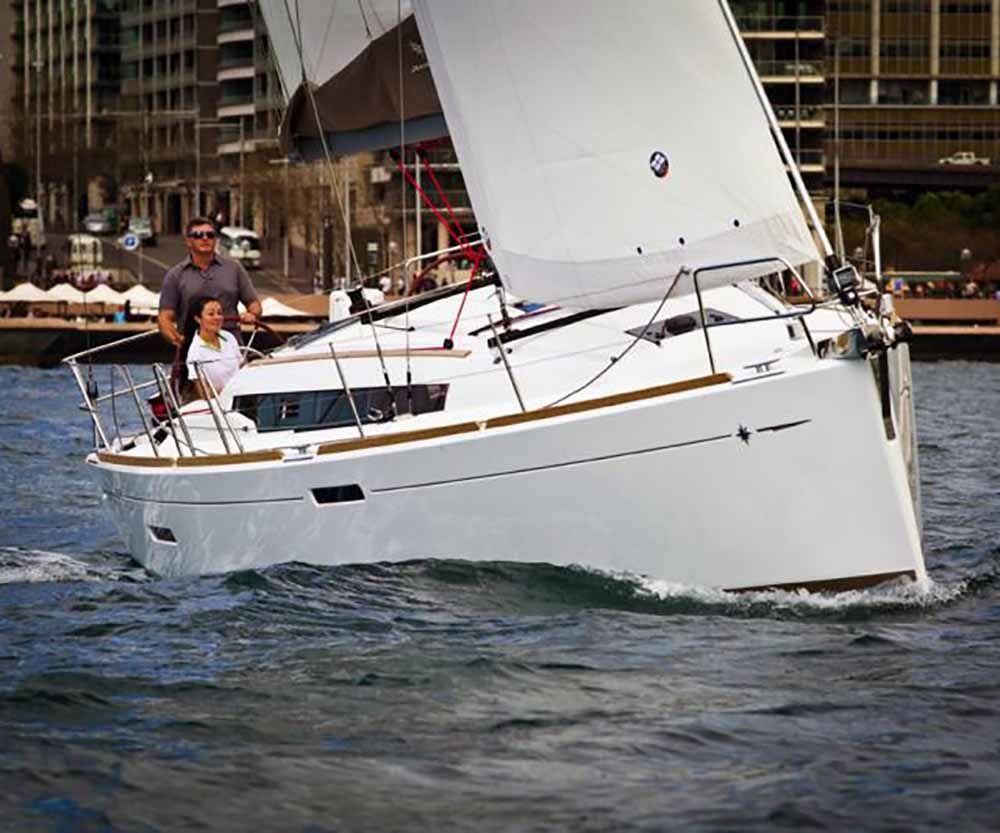
The Oceanis 38.1 and Sun Odyssey 389 are close competitors, both reflecting French design priorities of space and comfort. The Jeanneau places slightly more emphasis on balanced performance offshore, with a hull and rig that favor stability under varying conditions, while the Oceanis is often configured for easier handling with twin rudders and a focus on adaptability for family cruising. Interior layouts differ in tone: the Jeanneau is more traditional in finish and compartmentalization, whereas the Oceanis offers modular options that feel more contemporary and airy. Buyers prioritizing family cruising with flexible living spaces may prefer the Oceanis, while those who want a steadier helm offshore with a slightly more performance-oriented setup might find the Jeanneau the stronger choice.
► Learn more about the Jeanneau Sun Odyssey 389
Beneteau Oceanis 38.1 vs Hanse 388
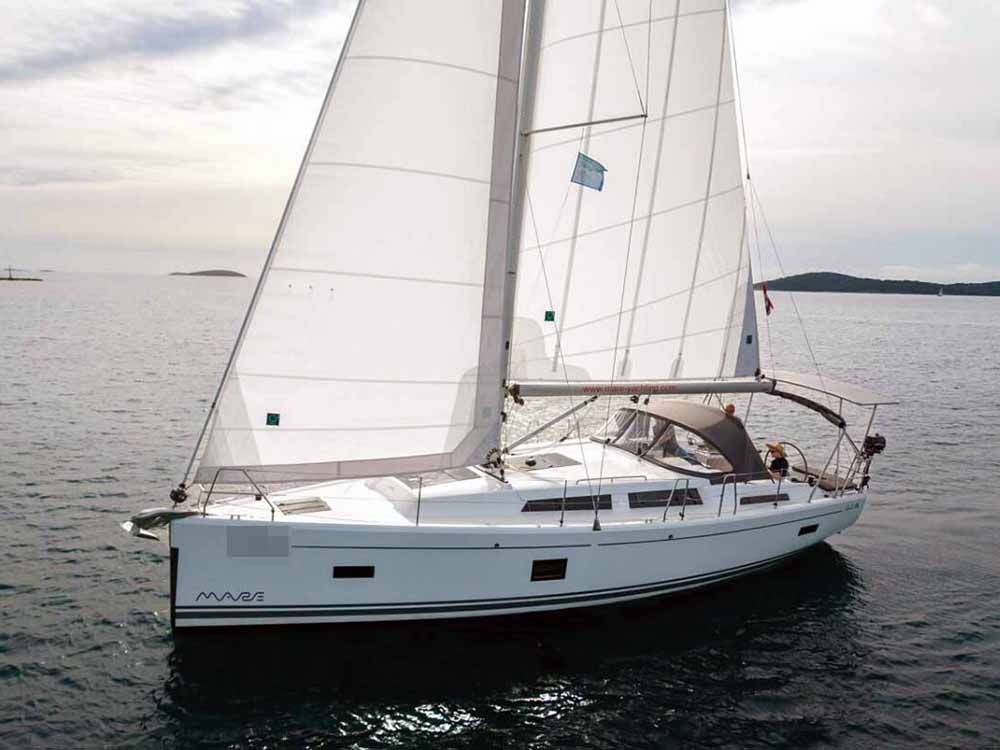
The Hanse 388 distinguishes itself with a sleeker, performance-oriented hull and a self-tacking jib that appeals to short-handed sailors, offering speed and efficiency with minimal crew input. In contrast, the Oceanis 38.1 balances ease of handling with interior volume, trading a fraction of upwind efficiency for more comfort and flexible living arrangements. The Hanse’s minimalist yet high-quality interiors emphasize German build precision, while the Oceanis opts for spaciousness and adaptability, catering more directly to family and cruising lifestyles. For buyers seeking club racing potential and sharp sailing characteristics, the Hanse is likely more attractive, whereas the Oceanis delivers stronger value for family cruising and coastal exploration.
► Learn more about the Hanse 388
Maintenance Costs of a Beneteau Oceanis 38.1 in the U.S.
Typical annual maintenance expenses for a 38-foot sailboat in the U.S. include:
- Mooring or Dockage: $4,000–$12,000 depending on location (lower in the Gulf Coast, highest in New England or California).
- Insurance: $1,500–$3,500 annually, influenced by cruising range (coastal vs offshore) and sailing region.
- Engine Servicing: $500–$1,000 for annual checks, oil changes, and filters.
- Antifouling Paint: $2,000–$4,000 depending on paint type and haul-out yard fees.
- Standing Rigging Inspection/Replacement: $500–$1,000 per year averaged over a decade, with a full replacement costing $8,000–$12,000 every 10–12 years.
- Running Rigging: $500–$1,000 annually, more if racing frequently.
- Sails: $1,000–$2,000 per year for maintenance and minor repairs, with full replacements ($8,000–$12,000) needed roughly every 8–10 years depending on use.
Significant one-time costs include electronics upgrades ($5,000–$15,000), interior refits ($5,000–$20,000), or full sail replacements. Many Oceanis owners perform basic tasks themselves—cleaning, minor rigging work, or simple engine checks—helping reduce yard labor bills, though professional services are often required for rigging, antifouling, and complex systems. Overall, ownership costs fall in the medium range for this size and class of sailboat: higher than older, simpler designs but reasonable given the comfort and versatility offered. The Oceanis 38.1 maintains strong resale value in the U.S. market, offsetting some of the long-term investment.
Conclusion
The Beneteau Oceanis 38.1 is a well-rounded, thoughtfully designed cruising sailboat that prioritizes comfort, versatility, and ease of use. Its modular interior and modern hull design make it an excellent fit for weekend sailors, small families, or couples seeking an affordable and stylish cruising platform. While it’s not a performance boat, it handles well under sail and offers respectable speed and stability for coastal and limited offshore use.
For buyers evaluating their next cruising sailboat, the Oceanis 38.1 offers solid value, broad market availability, and a proven design from a trusted yard. It’s a sound investment for those focused on comfort and practicality rather than performance extremes—and its resale value remains strong thanks to consistent demand. For those seeking a modern, easy-to-handle cruiser with room to grow into longer passages, the Oceanis 38.1 is certainly worth a serious look.
Specifications
| Hull Type | Fin w/bulb & dual rudders |
| Rigging Type | Fractional Sloop |
| LOA | 37.73 ft / 11.50 m |
| LWL | 35.17 ft / 10.72 m |
| Beam | 13.09 ft / 3.99 m |
| Max Draft | 6.83 ft / 2.08 m |
| Displacement | 15,102 lb / 6,850 kg |
| Ballast | 3,946 lb / 1,790 kg |
| Ballast Type | Cast iron |
| Construction | Fiberglass (FG) |
| First Built | 2017 |
| Builder | Beneteau (France) |
| Designer | FINOT-CONQ |
| Auxiliary Power | Diesel – 30 HP |
| Fuel Capacity | 34 gal / 130 L |
| Water Capacity | 34 gal / 130 L |
| Hull Speed | 7.95 knots |
| Pounds/Inch Immersion | 1,644.97 lb/inch |
| S.A. (Reported) | 707.19 ft² / 65.70 m² |
| S.A./Displacement | 18.59 |
| Ballast/Displacement | 26.13% |
| Displacement/Length | 154.98 |
| Comfort Ratio | 21.14 |
| Capsize Screening Formula | 2.12 |
| Stability Index (S#) | 3.35 |
| Rig Dimensions – I | 45.96 ft / 14.01 m |
| Rig Dimensions – J | 15.72 ft / 4.79 m |
| Rig Dimensions – P | 43.47 ft / 13.25 m |
| Rig Dimensions – E | 13.81 ft / 4.21 m |
| SA Foretriangle | 361.25 ft² / 33.56 m² |
| SA Mainsail | 300.16 ft² / 27.89 m² |
| Total SA (100% fore + main) | 661.41 ft² / 61.45 m² |
| SA/Displacement (calculated) | 17.38 |
| Estimated Forestay Length | 48.57 ft / 14.80 m |
| Mast Height from DWL | 54.30 ft / 16.55 m |
Disclaimer
The considerations and analyses presented regarding the Beneteau Oceanis 38.1 sailboat are of a general nature and are based on the available information and technical data on this model, interpreted to the best of our knowledge and understanding. It is important to note that the specific characteristics of any particular sailboat may vary due to custom modifications, maintenance performed, and conditions of use over time, among other factors. Therefore, the details and performance of the boat you are considering may not exactly match the information provided here.
We strongly recommend that, before making any purchasing or usage decisions, you conduct a detailed inspection of the boat in question, consult with nautical professionals and other sailors, and consider your personal needs, expectations, and capabilities. Each sailboat may have unique particularities that affect its performance and suitability for different types of sailing and sailors.
The information contained in this analysis should be used as a general guide and not as a definitive reference. Professional evaluation and personal inspection are essential to ensure that the boat meets your specific requirements and expectations.