



The Catalina 28 is a classic American coastal cruiser designed for sailors seeking a manageable, comfortable, and reliable weekend or family sailboat. First introduced in the early 1990s by Catalina Yachts, it was developed as a response to the demand for versatile mid-size cruisers that could accommodate small crews or families while maintaining respectable sailing performance. With a moderate displacement hull and traditional masthead sloop rig, the Catalina 28 appeals to owners looking for a vessel that is forgiving under sail but still capable of club racing. On the used market, it remains a popular choice among private owners, sailing schools, and coastal charter operators due to its approachable design, ease of handling, and interior comfort.
Design and Construction
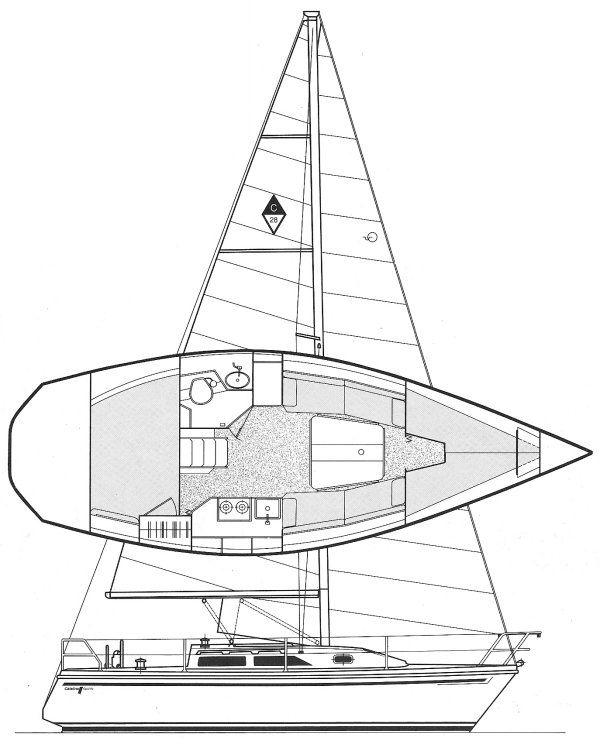
The Catalina 28 features a moderate fin keel with an internally-mounted spade rudder, a hull form designed to balance stability and maneuverability. Its masthead sloop rig provides a straightforward sail plan, with a large mainsail and overlapping headsail for versatility in varying wind conditions. Construction relies primarily on hand-laid fiberglass with minimal wood trim, which ensures longevity and low maintenance while offering a lightweight structure that enhances sailing performance. Internally, the boat’s layout maximizes usable space, offering a functional galley, dedicated navigation station, enclosed head, and a comfortable saloon. These design choices make the boat both practical for short-handed sailing and cost-effective in terms of upkeep, while preserving its value in the pre-owned market.
Performance
The Catalina 28 delivers steady, predictable performance in a range of wind and sea conditions. With a hull speed in the mid-6-knot range, it handles moderate seas well, offering stable tracking and reliable helm feedback. The fin keel and spade rudder combination provides good pointing ability and responsiveness, particularly in the standard deep keel configuration, while shoal draft versions trade a small amount of upwind performance for access to shallow waters. Compared with contemporaries like the Hunter 28.5 or Pearson 28, the Catalina 28 leans toward the more stable, comfortable end of the spectrum rather than outright speed. Its reputation among owners is largely positive for coastal cruising, short-handed sailing, and relaxed family outings, with predictable handling that minimizes surprises for newer sailors.
Comfort and Accommodations
Interior space is a strong point for the Catalina 28, particularly for a 28-foot vessel. The cabin layout supports a small family or couple for weekend cruises, with ample storage, comfortable berths, and good headroom. Ventilation is adequate with opening ports and a forward hatch, and the ergonomics support prolonged stays aboard without feeling cramped. The galley and head are functional and simple, allowing for efficient day-to-day use and easy maintenance. While some examples may have undergone cosmetic updates over the years, the underlying structure typically remains sound, making it straightforward for buyers to modernize the interior without extensive renovation.
Safety and Practicality
Deck design emphasizes safe movement and access, with sufficient lifelines, non-skid surfaces, and well-placed handholds. The Catalina 28 is manageable with a small crew, and sail handling is straightforward thanks to its sloop rig and accessible winches. Systems, including engine access and electrical panels, are generally easy to maintain, keeping ownership practical for DIY sailors and reducing ongoing costs. While not originally designed for extended offshore passages, the boat can handle near-coastal and inshore cruising reliably, and upgrades such as storm sails, improved electronics, and reinforced lifelines can extend its capabilities for more ambitious coastal sailing.
Known Issues with the Catalina 28
Common issues reported by owners include minor deck leaks around fittings and hardware, aging standing rigging, and occasional engine wear depending on maintenance history. Osmosis is rare but can occur in boats that have been poorly maintained or left in water for extended periods. Electronics and plumbing systems often require updating, and propeller wear or cutlass bearing replacement may be needed on older examples. Recommended improvements typically include checking or upgrading rigging, modernizing navigation electronics, and addressing any localized gelcoat or deck hardware issues to ensure reliability and safety.
Market Availability and Pricing in the U.S.
The Catalina 28 is no longer in production and is only available on the secondary market. It is commonly found in coastal regions such as New England, the Mid-Atlantic, Florida, and the Great Lakes, often in well-maintained condition due to active owner networks. Recent listings indicate prices typically range from $12,000 to $25,000, depending on age, equipment, and cosmetic condition. The model offers a solid balance of comfort, ease of handling, and resale value, making it appealing to buyers seeking a mid-size cruiser with an established support network. Comparable boats include the Hunter 28.5, Beneteau First 285, and Pearson 28-2, which offer similar LOA and coastal cruising capabilities.
Below is a comparison with similar sailboats from the same era:
| Model | LOA | Year | Typical U.S. Used Price | Notable Differences |
|---|---|---|---|---|
| Catalina 28 | 28 ft | 1990s | $12k–$25k | Stable, roomy interior, traditional masthead sloop, ideal for small crews and families. |
| Hunter 28.5 | 28.42 ft | 1985–1988 | $9k–$15k | B&R rig, beamy hull, slightly more performance-oriented in deeper keel. |
| Beneteau First 285 | 28.2 ft | 1985–1993 | $10k–$22k | European design, lighter displacement, sharper handling for more performance-focused sailors. |
| Pearson 28-2 | 28.5 ft | 1985–1989 | $8k–$18k | Balanced U.S. design, slightly quicker upwind, functional family cruising layout. |
Catalina 28 vs Hunter 28.5

The Catalina 28 offers a more traditional masthead sloop and a narrower hull profile compared with the beamier Hunter 28.5. This results in slightly more stable tracking under sail, though the Hunter may feel livelier to windward, especially in the deeper keel variant. Interior volume favors the Hunter, but Catalina’s layout emphasizes practical ergonomics and long-term comfort for a couple or small family.
Maintenance is straightforward on both boats, though the Hunter’s B&R rig requires inspection for shroud tension and spreader integrity. The Catalina benefits from extensive owner support and parts availability, which simplifies upkeep and resale. For weekend cruising with occasional club racing, the Catalina is more forgiving and user-friendly, whereas the Hunter rewards sailors who enjoy tuning and slightly more responsive handling.
► Learn more about the Hunter 28.5
Catalina 28 vs Beneteau First 285
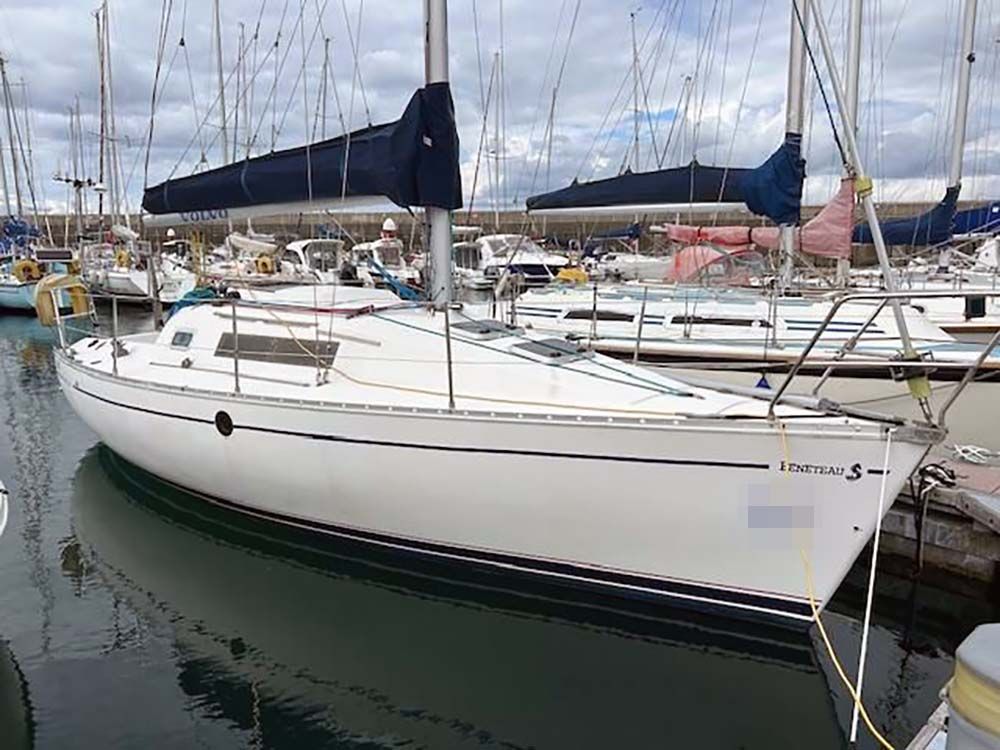
Compared to the Beneteau First 285, the Catalina 28 prioritizes interior comfort and ease of handling over performance. The Beneteau’s European hull lines allow for faster acceleration and a sharper response in lighter winds, but at the cost of slightly less living space. Sail plan differences also mean the Catalina’s masthead sloop is easier to manage short-handed, while the First 285 demands more attention to sail trim to achieve peak performance.
On maintenance, the Catalina’s systems are generally simpler, reducing annual costs and complexity for owners. Both are capable of coastal cruising, but the Beneteau will appeal to those seeking more speed and agility in club racing. For families focused on comfort and reliability rather than performance tuning, the Catalina provides a compelling, low-stress option.
► Learn more about the Beneteau First 285
Catalina 28 vs Pearson 28-2

The Pearson 28-2 and Catalina 28 share a focus on coastal cruising and family usability, but the Catalina’s design emphasizes interior comfort with a stable, forgiving hull. Pearson’s slightly finer entry and lighter displacement can yield marginally higher speeds upwind and more responsiveness in choppy seas. Layout differences favor the Catalina for long weekends, with more accessible storage and a well-arranged galley and saloon.
In terms of maintenance, both boats are similar, with familiar systems and accessible engines. The Pearson may appeal to buyers interested in occasional club racing, while the Catalina suits owners prioritizing comfort and predictability. Overall, the Catalina 28 is a versatile, practical choice with solid resale potential, especially in family-oriented sailing markets.
► Learn more about de Pearson 28-2
Maintenance Costs of a Catalina 28 in the U.S.
- Mooring / slip (annual): $1,000–$6,000
- Insurance (annual): $250–$700
- Engine servicing (annual): $300–$700
- Antifouling & haul/launch (annual): $800–$2,000
- Standing rigging replacement (one-time): $2,000–$5,000
- Running rigging & sail maintenance: $200–$1,000 annually depending on use
- Sails replacement (one-time, main & jib): $2,000–$5,000
- Electronics upgrades/refits: $1,000–$3,000
Owner-maintained Catalina 28s are feasible for those with basic mechanical and rigging skills, while professional services are recommended for engine work and haul-outs. Overall costs are moderate for a 28-foot cruiser and are balanced by the boat’s reasonable resale value and enduring market demand.
Conclusion
The Catalina 28 is a solid choice for sailors seeking a dependable, user-friendly coastal cruiser. Its stable hull, practical interior, and manageable sail plan make it ideal for couples or small families, weekend cruising, and occasional club racing. While it lacks the raw performance of some European or more modern designs, it compensates with comfort, ease of maintenance, and long-term reliability. For buyers looking for a versatile mid-size sailboat with good resale value and approachable handling, the Catalina 28 remains a compelling option in the used boat market.
Specifications
| Hull Type | Fin w/spade rudder |
| Rigging Type | Masthead Sloop |
| LOA | 28.50 ft / 8.69 m |
| LWL | 23.83 ft / 7.26 m |
| S.A. (reported) | 396.00 ft² / 36.79 m² |
| Beam | 10.17 ft / 3.10 m |
| Displacement | 8,300 lb / 3,765 kg |
| Ballast | 3,200 lb / 1,451 kg |
| Max Draft | 5.25 ft / 1.60 m |
| Construction | FG (Fiberglass) |
| Ballast Type | Lead |
| First Built | 1991 |
| # Built | 620 |
| Builder | Catalina Yachts (USA) |
| Designer | Gerry Douglas |
Auxiliary Power / Tanks (orig. equip.) | |
|---|---|
| Make / Model | Universal M3-20 |
| Type | Diesel |
| Fuel | 19 gals / 72 L |
Sailboat Calculations | |
| S.A. / Displ. | 15.51 |
| Bal. / Displ. | 38.55 |
| Disp. / Len. | 273.82 |
| Comfort Ratio | 23.15 |
| Capsize Screening Formula | 2.01 |
| S# | 1.71 |
| Hull Speed | 6.54 kn |
| Pounds/Inch Immersion | 865.95 pounds/inch |
Rig and Sail Particulars | |
| I | 36.50 ft / 11.13 m |
| J | 10.80 ft / 3.29 m |
| P | 31.00 ft / 9.45 m |
| E | 10.75 ft / 3.28 m |
| S.A. Fore | 197.10 ft² / 18.31 m² |
| S.A. Main | 166.63 ft² / 15.48 m² |
| S.A. Total (100% Fore + Main) | 363.73 ft² / 33.79 m² |
| S.A./Displ. (calc.) | 14.24 |
| Est. Forestay Length | 38.06 ft / 11.60 m |
Disclaimer
The considerations and analyses presented regarding the Catalina 28 sailboat are of a general nature and are based on the available information and technical data on this model, interpreted to the best of our knowledge and understanding. It is important to note that the specific characteristics of any particular sailboat may vary due to custom modifications, maintenance performed, and conditions of use over time, among other factors. Therefore, the details and performance of the boat you are considering may not exactly match the information provided here.
We strongly recommend that, before making any purchasing or usage decisions, you conduct a detailed inspection of the boat in question, consult with nautical professionals and other sailors, and consider your personal needs, expectations, and capabilities. Each sailboat may have unique particularities that affect its performance and suitability for different types of sailing and sailors.
The information contained in this analysis should be used as a general guide and not as a definitive reference. Professional evaluation and personal inspection are essential to ensure that the boat meets your specific requirements and expectations.