


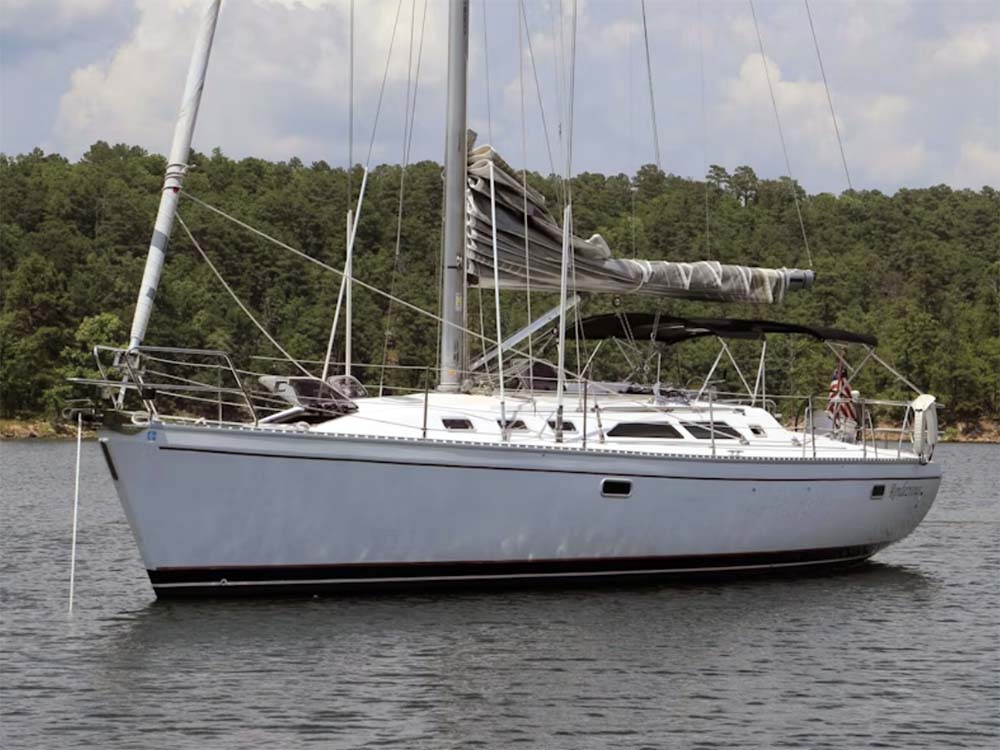
The Catalina 400 arrived in the mid-1990s as Catalina Yachts’ answer to owners who wanted a comfortable, easily handled cruiser with some performance ambition. Conceived by Frank (Gerry) Douglass and introduced around 1994–1996, the design targets the cruising sailor who values liveaboard comfort and straightforward systems more than pure racing speed; it occupies the market niche of family coastal cruising with occasional club racing. With features such as twin helms and a relatively broad beam for a 40-footer of that era, the 400 quickly became popular among private owners and flotillas, and today it remains a steady presence on the U.S. used market—sought by couples and families for coastal cruising, sometimes acquired by training programs and charter operations, but most commonly sold between private owners and brokerages.
Design and Construction
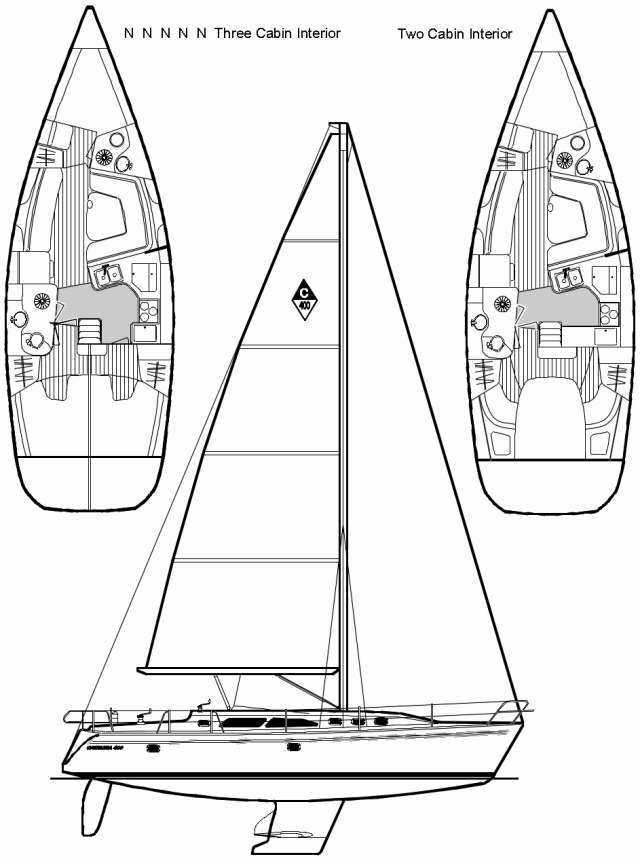
The Catalina 400 is a fiberglass (solid hull, fiberglass sandwich deck in many boats) monohull with a relatively modern fin keel and spade rudder layout. Early boats offered different keel options (standard fin, wing or shoal), and the twin-helm cockpit arrangement—unusual at the time—improves helmsman sightlines and cockpit traffic flow, a feature that now reads as forward-thinking for comfortable cruising. The rig is a masthead sloop, sized to be handled by a small crew while still carrying respectable sail area for passages and club racing. Construction uses hand-laid fiberglass with typical Catalina building methods of the period; interior joinery is functional and voluminous rather than highly bespoke, which aids repairs and lowers refurbishment costs compared with high-end custom interiors.
From an architectural standpoint the wide beam (around 13’6″) and relatively long waterline produce good initial stability and interior volume, while the displacement-to-ballast ratio lends a comfortable motion in coastal seaways. The spade rudder and fin keel favor responsiveness and maneuverability but mean that grounding or rudder strikes are more of a concern than with full-keel designs—something buyers should factor into insurance and inspection priorities. In practical terms these choices make the boat straightforward to maintain: fiberglass hull repairs are routine, deck hardware is accessible, and the interior layout was designed for modular replacement rather than custom-built complexity, which helps retain value and simplifies long-term upkeep.
Performance
On the water the 400 behaves like a cruiser that can surprise you with competent performance. In moderate winds the boat sails efficiently on a close reach and can make good passage speeds for its size—owners commonly report comfortable 6–7+ knot averages under sail in 12–18 knot true wind conditions, with higher bursts when reaching. The hull form and beam provide steady initial stability; combined with adequate ballast, the boat heels progressively and remains forgiving for shorthanded crews. Its ability to point (ceñida) is reasonable for a production cruiser of the era, though a dedicated racer in the same length would typically outpace it in light airs and when going hard to windward.
In a seaway the wide beam helps dry the cockpit and adds interior comfort, but a fully loaded cruising outfit will be slower to accelerate and may pound more in choppy head seas than narrower, lighter designs. Maneuverability in marinas is generally good—twin helms and a balanced rudder give confident steering—and with an inboard diesel of typical horsepower the boat has adequate low-speed control. Compared with contemporaries like Hunter- and Beneteau-designed 40-foot cruisers, the Catalina trades a touch of outright light-air speed for roomy interiors and straightforward handling—an attractive compromise for buyers prioritizing cruising comfort.
Comfort and Accommodations
Interior volume is one of the 400’s strongest selling points. The broad beam and long cabin trunk allow a layout that comfortably accommodates a couple cruising long-term, or a family for extended weekends: a roomy owner’s forward berth, a well-sized main salon with settee and dining table, and a practical galley positioned for both underway and dockside use. Storage lockers are generous relative to older 40-footers, and ventilation—through dorades, hatches and portlights—is generally adequate, though many owners upgrade fans or add solar-powered vents to improve airflow during summer cruising.
Ergonomically the cockpit and companionway were designed for easy movement; the twin helms create clear lanes to the swim platform and lifelines. For liveaboard use the layout is serviceable: systems are reachable, tankage (water and fuel) is acceptable for coastal passage making, and the joinery is durable if not luxurious. Many vessels on the used market show tasteful refits—new upholstery, modern galley appliances, LED lighting—which keep the boat competitive for buyers who want near-turnkey comfort. For owners seeking blue-water, long-term voyaging, some upgrades (rigging renewals, additional water/waste capacity, strengthened chainplates) are common, but for coastal/family cruising the interior is already well suited.
Safety and Practicality
Deck layout emphasizes safe movement: wide sidedecks, good handholds, and a low coachroof combined with the twin-helm cockpit reduce congestion when moving forward or launching a dinghy. Stanchions, lifelines and a solid pulpit are standard, but buyers should inspect chainplate areas and toerails for signs of stress or past leaks. Access to the water via a walk-through transom or swim platform (depending on sub-model) is practical for swimming and tender retrieval, though owners frequently add stronger boarding ladders or boarding platforms for frequent swimming use.
Systems accessibility is reasonable—the engine compartment, through-hulls and primary valves are reachable without removing major joinery—so routine maintenance can be owner-performed if the buyer has mechanical skills. For serious offshore work the platform will require upgrades (e.g., redundant navigation and communications, emergency steering plans, liferaft stowage), but for coastal cruising and weekenders the Catalina 400 is fundamentally practical and safe when well maintained.
Known Issues with the Catalina 400
Owners’ groups and brokers consistently note a handful of recurring items to watch for in surveys and pre-purchase inspections. These typically stem from age and typical use rather than a single catastrophic design fault:
- Osmosis/blistering has been mentioned in isolated older hulls—common to many fiberglass boats from the period—so check for recent hull treatments or blisters.
- Deck hardware leaks and worn toerail caulking: water intrusion around stanchions and toerail fastenings can lead to localized core softening if left unchecked.
- Engine and exhaust system wear: owners report routine maintenance items with Yanmar or equivalent diesels, and forum threads note attention to muffler/drip concerns after long cranking or cooling-water issues.
- Standing and running rigging age: mast fittings and shrouds commonly approach replacement intervals on boats over 20 years old.
- Typical cosmetic aging: cabinetry, upholstery and electrical panels are often refreshed by second owners.
Commonly recommended upgrades by buyers and surveyors include a modern propeller (to improve light-air performance and reduce vibration), replacement or refurbishment of sails, upgrades to navigation electronics and an assessment/refit of deck seals and chainplates. Such improvements are practical, increase safety and often raise resale value for the next owner.
Market Availability and Pricing in the U.S.
The Catalina 400 is no longer in production as a current model but remains widely available on the used market across the U.S., especially in traditional sailing hubs—Florida, the Chesapeake/Annapolis area, the Pacific Northwest and California, and parts of New England. Listings in broker marketplaces show a spread of conditions from well-maintained, upgraded examples to project boats needing refit; ex-charter boats exist but are less common than private-owner sales. Recent advertised asking prices in the U.S. typically range from $60,000 to $150,000, depending on year, equipment, and condition, with late-model MkII examples and well-refitted boats at the upper end and older, project vessels at the lower end.
Here’s how it compares to similar models:
| Model | LOA | Approx. Years | Typical Used Price (U.S.) | Main Differences |
|---|---|---|---|---|
| Catalina 400 | ~40–41 ft | 1994–2004 | $60,000–$150,000 | Roomy interior, twin helms, cruiser focus. |
| Hunter 40 (40-2 / 2000s variants) | ~40–41 ft | 1998–2008 | $50,000–$140,000 | Often lighter, more modern deck hardware layouts; emphasis on comfort and ease of handling. |
| Beneteau Oceanis 40 (2000s) | ~40 ft | 2004–2014 | $80,000–$170,000 | Cleaner modern lines, lighter displacement, stronger option packages for cruising tech. |
| Jeanneau Sun Odyssey 40 | ~40 ft | 1999–2005 | $75,000–$140,000 | European build sensibility, emphasis on sailing performance and modern interiors. |
Catalina 400 vs Hunter 40
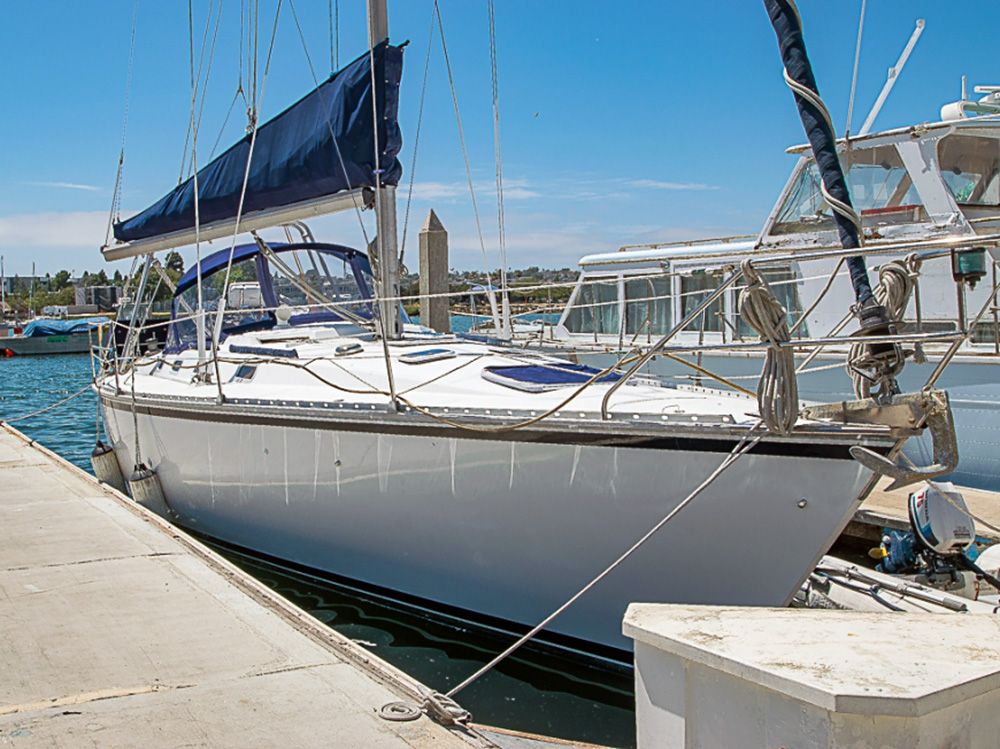
The Catalina 400 leans more toward spacious cruising interiors and practical deck ergonomics; its twin helm and broad beam translate into a living space that feels larger for a 40-foot, whereas many Hunter 40 variants emphasized simplified sail handling systems and slightly lighter displacement for ease of use. For a buyer focused on family comfort and internal volume the Catalina often wins; for someone prioritizing marginally lighter displacement and often more modern deck hardware, the Hunter can be the better match.
Maintenance-wise, both will show age-related items—rigging, sails and electronics—but Hunters sometimes have more contemporary factory systems that lower immediate upgrade needs. In short, choose the Catalina for proven cruising comfort and the Hunter if you want a balance toward simpler systems and slightly sportier feel.
► Learn more about de Hunter 40
Catalina 400 vs Beneteau Oceanis 40
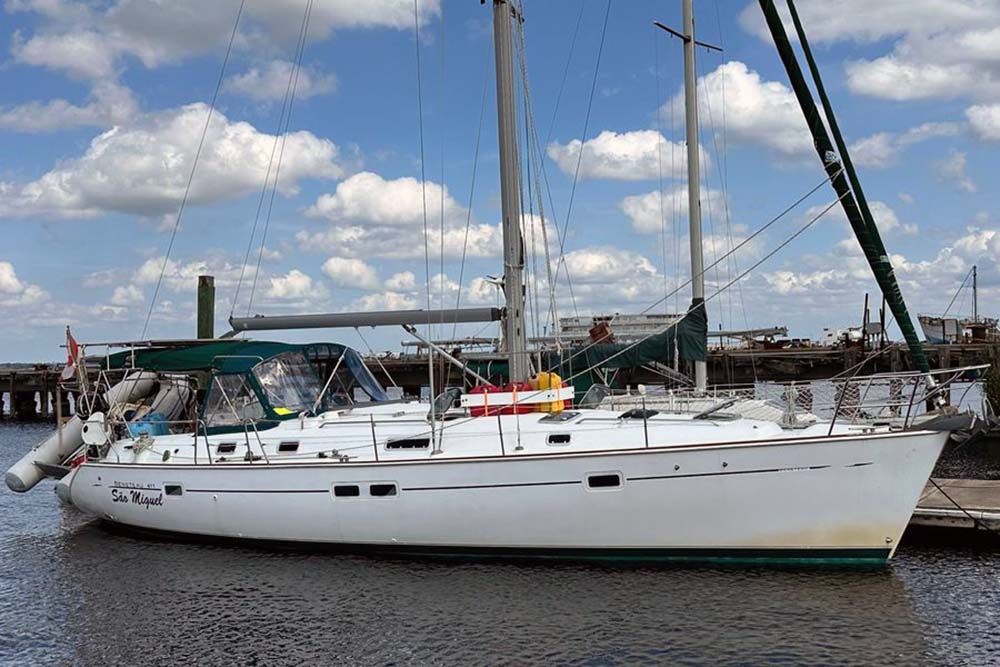
Compared to the Oceanis 40, the Catalina 400 offers more traditional construction and an interior geared to durable, roomy cruising rather than the sleeker, often lighter-displacement French approach of Beneteau. The Oceanis typically points better in light airs and may feel more modern at the dock, while the Catalina gives you predictable motion, very accessible systems, and an interior that refits easily.
Buyers trading up for systems and contemporary styling may prefer the Oceanis, but those seeking easier DIY maintenance, a robust used-boat parts ecosystem, and spacious liveaboard real estate frequently favor the Catalina 400.
► Learn more about de Beneteau Oceanis 40
Catalina 400 vs Jeanneau Sun Odyssey 40
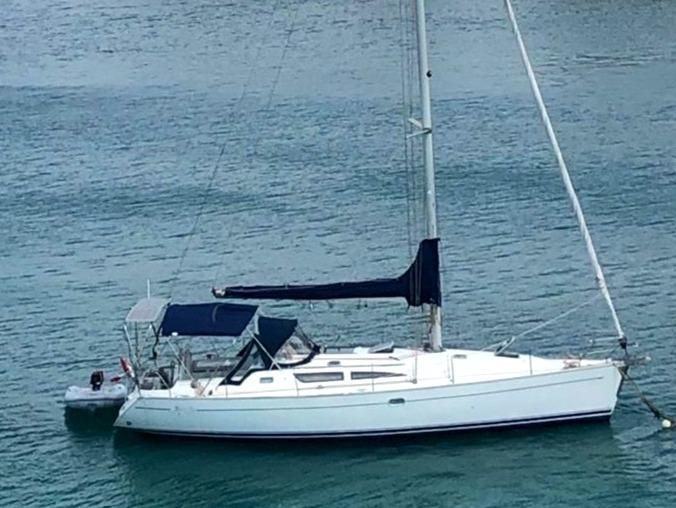
The Jeanneau leans toward a European-styled compromise between performance and comfort, with hull and deck shapes aimed at efficient sailing and a modern onboard feel; the Catalina 400 prioritizes cockpit circulation and interior volume, sometimes at the expense of light-air pointing. For passagemaking flexibility and potentially higher resale in regions that favor performance-leaning cruisers, Jeanneau can be attractive; for owners who prize conservative systems, familiarity and roomy accommodations, the Catalina is the practical choice.
From an ownership perspective, Jeanneau models may require slightly different service approaches for certain components (European suppliers and layout differences), while Catalina parts and refit knowledge are widespread in North America, easing maintenance logistics.
► Learn more about de Jeanneau Sun Odyssey 40
Maintenance Costs of a Catalina 400 in the USA
Typical annual and periodic costs for a Catalina 400 vary by region, usage and whether you perform work yourself. Estimates below are intended as a practical planning guide.
- Mooring / slip fees: $2,000–$8,000 per year (wide variation: inland/coastal marinas cheaper, high-demand areas like parts of Florida, California or the Northeast are at the high end).
- Insurance: $800–$3,000 per year depending on coverage, location, and cruising range.
- Engine servicing (annual): $300–$1,200 including oil, filters and impeller checks; significant repairs will cost more.
- Antifouling and haulout: $800–$3,000 per haul depending on hull condition, bottom prep and paint choice.
- Standing rigging inspection/renewal: $0–$300 for periodic inspections; full replacement commonly $3,000–$7,000 every 10–15 years depending on configuration.
- Sails (maintenance / replacement): Minor repairs $100–$600 annually; full sail replacement $4,000–$12,000 for a main and headsail set depending on material and custom options.
- Electronics and navigation upkeep: $200–$1,500 annually for updates and subscriptions; replacement packs $2,000–$10,000 for integrated upgrades.
- Miscellaneous (zincs, anodes, fittings, small systems): $200–$1,000 per year.
Significant one-time costs to budget for: major rigging replacement, full electronics refit, a comprehensive deck re-seal or a structural survey-driven repair (these can run $10k–$40k depending on scope). The Catalina 400 is commonly owner-maintained to some degree—routine engine and systems servicing, varnish, and interior work are DIY-friendly—but professional services are recommended for mast work, major structural repairs and complex electrical or engine overhauls. Overall, for a 40-foot cruiser its annual running costs are medium compared with similar boats: not the cheapest to own (slip and bottom work dominate), but not exceptionally expensive if preventative maintenance is followed. A well-kept example typically holds resale value reasonably well within its class, meaning that sensible reinvestments (rigging, sails, navigation) often pay off at sale.
Conclusion
The Catalina 400 is a pragmatic choice for buyers who prioritize comfortable, roomy accommodations, simple systems, and a boat that’s forgiving under sail for shorthanded crews. Its design choices—broad beam, twin helms, and robust fiberglass construction—make it especially well suited to couples and families who want a dependable coastal cruiser with enough performance for pleasant passages and club events. Known issues are mostly age-related and manageable with a careful pre-purchase survey and an appropriate budget for routine upgrades (rigging, sails, electronics, deck seals).
If your goal is a reliable family cruiser with good onboard comfort and an active resale market in North America, the Catalina 400 is worth serious consideration: it offers a balanced package of liveability and practicality. For buyers seeking the absolute latest in light-air performance or ultra-modern systems, contemporary Beneteau or Jeanneau alternatives may tempt you, but for straightforward ownership and comfortable coastal cruising the Catalina 400 remains a sensible, practical investment.
Specifications
| Hull Type: | Fin w/ bulb & spade rudder |
| Rigging Type: | Masthead Sloop |
| LOA: | 40.50 ft / 12.34 m |
| LWL: | 34.83 ft / 10.62 m |
| Sail Area (reported): | 808.00 ft² / 75.07 m² |
| Beam: | 13.50 ft / 4.11 m |
| Displacement: | 18,000 lb / 8,165 kg |
| Ballast: | 7,200 lb / 3,266 kg |
| Max Draft: | 6.75 ft / 2.06 m |
| Construction: | Fiberglass (FG) |
| First Built: | 1994 |
| Builder: | Catalina Yachts (US) |
| Designer: | Frank Douglas / Gerry Douglas |
| Auxiliary Power (orig.): | Diesel, 42 HP |
| S.A. / Displ.: | 18.89 |
| Bal. / Displ.: | 40.00 |
| Disp. / Len.: | 190.18 |
| Comfort Ratio: | 23.79 |
| Capsize Screening Form.: | 2.06 |
| S#: | 3.05 |
| Hull Speed: | 7.91 kn |
| Pounds/Inch Immersion: | 1,680.09 lb/in |
| I: | 52.67 ft / 16.05 m |
| J: | 15.50 ft / 4.72 m |
| P: | 47.00 ft / 14.33 m |
| E: | 17.00 ft / 5.18 m |
| S.A. Fore: | 408.19 ft² / 37.92 m² |
| S.A. Main: | 399.50 ft² / 37.11 m² |
| Total Sail Area: | 807.69 ft² / 75.04 m² |
| Estimated Forestay Length: | 54.90 ft / 16.73 m |
Disclaimer
The considerations and analyses presented regarding the Catalina 400 sailboat are of a general nature and are based on the available information and technical data on this model, interpreted to the best of our knowledge and understanding. It is important to note that the specific characteristics of any particular sailboat may vary due to custom modifications, maintenance performed, and conditions of use over time, among other factors. Therefore, the details and performance of the boat you are considering may not exactly match the information provided here.
We strongly recommend that, before making any purchasing or usage decisions, you conduct a detailed inspection of the boat in question, consult with nautical professionals and other sailors, and consider your personal needs, expectations, and capabilities. Each sailboat may have unique particularities that affect its performance and suitability for different types of sailing and sailors.
The information contained in this analysis should be used as a general guide and not as a definitive reference. Professional evaluation and personal inspection are essential to ensure that the boat meets your specific requirements and expectations.