



The Catalina 470 was introduced in the 2000s by Catalina Yachts as a purpose-built cruising yacht aimed at owners who prioritize offshore comfort, straightforward systems and owner-friendly maintenance over aggressive racing performance. Conceived in the tradition of American production cruisers, the 470 targets couples and families planning serious coastal cruising and occasional bluewater passages, as well as liveaboard owners who value durable systems and generous tankage. On the used market the model has attracted steady interest from private cruisers and owner-operators—less common in high-turnover charter fleets—and it generally sells to buyers who want a robust, easy-to-service platform rather than a performance-first hull.
Design and Construction
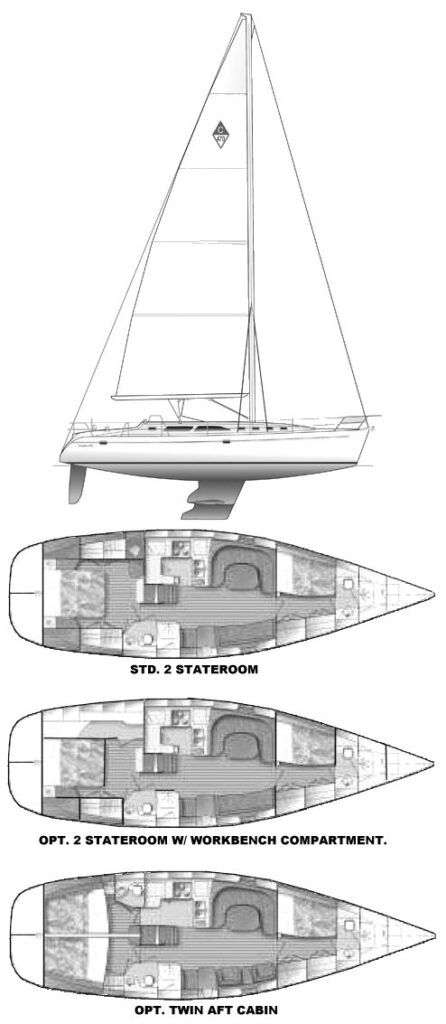
The Catalina 470 features a relatively deep fin keel with a bulb and a spade rudder, combined with a moderately beamy hull form that favors form stability and interior volume. Typical rigging is a conservative masthead sloop, which simplifies headsail choices and furling arrangements and places less demand on short-handed trimming skill than fractional, high-aspect rigs; construction uses hand-laid fiberglass laminates with strategic coring in non-structural deck areas, which balances weight savings and durability. These design choices produce a boat that handles predictably and repairs readily in U.S. yards, and they tend to keep long-term maintenance straightforward: robust through-hull arrangements, accessible systems compartments and conservative engineering reduce the likelihood of exotic or hard-to-source components. From a naval-architecture viewpoint, Catalina chose to trade some light-air responsiveness for heavier displacement and forgiving motion, a decision that benefits owners who value comfort and low-stress offshore passages.
Performance
On the water the 470 behaves like a traditional American cruiser: it tracks steadily, resists quick hobby-horse pitching in a head sea, and offers a reassuring feel when the conditions deteriorate. It will not match the pointing or acceleration of late-1990s European designs with higher sail-area-to-displacement ratios, but it gains in directional stability and predictable helm balance under a reefed sailplan—qualities that make single- or short-handed offshore watchkeeping less demanding. Maneuverability in marinas is manageable for a boat this size, and the conservative rig and robust underbody make motoring efficiency and heavy-weather control dependable, though owners seeking club-racing performance should expect to be outpaced by lighter, performance-oriented contemporaries. Practically, the 470 rewards prudent sail inventory choices (e.g., overlapping genoas replaced by well-cut furling headsails and a quality main) to get the best compromise of ease and passage speed.
Comfort and Accommodations
Cabin layouts on the Catalina 470 emphasize liveability: large tankage for water and fuel, capacious berths and generous storage make extended cruising realistic for couples or small families. The saloon and galley are arranged for practicality—secure handholds, deep lockers and an easily managed galley—so provisioning and daily life aboard feel straightforward during long passages. Ventilation and natural light are adequate, and the joinery tends toward practical, serviceable finishes that age well with routine upkeep; many used examples show owner-driven refits focused on upholstery, navigation electronics and galley modernisation rather than structural overhauls. For buyers considering long-term liveaboard use, the 470’s emphasis on systems accessibility and storage outweighs the loss of the last knots of speed, making it a comfortable, resilient onboard environment.
Safety and Practicality
Safety is integral to the 470’s design language: wide side decks, substantial cockpit coamings and conservative deck gear layouts reduce the amount of improvisation required when moving on deck in a blow. The masthead rig and straightforward running rigging minimize single-point failures in sail handling systems, and mechanical systems—engine, tanks, seacocks—are typically arranged for direct access, which lowers routine service time and yard bills. With common-sense upgrades (modern ground tackle, storm sails, redundant electronics) the 470 is perfectly capable of offshore passages; however, prospective buyers should inspect and refresh corrodible items and seacocks given the age of many examples. In short, the Catalina’s practical systems and accessible layout make it a pragmatic choice for owners who intend to maintain the boat themselves or rely on widely available professional support.
Known Issues with the Catalina 470
Common owner-reported issues reflect the expected wear patterns of production cruisers of its era: deck hardware and through-deck fittings can develop leaks if bedding has degraded, exhaust and cooling hoses age and need replacement, and domestic systems such as sanitation and plumbing are frequent maintenance items. Osmosis is not a dominant theme on well-maintained hulls, but gelcoat crazing and minor blistering can appear on neglected boats; core checks around high-load fittings and chainplates are important at survey. Owners commonly recommend replacing old furling units and headsail hardware, assessing and possibly upgrading propeller choice (e.g., fixed to folding or feathering props for better light-air motoring), and modernizing navigation and electrical systems to improve reliability and resale appeal—practical upgrades that both reduce risk and immediately improve the boat’s capability.
Market Availability and Pricing in the U.S.
The Catalina 470 is no longer in production and is traded on the pre-owned market; availability is concentrated in major cruising hubs—Florida, the Chesapeake and New England, with a scattering of boats on the Pacific Coast—often as privately sold, owner-maintained examples rather than high-turnover charter inventory. Condition matters: well-documented, upgraded boats with recent mechanical and electronic work command stronger prices than project vessels. Typical asking prices for survey-ready, well-equipped examples fall in the range of $125,000–$265,000, while project or minimally-equipped listings can be substantially less. Compared with similar-era production cruisers, the 470 occupies a value position that favors buyers who want durability and systems simplicity over cutting-edge sailing performance; its resale tends to be stable in markets that value rugged, owner-serviceable boats.
Here’s a quick comparison with similar models:
| Model | LOA | Years Built | Typical Used Price (U.S.) | Main Differences |
|---|---|---|---|---|
| Catalina 470 | ≈47 ft | 2000s | $125,000 – $265,000 | Robust American construction, focus on systems accessibility, heavier displacement, owner-friendly maintenance. |
| Jeanneau Sun Odyssey 45.2 | ≈46.4 ft | 1997–2003 | $110,000 – $180,000 | Performance-leaning hull, lighter displacement, sportier handling and higher resale appeal among performance-minded buyers. |
| Hunter 460 | 46.1 ft | 1999–2001 | $99,500 – $145,000 | Volume-first design with B&R rig, very large cockpit and simplified short-handed systems. |
| Beneteau Oceanis 461 | ≈46.6 ft | mid-1990s – early-2000s | $105,000 – $160,000 | European cruising bias with lighter displacement and slightly crisper sailing feel versus Catalina’s heavier, comfort-first approach. |
Catalina 470 vs Jeanneau Sun Odyssey 45.2
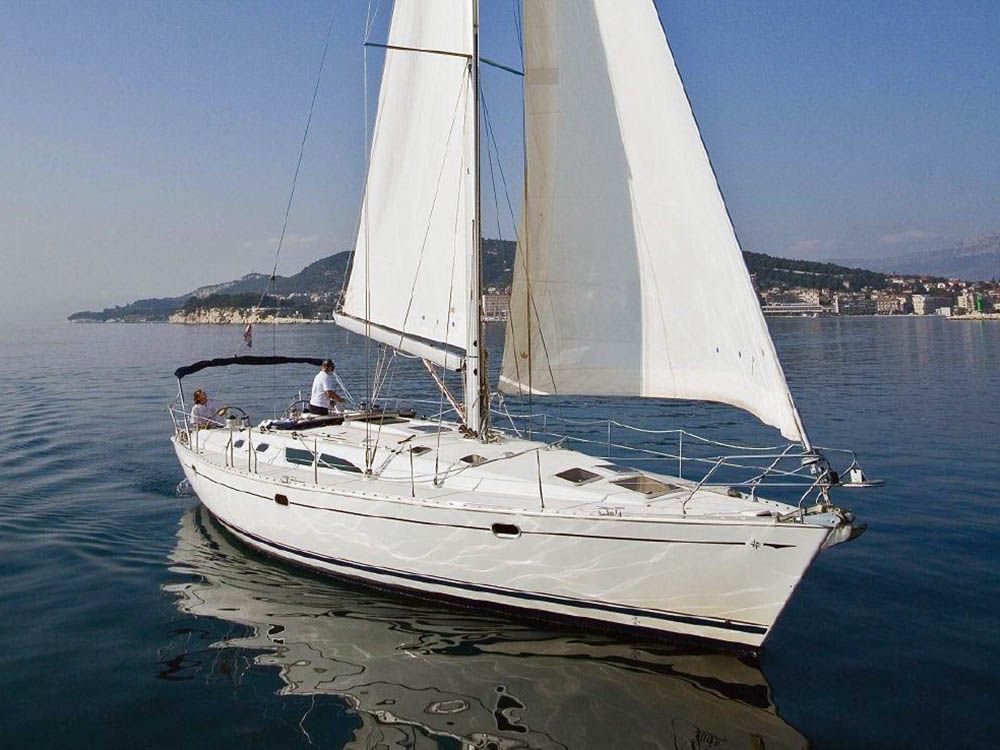
The Catalina 470 emphasizes seakeeping, roomy tankage and approachable systems that make extended cruising and liveaboard use straightforward, while the Sun Odyssey 45.2 places greater emphasis on hull form and rig tuning that reward active sailing and tighter windward performance. In practice, the Jeanneau will feel livelier and faster to windward, which benefits owners who prioritize passage speed and maneuvering under sail; the Catalina returns steadier motion, more forgiving behavior in confused seas and easier owner-level maintenance.
For a buyer, this translates into a practical choice: select the Catalina if durability, simple serviceability and offshore comfort are primary goals; choose the Jeanneau if you want sharper sailing manners and are willing to budget for sails, rig tuning and electronics that keep the boat performing.
► Learn more about de Jeanneau Sun Odyssey 45.2
Catalina 470 vs Hunter 460

Compared with the Hunter 460, the Catalina 470 shares the American cruise-first philosophy but tends to skew more toward heavier displacement and conservative engineering, whereas the Hunter trades slightly greater interior social space and simplified B&R rigging for some performance compromises. The Hunter’s cockpit and ergonomics make it exceptionally appealing to families and short-handed sailors prioritizing comfort and easy sail handling, while the Catalina focuses on ruggedness and systems accessibility for owners planning longer offshore runs.
Ownership implications are tangible: Hunters may be marginally easier to outfit for social cruising and weekend hospitality, whereas Catalinas often require less retrofit work to arrive at an offshore-capable platform—both approaches reduce ongoing yard time but in different ways.
► Learn more about de Hunter 460
Catalina 470 vs Beneteau Oceanis 461
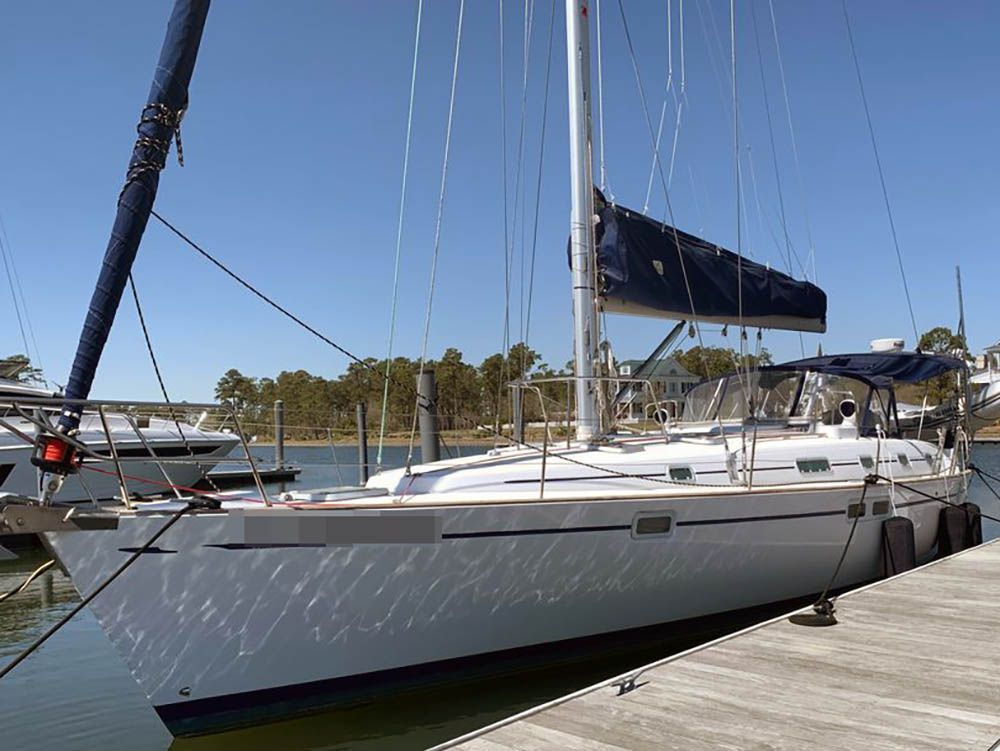
The Oceanis 461 tilts toward European design priorities—lighter displacement, crisper entries and a somewhat more performance-biased sail plan—while the Catalina 470 answers with heavier displacement, more tankage and a sturdier, maintenance-friendly systems layout. On passage the Oceanis will generally point higher and accelerate sooner in puffs, making it attractive to buyers who value passage pace; the Catalina offers a steadier motion, greater autonomy (fuel/water capacity) and simpler mechanical access that suits long-range cruising without frequent yard visits.
Practical buying guidance: if you plan predominantly coastal voyaging with occasional fast passages, the Oceanis may feel more rewarding; if you expect prolonged offshore legs, want larger tanks and want to do much of the servicing yourself, the Catalina’s design pays off in reduced logistical friction and peace of mind.
► Learn more about de Beneteau Oceanis 461
Maintenance Costs of a Catalina 470 in the USA
Active ownership costs vary with region, usage and condition, but an actively cruised Catalina 470 typically costs $11,000–$22,000 per year to maintain in practical working condition. Below is a commented list of recurring items with typical ranges and notes:
- Mooring or slip fees: $3,000–$10,000/year — (lower in Gulf regions, higher in New England or Southern California peak-season berths).
- Insurance: $1,200–$3,500/year — (hurricane-prone areas and offshore cruising plans increase premiums and deductibles).
- Engine servicing: $700–$1,800/year — (routine services; major injectors, gearboxes or transmissions raise costs substantially).
- Antifouling and bottom work: $1,200–$4,000/year — (warm-water, high-fouling areas require more frequent haul-outs and higher paint/labor costs).
- Standing and running rigging inspection / minor repairs: $400–$1,500/year for inspections and small repairs; full standing rig replacement $4,000–$10,000 every 10–15 years depending on mast length and fittings.
- Sail maintenance and replacement: $400–$1,500/year for repairs and servicing; new mainsail and headsail packages typically $8,000–$18,000 depending on materials and custom work.
One-time or periodic major costs to budget include sail inventory replacement ($8k–$18k), electronics and nav-comm refit ($3k–$15k), propeller upgrade to a folding/feathering type ($1k–$4k), and larger refits such as deck-core repairs or a comprehensive systems refit which can exceed $15k–$40k+. Many Catalina owners perform routine mechanical and cosmetic maintenance themselves (oil changes, pump rebuilds, varnish, canvas work), but specialized tasks—antifouling, mast removal, major electrical rewiring or structural repairs—usually require professional yards. Overall, the Catalina 470’s ownership cost sits in the medium range for a 45–47 ft cruising yacht: not inexpensive, but the straightforward systems and good parts availability tend to moderate long-term expenditure. Well-maintained examples generally retain reasonable resale value, and buyers who invest in the predictable upgrades often recover much of that expense at sale.
Conclusion
The Catalina 470 is a pragmatic, well-considered choice for sailors who prioritize durability, systems accessibility and comfort for extended cruising or liveaboard life; its strengths are robust construction, ample tankage and a design that reduces the friction of ownership. Its compromises—less sporty handling in light airs and a heavier feel under sail—are deliberate tradeoffs that reward owners who value predictability and lower-maintenance systems over the last knots of speed. For couples or families planning serious coastal cruising or intermittent offshore passages, the 470 is worth seeking out: when bought after a careful survey and supported by sensible preventive maintenance, it represents a solid investment with stable resale appeal within its class.
Specifications
| Hull Type | Fin w/ bulb & spade rudder |
| Rigging Type | Masthead Sloop |
| LOA | 47.67 ft / 14.53 m |
| LOD | 46.50 ft / 14.17 m |
| LWL | 42.00 ft / 12.80 m |
| Sail Area (reported) | 1,010.00 ft² / 93.83 m² |
| Beam | 14.00 ft / 4.27 m |
| Displacement | 27,270 lb / 12,369 kg |
| Ballast | 9,020 lb / 4,091 kg |
| Max Draft | 7.83 ft / 2.39 m |
| Construction | Fiberglass (FG) |
| First Built | 1998 |
| Builder | Catalina Yachts (USA) |
| Designer | Gerry Douglas |
Auxiliary Power / Tanks (Original Equipment) | |
|---|---|
| Make | Yanmar |
| Model | 4JHTE |
| Type | Diesel |
| Horsepower | 76 HP |
| Fuel Capacity | 84 gals / 318 L |
Accommodations | |
| Water Capacity | 214 gals / 810 L |
Sailboat Calculations | |
| S.A. / Displ. | 17.91 |
| Ballast / Displacement | 33.08% |
| Disp. / Len. | 164.32 |
| Comfort Ratio | 28.70 |
| Capsize Screening Formula | 1.86 |
| S# (Sail Area Index) | 3.29 |
| Hull Speed | 8.68 kn |
| Pounds/Inch Immersion | 2,100.99 lb/in |
Rig and Sail Particulars | |
| I | 58.25 ft / 17.75 m |
| J | 17.00 ft / 5.18 m |
| P | 51.50 ft / 15.70 m |
| E | 20.00 ft / 6.10 m |
| S.A. Fore | 495.13 ft² / 46.00 m² |
| S.A. Main | 515.00 ft² / 47.85 m² |
| Total Sail Area (100% Fore + Main) | 1,010.13 ft² / 93.84 m² |
| S.A./Displ. (calc.) | 17.91 |
| Estimated Forestay Length | 60.68 ft / 18.50 m |
| Mast Height from DWL | 63.33 ft / 19.30 m |
Disclaimer
The considerations and analyses presented regarding the Catalina 470 sailboat are of a general nature and are based on the available information and technical data on this model, interpreted to the best of our knowledge and understanding. It is important to note that the specific characteristics of any particular sailboat may vary due to custom modifications, maintenance performed, and conditions of use over time, among other factors. Therefore, the details and performance of the boat you are considering may not exactly match the information provided here.
We strongly recommend that, before making any purchasing or usage decisions, you conduct a detailed inspection of the boat in question, consult with nautical professionals and other sailors, and consider your personal needs, expectations, and capabilities. Each sailboat may have unique particularities that affect its performance and suitability for different types of sailing and sailors.
The information contained in this analysis should be used as a general guide and not as a definitive reference. Professional evaluation and personal inspection are essential to ensure that the boat meets your specific requirements and expectations.