


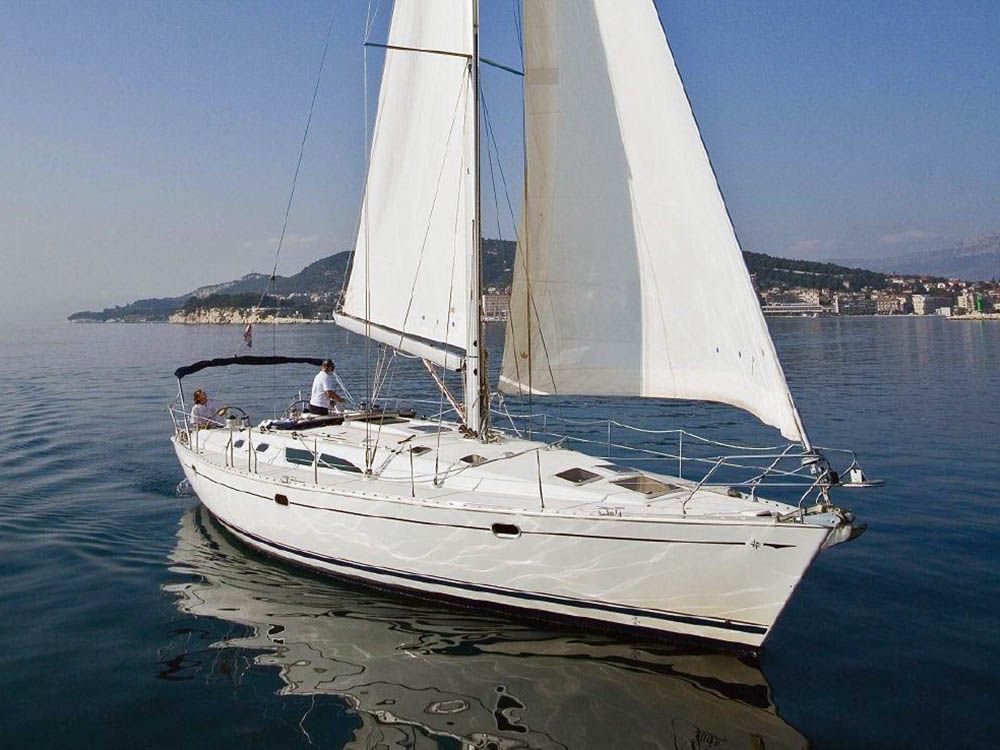
The Jeanneau Sun Odyssey 45.2 was introduced in the late 1990s as a performance-minded cruising yacht from Jeanneau, designed by an in-house team with input from naval architects focused on a comfortable but spirited cruising experience. Conceived as a cruiser with sporty credentials, the 45.2 targets couples and families who want a boat that balances passage-making ability with liveaboard comfort, and it has been popular on the second-hand market for owners who want a modern-feeling interior without sacrificing seakeeping. Over the years the model has attracted private cruisers and some charter operators in Europe and the U.S.; today it’s commonly sought by buyers who value sharper sailing manners than a volume-first production cruiser while still needing practical accommodations for family cruising.
Design and Construction
The Sun Odyssey 45.2 pairs a moderately fine entry and broad midship section with a fin keel and spade rudder, a hull form that encourages good upwind performance without penalizing interior volume too severely. Its standard sloop rig is set up to give balanced sail-area distribution, and construction typically relies on hand-laid fiberglass with strategic coring in the deck to save weight; this approach yields a structure that repairs readily in most yards but also requires careful inspection of through-deck fittings and core areas during survey. Jeanneau’s design philosophy for this model leans toward a slightly higher sail-area-to-displacement ratio than purely cruising counterparts, producing livelier acceleration and better pointing, while the construction choices (glass laminate schedules, laminated bulkheads) support durability and decent value retention when properly maintained.
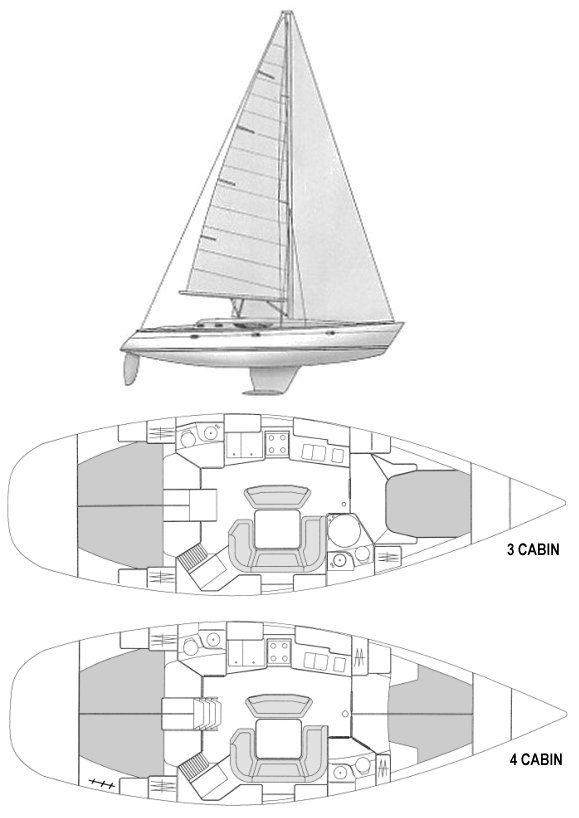
Performance
Under sail the 45.2 is known for a responsive helm and a willingness to accelerate through puffs; it will generally outpoint and feel livelier than production cruisers that prioritize interior volume above all. In light to moderate air the hull’s waterline length and sail plan allow steady cruising speeds and efficient passage-making; in heavier seas the boat balances well—its form stability reduces excessive roll while the rudder and balanced sail plan maintain control. Compared with similarly sized contemporaries it strikes a middle ground: noticeably more agile than heavy-displacement American cruisers, but not as extreme as pure performance cruisers, which makes it attractive to owners who want good cruising speeds without demanding race-level trimming.
Comfort and Accommodations
Jeanneau designed the 45.2’s interior to feel contemporary and airy for its era: generous headroom, an open saloon, and intelligently placed storage make life aboard comfortable for couples and families. Cabins are typically well-proportioned with practical lockers and decent ventilation; galley and navigation station layouts favor usability underway and at anchor, which helps when a small crew is managing longer passages. The finish tends to age gracefully when owners maintain joinery and soft goods, though many older examples show common cosmetic refits—upgraded upholstery, refreshed heads, or modern electronics—to match current expectations. For extended liveaboard use the 45.2 is fully capable, especially when owners tackle known service items early in ownership.
Safety and Practicality
Deck ergonomics and walk-around space are designed to keep crew movement straightforward in typical cruising conditions, and the cockpit layout supports watchkeeping and sheltered steering during longer trips. Systems access is reasonable—engine compartments and major service points are reachable without extreme dismantling—which makes routine maintenance and inspections manageable for hands-on owners and professional yards alike. While suitable for coastal and offshore passages, prudent buyers should budget for standard upgrades (improved ground tackle, up-to-date navigation and communications) to ensure the boat meets modern safety expectations for offshore work. Overall, she is a practical platform for couples or small crews who prioritize sensible safety systems and maintainability.
Known Issues with the Jeanneau Sun Odyssey 45.2
Across owner forums and survey notes the recurring items are familiar: potential deck core softening or leaks around older deck fittings, wear or fatigue in standing rigging on late-1990s examples, and the usual aging of engine mounts, hoses and seacocks. Osmosis is not typically endemic when hulls have been well maintained, but gelcoat wear and minor blistering can appear on neglected boats; thorough moisture testing at survey is recommended. Common buyer recommendations include renewing running rigging and halyards if original, updating sail inventory (roller furling units, reefing lines), and modernizing electronics—practical investments that improve safety, performance and resale appeal without structural alteration.
Market Availability and Pricing in the U.S.
The Sun Odyssey 45.2 is out of production and traded exclusively on the used market; U.S. availability concentrates in cruising hubs such as Florida, the Chesapeake, New England and parts of California, with clean, privately maintained boats and occasional ex-charter examples appearing. Typical asking prices depend on year, equipment and condition; well-equipped, survey-ready examples commonly list in the range of $110,000–$180,000, while project boats or older-outfitted models appear lower. Compared with direct alternatives the 45.2 often commands a fair premium for its sailing manners and contemporary interior layout—buyers frequently see it as a good value for those wanting a sportier cruiser that still offers family comfort and solid resale prospects.
Here’s a quick comparison with similar models:
| Model | LOA | Approx. Years Built | Typical Used Price (U.S.) | Main Differences |
|---|---|---|---|---|
| Jeanneau Sun Odyssey 45.2 | ≈46.4 ft | 1997–2003 | $110,000 – $180,000 | Performance-biased cruiser with contemporary interior and good upwind manners. |
| Beneteau Oceanis 461 | ≈46.6 ft | mid-1990s – early-2000s | $105,000 – $160,000 | More comfort-focused with slightly softer helm and European cruising bias. |
| Catalina 470 | ≈46–47 ft | 2000s | $125,000 – $265,000 | American robust systems, heavier displacement, emphasis on simple maintenance and bluewater comfort. |
| Hunter 460 | 46.1 ft | 1999–2001 | $99,500 – $145,000 | Volume-focused cruiser with B&R rig, spacious cockpit and easy short-handed handling. |
Jeanneau Sun Odyssey 45.2 vs Beneteau Oceanis 461
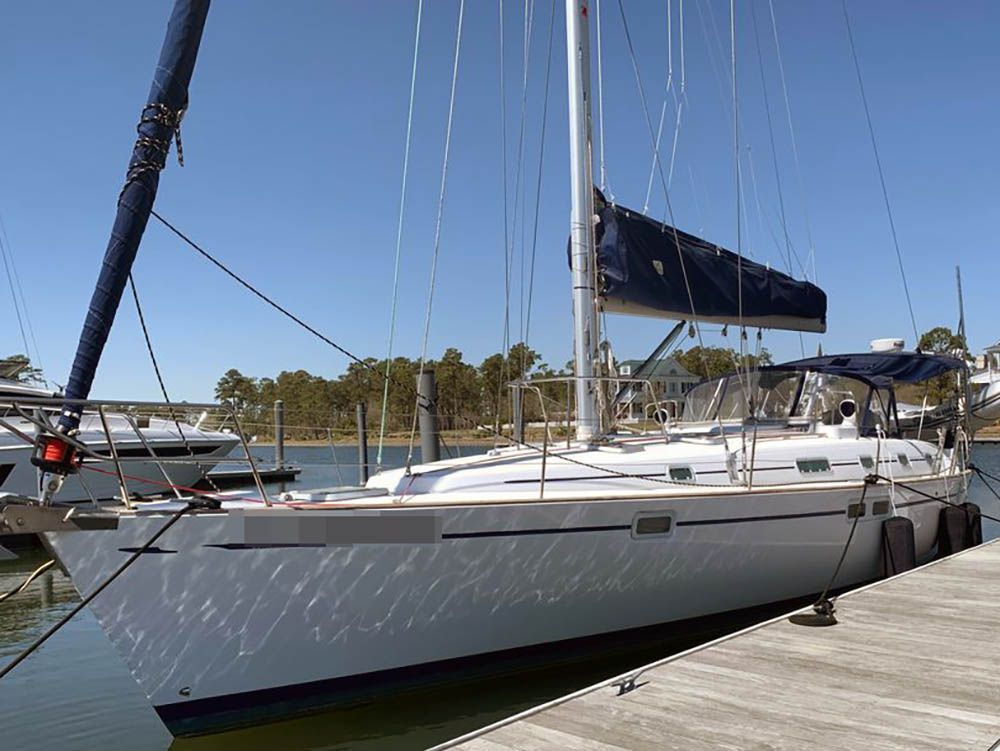
The Sun Odyssey 45.2 generally feels sharper and more performance-oriented than the Oceanis 461: its hull and rig choices give a crisper helm and better pointing ability, which benefits owners who value passage speed and tighter windward angles. The Oceanis, by contrast, leans more toward motion comfort and interior volume, so buyers trading down from an Oceanis to a Jeanneau should expect livelier handling and a slightly firmer ride.
Interiorly, the two offer similar levels of refinement for their era, but the Jeanneau’s layouts often favor ergonomics for a sailing couple who sail actively, while the Beneteau prioritizes social spaces and broad appeal; these differences translate into practical ownership choices—Jeanneau for those who sail to go fast, Beneteau for those who cruise in maximum onboard comfort.
► Learn more about de Beneteau Oceanis 461
Jeanneau Sun Odyssey 45.2 vs Catalina 470

Compared with the Catalina 470, the Sun Odyssey 45.2 presents a lighter, more agile sailing character: the Jeanneau will accelerate and tack with less energy, whereas the Catalina trades that responsiveness for heavier displacement and a steadier motion in big seas. For owners planning serious offshore or liveaboard programs, the Catalina’s robust systems and simpler mechanical layouts can be reassuring and easier to maintain in remote areas, while the Jeanneau rewards owners who prefer sailing performance and are willing to invest in higher-spec sail inventory and preventive maintenance.
In practical terms, the decision often comes down to priorities: choose the Sun Odyssey if you want a sportier family cruiser with good resale appeal among performance-minded buyers; choose the Catalina if you need a workhorse platform where rugged systems and owner-mechanic friendliness matter most.
► Learn more about de Catalina 470
Jeanneau Sun Odyssey 45.2 vs Hunter 460

The Jeanneau and the Hunter occupy similar market niches but approach them differently: the Sun Odyssey emphasizes sharper sailing manners and refined hull balance, while the Hunter 460 prioritizes cockpit comfort, simplified systems (B&R rig) and interior volume that reduce crew workload. Under sail the Jeanneau will typically feel more responsive and point higher to windward, making it a better choice for buyers who want to cover ground efficiently; the Hunter will appeal to those who prize protected cockpit ergonomics and lower perceived maintenance complexity.
Ownership considerations follow suit—Jeanneau owners often budget for sail and rig tuning to keep the boat performing, while Hunter owners may focus investments on systems maintenance and interior upgrades that sustain liveability and long-term resale to cruising families.
► Learn more about de Hunter 460
Maintenance Costs of a Jeanneau Sun Odyssey 45.2 in the USA
Typical annual ownership costs depend on region, usage and the boat’s condition; owners should budget $10,000–$20,000 per year for an actively cruised Sun Odyssey 45.2 kept in good order. Below is a commented list of recurring items with typical ranges and notes:
- Mooring or slip fees: $3,000–$10,000/year — (very location dependent; Florida and Gulf marinas tend to be cheaper than New England or Southern California summer berths).
- Insurance: $1,000–$3,000/year — (higher in hurricane zones or for cruising plans that include offshore passages).
- Engine servicing: $600–$1,500/year — (regular oil, filters, impeller, belts; injector or gearbox work increases costs).
- Antifouling and bottom work: $1,000–$4,000/year — (warm, high-fouling waters require more frequent hauling and paint).
- Standing and running rigging inspection / minor repairs: $400–$1,200/year for inspections and small repairs; full standing rig replacement $4,000–$9,000 every 10–15 years — (age of the rig is a major survey item).
- Sail maintenance and replacement: $300–$1,200/year for repairs and servicing; new sail inventory or major sails $6,000–$15,000 depending on fabrics and cutter vs. sloop setups.
Significant one-time expenditures frequently encountered include sail replacement ($6k–$15k), electronics/navigation refits ($3k–$12k), deck/core repairs or refastening ($5k–$25k+) and comprehensive refits if cosmetic or systemic updates are performed. Many owners can carry out routine mechanical maintenance and cosmetic work themselves—oil changes, basic electrical troubleshooting, varnish or upholstery refresh—which reduces annual costs, but antifouling, rig drops, major electrical or structural work generally require professional yards. For a 45-foot cruiser the overall cost sits in the medium range: neither the cheapest nor the most expensive to own, with reasonable upkeep allowing the boat to hold market value; well-maintained examples typically justify the investment through practical resaleability and robust owner satisfaction.
Conclusion
The Sun Odyssey 45.2 is a compelling option for buyers who want a true cruising boat with sporty tendencies: it blends agile, confidence-inspiring sailing characteristics with an interior and systems package that supports real cruising life. Its strengths are clear—good upwind performance for the size, a practical and comfortable cabin plan, and construction that responds well to regular maintenance—while its compromises are the expected demands of keeping a late-1990s performance cruiser tuned (rig checks, sail inventory, electronics upgrades). For couples or families focused on coastal passages and occasional offshore work who enjoy sailing actively, the 45.2 represents a strong balance of performance and habitability; for buyers seeking maximum interior volume or the simplest possible systems for remote bluewater work, other models may be more suitable. Overall, when purchased after a careful survey and tended to with sensible preventive maintenance, the Sun Odyssey 45.2 is worth seeking and typically offers stable resale value relative to its segment.
Specifications
| Hull Type | Fin w/ bulb & spade rudder |
| Rigging Type | Masthead Sloop |
| LOA | 46.42 ft / 14.15 m |
| LWL | 38.42 ft / 11.71 m |
| Sail Area (reported) | 1,001 ft² / 93.0 m² |
| Beam | 14.70 ft / 4.48 m |
| Displacement | 21,605 lb / 9,800 kg |
| Ballast | 8,102 lb / 3,675 kg |
| Max Draft | 5.25 ft / 1.60 m |
| Construction | Fiberglass (FG) |
| Years Built | 1997 – 2003 |
| Builder | Jeanneau (France) |
| Designer | Philippe Briand / Jeanneau Design Team |
| Engine | Yanmar Diesel, 59 HP |
| Fuel Capacity | 54 gals / 205 L |
| Water Capacity | 159 gals / 600 L |
| S.A. / Displacement | 20.73 |
| Ballast / Displacement | 37.50% |
| Displacement / Length | 170.07 |
| Comfort Ratio | 22.82 |
| Capsize Screening Formula | 2.12 |
| S# (Sail Area Index) | 3.09 |
| Hull Speed | 8.31 knots |
| Pounds/Inch Immersion | 2,018 lb/inch |
| Rig and Sail Dimensions (I / J / P / E) | I: 51.18 ft | J: 17.39 ft | P: 46.06 ft | E: 16.40 ft |
| Sail Area Foretriangle | 445.01 ft² / 41.34 m² |
| Sail Area Mainsail | 377.69 ft² / 35.09 m² |
| Total Sail Area (100% Fore + Main) | 822.70 ft² / 76.43 m² |
| S.A. / Displacement (calculated) | 17.04 |
| Estimated Forestay Length | 54.05 ft / 16.47 m |
Disclaimer
The considerations and analyses presented regarding the Jeanneau Sun Odyssey 45.2 sailboat are of a general nature and are based on the available information and technical data on this model, interpreted to the best of our knowledge and understanding. It is important to note that the specific characteristics of any particular sailboat may vary due to custom modifications, maintenance performed, and conditions of use over time, among other factors. Therefore, the details and performance of the boat you are considering may not exactly match the information provided here.
We strongly recommend that, before making any purchasing or usage decisions, you conduct a detailed inspection of the boat in question, consult with nautical professionals and other sailors, and consider your personal needs, expectations, and capabilities. Each sailboat may have unique particularities that affect its performance and suitability for different types of sailing and sailors.
The information contained in this analysis should be used as a general guide and not as a definitive reference. Professional evaluation and personal inspection are essential to ensure that the boat meets your specific requirements and expectations.