



The Dufour 310 Grand Large is a modern small cruiser from Dufour Yachts positioned as a fast, comfortable family cruiser rather than a stripped-down racer or an offshore passagemaker. Conceived by Umberto Felci and introduced as part of Dufour’s Grand Large line in the mid-2010s, the 310 brings design details—twin rudders, twin wheels and a fractional sloop rig with an easy, short-luffed headsail—that aim to simplify short-handed sailing while keeping good sailing performance. The model was launched as a “small but roomy” boat to appeal to couples and young families who want a lively helm, usable interior volume and modest systems costs; it has since found most of its sales in Europe and the Mediterranean and is gradually appearing on the second-hand market outside Europe for owners seeking compact comfort. If you’re shopping the used market today you will generally find the 310 as a European import or in charter fleets rather than as a common domestic U.S. model.
Design and Construction
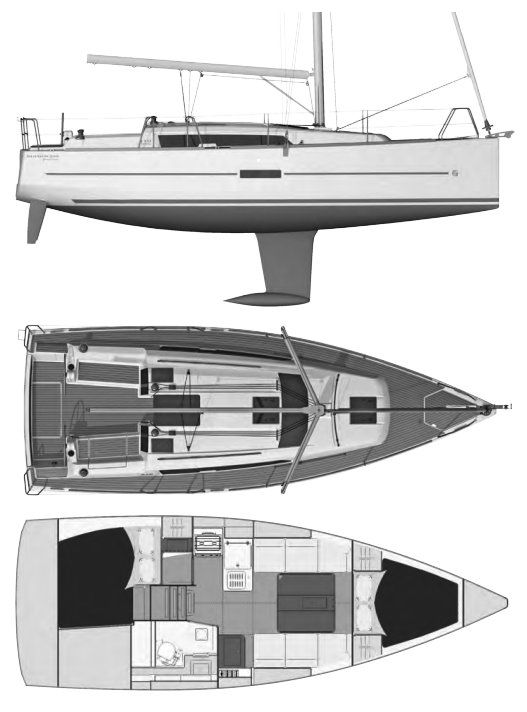
The 310’s hull is a contemporary fin-keel form with a relatively beamy aft section and twin rudders, a configuration chosen to preserve control and grip while the boat heels—a clear trend for cruisers that want good control without an overly deep keel. The standard Dufour Grand Large deck layout puts control lines led back to the cockpit, and many 310s were built with a self-tacking (short-luffed) jib and a mainsail optimized for easy trimming, which reduces crew workload under sail.
Construction is conventional hand-laminated fiberglass with core reinforcements where loads concentrate; Felci’s lines and Dufour’s production methods aim for a light but stiff hull that balances performance with straightforward repairability. Double steering wheels and twin rudders are notable features that influence both handling and maintenance: they help with helm balance and allow a lower freeboard cockpit seating position, but add extra moving parts (linkages, bearings, rudder stocks) to inspect over the years. Overall the design choices favor owner-cruisers who want something simple to sail and economical to maintain, while still offering the on-water manners to be engaging under sail.
Performance
On the water the Dufour 310 tends to be lively and responsive for a thirty-foot cruiser. Test reports and owner feedback note that she is enjoyable to helm, accelerates well in moderate breeze and points respectably for a cruiser of this class; the self-tacking jib makes upwind work easy with a short-handed crew, though off-wind sail area with just the small jib can feel limited unless a larger genoa or asymmetric is used. The twin rudders give good bite when heeled, improving control in stronger conditions, while the relatively light displacement for the length helps in light airs. Compared with older traditional 31-foot cruisers, the 310 skews toward sportier handling without compromising comfort—she’s not a racing thoroughbred but is often described as nearer the “cruiser-racer” end of the small cruiser market.
Comfort and Accommodations
Inside, the 310 squeezes generous volume into a 31-foot hull: the saloon is bright, the companionway is wide and the layouts offered (usually one or two cabins plus heads) make the boat flexible for a couple or a small family. Storage is reasonable for weekend to week-long cruising, and the onboard tankage and systems are sized for coastal cruising rather than extended blue-water autonomy; in practical terms most owners use this model for weekending, coastal cruising and short passages rather than full-time liveaboard life. The ergonomics are contemporary—flat-panel surfaces, modern joinery—and the interiors generally respond well to modest refits (cushions, upholstery, galley tweaks). It is possible to live aboard for long stretches if you’re disciplined about provisioning and systems care, but prospective buyers who plan long-term liveaboard life should budget for extra water capacity, refrigeration and personal comfort upgrades.
Safety and Practicality
Deck layout, low-profile coachroof and a cockpit designed with good seating and clear sightlines make the 310 inherently safe for family sailing in coastal waters. Twin rudders help keep steerage when the boat heels, and the fractional rig with a small jib reduces risk on short-handed voyages; however, the swept spreader / minimal-backstay rigs common on many modern cruisers mean you should be attentive to rig tuning and mast-base loads. Boarding and tender access are straightforward with the extended swim platform options available on some examples, and systems are typically accessible enough for owner maintenance—engine, steering linkages and through-hull fittings are placed to permit regular inspections without exotic tools. For coastal cruising the boat is very capable as-built; for offshore work a buyer should consider additional safety and redundancy upgrades (liferaft stowage, upgraded navigation/communication, and deeper keel options if available).
Known Issues with the Dufour 310 Grand Large
Owners and brokers report a handful of recurring themes rather than any systemic design failures. Forum threads and owner groups mention attention points such as localized deck-fitting fatigue (chainplate and cleat backing), the expected wear items on twin steering systems, and the ordinary risks for moderate-age GRP hulls (stress at keel/hull joints and sealant degradation around deck penetrations). Osmosis is not a common complaint on the 2014+ hulls in the Grand Large line, but as with any fiberglass boat exposure and maintenance history matter; older or poorly stored examples can present gelcoat blisters or soft patches. Propeller and shaft configuration, as on many production cruisers, is a place where owners often upgrade for better motoring efficiency (e.g., a folding three-blade or performance two-blade), and electronics packages on older boats are frequently replaced to bring navigation and communications up to current standards. Practical buyer guidance: check chainplate and toerail bonding, inspect rudder stocks and steering bearings, review engine hours and service history, and budget for modest cockpit-fitting re-seals and electronics refreshes.
Market Availability and Pricing in the U.S.
Dufour built the 310 Grand Large starting in the mid-2010s and most examples are still concentrated in European markets; U.S. listings exist but are sporadic, with many boats sold through Mediterranean and northern European brokers and occasional imports appearing on the East Coast or via Caribbean resales. Typical asking prices on international broker sites in recent years have clustered roughly between €70,000 and €115,000 (roughly $75,000–$125,000 depending on year, gear and location), with lower-priced examples usually being ex-charter or needing work and the better-equipped boats toward the top of that range.
In the U.S. market you should expect additional import costs, commissioning and possible gear upgrades; when Dufour 310s appear in U.S. listings they often command a premium for delivery and compliance work. Compared with direct rivals, the 310 usually undercuts newer Jeanneau/Beneteau offerings on entry price while offering a sportier driving feel than some American-built cruisers, which explains its modest but steady demand among coastal cruisers and couples seeking a capable weekend boat.
Below is a comparison with similar sailboats from the same era:
| Model | LOA | Approx. years built | Typical used price (U.S. market) | Principal differences / notes |
|---|---|---|---|---|
| Jeanneau Sun Odyssey 349 | ~34 ft | 2014–2020+ | $120,000–$210,000 | Roomier, heavier displacement, strong dealer network in the U.S.; tends to command higher used prices. |
| Beneteau Oceanis 31 | ~31.7 ft | 2006–2014 | $70,000–$110,000 | Similar LOA and focus on cruising comfort; older designs often cheaper but with less modern deck ergonomics. |
| Catalina 315 | ~31 ft | 2010s–present | $130,000–$200,000 | American-market support, emphasis on robust build and owner serviceability; often priced higher in U.S. listings. |
Dufour 310 Grand Large vs Jeanneau Sun Odyssey 349

The Dufour 310 feels more oriented to a sportier helm and ease of short-handed sailing, whereas the Jeanneau 349 prioritizes interior volume and an established dealer support network—Jeanneau’s 349 generally offers a heavier, more sea-kindly displacement that many buyers equate with “built for cruising comfort.” In practical ownership terms the 349 can be easier to resell within the U.S. because of dealer penetration and local parts support, while the 310 can offer slightly sharper performance and lower initial price for comparable years.
The 349’s interior layout and tankage tend to suit buyers who want a more robust cruising platform for families, while the 310 appeals to sailors who want livelier handling and don’t mind importing or sourcing parts internationally. Maintenance patterns differ: Jeanneau examples often trade on easier access to replacement gear and national service, while Dufour owners should budget a little more time or broker help for parts and commissioning when relocating a boat from Europe.
► Learn more about de Jeanneau Sun Odyssey 349
Dufour 310 Grand Large vs Beneteau Oceanis 31
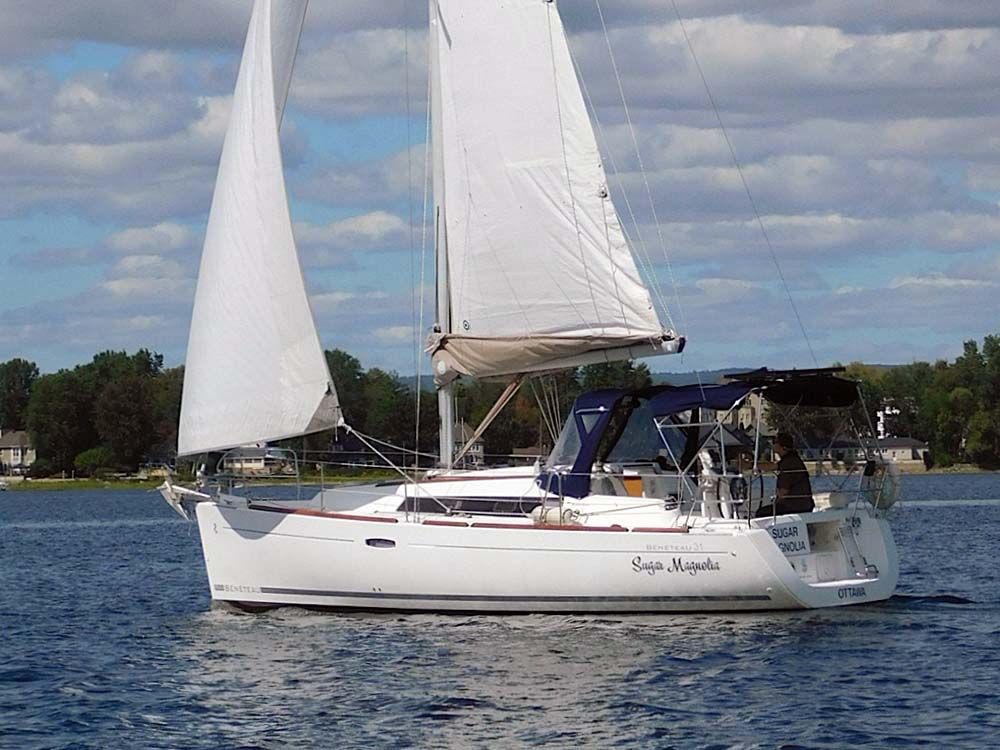
Compared to the Oceanis 31, the Dufour 310 is the more modern in-feel boat with contemporary deck ergonomics and twin rudders that favor control at heel; the Oceanis 31’s older Finot/Conq hulls are proven and often cheaper to buy used. A buyer choosing the Oceanis 31 is usually prioritizing upfront price and parts availability—there are many more Beneteau examples globally—while the Dufour buyer is buying a fresher layout and a slightly sportier personality.
For owners focused strictly on weekend family cruising and minimal refit work, the Oceanis 31’s simpler systems and deeper availability of spare parts can reduce ongoing cost and hassle. Conversely, the Dufour often wins on cockpit ergonomics and driving pleasure, making it better suited to sailors who value on-water experience as much as below-decks comfort.
► Learn more about de Beneteau Oceanis 31
Dufour 310 Grand Large vs Catalina 315

The Catalina 315 competes on robustness and U.S. market friendliness—Catalina’s emphasis on owner-maintainability and a U.S. parts/service infrastructure makes the 315 attractive to buyers who prefer low friction ownership. By contrast the Dufour trades some of that local convenience for a sleeker European deck plan and a more performance-tilted hull form; in short, the 310 will feel sportier, while the 315 will feel more familiar to American owners used to straightforward maintenance.
If your priority is a dealer network, ease of warranty or local service and resale in U.S. waters, the Catalina often has the edge; if you prize sharper sailing manners and are comfortable importing parts or using international brokers, the Dufour can deliver higher sailing engagement for the same LOA at a competitive price.
► Learn more about de Catalina 315
Maintenance Costs of a Dufour 310 Grand Large in the U.S.
Annual and recurring (typical U.S. ranges):
- Mooring / slip fees: $2,000–$12,000 per year — varies hugely by region (low in small harbors, very high in major marinas such as San Francisco, Newport or Miami).
- Insurance: $500–$1,800 per year — depends on coverage, location, and owner’s experience.
- Engine servicing (annual): $300–$900 — routine oil/filter, impeller, and winterization/commissioning where applicable.
- Antifouling & haulout: $700–$2,500 per year — depending on paint used, frequency, and regional labor rates.
- Standing & running rigging inspection / partial replacement reserve: $300–$2,000 per year averaged; full standing rig replacement every 10–15 years ~$3,000–$7,000.
- Sails (maintenance & replacement reserve): $200–$1,000 annually for repairs; expect $3,000–$8,000 for a new full sail inventory (mainsail + headsail) depending on cut and fabric.
One-time / episodic costs: new electronics/navigation suite ($2,000–$8,000), rigging renewal (every decade), prop/shaft work ($800–$3,000), major gelcoat or structural repairs (wide range; small local repairs $500–$3,000, larger keel/hull jobs much more).
Geographic differentiation is material: moorings, haulout and labor in California/New England can be 25–100% higher than Gulf or inland regions. The Dufour 310 is broadly owner-serviceable for routine items (valve checks, routine mechanical servicing, sanding and varnish touch-ups), but more complex structural or electronics work will usually require professional yards—especially if the boat has been imported and needs U.S. electrical or emission compliance work. For a 31-foot modern cruiser the overall cost profile is medium: not as cheap as an older bare-bones 30-footer, but generally lower than larger 35–40-foot cruisers; resale values and the boat’s sporting character tend to offset maintenance outlays if the vessel is well kept.
Conclusion
The Dufour 310 Grand Large is a compact cruiser that thoughtfully blends engaging sailing manners with practical cruising comforts. Its strengths are contemporary deck ergonomics, twin rudders and easy-to-manage sail plan that make short-handed sailing straightforward; it is especially well suited to couples or small families who want an active sailing boat for weekend outings and regional coastal cruises. Weaknesses for some buyers are the relative scarcity of U.S. dealer support (most boats are European examples), the need to budget for import or commissioning expenses in the U.S., and the normal aging items found on any production GRP boat.
Is it worth hunting for one? For a buyer who prioritizes sailing feel and modern ergonomics at a competitive used price, the 310 is a solid contender and often delivers very good value for coastal cruising. For buyers who demand the easiest possible resale and the broadest domestic dealer support, a Jeanneau, Beneteau or Catalina with a strong U.S. presence may be preferable. In short: the Dufour 310 is a sensible, reasonably priced choice for coastal and weekend cruising with sporty handling—just inspect systems carefully, budget for modest upgrades, and expect the best resale prospects among buyers who value performance-leaning small cruisers.
Specifications
| Hull Type | Fin w/bulb & dual rudders |
| Rigging Type | Fractional Sloop |
| LOA | 31.73 ft / 9.67 m |
| LWL | 28.54 ft / 8.70 m |
| Sail Area (reported) | 542.50 ft² / 50.40 m² |
| Beam | 10.86 ft / 3.31 m |
| Displacement | 10,891 lb / 4,940 kg |
| Ballast | 2,932 lb / 1,330 kg |
| Max Draft | 6.23 ft / 1.90 m |
| Construction | Fiberglass (FG) |
| First Built | 2014 |
| Builder | Dufour |
| Designer | Umberto Felci |
| Auxiliary Power / HP | 19 HP |
| Fuel Tank | 24 gals / 91 L |
| Water Tank | 42 gals / 159 L |
| Sail Area / Displacement | 17.73 |
| Ballast / Displacement | 26.92 |
| Displacement / Length | 209.15 |
| Comfort Ratio | 23.81 |
| Capsize Screening Formula | 1.96 |
| Sail Area Number (S#) | 2.49 |
| Hull Speed | 7.16 kn |
| Pounds / Inch Immersion | 1,107.47 lbs/in |
| I | 40.35 ft / 12.30 m |
| J | 10.83 ft / 3.30 m |
| P | 38.25 ft / 11.66 m |
| E | 14.27 ft / 4.35 m |
| S.A. Fore | 218.50 ft² / 20.30 m² |
| S.A. Main | 272.91 ft² / 25.35 m² |
| S.A. Total (100% Fore + Main) | 491.41 ft² / 45.65 m² |
| S.A. / Displacement (calc.) | 16.06 |
| Estimated Forestay Length | 41.78 ft / 12.73 m |
Disclaimer
The considerations and analyses presented regarding the Dufour 310 Grand Large sailboat are of a general nature and are based on the available information and technical data on this model, interpreted to the best of our knowledge and understanding. It is important to note that the specific characteristics of any particular sailboat may vary due to custom modifications, maintenance performed, and conditions of use over time, among other factors. Therefore, the details and performance of the boat you are considering may not exactly match the information provided here.
We strongly recommend that, before making any purchasing or usage decisions, you conduct a detailed inspection of the boat in question, consult with nautical professionals and other sailors, and consider your personal needs, expectations, and capabilities. Each sailboat may have unique particularities that affect its performance and suitability for different types of sailing and sailors.
The information contained in this analysis should be used as a general guide and not as a definitive reference. Professional evaluation and personal inspection are essential to ensure that the boat meets your specific requirements and expectations.