


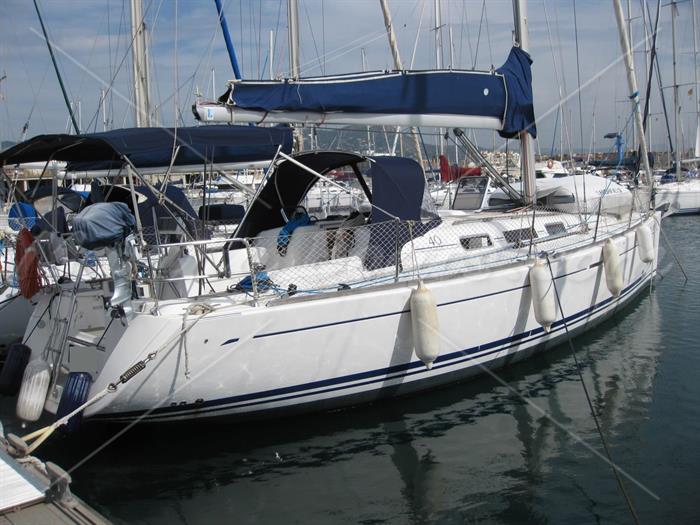
The Dufour 40 emerged in the early 2000s as a modern performance-oriented cruiser aimed at sailors who wanted the comfort of a family cruiser without surrendering the joy of sailing. Conceived with hull lines by Umberto Felci and deck/layout input from Patrick Roséo, the Dufour 40 arrived as part of Dufour’s push toward lighter, stiffer construction and smarter deck ergonomics — a trend that produced both “Performance” and “Grand Large” variants. The target owner was a couple or small family who cruised the coast and occasionally pushed farther offshore, but who also cared about sensible deck control layouts for short-handed sailing. On the used market the 40 has a steady following: it’s popular with private owners and small charter operators in Europe and appears regularly on international broker sites; U.S. availability is more fragmented but buyers in coastal pockets (Pacific Northwest, New England, Florida) do find well-kept examples.
Design and Construction
The Dufour 40 pairs a relatively beamy, modern hull form with a fin keel and spade rudder which together favor agility and pointing ability without sacrificing interior volume. Rigged typically as a fractional sloop, the boat’s deck was laid out to bring primary and reefing controls close to the helmsman — a clear nod to short-handed practicality. Construction techniques on later Dufour 40 variants moved toward vacuum-bagged or injected sandwich decks and reinforced laminates, which trim weight aloft, increase stiffness and lower the center of gravity; those choices improve both performance and seakeeping while reducing long-term structural creep.
For a buyer this design philosophy matters: the vacuum-injected deck and sandwich hull reduce maintenance headaches linked to deck flex and leaks, and standard fiberglass repair shops can address most routine damage. The tradeoff is that high-performance laminates and more complex layups can make some structural repairs costlier than on older, simpler production boats — but the payoff is a boat that sails more efficiently and tends to command better residual value when properly maintained. In naval-architecture terms the Dufour 40 seeks a sweet spot between sail-area-to-displacement and a ballast ratio tuned to give affirmative stability without the heavy, sedate motion of full-keel cruisers.
Performance
On the water the Dufour 40 generally behaves like a modern performance cruiser: it accelerates briskly in light to moderate air, points well, and feels responsive on the helm. In flat to moderate seas owners report steady tracking and good control; when seas steepen the hull’s lighter displacement (versus classic full-keel cruisers) produces livelier motion, but the righting moment and ballast configuration usually provide reassuring stability under reefed sail. Compared with contemporaries such as the Beneteau Oceanis 40 or Jeanneau 409, the Dufour 40 tends to sit slightly closer to the “performance” end of the family cruiser spectrum—faster off the wind and handier in tacks—while not being an outright racer. This blend suits sailors who want efficient passages without the complexity or cost of a high-performance campaign.
Comfort and Accommodations
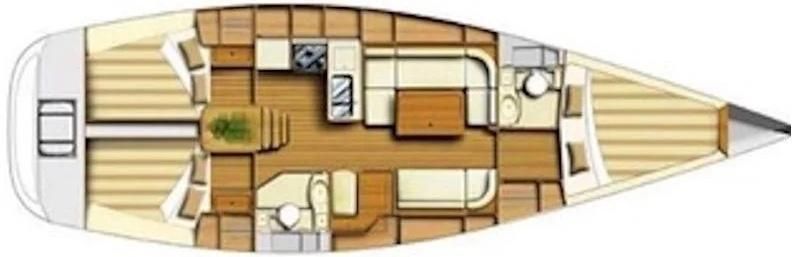
Internally, the Dufour 40 was arranged to maximize liveable space: several layout options allowed owners to pick two-cabin owner versions or three-cabin family formats, and storage is generally good for the class. The saloon tends to be bright and practical, with a functional galley and decent headroom for comfortable weekending and extended seasonal cruising. Ventilation and natural light are typically strong thanks to large coachroof ports and hatches, and joinery finishes on many examples remain attractive if they have been well cared for.
For a couple or family the Dufour 40 can be a comfortable liveaboard for seasonal cruising; full-time liveaboard owners often upgrade refrigeration, heating or water systems to suit year-round use. It’s common to see tasteful owner refits that modernize upholstery, electronics and galley equipment—upgrades that materially enhance everyday comfort and often increase resale appeal.
Safety and Practicality
Deck ergonomics emphasize safe crew movement: wide sidedecks, reliable handholds, and the option to lead sheets aft to the cockpit make passage handling and short-handed sailing practical. The fractional sloop rig reduces the need for large overlapping genoas and simplifies reefing, which benefits safety in changing conditions. Access to service points—engine bay, through-hull fittings and primary seacocks—is reasonable on most examples, lowering the barrier to routine maintenance.
As sold, the Dufour 40 is best described as a coastal-to-offshore cruiser rather than a commercial passagemaker: with prudent upgrades (redundant comms, updated safety kit, thorough rig inspection and prudent seacock maintenance), it is perfectly capable of longer passages, but buyers should factor in modern electronics and safety investments if they plan blue-water work. The relative simplicity of common systems makes servicing and parts sourcing straightforward in many regions.
Known Issues with the Dufour 40
Problems reported by owners tend to be typical of production boats from the same era rather than unique design failures. Recurring items to watch for in surveys and listings include: aged standing rigging (inspect for corrosion or stretch), deferred bedding and sealant failure around deck fittings and hatches which can lead to leaks, routine diesel wear items (heat exchanger, injectors, exhaust) and cosmetic gelcoat wear or small blisters on older hulls. Chainplate areas and deck-to-hull joints merit a careful look on any candidate boat.
Commonly recommended upgrades and preventive measures include replacing older sails with modern, lighter materials to improve light-air performance, installing a folding or feathering prop for better motoring efficiency and reduced drag, upgrading autopilot and navigation electronics for safe short-handed passage making, and resealing deck fittings as preventive maintenance. These interventions are straightforward, widely practiced, and typically raise both safety and value. A professional pre-purchase survey is essential to separate routine maintenance from larger structural or osmosis issues.
Market Availability and Pricing in the U.S.
The Dufour 40 is out of production and appears primarily on the used market; current U.S. availability is limited compared with more common domestic brands, but examples do appear—particularly in the Pacific Northwest and among listings for European imports. Recent listing snapshots show asking prices commonly falling in the $100,000–$140,000 range for mid-2000s models, with variation driven by year, refit level, location and whether the boat is a Performance or Grand-Large version. Buyers in the U.S. should add realistic budgets for commissioning, possible US import costs, and system upgrades if the boat has been primarily European-based.
Here’s how it compares to similar models:
| Model | LOA | Approx. Years Built | Typical U.S. Used Price | Main Differences |
|---|---|---|---|---|
| Dufour 40 (Performance / Grand Large) | ~40 ft | ~2003–2010 | $100,000–$140,000 | Performance-leaning variants; European production; varied keel/rig options; good balance of comfort and sailing ability. |
| Beneteau Oceanis 40 | ~40 ft | ~2005–2012 | $95,000–$160,000 | Comfort-focused European cruiser with broad dealer network and many layout options; often similar pricing. |
| Jeanneau Sun Odyssey 409 | ~40 ft | ~2011–2016 | $150,000–$230,000 | Newer design era, injected deck tech, often more modern systems and higher U.S. asking prices for late models. |
| Catalina 400 | ~40 ft | ~1996–2004 | $80,000–$140,000 | U.S. domestic market focus, strong dealer/service network and value pricing on used examples; more conservative hull tuning. |
Dufour 40 vs Beneteau Oceanis 40
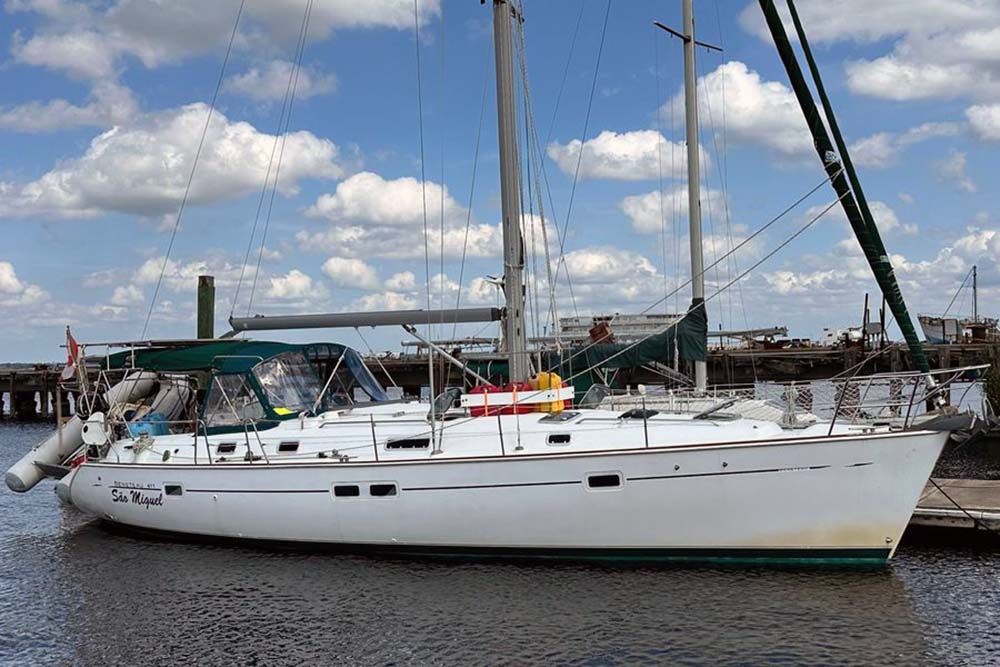
Both boats are European production cruisers that prioritize interior volume and accessible sailing, but the Dufour 40’s Performance variants tilt the balance slightly toward livelier sailing and crisper helm feel. The Beneteau typically emphasizes cruising comfort and may have broader dealership presence in some U.S. regions, which can simplify service and resale.
For buyers this means the Dufour is attractive when light-air performance and a more engaged sailing experience matter; the Oceanis may be preferable when dealer support, interior layout variety and a mainstream used-market audience are higher priorities.
► Learn more about de Beneteau Oceanis 40
Dufour 40 vs Jeanneau Sun Odyssey 409

The Jeanneau 409, being a newer generation in many listings, often brings more modern systems and refinements in deck ergonomics, while the Dufour 40—especially in Performance form—can feel slightly faster and more responsive under sail. Jeanneau examples may command higher asking prices for later builds but offer contemporary conveniences that reduce immediate upgrade costs.
Buyers who value later-model electronics, contemporary creature comforts and dealer support might favor the Jeanneau; owners who prioritize sharper sailing and potentially lower acquisition cost on older, well-set-up Dufour hulls will find the Dufour compelling.
► Learn more about de Jeanneau Sun Odyssey 409
Dufour 40 vs Catalina 400
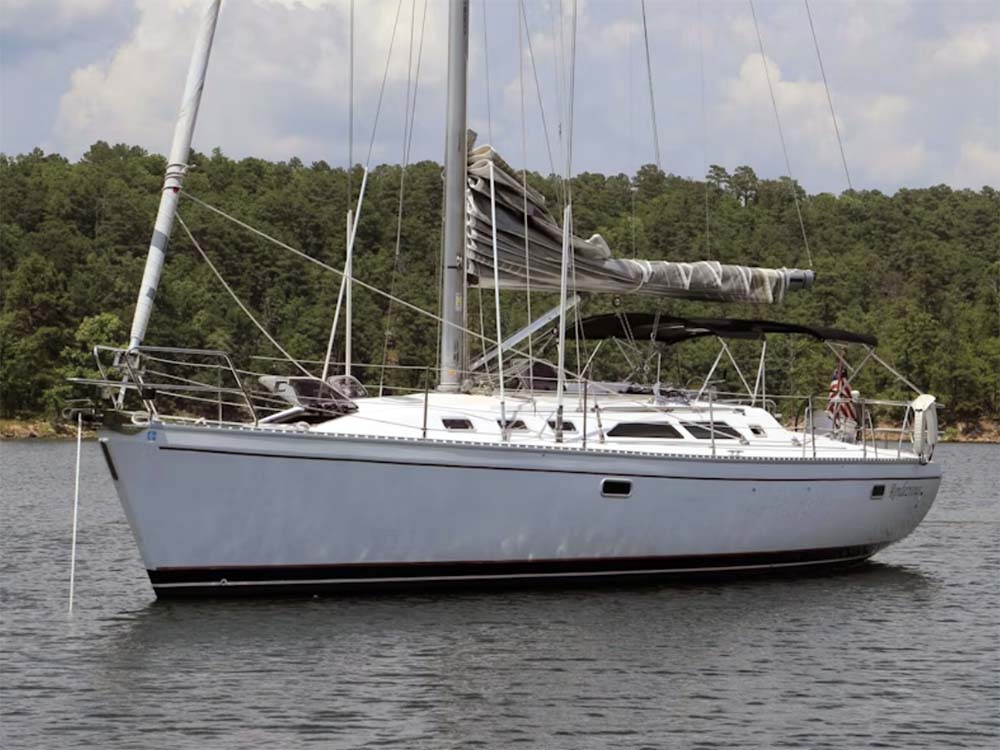
Catalina’s U.S.-centric design and support network typically make ownership logistically simpler in North America, and older Catalina 400s can be attractively priced. The Dufour tends to ship a more European sailing character—better light-air acceleration and a more modern underwater profile—while Catalinas are often praised for roomy cockpits and robust, straightforward systems.
A pragmatic buyer who wants easy local service and parts will appreciate a Catalina; a buyer who values sharper sailing dynamics and doesn’t mind sourcing some parts from European channels will prefer the Dufour.
► Learn more about de Catalina 400
Maintenance Costs of a Dufour 40 in the USA
Below are typical annual and periodic maintenance items presented as a clear bulleted list; each item is bold for emphasis.
- Mooring / Slip (annual): $3,000–$12,000 depending on marina and region.
- Insurance (annual): $800–$3,000 depending on coverage, cruising area and owner experience.
- Engine servicing (annual): $400–$1,500 for routine service; major repairs cost more.
- Antifouling (every 1–2 years): $700–$2,500 depending on haulout, paint and labor.
- Standing rigging inspection / replacement (every 8–15 years): $1,500–$6,000 depending on scope.
- Running rigging and sail repairs/replacement: $200–$4,000 annually; a full sail wardrobe replacement typically runs $4,000–$12,000.
- Electrical / electronics upgrades (one-time or cyclical): $1,000–$12,000 depending on scope (chartplotter, AIS, batteries, inverter).
- Survey and immediate repairs (one-time when buying): $2,000–$10,000+ depending on findings.
- Winterization and commissioning (seasonal): $300–$1,200 depending on region and services.
Regional differences matter: labor, slip fees and insurance in New England or California can be significantly higher than in the Southeast or Great Lakes. Significant one-time costs typically include sail replacement, a major electronics refit and any bottom work for blister repair or keel servicing identified in a survey. Many routine tasks (oil changes, basic rig tune, cockpit hardware replacement) can be handled by an experienced owner, but major rigging, diesel overhauls and complex electrical work generally require professional yards. Overall the Dufour 40’s maintenance profile is medium for a 40-foot cruiser: neither budget-minimal nor luxuriously expensive, and good maintenance helps preserve resale value in a competitive used market.
Conclusion
The Dufour 40 is a well-rounded package for buyers who want a modern, capable cruiser that still rewards active sailing. Its strengths lie in a design that balances interior comfort, practical systems and a hull/rig that sails confidently in typical coastal and moderate offshore conditions. Weaknesses are not dramatic design faults but the normal wear-and-age issues found on mid-2000s production boats—rigging, sails, sealant and occasional gelcoat or blister attention—that sensible buyers will budget for and address in a survey-driven purchase.
For couples, families and coastal cruisers who want a boat that can double as an efficient passage vessel and an agreeable liveaboard platform, the Dufour 40 is a compelling choice: it generally offers good value on the used market and, when properly maintained, holds resale appeal. Sourcing a well-surveyed example with recent sails and electronics will make the ownership experience straightforward and relatively economical compared with newer, more complex yachts.
Specifications
| Hull Type | Fin w/bulb & spade rudder |
| Rigging Type | Fractional Sloop |
| LOA | 40.42 ft / 12.32 m |
| LWL | 35.24 ft / 10.74 m |
| S.A. (reported) | 866.41 ft² / 80.49 m² |
| Beam | 12.80 ft / 3.90 m |
| Displacement | 17,196 lb / 7,800 kg |
| Ballast | 6,206 lb / 2,815 kg |
| Max Draft | 5.41 ft / 1.65 m |
| Construction | Fiberglass (FG) |
| Ballast Type | Cast Iron |
| First Built | 2005 |
| Builder | Dufour Yachts |
| Designer | Umberto Felci |
| Auxiliary Power Type | Diesel |
| Engine Power | 40 HP |
| Fuel Capacity | 42 gals / 160 L |
| Water Capacity | 87 gals / 330 L |
| S.A. / Displ. | 20.89 |
| Bal. / Displ. | 36.09 |
| Disp. / Len. | 175.42 |
| Comfort Ratio | 24.22 |
| Capsize Screening Formula | 1.99 |
| S# | 3.10 |
| Hull Speed | 7.95 kn |
| Pounds/Inch Immersion | 1,611.73 pounds/inch |
| I | 48.10 ft / 14.66 m |
| J | 13.75 ft / 4.19 m |
| P | 46.75 ft / 14.25 m |
| E | 17.22 ft / 5.25 m |
| S.A. Fore | 330.69 ft² / 30.72 m² |
| S.A. Main | 402.52 ft² / 37.40 m² |
| S.A. Total (100% Fore + Main Triangles) | 733.21 ft² / 68.12 m² |
| S.A. / Displ. (calculated) | 17.67 |
| Est. Forestay Length | 50.03 ft / 15.25 m |
| Mast Height from DWL | 57.91 ft / 17.65 m |
Disclaimer
The considerations and analyses presented regarding the Dufour 40 sailboat are of a general nature and are based on the available information and technical data on this model, interpreted to the best of our knowledge and understanding. It is important to note that the specific characteristics of any particular sailboat may vary due to custom modifications, maintenance performed, and conditions of use over time, among other factors. Therefore, the details and performance of the boat you are considering may not exactly match the information provided here.
We strongly recommend that, before making any purchasing or usage decisions, you conduct a detailed inspection of the boat in question, consult with nautical professionals and other sailors, and consider your personal needs, expectations, and capabilities. Each sailboat may have unique particularities that affect its performance and suitability for different types of sailing and sailors.
The information contained in this analysis should be used as a general guide and not as a definitive reference. Professional evaluation and personal inspection are essential to ensure that the boat meets your specific requirements and expectations.