



The Ericson 32-3 is a classic American cruiser-racer launched in the mid-1980s by Ericson Yachts, a respected West Coast builder known for blending performance with comfort. Designed during an era when many U.S. yards were refining the balance between club racing and family cruising, the 32-3 was conceived as a versatile boat—quick enough for PHRF competition, yet forgiving and comfortable for weekend and coastal cruising. This dual-purpose character has helped it retain popularity on the used-boat market, where it appeals to sailors looking for a solid, affordable entry into mid-sized cruising. Today, the model is in steady demand among private owners and club racers, particularly in regions with active sailing communities such as California, the Great Lakes, and New England.
Design and Construction
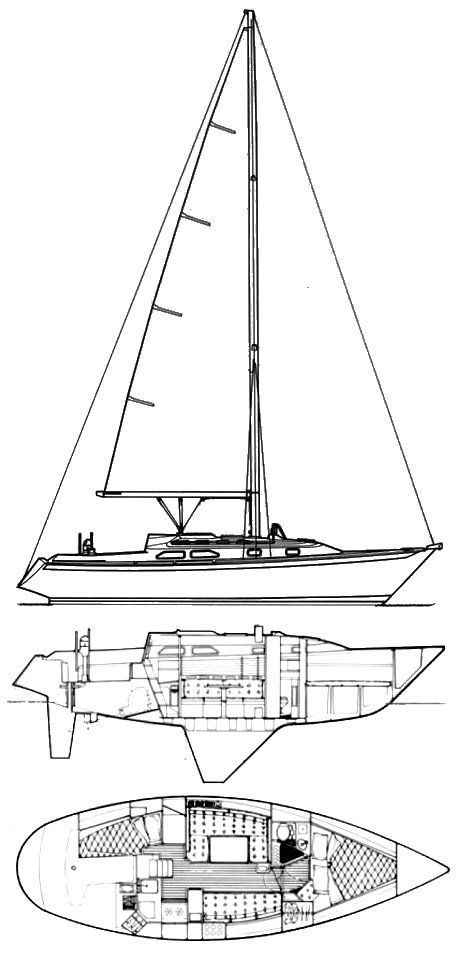
The Ericson 32-3 features a fin keel with a spade rudder, a configuration that enhances maneuverability and responsiveness compared to older long-keel designs. With a moderate beam and a masthead sloop rig, it reflects the design principles of the 1980s, prioritizing balance between upwind performance and ease of handling. Built in solid fiberglass with an internal ballast keel, the hull is rugged and less prone to structural weakness compared to cored hulls, though deck coring requires regular inspection for moisture.
The sloop rig keeps sail handling straightforward, while the deck layout allows for relatively easy single- or double-handed sailing. These choices result in a boat that remains manageable without the need for constant upgrades. From a maintenance perspective, fiberglass construction ensures long-term durability, straightforward repairs, and reasonable resale value for a boat of its age.
.
Performance
On the water, the Ericson 32-3 has a reputation for being lively without being temperamental. It points well upwind and holds speed efficiently on a reach, thanks to its balanced hull form and sail plan. With a hull speed around 6.5 knots, it performs comparably to Catalina 30s and Pearson 323s, while offering slightly more nimble handling in choppy seas. Owners consistently report that the boat feels stable and confidence-inspiring, yet still capable of spirited sailing when pressed.
Compared to contemporaries, it leans more toward performance cruising than pure family comfort. This makes it appealing to sailors who want to participate in club races on Saturday and take their family out for a coastal cruise on Sunday.
Comfort and Accommodations
The interior layout is practical and welcoming for a 32-foot vessel. A double berth forward, a spacious saloon with convertible seating, and an aft quarter berth give it sleeping space for up to five, though realistically it is best suited for a couple or small family. Ventilation is adequate, with hatches and opening ports that keep the cabin airy in warmer climates. Storage is sufficient for weekend cruising, and with some creative organization, it can support longer voyages.
Ergonomics are typical of the 1980s: functional, though not as spacious as more modern designs with wider beams and open interiors. Many examples on the market today have been refitted with updated upholstery, LED lighting, and modern galley equipment, making them more comfortable for extended use.
Safety and Practicality
On deck, the Ericson 32-3 benefits from wide side decks and sturdy lifelines, which improve security when moving around underway. The cockpit is deep and well-protected, though modest in size compared to modern designs. Handling under power is straightforward, especially in marinas, where the responsive rudder gives good control. With a balanced rig and efficient sail handling systems, it is manageable by a small crew or even single-handed, making it practical for aging sailors or couples.
Structurally, the boat is considered seaworthy for coastal cruising and has even been taken on longer offshore passages with modifications, but it is most at home in nearshore waters. Systems are relatively accessible, which helps reduce ownership costs by allowing motivated owners to tackle much of the maintenance themselves.
Known Issues with the Ericson 32-3
Common issues reported by owners include deck core moisture around fittings, typical of boats of this era. Original Atomic 4 gasoline engines, when still installed, often require replacement or conversion to a small diesel for reliability and safety. Standing rigging on older boats may also be due for replacement if not already addressed. Other wear points include aging fuel tanks, outdated electronics, and occasional rudder bearing wear.
Popular upgrades include repowering with a small Yanmar diesel, replacing the original two-blade prop with a more efficient three-blade or folding propeller, updating the electrical system, and reinforcing deck hardware. Buyers should budget for at least some of these upgrades when considering a purchase.
Market Availability and Pricing in the U.S.
The Ericson 32-3 is no longer in production and is found only on the secondhand market. Most listings appear in California, the Pacific Northwest, and the Great Lakes, though examples occasionally turn up on the East Coast. Condition varies widely, from well-maintained private cruisers to neglected boats needing extensive work.
In today’s U.S. market, typical asking prices range from $18,000 to $32,000, depending on condition, upgrades, and region. This positions the Ericson 32-3 competitively against similar boats like the Catalina 30, Pearson 323, and Hunter 31, often offering a touch more sailing performance for a similar price. Resale is generally steady, though the brand does not carry the same mass-market recognition as Catalina or Hunter, which can slow sales in some regions.
Below is a comparison with similar sailboats:
| Model | LOA | Years Built | Used Price (U.S.) | Key Differences |
|---|---|---|---|---|
| Ericson 32-3 | 32 ft | 1985–1990 | $18k–$32k | Balanced cruiser-racer, solid glass hull, more performance-oriented |
| Catalina 30 | 29’11” | 1975–2006 | $15k–$28k | Very common, strong owner network, more interior volume, less sporty |
| Hunter 31 | 31 ft | 1983–1987 | $16k–$30k | Spacious cabin, modern interior design for its era, lighter build |
| Pearson 323 | 32 ft | 1976–1983 | $17k–$29k | Heavier displacement, strong cruising reputation, slower performance |
Maintenance Costs of a Ericson 32-3 in the USA
Annual costs for owning an Ericson 32-3 vary by region but generally fall in the medium range for a boat of its size. Dockage or mooring runs between $3,000 and $6,000 per year depending on location, with higher costs in California and the Northeast. Insurance typically ranges from $500 to $1,200 annually. Routine engine service averages $500–$1,000 per year for a small diesel, while antifouling bottom paint runs $1,200–$2,000 annually.
Sails, if original or aging, will eventually need replacement at $3,500–$6,000 for a new mainsail and genoa. Standing rigging replacement can cost $5,000–$7,000 if due. Electronics refits vary widely but often exceed $5,000 for modern navigation and communication gear. Owners willing to do their own maintenance can keep costs moderate, while those relying heavily on professional yards will see expenses rise considerably. Overall, ownership costs for the Ericson 32-3 can be considered medium within its class, and resale values tend to support much of the long-term investment.
.
Conclusion
The Ericson 32-3 represents a thoughtful blend of performance and comfort from an era when American builders were producing some of their most enduring designs. Its solid fiberglass hull, responsive handling, and practical accommodations make it appealing for sailors seeking a capable coastal cruiser that can also hold its own in casual racing. While buyers should be mindful of typical age-related issues and budget for upgrades, the model offers excellent sailing value in the under-35-foot category.
For the right sailor—a couple or small family wanting a dependable and rewarding boat without entering the higher cost bracket of newer yachts—the Ericson 32-3 remains an attractive, underrated option with enduring appeal.
Specifications
| Hull Type | Fin w/spade rudder |
| Rigging Type | Masthead Sloop |
| LOA | 32.50 ft / 9.91 m |
| LWL | 25.83 ft / 7.87 m |
| S.A. (reported) | 497.00 ft² / 46.17 m² |
| Beam | 10.83 ft / 3.30 m |
| Displacement | 9,800 lb / 4,445 kg |
| Ballast | 4,200 lb / 1,905 kg |
| Max Draft | 6.00 ft / 1.83 m |
| Construction | Fiberglass (FG) |
| Ballast Type | Lead |
| First Built | 1985 |
| Builder | Ericson Yachts (USA) |
| Designer | Bruce King |
| Auxiliary Power (original) | Universal Diesel, 21 HP |
| Fuel Capacity | 22 gals / 83 L |
| Water Capacity | 33 gals / 125 L |
| S.A./Displ. | 17.42 |
| Bal./Displ. | 42.86 |
| Disp./Len. | 253.87 |
| Comfort Ratio | 22.79 |
| Capsize Screening Formula | 2.03 |
| S# | 2.18 |
| Hull Speed | 6.81 kn |
| Pounds/Inch Immersion | 999.54 lb/in |
| I | 42.00 ft / 12.80 m |
| J | 13.80 ft / 4.21 m |
| P | 36.00 ft / 10.97 m |
| E | 11.50 ft / 3.51 m |
| S.A. Fore | 289.80 ft² / 26.92 m² |
| S.A. Main | 207.00 ft² / 19.23 m² |
| Total Sail Area | 496.80 ft² / 46.15 m² |
| S.A./Displ. (calc.) | 17.42 |
| Estimated Forestay Length | 44.21 ft / 13.48 m |
Disclaimer
The considerations and analyses presented regarding the Ericson 32-3 sailboat are of a general nature and are based on the available information and technical data on this model, interpreted to the best of our knowledge and understanding. It is important to note that the specific characteristics of any particular sailboat may vary due to custom modifications, maintenance performed, and conditions of use over time, among other factors. Therefore, the details and performance of the boat you are considering may not exactly match the information provided here.
We strongly recommend that, before making any purchasing or usage decisions, you conduct a detailed inspection of the boat in question, consult with nautical professionals and other sailors, and consider your personal needs, expectations, and capabilities. Each sailboat may have unique particularities that affect its performance and suitability for different types of sailing and sailors.
The information contained in this analysis should be used as a general guide and not as a definitive reference. Professional evaluation and personal inspection are essential to ensure that the boat meets your specific requirements and expectations.