


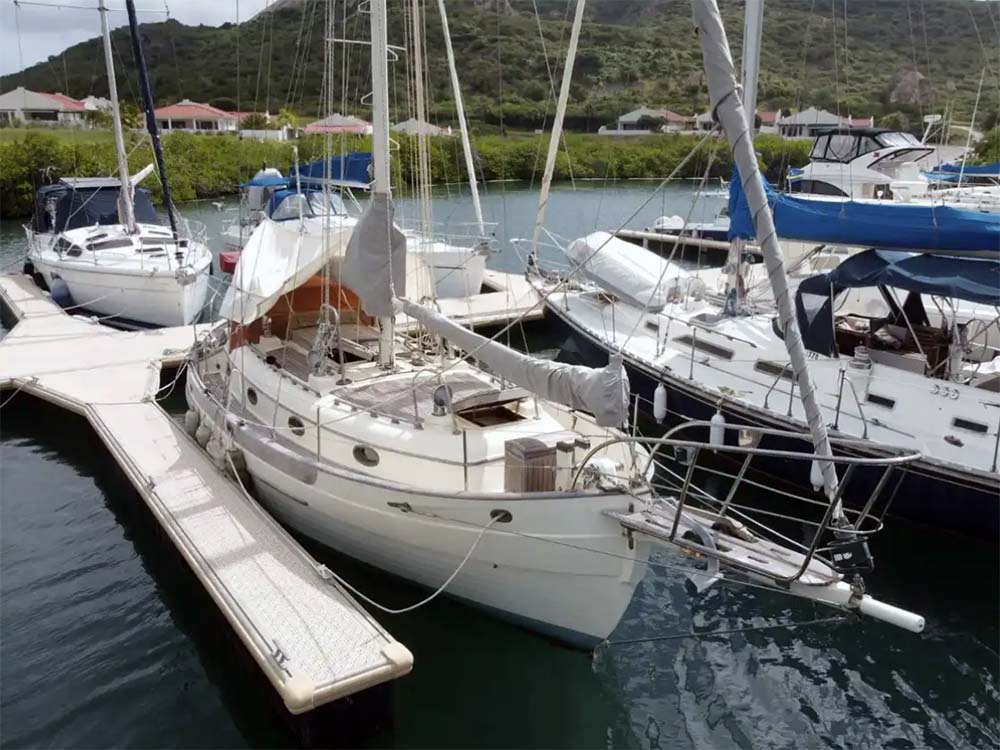
The Hans Christian 33T is a heavy-displacement cruising sailboat designed in the late 1970s during a period when traditional bluewater yachts were in high demand among serious voyagers. Built by Hans Christian Yachts in Taiwan and designed by Harwood Ives, the boat was intended as a true offshore cruiser rather than a coastal weekend boat. With its double-ended hull form, full keel, and distinctive canoe stern, the 33T is unmistakably part of the Hans Christian family—boats celebrated for their ruggedness, seaworthiness, and traditional styling.
From the beginning, the 33T was marketed to independent-minded sailors who valued long-term self-sufficiency over marina-based comfort. Today, on the secondhand market, it continues to attract bluewater dreamers, couples preparing for extended passages, and individuals who prefer classic lines over modern volume-oriented designs. Demand is steady but focused, meaning that while this boat may not appeal to the charter or entry-level crowd, it holds its value among serious cruisers.
Design and Construction
The hull of the 33T is a full-displacement, canoe-stern design with a long keel and a keel-hung rudder. This configuration emphasizes tracking ability, directional stability, and ultimate seaworthiness at the expense of agility in tight quarters. Unlike fin-keel production boats of the same era, the 33T was never meant to tack on a dime; instead, it was engineered to hold its course over long passages in heavy seas.
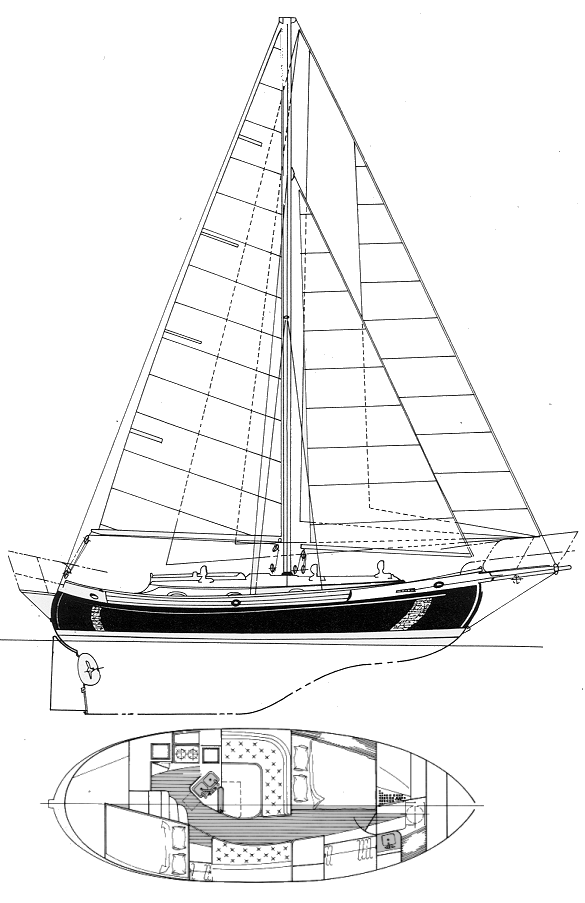
The rig is typically a cutter, offering flexibility with its staysail and allowing the sail plan to be easily reduced for heavy weather. This design choice reflects traditional bluewater principles: balance, redundancy, and safety. Construction is solid fiberglass, heavily laid up, with extensive use of teak in both the deck structures and interior joinery. While this contributes to durability and aesthetics, it also means higher upkeep costs, especially in humid or tropical environments where teak requires constant care.
From a naval architecture perspective, the displacement-to-length ratio is high, translating to a slow but steady motion at sea and excellent load-carrying capacity—important for cruisers bringing stores, water, and equipment for long-term voyages. These construction choices make the 33T one of the more robust boats in its size range, and that robustness is reflected in its resale stability.
Performance
Performance under sail is best described as deliberate but reliable. The 33T is not a light-air performer; in winds below 10 knots, it will struggle compared to lighter modern cruisers. However, in 15–25 knots with seas running, the boat comes into its own. The heavy displacement dampens motion, providing comfort and reducing crew fatigue on long passages. Its cutter rig allows for easy sail balance and reduces helm pressure, particularly useful when sailing shorthanded.
The boat points reasonably well for a full-keel cruiser but cannot match the windward performance of contemporary fin-keel boats such as the Pearson 34 or Catalina 34. Speed under sail averages 5–6 knots, with a theoretical hull speed around 6.8 knots. What it lacks in speed, it makes up in predictability and safety, which explains why many examples have successfully crossed oceans. Among sailors, the 33T has a reputation for being a “go-anywhere” boat rather than a “get-there-fast” one.
Comfort and Accommodations
The interior reflects a traditional cruising layout: a forward V-berth, main saloon with opposing settees, a functional galley, and an enclosed head. Teak joinery and robust fittings create a warm, ship-like atmosphere that has aged gracefully in many boats. Storage is generous, thanks to deep lockers and cabinetry designed with voyaging in mind.
Ventilation can be limited in stock form, though many owners retrofit additional hatches or dorade vents for tropical sailing. While not spacious compared to modern 33-footers, the interior is practical and comfortable for a couple living aboard full-time, with occasional guests. Families will find it tight for long-term cruising, but for two people with an ocean-crossing mindset, it strikes a good balance.
Because the layout and joinery are so classic, many examples have been well cared for or tastefully upgraded over time, meaning interiors generally age well. Extensive remodels are common, with owners modernizing galley equipment, upholstery, or head systems while retaining the traditional Hans Christian character.
Safety and Practicality
The 33T’s safety features are integral to its design. High bulwarks, sturdy double lifelines, and heavy handholds make it secure to move around on deck even in rough weather. The deep cockpit provides protection but can retain water if drainage is not kept in check—a known consideration for many traditional cruisers.
Its cutter rig is especially practical for shorthanded sailing, as the smaller sails are easier to manage than a large genoa. The long keel and attached rudder mean fewer vulnerabilities offshore, though maneuvering in marinas is more challenging compared to fin-keelers. Systems access varies: the engine compartment can be tight, but overall, the mechanical simplicity of the boat favors owners willing to maintain their own gear. For serious passagemaking, the boat is ready as designed, requiring minimal modification beyond safety equipment and modern electronics.
Known Issues with the Hans Christian 33T
Owners often report typical age-related issues rather than inherent design flaws. Teak decks, where present, are prone to leaks if not meticulously maintained, and re-caulking or even complete replacement is common. The solid fiberglass hull itself is robust, but osmotic blistering can appear after decades in the water.
Engines on original boats may be long past their service life, with many owners repowering with modern diesels—a major expense if not already done. Electrical systems are frequently outdated, and upgrades to LED lighting, wiring, and electronics are almost always necessary. Other common improvements include replacing fuel and water tanks, reinforcing chainplates, and upgrading the propeller for better efficiency under power.
In short, buyers should not be surprised if a 33T requires some investment after purchase, but these boats generally reward the effort with longevity and reliability.
Market Availability and Pricing in the U.S.
The Hans Christian 33T is no longer in production, so it is only found on the used market. Most examples are clustered in cruising hubs like Florida, California, and occasionally the Pacific Northwest. Condition varies significantly: some are turnkey, outfitted for bluewater passages, while others are project boats needing full refits.
As of recent listings, the price range in the U.S. is typically $50,000 to $90,000, depending on upgrades, condition, and cruising inventory. While more expensive than some similarly sized coastal cruisers, the 33T justifies its premium by offering true offshore capability. Resale is steady within the bluewater niche; while it may take longer to sell compared to mass-market models like the Catalina 34, it attracts dedicated buyers who understand its pedigree.
Below is a comparison with similar sailboats:
| Model | LOA | Years Built | Typical U.S. Price | Key Differences |
|---|---|---|---|---|
| Hans Christian 33T | 33 ft | 1970s–1980s | $50,000–$90,000 | Heavy-displacement cutter, bluewater ready, traditional teak interior |
| Catalina 34 | 34 ft | 1986–2000s | $35,000–$65,000 | Lighter, faster, coastal focus, more interior volume |
| Island Packet 31 | 31 ft | 1983–1988 | $45,000–$70,000 | Full keel, comfortable cruiser, less traditional styling |
| Pacific Seacraft 34 | 34 ft | 1980s–1990s | $65,000–$95,000 | Bluewater pedigree, higher build cost, better resale |
| Hunter 34 | 34 ft | 1983–1987 | $25,000–$45,000 | Performance-oriented, spacious, less rugged offshore reputation |
Maintenance Costs of a Hans Christian 33T in the USA
Annual maintenance costs for a Hans Christian 33T are moderate to high for its size, primarily because of the extensive use of teak and the complexity of long-term cruising systems. Typical yearly expenses include:
- Mooring or slip fees: $4,000–$7,000 depending on region (higher in California or the Northeast).
- Insurance: $800–$2,000 annually, depending on cruising range and vessel condition.
- Engine servicing: $800–$1,500 annually, more if the engine is older or underused.
- Bottom paint/antifouling: $1,500–$3,000 per year.
- Rigging and sails: Standing rigging replacement every 10–12 years ($6,000–$8,000); sail replacements $4,000–$7,000 depending on quality.
- Teak upkeep: Annual varnishing or oiling can cost $500–$2,000 in labor and materials, or far more if decks require major restoration.
For hands-on owners, costs can be reduced significantly by doing varnish, electrical upgrades, and light mechanical work themselves. However, teak-intensive yachts like the 33T almost inevitably demand some level of professional service. Overall, the cost of ownership is medium to high for a 33-footer, but resale stability offsets part of the long-term expense since demand for bluewater-ready boats remains consistentruiser. When balanced against its resale stability and offshore credibility, the investment is often justified.
Conclusion
The Hans Christian 33T stands out as a serious bluewater cruiser in a compact package. Its strengths are its seaworthiness, durability, traditional charm, and proven long-distance capability. Its weaknesses are modest speed, the upkeep demands of teak, and limited interior volume compared to modern designs.
For sailors seeking a coastal weekender or a fast cruiser, it is not the right choice. But for those dreaming of offshore passages, self-reliant voyaging, and a boat that can carry them safely across oceans, the 33T remains an excellent investment. Stable resale values and enduring demand among serious cruisers make it a dependable option in the secondhand market. Within its category, it is one of the most respected and enduringly admired small bluewater yachts available.
Specifications
| Hull Type | Long Keel |
|---|---|
| Rigging Type | Cutter |
| LOA | 32.75 ft / 9.98 m |
| LWL | 29.17 ft / 8.89 m |
| S.A. (reported) | 600.00 ft² / 55.74 m² |
| Beam | 11.67 ft / 3.56 m |
| Displacement | 18,500.00 lb / 8,391 kg |
| Ballast | 6,800.00 lb / 3,084 kg |
| Max Draft | 5.50 ft / 1.68 m |
| Construction | FG |
| Ballast Type | Iron |
| First Built | 1980 |
| # Built | 165 |
| Builder | Anderson Yachts Ltd. (Taiwan) |
| Designer | Harwood Ives |
| Auxiliary Power/Tanks | Diesel |
| Fuel | 80 gals / 303 L |
| Water | 120 gals / 454 L |
| S.A. / Displ. | 13.78 |
| Bal. / Displ. | 36.76 |
| Disp. / Len. | 332.75 |
| Comfort Ratio | 35.84 |
| Capsize Screening Formula | 1.77 |
| S# | 1.28 |
| Hull Speed | 7.24 kn |
| Pounds/Inch Immersion | 1,216.34 pounds/inch |
| I | 40.00 ft / 12.19 m |
| J | 18.00 ft / 5.49 m |
| P | 34.00 ft / 10.36 m |
| E | 14.10 ft / 4.30 m |
| S.A. Fore | 360.00 ft² / 33.45 m² |
| S.A. Main | 239.70 ft² / 22.27 m² |
| S.A. Total (100% Fore + Main Triangles) | 599.70 ft² / 55.71 m² |
| S.A./Displ. (calc.) | 13.77 |
| Est. Forestay Length | 43.86 ft / 13.37 m |
| Mast Height from DWL | 49.25 ft / 15.01 m |
Disclaimer
The considerations and analyses presented regarding the Hans Christian 33T sailboat are of a general nature and are based on the available information and technical data on this model, interpreted to the best of our knowledge and understanding. It is important to note that the specific characteristics of any particular sailboat may vary due to custom modifications, maintenance performed, and conditions of use over time, among other factors. Therefore, the details and performance of the boat you are considering may not exactly match the information provided here.
We strongly recommend that, before making any purchasing or usage decisions, you conduct a detailed inspection of the boat in question, consult with nautical professionals and other sailors, and consider your personal needs, expectations, and capabilities. Each sailboat may have unique particularities that affect its performance and suitability for different types of sailing and sailors.
The information contained in this analysis should be used as a general guide and not as a definitive reference. Professional evaluation and personal inspection are essential to ensure that the boat meets your specific requirements and expectations.