



The Hunter 216 is a compact, trailerable daysailer that was conceived as a sporty, easily handled boat for weekend sailors and club racers rather than as a liveaboard cruiser. Designed by Glenn Henderson and introduced by Hunter Marine in the early 2000s, it targets owners who want the convenience of trailering plus a responsive hull and simple fractional sloop rig for quick setup and fun sailing days. The 216 found a steady niche on the used market because it blends spirited performance with easy maintenance and a small cuddy for gear or an occasional overnight; today it turns up most often in private-owner listings, sail training fleets and the inland/Great Lakes marketplace where trailerability matters most.
Design and Construction
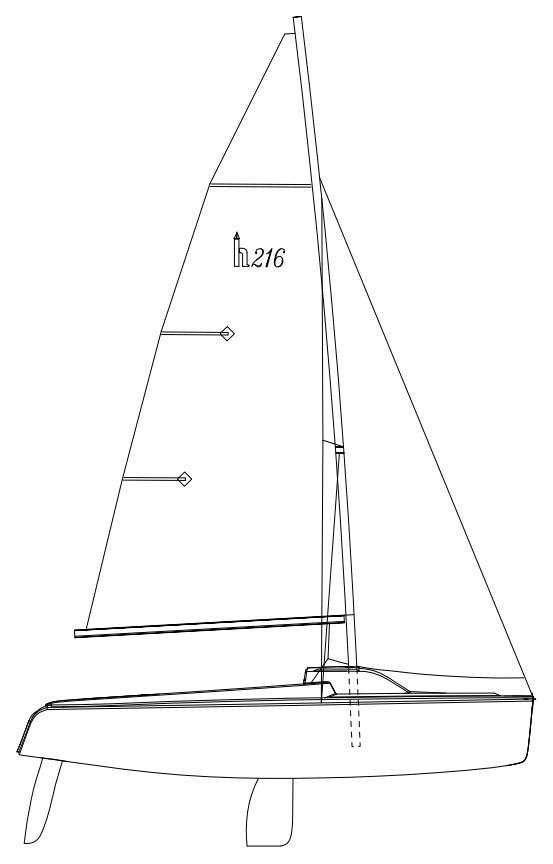
Hunter’s approach with the 216 emphasizes light weight and ease of use: a relatively narrow, sportboat-like hull, modest ballast, and a lifting/retractable keel make launching, trailering and shallow-water sailing straightforward. Hunter used a thermoformed/composite hull process on the 216 (ACP-style materials on many Hunter small models), and paired the hull with a simple fractional sloop rig and a kick-up rudder — choices that reduce cost and make repairs simpler than on complex, laminated structures. Those construction and systems choices translate to practical ownership benefits: chips or cosmetic wear on ACP-style surfaces are easier and less expensive to repair than structural osmosis issues on older hand-laid boats, but they can scratch more readily and sometimes demand cosmetic attention to hold resale appeal. In short, the 216’s construction favors low-cost, owner-level upkeep and quick turnarounds at the ramp, rather than workshop-level refits.
Performance
On the water the 216 is known for lively acceleration and a feel that rewards active trimming — in light to moderate airs it gets up and moves, and its light displacement makes it nimble in tacks and gusts. Because the hull favors planing-like responsiveness rather than heavy-weather comfort, the boat performs best as a coastal/day-sailing platform or for club-level one-design-style competition; it is not intended to be pushed into offshore conditions without significant preparation. Handling is straightforward for singlehanding or short-handed crews: the fractional rig reduces headsail size and simplifies tacking, while the shallow draft and kick-up rudder make recovery from groundings and shoal work forgiving. Overall, among small trailerable sport-sloops the 216 sits toward the sporty end of the spectrum — faster and livelier than many cruiser-oriented 21–23 footers but less weight-stable in big seas.
Comfort and Accommodations
Interior accommodations are minimal by design: the small cuddy provides dry storage, a place to stow sails and an occasional sheltered berth for a night, but the 216 wasn’t conceived as a cruising-first layout. For a couple or a parent with small children the cockpit and cuddy work well for day sailing and short weekend escapes; for family cruising beyond a night or two the space and headroom quickly limit comfort and gear stowage. The cockpit is an asset — roomy for its length and arranged to keep controls within reach — but the cabin finishes are utilitarian and often show cosmetic wear on used boats, so buyers seeking a polished interior should budget for modest refit or reupholstery. For owners prioritizing daysails, easy launch and a forgiving cockpit layout, the 216’s interior is fit-for-purpose; for buyers wanting extended cruising comforts, a larger fixed-keel 23–26 foot boat will be a better match.
Safety and Practicality
Deck layout and systems emphasize simplicity: wide cockpit, easy access to the transom and a shallow boarding step make man-overboard recovery and dinghy access straightforward in protected waters. The retractable keel and kick-up rudder are practical safety features for shoal areas — they lower the risk of costly grounding damage and let owners explore shallow bays and ramps that deeper-keel boats cannot. That said, the light displacement and sport-focused hull mean the boat is best restricted to coastal and inland waters unless the owner invests in heavy-weather gear and communications; as-built systems (outboard engine mount, basic electrical) are intentionally basic and designed for easy owner servicing rather than extended offshore redundancy. Systems are generally accessible for a competent DIY owner, which reduces long-term service bills and increases practical usability for weekend sailors.
Known Issues with the Hunter 216
Experienced owners and forum threads commonly cite cosmetic wear to ACP-style gelcoats (scratching, fading) and occasional cuddy leaks around hatches or the mast boot as frequent, recurring complaints; these are usually maintenance issues rather than structural failures. Rudder and keel hardware on retractable systems need regular inspection — water infiltration and worn pivot fittings are typical wear points on any lifting-keel boat and should be checked at haul-out. Electronics and sail inventories on older 216s are often minimal or dated, so sensible upgrades are commonly recommended (new electronics package, fresh sails or a newer outboard). Buyers should treat these items as anticipated maintenance or upgrade tasks rather than surprises: a careful pre-purchase inspection focuses on keel/keelbox condition, condition of the rudder hinge, mast step/seal integrity and the general state of the cuddy’s flange seals
Market Availability and Pricing in the U.S.
The Hunter 216 is out of production and is now found almost exclusively on the used market; because only a few hundred were built its listings are intermittent but steady in inland and coastal classifieds. Typical condition on the U.S. market ranges widely — well-maintained, recently-upgraded examples often trade at higher values, while older, cosmetically worn boats are priced very affordably. Valuation services put the 216’s average retail near $9,800 (approximate), while live ads and private listings show asking prices commonly between about $3,000 and $12,000 depending on year, gear and region. Models like the Catalina Capri 22 and Precision 23 appear in similar buyer searches but generally command different owner profiles and price bands: the Capri tends to trade a bit higher for its interior volume and class support, while the Precision sits toward the comfortable cruiser end of the trailerable 23-foot class.
Below is a comparison with similar sailboats from the same era:
| Model | LOA | First built (approx.) | Typical U.S. used price | Main practical differences |
|---|---|---|---|---|
| Catalina Capri 22 | ~22.0 ft (hull length) | 1984 | $12,000–$25,000 | More interior volume and cruising comfort; heavier, more traditional fiberglass construction vs. 216’s sportier, lighter build. |
| Precision 23 | ~23.4 ft | 1986 | $10,000–$18,000 | Sturdier cruiser-trailer design with deeper ballast and more cruising features; trades some agility for stability and interior amenities. |
| San Juan 21 | ~20.5 ft | 1970 | $1,000–$6,000 | Older, race-oriented trailerable one-design with active class; cheaper to buy but often needs cosmetic or rigging work. |
Hunter 216 vs Catalina Capri 22

The 216’s sport-leaning, light-displacement hull and thermoformed/composite construction make it quicker out of the hole and easier to trailer than the Capri 22, which favors a heavier, more traditional fiberglass layup and greater interior volume. For a buyer, that means the 216 is a better pick if you prioritize launch-and-go daysailing and lower trailering weight; the Capri is preferable if you need genuine weekend accommodations and a sturdier feel in confused water.
Handling and stability split further: the Capri’s fuller hull and heavier ballast deliver a steadier ride in choppier or windier conditions and generally feel more comfortable for family cruising, while the 216 rewards active crews with nimble tacks and faster acceleration in light-to-moderate airs. Maintenance-wise the Capri’s hand-laid fiberglass ages predictably and has a broad aftermarket for parts, whereas the 216’s ACP-style surfaces are easier for quick DIY fixes but may require more cosmetic attention to keep resale value strong.
► Learn more about de Catalina Capri 22
Hunter 216 vs Precision 23
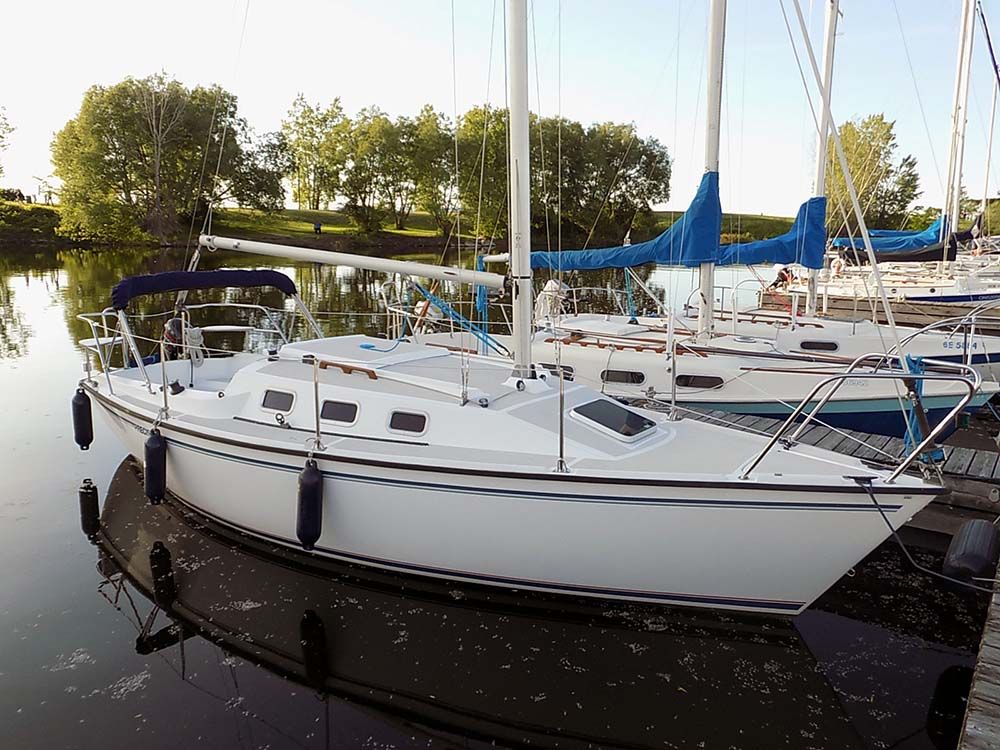
Compared with the Precision 23, the 216 is lighter, more tender and oriented toward lively day-sailing and club-style performance; the Precision’s stub keel with centerboard and heavier lead ballast bias it toward comfortable, stable coastal cruising. From an ownership standpoint, the Precision will generally carry more gear and offer a more usable cabin for weekend cruising, reducing the pressure to limit trips by weather or comfort.
In sea-kind conditions the Precision’s deeper ballast when lowered gives it a more reassuring motion and better pointing ability in heavy air, while the 216’s design rewards short, exciting passages and easier trailering; buyers who want a single boat that will comfortably host family cruises will likely prefer the Precision, while those who want trailerable performance and low-cost day sailing will favor the 216.
► Learn more about de Precision 23
Hunter 216 vs San Juan 21

The San Juan 21’s pedigree as a one-design racer gives it a narrower, tuned racing hull and a long history of competitive fleets, whereas the 216 blends sporty performance with a more modern approach to trailering and shallow-water usability. For a price-conscious buyer interested in club racing and an active class, the San Juan is attractive and cheap to buy, but many examples need rigging or sail investments to be competitive.
The 216, by contrast, is a more modern package for mixed-day-sail and casual racing use: its retractable keel and kick-up rudder reduce hauling headaches and make beaching easier, and its cuddy provides practical dry storage that the San Juan’s spartan cabin often lacks. For family-oriented or more casual owners the 216’s easier-launch and more forgiving systems outweigh the San Juan’s raw race focus.
► Learn more about de San Juan 21
Maintenance Costs of a Hunter 216 in the U.S.
Below is an annotated list of typical annual expenses (approximate ranges for 2024–2025 U.S. ownership), presented with the cost item in bold followed by a short comment.
- Mooring or slip fees: $600–$4,500 per year — marina costs vary widely by region; modest inland slips and municipal moorings sit at the low end, high-demand Florida or Northeast slips hit the top end.
- Insurance: $200–$800 per year — small daysailer coverage is inexpensive in many states, though coastal Florida premiums trend higher; typical policies for a $5–$15k boat land in the low hundreds annually.
- Engine servicing (outboard): $100–$400 per year — routine yearlies include oil, fuel filter/impeller checks and occasional lower-unit service; many owners do this work themselves.
- Antifouling paint and bottom maintenance: $150–$900 per year — freshwater owners often pay far less (or nothing if hauled for winter), while saltwater moored boats require regular paint or hull scrubbing.
- Standing and running rigging inspection/replacement: $75–$400 per year in routine inspections and small repairs; full rigging replacement every 8–12 years can run $1,200–$2,500.
- Sails (repairs/replace): $100–$400 per year for repairs and storage; a full new suit typically costs $1,800–$3,500 depending on cloth and whether the owner chooses basic cruising or high-performance cuts.
- Winterization, storage and trailer upkeep (if trailered): $200–$1,200 per year — trailer maintenance is a modest but real recurring cost that inland owners must budget for.
Region matters: inland and Great Lakes owners typically see 20–40% lower antifouling and mooring costs because of seasonal haul-out and freshwater, while coastal owners (especially in high-demand marinas) face higher slip and antifouling bills. Occasional one-time or periodic expenses commonly include sail replacement ($1,800–$3,500), electronics upgrades ($500–$2,000) and refits/major gelcoat work or keelbox repairs ($1,000–$5,000) depending on the boat’s condition. For most owners the 216 is largely owner-maintainable: basic engine, hull and rig tasks are within reach of a competent DIY owner and that materially reduces cost; owners who prefer professional polishing, bottom jobs or complex repairs will see costs rise accordingly. In this size and class the Hunter 216’s running costs are typically low-to-medium, and because the 216 is inexpensive to buy and has modest upkeep, resale value tends to reflect a reasonable trade-off — you won’t recoup large refit investments, but the initial purchase price and ongoing costs are frequently balanced by steady demand for trailerable daysailers.
Conclusion
The Hunter 216 is a clear, purpose-driven small daysailer: it favors trailering convenience, lively performance and simple systems that a hands-on owner can maintain affordably. Its strengths are accessibility (easy launching and singlehanding), sporty handling and low initial cost of entry; its limits are modest cabin space, cosmetic sensitivity of ACP-style surfaces and a hull that is best used in coastal, inland and nearshore conditions rather than offshore voyaging. For a buyer seeking a trailerable sport-sloop for weekend sailing, club competition and family day trips, the 216 is a compelling, budget-friendly option; for someone whose priority is comfortable multi-day cruising or offshore capability, a heavier, ballast-stable 23–26 foot cruiser will serve better. Resale tends to be steady for well-kept examples because the combination of trailering and spirited performance fills a persistent niche — if you value easy ownership and lively sailing in protected waters, seeking a solid-condition 216 is often worth it.
Specifications
| Hull Type: | Lifting Keel |
| Rigging Type: | Fractional Sloop |
| LOA: | 21.50 ft / 6.55 m |
| LWL: | 18.75 ft / 5.72 m |
| Sail Area (reported): | 252.00 ft² / 23.41 m² |
| Beam: | 7.92 ft / 2.41 m |
| Displacement: | 1,250 lb / 567 kg |
| Ballast: | 500 lb / 227 kg |
| Max Draft: | 3.50 ft / 1.07 m |
| Min Draft: | 1.00 ft / 0.30 m |
| Construction: | Thermo Plastic |
| Ballast Type: | Lead |
| First Built: | 2003 |
| # Built: | 250 |
| Builder: | Hunter Marine (USA) |
| Designer: | Glenn Henderson |
Sailboat Calculations | |
|---|---|
| S.A./Displ.: | 34.82 |
| Bal./Displ.: | 40.00 |
| Disp./Len.: | 84.66 |
| Comfort Ratio: | 6.27 |
| Capsize Screening Formula: | 2.94 |
| S#: | 6.44 |
| Hull Speed: | 5.80 kn |
| Pounds/Inch Immersion: | 530.61 pounds/inch |
Rig and Sail Particulars | |
| I: | 21.92 ft / 6.68 m |
| J: | 7.33 ft / 2.23 m |
| P: | 24.58 ft / 7.49 m |
| E: | 10.42 ft / 3.18 m |
| S.A. Fore: | 80.34 ft² / 7.46 m² |
| S.A. Main: | 128.06 ft² / 11.90 m² |
| S.A. Total (100% Fore + Main Triangles): | 208.40 ft² / 19.36 m² |
| S.A./Displ. (calculated): | 28.79 |
| Estimated Forestay Length: | 23.11 ft / 7.04 m |
| Mast Height from DWL: | 30.92 ft / 9.42 m |
Disclaimer
The considerations and analyses presented regarding the Hunter 216 sailboat are of a general nature and are based on the available information and technical data on this model, interpreted to the best of our knowledge and understanding. It is important to note that the specific characteristics of any particular sailboat may vary due to custom modifications, maintenance performed, and conditions of use over time, among other factors. Therefore, the details and performance of the boat you are considering may not exactly match the information provided here.
We strongly recommend that, before making any purchasing or usage decisions, you conduct a detailed inspection of the boat in question, consult with nautical professionals and other sailors, and consider your personal needs, expectations, and capabilities. Each sailboat may have unique particularities that affect its performance and suitability for different types of sailing and sailors.
The information contained in this analysis should be used as a general guide and not as a definitive reference. Professional evaluation and personal inspection are essential to ensure that the boat meets your specific requirements and expectations.