



The Hunter 23 was introduced in the mid-1980s as a compact but versatile sailboat designed primarily for coastal cruising and weekend sailing. Built by Hunter Marine, a company well known for producing accessible and family-friendly yachts, the 23 was aimed at sailors who wanted the freedom of trailerability combined with the comfort of a proper cruising boat. Its purpose was clear: to provide a manageable platform for couples and small families eager to enjoy both inland and coastal waters without the complexity or cost of larger yachts. Over time, the Hunter 23 has carved out a niche in the used boat market, where it remains attractive to private buyers looking for affordable entry-level cruising sailboats, rather than charter companies or sailing schools.
Design and Construction
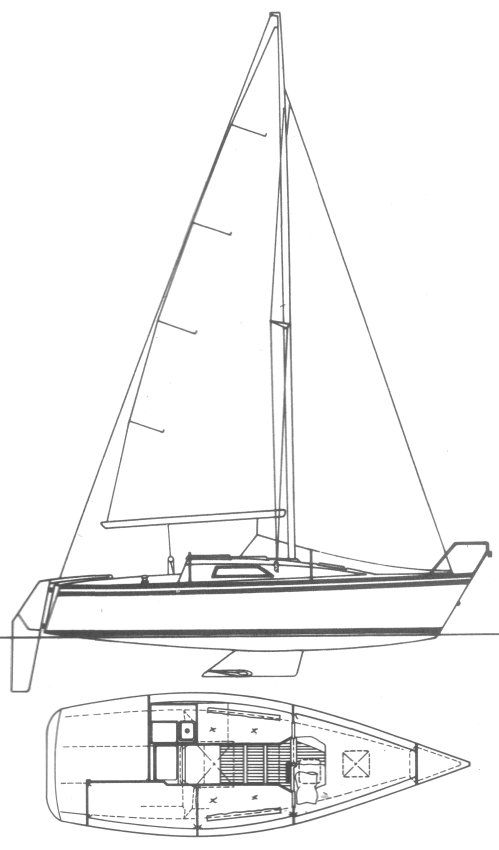
The Hunter 23 features a fiberglass hull with a moderate beam and either a shoal-draft wing keel or a centerboard version, giving owners flexibility between performance and trailerability. Its transom-hung rudder simplifies steering and reduces maintenance costs, though it can be vulnerable in very shallow or rocky waters. Rigged as a fractional sloop, the sail plan is deliberately easy to handle, offering forgiving balance while still providing enough sail area for lively performance in light to moderate breezes.
From a naval architecture perspective, the use of fiberglass construction ensures durability and relatively straightforward repairs compared to wooden alternatives. The simple rigging and deck layout keep upkeep costs down, and the compact design contributes to stable resale value because the boat appeals to practical owners who value efficiency over complexity
.
Performance
Under sail, the Hunter 23 performs predictably and is considered agile for its size. With moderate displacement, it accelerates quickly in light airs, and the fractional rig allows for efficient sail trimming upwind. In stronger winds, reefing is straightforward, though the boat’s light weight can make it a bit lively in chop compared with heavier 25–26 footers. It points decently into the wind but will not match the performance of dedicated racer-cruisers of the same era. Still, for its market segment, it is widely regarded as responsive and enjoyable—sailors appreciate that it feels more spirited than some heavier competitors like the Catalina 25, while still remaining manageable for a small crew.
Comfort and Accommodations
Below deck, the Hunter 23 is designed for short-term cruising rather than extended living aboard. The layout typically includes a small V-berth, settees that double as berths, and a compact galley module. Ventilation is adequate with opening hatches, though headroom is limited. Storage space is modest but sufficient for weekend supplies. Families can use it for short coastal trips, but comfort is best for couples or small groups who value simplicity over space. Interiors on older models may show wear, and many owners upgrade fabrics, cabinetry, or lighting to modernize. It is not intended for long-term living aboard, but it provides more than enough comfort for overnighting or a week of coastal sailing.
Safety and Practicality
On deck, the Hunter 23 offers wide-enough side decks and reasonably secure lifelines, though as with most boats under 24 feet, movement in rough weather requires care. The cockpit is deep and secure, making it comfortable for family use. The simple sail plan and fractional rig make single-handed sailing possible, and most controls are within easy reach of the helm. Systems are minimal, which reduces maintenance complexity, and the transom rudder provides straightforward access for inspection or repair. The boat is best suited for inland and coastal cruising rather than offshore passages, but within its design brief, it provides safe and predictable handling.
Known Issues with the Hunter 23
Like many boats of its era, the Hunter 23 can suffer from typical fiberglass aging issues, such as gelcoat crazing or occasional deck soft spots around fittings. Owners have reported that original portlights and hatches may leak if not resealed, and some examples show wear on rudder hardware. The swing-keel version requires attention to pivot points and lifting gear, which can corrode over time. Electronics, if original, are usually outdated and often replaced by modern chartplotters or VHF systems. Sail replacements are also common, as many examples on the market are still using decades-old canvas. None of these issues are unique to the Hunter 23, and most are considered manageable by prospective buyers.
Market Availability and Pricing in the U.S.
The Hunter 23 is no longer in production and is found exclusively on the second-hand market. Examples are most commonly listed in Florida, the Great Lakes region, and New England, where small cruisers are popular for both inland and coastal use. Condition varies: some boats have been well maintained and upgraded, while others may require full refits. Based on recent listings, a reasonable price range is $5,000–$10,000, depending on age, condition, and equipment.
Compared with similar boats, the Hunter 23 represents solid value. It is less expensive than a Catalina 25 but offers livelier performance. It competes closely with the Beneteau First 235, which is sportier and better appointed inside but usually more expensive. Compared with the O’Day 23, the Hunter strikes a balance between affordability and ease of handling, with a more modern hull design than the O’Day but less interior volume than the Catalina.
Below is a comparison with similar sailboats:
| Model | LOA (ft) | Approx. Build Years | Typical Used Price (USD) | Key Differences |
|---|---|---|---|---|
| Hunter 23 | 23 | 1985–1992 | $5,000–$10,000 | Trailerable, fractional rig, simple interior, agile handling |
| Catalina 25 | 25 | 1977–1991 | $5,000–$12,000 | Roomier interior, heavier build, slower but more stable |
| Beneteau First 235 | 23.3 | 1986–1991 | $8,000–$15,000 | Performance-oriented, better-appointed cabin, higher resale value |
| O’Day 23 | 23 | 1970s–1980s | $3,500–$7,500 | Older design, less performance, more basic accommodations |
Hunter 23 vs Catalina 25

The Hunter 23 and Catalina 25 cater to small-boat sailors, but they differ significantly in hull design and cruising capabilities. The Hunter 23 has a compact, balanced hull with a forgiving sail plan, making it ideal for beginner sailors and weekend coastal cruising. Its handling is predictable, stable, and easy to manage with a small crew, though it lacks the extra interior volume of the Catalina 25. The Catalina 25, being slightly longer and heavier, offers a more spacious cabin with additional berths and storage, making it better suited for small family outings or multi-day cruises.
Performance-wise, the Hunter 23 accelerates quickly in moderate winds and maneuvers well in tight quarters, while the Catalina 25 benefits from increased momentum and stability, especially in choppy waters. Maintenance requirements for both boats are moderate, but the Catalina’s wider adoption ensures parts and support are plentiful. Deck layout and rigging on the Hunter emphasize simplicity and ease of sail handling, whereas the Catalina 25 allows slightly more flexibility for cruising gear and amenities.
Overall, the Hunter 23 appeals to sailors seeking an easy-to-handle, trailerable coastal cruiser, while the Catalina 25 is attractive for buyers prioritizing cabin comfort and extended weekend cruising. For owners who value a balance between manageable size and livability, these differences are crucial for decision-making.
► Learn more about de Catalina 25
Hunter 23 vs Beneteau First 235
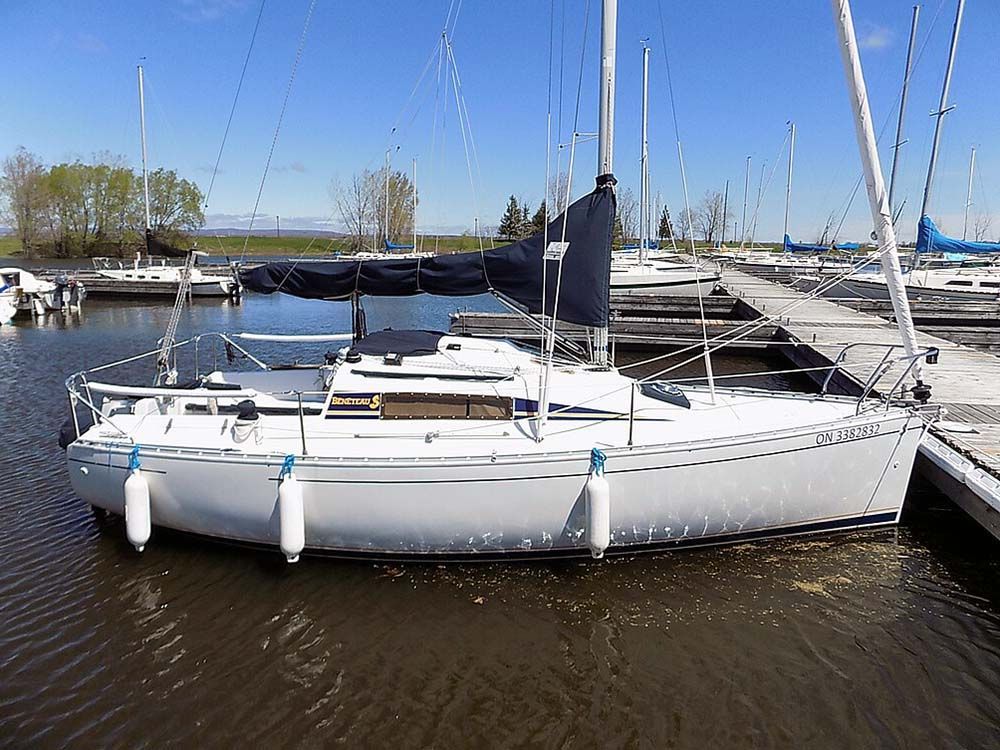
The comparison between the Hunter 23 and the Beneteau First 235 highlights contrasts between American and European small cruiser-racer designs. The Beneteau First 235 is a lighter, more performance-oriented boat, with a responsive hull and deeper keel that rewards sailors with quick acceleration and good upwind performance. In contrast, the Hunter 23 focuses on stability and forgiving handling, with a hull designed for confidence and predictable behavior in variable conditions.
The Hunter’s interior is functional, with practical sleeping arrangements and storage for weekend cruising, while the First 235 offers a more minimalist layout optimized for weight savings and sailing efficiency. Maintenance is generally straightforward for both boats, though the Hunter benefits from widely available parts and domestic familiarity, whereas the First 235 may require some specialized components. The Hunter 23 is ideal for family or casual weekend use, providing a more comfortable and secure platform, while the First 235 appeals to sailors seeking a lively, club-racing capable vessel.
Both boats excel in coastal waters, but the First 235 emphasizes performance and responsiveness, whereas the Hunter prioritizes ease and versatility for novice to intermediate sailors. Practical ownership considerations often revolve around how much emphasis a buyer places on sailing agility versus cabin comfort and maintenance simplicity.
► Learn more about de Beneteau First 235
Hunter 23 vs O’Day 23

Comparing the Hunter 23 with the O’Day 23 underscores subtle differences in handling, interior layout, and overall sailing character. Both boats are designed as compact trailerable cruisers suitable for weekend and coastal outings, but the O’Day 23 features a slightly stiffer hull, giving it a livelier feel under sail and a more connected response in moderate winds. The Hunter 23 emphasizes forgiving handling and stability, making it very approachable for beginners or small crews.
Interior layouts are compact on both, but the O’Day 23 generally provides slightly more storage and functional space for small family trips, while the Hunter focuses on simplicity and ease of maintenance. In terms of rigging, both boats are masthead sloops, but the O’Day’s sail plan can feel more responsive and slightly better suited for casual racing or spirited weekend sailing. Maintenance requirements are similar, though the Hunter benefits from extensive parts availability and a strong domestic support network.
For use, the Hunter 23 is ideal for sailors prioritizing a stable, easy-to-manage platform, while the O’Day 23 is attractive to owners seeking a touch more performance without sacrificing comfort. Buyers considering these two vessels often decide based on whether a lively sailing experience or straightforward handling takes precedence.
► Learn more about the O’Day 23
Maintenance Costs of a Hunter 23 in the USA
Annual maintenance costs for a Hunter 23 are relatively modest due to its size and simplicity.
- Mooring or slip fees: $800–$2,000 per year, depending on region (higher in California and New England, lower in the Southeast or inland lakes).
- Insurance: $250–$500 annually, depending on coverage and sailing area.
- Engine service: Most Hunter 23s use small outboards; annual servicing typically costs $150–$400.
- Antifouling: Around $800–$1,200 per season if kept in the water, much less if dry-sailed or trailered.
- Rigging and sails: Rig inspections average $500–$1,000 every few years; replacing sails can cost $1,500–$3,000 depending on quality.
- Electronics and refits: Upgrading outdated gear may add $500–$2,000 on a one-off basis.
A hands-on owner can reduce costs substantially, since many maintenance tasks—bottom painting, outboard servicing, or minor rigging—are within the reach of an amateur sailor. Professional services, while more costly, ensure longevity and safety. Overall, the Hunter 23 falls into the low to medium range of ownership costs within its size class, and resale values generally justify the investment when the boat is kept in good condition
Conclusion
The Hunter 23 offers an appealing blend of trailerable convenience, lively sailing performance, and manageable upkeep. Its strengths lie in its agility under sail, simple systems, and affordability, making it a practical choice for new sailors or couples seeking a first cruising boat. Limitations include modest interior comfort and the natural constraints of a sub-25 foot hull, but these are balanced by ease of handling and relatively low operating costs. For buyers considering coastal cruising or lake sailing on a budget, the Hunter 23 remains a smart and accessible option with stable resale value—particularly for those who appreciate hands-on ownership and value performance in a compact package.
Specifications
| Hull Type | Wing Keel |
| Rigging Type | Fractional Sloop |
| LOA | 23.25 ft / 7.09 m |
| LWL | 19.58 ft / 5.97 m |
| S.A. (reported) | 236.00 ft² / 21.93 m² |
| Beam | 8.00 ft / 2.44 m |
| Displacement | 2,450.00 lb / 1,111 kg |
| Ballast | 800.00 lb / 363 kg |
| Max Draft | 2.25 ft / 0.69 m |
| Construction | FG |
| First Built | 1985 |
| Last Built | 1992 |
| Builder | Hunter Marine (USA) |
| Designer | Hunter Marine |
| Sailboat Calculations | Definitions |
| S.A. / Displ. | 20.83 |
| Bal. / Displ. | 32.65 |
| Disp. / Len. | 145.71 |
| Comfort Ratio | 11.47 |
| Capsize Screening Formula | 2.38 |
| S# | 3.97 |
| Hull Speed | 5.93 kn |
| Pounds/Inch Immersion | 559.69 lb/in |
Rig and Sail Particulars | |
| I | 26.00 ft / 7.92 m |
| J | 8.50 ft / 2.59 m |
| P | 25.67 ft / 7.82 m |
| E | 9.75 ft / 2.97 m |
| S.A. Fore | 110.50 ft² / 10.27 m² |
| S.A. Main | 125.14 ft² / 11.63 m² |
| S.A. Total (100% Fore + Main Triangles) | 235.64 ft² / 21.89 m² |
| S.A. / Displ. (calc.) | 20.80 |
| Est. Forestay Length | 27.35 ft / 8.34 m |
| Mast Height from DWL | 33.00 ft / 10.06 m |
Disclaimer
The considerations and analyses presented regarding the Hunter 23 sailboat are of a general nature and are based on the available information and technical data on this model, interpreted to the best of our knowledge and understanding. It is important to note that the specific characteristics of any particular sailboat may vary due to custom modifications, maintenance performed, and conditions of use over time, among other factors. Therefore, the details and performance of the boat you are considering may not exactly match the information provided here.
We strongly recommend that, before making any purchasing or usage decisions, you conduct a detailed inspection of the boat in question, consult with nautical professionals and other sailors, and consider your personal needs, expectations, and capabilities. Each sailboat may have unique particularities that affect its performance and suitability for different types of sailing and sailors.
The information contained in this analysis should be used as a general guide and not as a definitive reference. Professional evaluation and personal inspection are essential to ensure that the boat meets your specific requirements and expectations.