



The Hunter 290 was introduced around 1999–2002 by Hunter Marine as a compact coastal cruiser aimed at weekenders and small families who wanted maximum usable space in a trailerable-ish footprint. Designed by the in-house Hunter design team and offered with features unusual for its size—two private cabins, a real navigation station and a generous head—the 290’s purpose was clearly cruising-focused rather than racing. That emphasis shows in the B&R fractional rig and a hull optimized for interior volume and easy handling rather than outright speed. Over the years the model has built a modest but steady presence on the used market in the U.S., preferred by day-sailors, couples and families who want an economical, easy-to-manage coastal cruiser rather than a club racer.
Design and Construction
The Hunter 290 is a fiberglass monohull with a fin keel (standard) and an internally mounted spade rudder; an optional shoal/wing keel was available for shallow harbors. Its LOA sits just under 29 feet with a fairly generous beam (about 10.75 ft), giving the boat a long waterline relative to its size and creating surprising interior volume for the class. The B&R fractional rig—backstayless with swept spreaders—keeps the sailplan simple and reduces the need for running backstays, which makes short-handed handling straightforward. Construction follows typical late-90s production practice: hand-laid GRP hull, cored deck for stiffness, and bonded structural elements that tie the bulkheads into a grid to resist flex. These choices make the boat light enough to perform in light airs while keeping common repair tasks and replacement parts straightforward and affordable.
From an owner’s perspective, the tradeoffs are clear: the fin keel and spade rudder improve maneuverability and pointing but are more vulnerable to grounding than full-keel designs; the B&R rig reduces complexity but means tuning and replacement parts are slightly different than a conventional mast with a backstay. Overall the Hunter 290’s design decisions favor owner-friendly boating—easy maintenance, easy sailing, and an interior that adds practical value for coastal cruising.
Performance
On the water the 290 behaves like a conservative coastal cruiser: with a displacement around 7,400 lb and roughly 2,550 lb of ballast, it offers steady initial stability and predictable handling. Expect hull speeds in the high-6 knot range under sail in moderate conditions and reasonable momentum in light air thanks to the long waterline; PHRF numbers place it solidly in the cruiser category rather than among performance pocket cruisers. The fractional B&R rig lets owners carry a modest headsail and control power through the mainsail, which is convenient when sailing short-handed or in gusty coastal conditions.
In a seaway the boat is comfortable and forgiving—won’t surprise an inexperienced crew—and will point adequately for coastal passages but won’t outpace sportier 30-footers. Compared with heavier classic 30-foot cruisers (for example many older Catalinas) the Hunter feels livelier in light air, while compared to modern performance cruisers it trades a little raw speed for ergonomics, interior volume and lower complexity.
Comfort and Accommodations
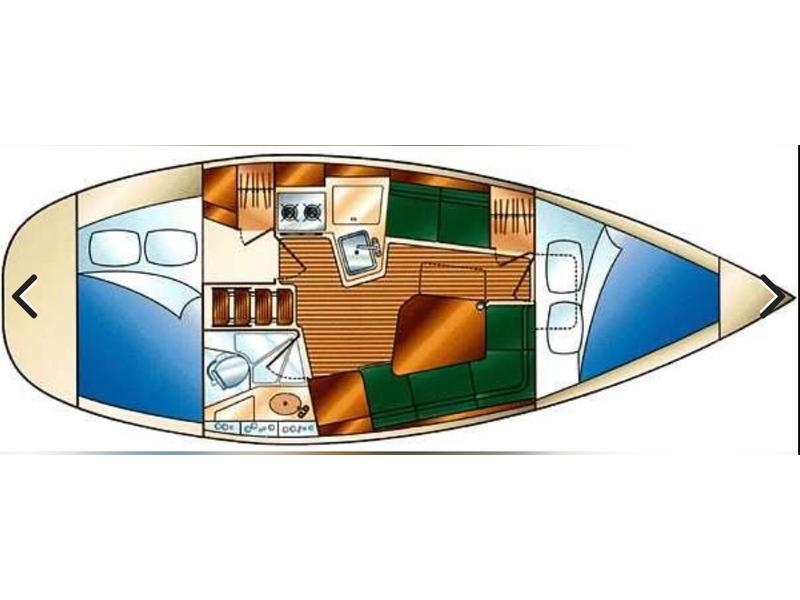
The Hunter 290’s interior is its standout selling point. The layout provides two private cabins (forward V-berth and aft quarter berth), a dedicated nav station and a full head with separate shower—features rare in many sub-30-foot designs. Headroom is generous for the size, and a well-placed series of hatches and ports deliver light and ventilation, which improves comfort for weekend cruising or a short cruise. Storage is thoughtfully distributed for a boat of this size, and the galley and saloon are arranged to be serviceable under way.
For a couple or small family the 290 is highly practical: it accommodates overnight guests without feeling cramped and offers the kind of crew-friendly ergonomics that reduce fatigue on multi-day trips. However, for true liveaboard use the space is limited; owners who live aboard tend to carry out modest refits—updated cushions, fridge upgrades, or additional shelving—to make the hull more comfortable over longer periods.
Safety and Practicality
Deck layout emphasizes easy movement and accessible systems: wide side decks, a walk-through transom, and a cockpit sized to balance social use with safe working space. The chainplates, lifelines and handholds are typical of production boats of the era and are straightforward to inspect and maintain. The standard inboard Yanmar (around 18 hp) gives plenty of low-speed control for docking and motoring in tide or adverse conditions, an important practical consideration for coastal owners.
For blue-water passagemaking the Hunter 290 would need upgrades—additional seacock checks, reinforced jacklines, upgraded electronics and perhaps extra water/energy capacity. For coastal cruising and near-offshore work the boat is practical as sold, and the accessibility of the engine and tanks reduces labor time for routine maintenance.
Known Issues with the Hunter 290
Owners’ threads and reviews point to a few recurring items rather than fundamental flaws. Common topics include limited under-cockpit storage access in some layouts, occasional complaints about the original galley refrigeration capacity, and the predictable need to replace running rigging and furling gear on older boats. Because many hulls spent years in coastal service, buyers should pay attention to the condition of deck fittings and bedding to avoid leaks at chainplates or toerails.
Forum and owner reports stress routine checks more than unique failures: verify the condition of the rudder bearings and keel bolts at survey, inspect roller furling hardware for wear, and confirm the engine’s cooling system and anode history. Typical, practical owner upgrades include a more efficient propeller to reduce engine rpm under power, modern navigation electronics, and replacement of worn sails or furling units.
Market Availability and Pricing in the U.S.
The Hunter 290 is out of production and appears only on the used market. Listings are relatively common in coastal cruising hubs—Florida, the Great Lakes region and California—but you’ll find examples across the country where 30-foot slips are typical. Current asking prices on U.S. broker sites and private listings commonly fall in the band of $20,000–$40,000, with well-equipped and freshly refitted boats pushing toward the top end and project or higher-hour examples at the lower end. Recent dealer and private listings (spring–summer offerings) illustrate this spread with asking prices in the high-$20k to high-$30k range.
The 290 generally presents good value for buyers seeking a capable coastal cruiser with two cabins and surprising onboard systems for the size. Compared with older, heavier 30-foot cruisers it often demands less initial refit to be immediately usable; compared with newer models its market is narrower but steady, attracting owners who value usable space and low complexity.
Below is a comparison with similar sailboats from the same era:
| Model | LOA | Approx. Years | Typical US Used Price | Key Differences |
|---|---|---|---|---|
| Hunter 290 | 28.6 ft | ~1999–2002 | **$20,000–$40,000** | Two-cabin layout, B&R fractional rig, compact coastal cruiser with surprising interior volume. |
| Catalina 30 | ~29.9 ft | 1970s–2000s (many variants) | $10,000–$40,000 | Heavier, very common, strong owner support; simpler rigging but less modern interior layouts. |
| Jeanneau Sun Odyssey 29.2 | ~28.9 ft | Late 1990s–2000s | $25,000–$45,000 | European build, emphasis on coastal comfort and modern lines; similar performance envelope. |
| Beneteau First 285 | ~28.5 ft | Late 1980s–1990s | $10,000–$30,000 | Sportier pedigree in some versions; lighter displacement variants aimed more at performance cruising. |
Hunter 290 vs Catalina 30

The Hunter 290’s modern late-90s design favors interior volume and a backstayless B&R fractional rig that simplifies sail handling, making it attractive to couples and small families who sail short-handed. By contrast, the Catalina 30’s older masthead rigs and heavier displacement give it a more solid, forgiving motion in heavy chop and a very large support network of parts and owners—advantages for buyers who prefer tried-and-true systems and simpler, lower-tech repairs.
In practical ownership terms the Hunter rewards those who want slightly more modern ergonomics and two cabins in a compact hull, while the Catalina often wins on resale liquidity and the breadth of inexpensive replacement parts and aftermarket solutions.
► Learn more about the Catalina 30
Hunter 290 vs Jeanneau Sun Odyssey 29.2
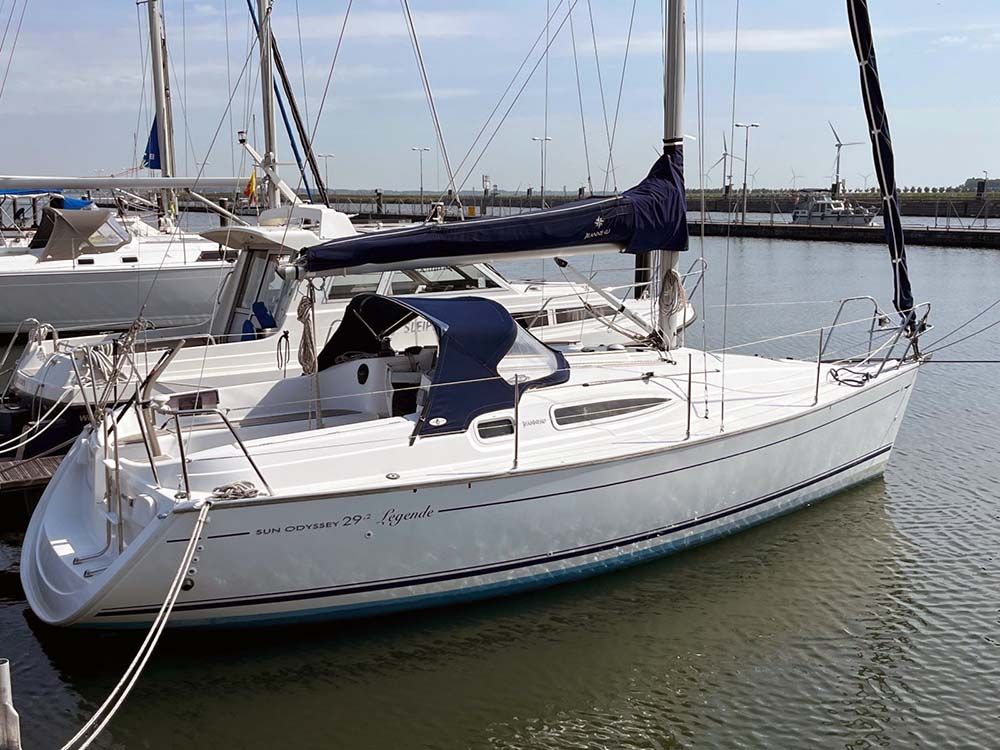
These boats share a similar European/U.S. design philosophy of prioritizing comfortable coastal cruising at manageable performance; the Jeanneau typically emphasizes a slightly more refined hull and finish aesthetic, while the Hunter leans into pragmatic U.S. production sensibilities with clever space use. For owners, the Jeanneau can feel a bit more “European” in fit and finish and sometimes demands less immediate interior updating, whereas the Hunter’s deck ergonomics and B&R rig make short-handed sailing exceptionally straightforward.
Buyers choosing between them should weigh available equipment and service history: both require routine rigging and sail maintenance, but the Jeanneau market may push buyers toward higher trim levels while the Hunter often offers more straightforward, owner-serviceable systems.
► Learn more about the Jeanneau Sun Odyssey 29.2
Hunter 290 vs Beneteau First 285
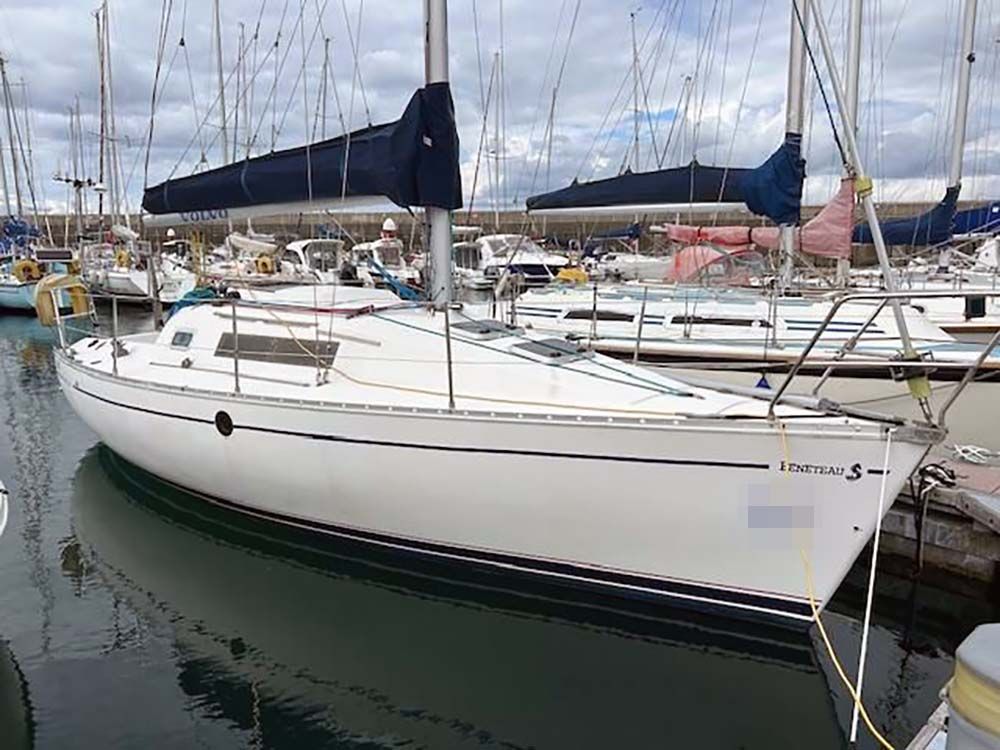
The Beneteau First 285 represents the sportier end of late-20th-century 28-footers, with lighter displacement and a performance tilt in some configurations; the Hunter 290, meanwhile, emphasizes cruising comfort and accommodation count. This results in a real difference on passage: a First 285 may accelerate more briskly and reward active sail trimming, while the Hunter will feel more comfortable and predictable for family cruising and less demanding to maintain.
From a maintenance and ownership angle the Hunter’s systems are aimed at ease of service and accessibility, making it friendlier for owner-mechanics; the Beneteau may require more attention to tuning and sail inventory to realize its performance potential.
► Learn more about the Beneteau First 285
Maintenance Costs of a Hunter 290 in the U.S.
Typical annual and significant ownership costs (each item bolded):
- Mooring/Slip fees — $1,200–$8,000+ per year depending on region (cheaper in inland/mid-Atlantic slips, expensive in California/New England marinas).
- Insurance — $400–$1,500+ per year depending on cruising range, owner experience and coverage limits.
- Engine servicing — $300–$900 per year for routine oil, filters, and annual checkups; more if injectors or major work needed.
- Antifouling/haulout — $500–$2,000 every 1–3 years depending on location, bottom condition and DIY vs pro.
- Standing and running rigging — Standing rigging replacement roughly every 10–15 years ($2,000–$6,000+), running rigging and hardware renewal more frequent depending on use.
- Sails — New cruising main and headsail can run $2,000–$6,000+; many owners stagger purchases and do patching/repair to extend life.
- Electronics & batteries — Upgrades or replacement (chartplotter, VHF, GPS, battery bank) can range $800–$5,000+ depending on depth of refit.
- General consumables & repairs — Zinc, anodes, hoses, minor gelcoat or woodwork: $300–$1,500 per year.
Region plays a big role: New England and California owners should budget toward the higher end for slip and haulout; Great Lakes and inland owners typically pay less. Significant one-time costs you should budget for include full sail replacement, a standing rigging change, or a full electronics refit—any of which can represent several thousand dollars. Practically, the Hunter 290 is eminently owner-maintainable for competent DIYers—engine access and system layout are friendly—so owners who do their own work will see markedly lower annual costs. Overall, ownership costs for the 290 are medium within its size class: higher than a trailer sailer, but lower than a larger passagemaker; the boat’s reasonable second-hand demand helps the owner recover many sensible investments at resale.
Conclusion
The Hunter 290 is a pragmatic, well-balanced choice for the coastal cruiser who values surprising interior volume, ease of handling and low operational complexity. Its strengths are the two-cabin layout, owner-friendly systems and a rig that simplifies short-handed sailing; its limitations are the modest seaworthiness envelope relative to larger passagemakers and the usual caveats about inspecting deck fittings, rigging and systems on older examples. For a couple or small family focused on weekend sailing, seasonal cruising and economical ownership, the Hunter 290 is a smart option and often represents good value in the used market. It’s not aimed at blue-water voyaging without upgrades, but for coastal cruising it offers a sensible blend of comfort, maintainability and price stability that makes it well worth seeking out.
Specifications
| Hull Type | Fin w/ bulb & spade rudder |
| Rigging Type | Fractional Sloop |
| LOA | 28.58 ft / 8.71 m |
| LWL | 26.92 ft / 8.21 m |
| Sail Area (reported) | 400.00 ft² / 37.16 m² |
| Beam | 10.75 ft / 3.28 m |
| Displacement | 7,400 lb / 3,357 kg |
| Ballast | 2,550 lb / 1,157 kg |
| Max Draft | 5.33 ft / 1.62 m |
| Construction | Fiberglass (FG) |
| First Built | 1999 |
| Last Built | 2002 |
| Builder | Hunter Marine (USA) |
| Designer | Hunter Design Team |
Auxiliary Power / Tanks (original equipment) | |
| Make | Yanmar |
| Type | Diesel |
| Horsepower | 18 HP |
| Fuel Capacity | 20 gal / 76 L |
Accommodations | |
| Water Capacity | 40 gal / 151 L |
Sailboat Calculations | |
| S.A. / Displ. | 16.91 |
| Bal. / Displ. | 34.46 |
| Disp. / Len. | 169.34 |
| Comfort Ratio | 17.64 |
| Capsize Screening Formula | 2.21 |
| S# | 2.79 |
| Hull Speed | 6.95 kn |
| Pounds/Inch Immersion | 1,034.02 lb/in |
Rig and Sail Particulars | |
| I | 32.00 ft / 9.75 m |
| J | 11.00 ft / 3.35 m |
| P | 29.08 ft / 8.86 m |
| E | 12.00 ft / 3.66 m |
| S.A. Fore | 176.00 ft² / 16.35 m² |
| S.A. Main | 174.48 ft² / 16.21 m² |
| S.A. Total (100% Fore + Main Triangles) | 350.48 ft² / 32.56 m² |
| S.A./Displ. (calc.) | 14.81 |
| Estimated Forestay Length | 33.84 ft / 10.31 m |
Disclaimer
The considerations and analyses presented regarding the Hunter 290 sailboat are of a general nature and are based on the available information and technical data on this model, interpreted to the best of our knowledge and understanding. It is important to note that the specific characteristics of any particular sailboat may vary due to custom modifications, maintenance performed, and conditions of use over time, among other factors. Therefore, the details and performance of the boat you are considering may not exactly match the information provided here.
We strongly recommend that, before making any purchasing or usage decisions, you conduct a detailed inspection of the boat in question, consult with nautical professionals and other sailors, and consider your personal needs, expectations, and capabilities. Each sailboat may have unique particularities that affect its performance and suitability for different types of sailing and sailors.
The information contained in this analysis should be used as a general guide and not as a definitive reference. Professional evaluation and personal inspection are essential to ensure that the boat meets your specific requirements and expectations.