



The Pearson 30 was introduced in the early 1970s by Pearson Yachts, a pioneering American production boatbuilder based in Rhode Island. Designed by William Shaw, the Pearson 30 was intended to bridge the gap between family cruising and club racing—a boat that could take a family out for a weeklong summer cruise yet still hold its own on the local racecourse. Its launch came at a time when fiberglass construction was transforming yacht building, and the Pearson 30 quickly established itself as a well-rounded, versatile sailboat. Today, it remains a popular choice on the used market, attracting buyers who want an affordable, responsive, and practical 30-footer. Demand is strongest among private owners and coastal cruisers, though some sailing schools have also appreciated its straightforward design for training purposes.
Design and Construction
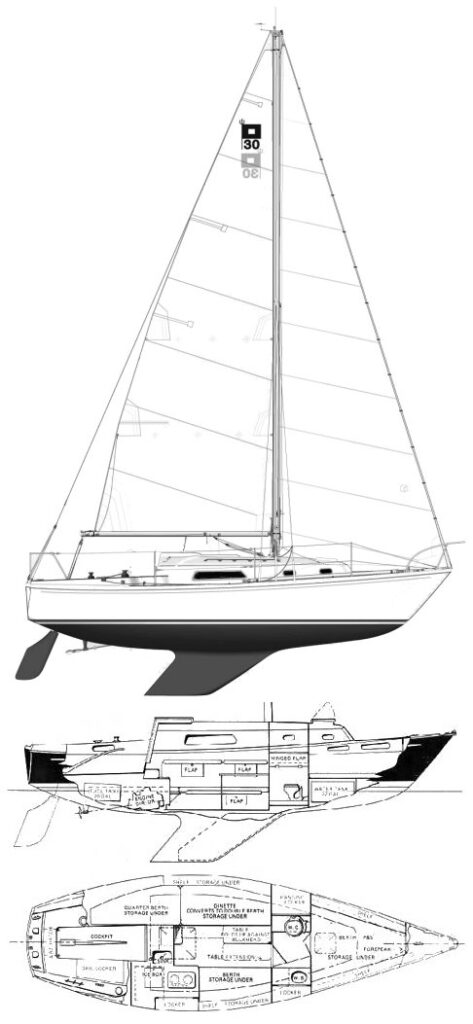
The Pearson 30 was built with a solid fiberglass hull and balsa-cored deck, an approach that balanced durability with weight savings. The hull features a fin keel and a skeg-hung rudder—a combination that provides stability, good directional control, and some protection for the rudder compared to fully exposed spade designs. This arrangement was forward-thinking in its day and remains appreciated for its blend of safety and handling.
The rig is a masthead sloop, simple to manage and efficient across a wide range of wind conditions. This choice made the boat accessible to less experienced sailors while still giving more advanced sailors scope for tuning and sail plan optimization. The design reflects sound naval architecture principles of the 1970s: a moderate beam that offers both interior space and performance, and a ballast-to-displacement ratio that ensures stiffness without making the boat excessively tender. The result is a structure that is relatively easy to maintain, resistant to hard use, and still carries decent resale value decades later.
Performance
Under sail, the Pearson 30 has earned a reputation for being quick and lively for its class. It accelerates well in light air, holds its course upwind better than many cruising contemporaries, and remains steady in moderate breezes. While not a heavy-displacement offshore yacht, it can handle coastal chop and moderate seas with confidence.
Compared to its direct competitors, the Pearson 30 is a touch faster and more performance-oriented than the Hunter 30, and in many cases, it can rival the Catalina 30 on the racecourse. Owners often describe it as “fun to sail,” especially when kept in good trim, and its skeg-hung rudder provides a reassuring balance between responsiveness and control in stronger conditions. This makes it particularly attractive for sailors who want a cruiser-racer blend rather than a pure comfort cruiser.
Comfort and Accommodations
Inside, the Pearson 30 offers a practical, no-frills layout. A V-berth forward, a head just aft, and a main saloon with settees and a fold-down table make for a comfortable family space. There is also a quarter berth aft and a compact galley. Ventilation is adequate, though not as generous as in later designs that featured larger opening hatches and more windows.
For a couple or small family, the accommodations are sufficient for weekend cruising and even longer coastal trips. However, the interior is not as spacious as the Catalina 30, which benefits from greater beam. Storage is adequate, though owners planning extended cruising often make modifications to improve locker space. Many boats on the market have had some level of interior refit, as upholstery and wood finishes naturally show their age after more than four decades.
Safety and Practicality
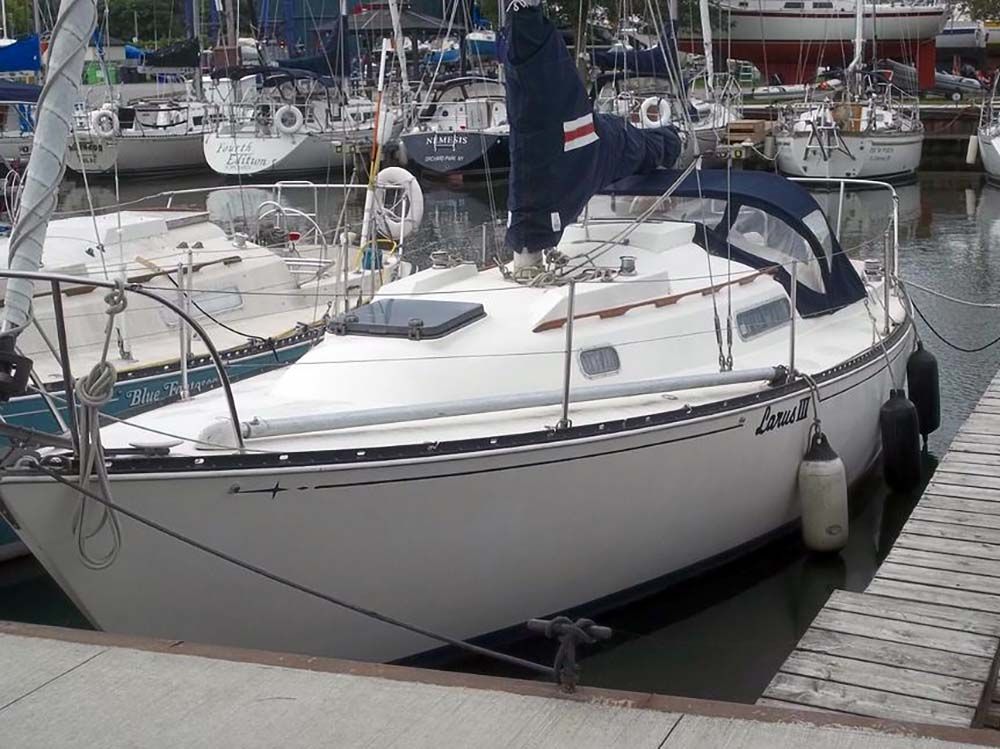
On deck, the Pearson 30 is straightforward and practical. Side decks are reasonably wide, the cockpit is deep and secure, and handholds are well-placed for moving around under sail. The skeg-hung rudder adds a safety factor by shielding the steering system from floating debris or accidental groundings.
The boat is manageable for shorthanded sailing, with most controls led within easy reach of the cockpit. It was designed primarily for coastal sailing, and while some owners have taken it further offshore, modifications such as reinforced rigging and upgraded safety gear are recommended for bluewater passages. System access is generally good, meaning routine maintenance is not overly complex, which reduces long-term ownership costs.
Known Issues with the Pearson 30
As with most boats of its vintage, the Pearson 30 has some common age-related issues. Deck core rot from water intrusion is perhaps the most significant concern, especially around fittings and chainplates. Blistering in the fiberglass hull can appear in neglected examples. The original inboard engines—often Atomic 4 gasoline models—may be unreliable today, leading many owners to repower with small diesels or even outboards mounted on brackets.
Standing rigging, if original, will certainly need replacement, and sails on many listings are overdue for renewal. Electrical systems often require modernization, as 1970s wiring is rarely up to today’s safety standards. Owners frequently recommend installing updated electronics, improving ventilation, and upgrading the galley. These issues are typical for the era and do not reflect flaws in design, but buyers should be prepared to invest in updates if the boat has not already been refitted.
Market Availability and Pricing in the U.S.
The Pearson 30 is no longer in production, but it is common on the used market, particularly in New England where Pearson Yachts had its strongest presence. They also appear regularly in the Chesapeake and Great Lakes regions. Florida and California listings exist but are less frequent. Condition varies from well-maintained examples that have been refit to inexpensive project boats.
In today’s market, prices typically range between $10,000 and $20,000, with particularly clean and upgraded examples fetching the higher end. This makes the Pearson 30 one of the most affordable entry points into a capable 30-foot sailboat. It is generally easier to resell than obscure brands, given the name recognition of Pearson and the active community of owners.
Below is a comparison with similar sailboats from the same era:
| Model | LOA | Years Built | Typical Price (U.S.) | Notable Differences |
|---|---|---|---|---|
| Pearson 30 | 30’ | 1971–1981 | $10,000–$20,000 | Good performance, skeg-hung rudder, simple interior |
| Catalina 30 | 30’ | 1974–2000s | $15,000–$30,000 | More interior volume, huge owner base, slower upwind |
| Hunter 30 | 30’ | 1973–1990s | $12,000–$25,000 | Comfortable, forgiving, less performance-oriented |
| C&C 30 | 30’ | 1970s–1980s | $12,000–$25,000 | Performance-focused, lighter displacement, smaller interior |
Pearson 30 vs Catalina 30

The Pearson 30 tends to show a more traditional, performance-minded hull form with relatively finer entries and a focus on tracking, while the Catalina 30 was designed to maximize interior volume and forgiving manners for a broad buyer market. For an owner this translates into the Pearson feeling a bit more solid through waves and responsive to sail trim, whereas the Catalina prioritizes roomy cabins and ease of use — helpful if your buyers care more about onboard comfort than getting the last knot of boat speed. In rigging and sailplan the Pearson often carries a straightforward, conservative setup that rewards attentive tuning, while the Catalina’s rig is typically set up for simpler handling and cruising-oriented reefing systems.
On the water, the Pearson will generally feel stiffer and a touch quicker in lighter airs and when sailed actively, while the Catalina’s higher form stability and larger beam produce comfortable, steady motion that passengers appreciate on family daysails. Interior-layout differences are practical: the Catalina usually offers larger berths, more headroom and storage, which lowers the need for aftermarket modifications; the Pearson’s layout is more compact but often better ventilated and easier to keep dry. Maintenance-wise both are older-production fiberglass boats so vigilance on deck hardware, chainplate integrity, and thru-hulls is necessary, but buyers who prefer simpler systems may find the Pearson’s sparser fittings cheaper to maintain.
For intended use, pick a Pearson if you want a boat that can be pushed for club races and still cruise sensibly; pick a Catalina if weekend or family cruising comfort, lower-stress sailing, and interior space are higher priorities. Overall, the trade-off is speed and a performance feel (Pearson) versus volume and cruising convenience (Catalina) — match that trade-off to how often and how ambitiously the buyer will sail.
► Learn more about de Catalina 30
Pearson 30 vs Hunter 30

Compared with the Hunter 30 family, the Pearson 30 reflects older design priorities of efficient underwater shape and conservative weight distribution, while Hunters lean toward maximizing ergonomics and ease-of-use with features like cockpit-friendly control layouts and more modern deck hardware. That means prospective owners who want traditional handling and a boat that reveals gains from sail-trim will favor the Pearson, whereas buyers seeking forgiving handling, simple single- or short-handed sailing, and user-friendly systems will appreciate the Hunter.
In practical sailing performance the Pearson usually tracks well and rewards active helming, offering crisper responses in a breeze; Hunters typically emphasize stability at low heel and comfortable helm balance rather than outright responsiveness. Rigging on Hunters often incorporates conveniences—self-tailing winches, better-led lines, and sometimes inboard furling options—that reduce the learning curve and maintenance burden for casual sailors, while the Pearson’s simpler rigging can be less expensive to repair but may require more hands-on trimming. Inside, Hunters generally push for maximizing liveaboard comforts and headroom which makes them attractive for families planning longer weekends, whereas the Pearson’s interiors are compact but thoughtfully arranged to minimize unnecessary systems and simplify upkeep. From a maintenance standpoint, Hunters sometimes have more built-in amenities (pressurized water systems, more electrical gear) which increases items to maintain, whereas the Pearson’s sparser outfitting can be an advantage for owners who prefer lower lifecycle costs.
Typical use recommendations follow: choose a Pearson if you want a boat that can be sailed actively, kept mechanically simple, and occasionally raced; choose a Hunter if you prioritize weekend comfort, easier short-handed sailing, and more creature comforts for family trips. The buyer decision ultimately balances whether they value hands-on sailing character and lower-tech maintenance (Pearson) versus user-oriented features and forgiving everyday handling (Hunter).
► Learn more about de Hunter 30
Pearson 30 vs C&C 30
The contrast between the Pearson 30 and a C&C 30 is most visible in hull intent: C&C designs were often targeted toward higher performance and racing potential, featuring sleeker sections, a more performance-tuned appendage layout, and a weight distribution favoring speed and acceleration. For owners this usually means the C&C will accelerate quicker, point higher to windward, and reward attentive sail handling, while the Pearson trades some peak performance for a steadier, more comfortable ride in a seaway.
Rigging on C&Cs is typically set up to support precise sail control—more robust vang and backstay systems, finer sheeting angles—so buyers keen on club racing or extracting performance will appreciate that, but should also accept the slightly higher maintenance and tuning attention required. In day-to-day handling the Pearson’s steadier motion and simpler systems make it easier to cruise with family without constant trimming, which reduces fatigue for casual owners and lowers wear on running rigging over time. Interior-wise the C&C often compromises some volume for a cleaner, race-oriented layout, whereas the Pearson gives up some speed potential for better creature comforts and storage—an important ownership consideration if you plan to cruise with kids or store gear for longer weekends. Maintenance expectations diverge: C&C owners should budget for more frequent rig tuning, sail inventory upkeep, and possible performance sail replacements, while Pearson owners will likely focus their maintenance on core systems and hull/through-hull care rather than high-performance gear.
Typical use guidance is clear—C&C suits buyers who want a boat that can double as a competitive club racer and spirited coastal cruiser; the Pearson suits buyers who want reliable cruising performance, lower-technical upkeep, and a comfortable platform for family sailing. In short, choose a C&C if performance and race-capability are primary, and choose a Pearson if steadiness, simpler maintenance, and family-oriented cruising matter more.
► Learn more about the C&C 30
Maintenance Costs of a Pearson 30 in the U.S.
Owning a Pearson 30 involves predictable expenses, though costs vary by region and whether the owner does the work personally. Typical annual costs include:
- Dockage or mooring: $2,500–$6,000 depending on location, with higher prices in New England and California.
- Insurance: $400–$800 annually, depending on coverage and sailing grounds.
- Engine maintenance: $500–$1,000 per year; higher if repowering from an older gasoline engine.
- Antifouling paint: $1,000–$2,000 per season, more in warmer climates.
- Rigging and sails: Standing rigging replacement every 10–15 years ($3,000–$5,000). A new sail package costs $2,500–$4,000.
- General upkeep: $1,000–$2,000 annually for pumps, electrical, safety gear, and small upgrades.
Major one-time expenses can include electronics refits ($3,000–$7,000), interior woodwork restoration, or replacing fuel and water tanks. Because the Pearson 30 is relatively simple, many owners handle a significant portion of maintenance themselves, which keeps costs down. Overall, its upkeep is considered low to moderate within the 30-foot coastal cruiser class, and resale value generally balances out long-term expenses.
Conclusion
The Pearson 30 is a well-rounded 30-footer that offers a compelling mix of performance and practicality. Its lively sailing qualities set it apart from more comfort-focused designs, while its simple interior and durable construction make it an accessible and affordable choice for many sailors. Weaknesses include age-related issues that demand vigilance, modest interior space compared to beamier competitors, and the need for system upgrades on many boats.
For sailors seeking an affordable, responsive coastal cruiser with club racing potential, the Pearson 30 remains an excellent option. It may not deliver the spacious accommodations of a Catalina 30 or the modern refinement of a Jeanneau, but it provides honest sailing pleasure and solid value. For buyers ready to maintain an older fiberglass yacht, it offers a stable resale market and a rewarding ownership experience.
Specifications
| Hull Type | Fin w/spade rudder |
| Rigging Type | Masthead Sloop |
| LOA | 29.79 ft / 9.08 m |
| LWL | 25.00 ft / 7.62 m |
| S.A. (reported) | 445.00 ft² / 41.34 m² |
| Beam | 9.50 ft / 2.90 m |
| Displacement | 8,320 lb / 3,774 kg |
| Ballast | 3,560 lb / 1,615 kg |
| Max Draft | 5.00 ft / 1.52 m |
| Construction | FG w/balsa cored deck |
| Ballast Type | Lead |
| First Built | 1971 |
| Last Built | 1981 |
| # Built | 1000 |
| Builder | Pearson Yachts (USA) |
| Designer | William Shaw |
| Auxiliary Make | Universal |
| Auxiliary Model | Atomic 4 |
| Auxiliary Type | Gas |
| Fuel Capacity | 20 gals / 76 L |
| Fresh Water Capacity | 22 gals / 83 L |
| S.A. / Displ. | 17.40 |
| Bal. / Displ. | 42.79 |
| Disp. / Len. | 237.71 |
| Comfort Ratio | 24.25 |
| Capsize Screening Formula | 1.88 |
| S# | 2.34 |
| Hull Speed | 6.70 kn |
| Pounds/Inch Immersion | 848.61 pounds/inch |
| I | 39.00 ft / 11.89 m |
| J | 12.67 ft / 3.86 m |
| P | 33.50 ft / 10.21 m |
| E | 11.83 ft / 3.61 m |
| S.A. Fore | 247.07 ft² / 22.95 m² |
| S.A. Main | 198.15 ft² / 18.41 m² |
| S.A. Total (100% Fore + Main) | 445.22 ft² / 41.36 m² |
| S.A. / Displ. (calc.) | 17.41 |
| Estimated Forestay Length | 41.01 ft / 12.50 m |
| Mast Height from DWL | 42.25 ft / 12.88 m |
Disclaimer
The considerations and analyses presented regarding the Pearson 30 sailboat are of a general nature and are based on the available information and technical data on this model, interpreted to the best of our knowledge and understanding. It is important to note that the specific characteristics of any particular sailboat may vary due to custom modifications, maintenance performed, and conditions of use over time, among other factors. Therefore, the details and performance of the boat you are considering may not exactly match the information provided here.
We strongly recommend that, before making any purchasing or usage decisions, you conduct a detailed inspection of the boat in question, consult with nautical professionals and other sailors, and consider your personal needs, expectations, and capabilities. Each sailboat may have unique particularities that affect its performance and suitability for different types of sailing and sailors.
The information contained in this analysis should be used as a general guide and not as a definitive reference. Professional evaluation and personal inspection are essential to ensure that the boat meets your specific requirements and expectations.