



The Hunter 336 is a mid-1990s coastal cruiser built by Hunter Marine and designed by Rob Mazza, aimed at owners who wanted maximum live-aboard comfort and easy handling in a compact, affordable package. It was conceived as a family-friendly cruiser rather than a club racer: wide beam, a big cockpit and an aft cabin give the feeling of a larger boat, and the production focus was on value, simple systems and roomy accommodations for weekenders and coastal voyagers. The model remains common on the used market in the U.S., sought after by budget-conscious sailors, first-time owners and those who prioritize interior volume and social cockpit space over cutting-edge performance.
Design and Construction
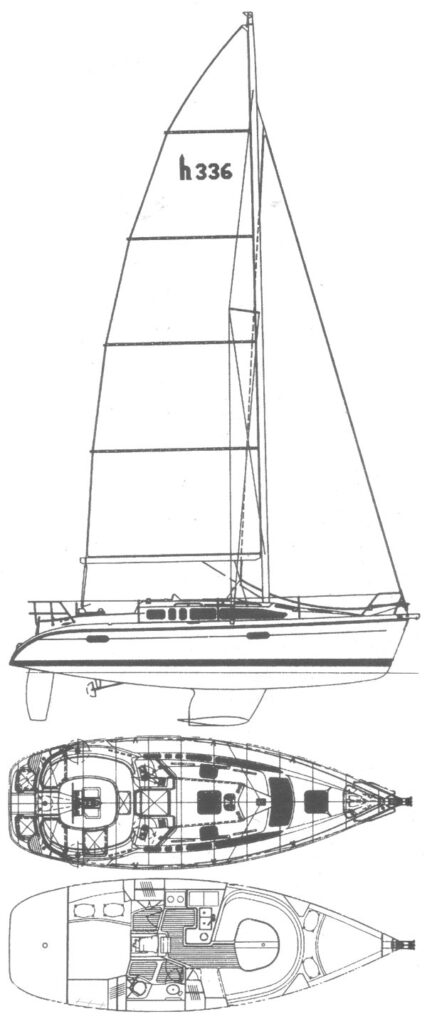
Hunter built the 336 with hand-laid fiberglass (GRP), a fin keel and an internally mounted spade rudder; the rig is Hunter’s characteristic B&R-style swept shroud arrangement, which allows a large, full-roached main and eliminates the need for a backstay. The hull’s relatively wide beam (about 11.6 ft) and moderate displacement prioritize initial stability and interior volume—deliberate tradeoffs that favor comfort and payload (tankage, stores and cruising gear) over light-air acceleration. From a practical ownership standpoint, GRP construction keeps repair options straightforward and cost-effective, but buyers should watch typical production-boat stress points: chainplate areas, deck-to-hull joints and around through-deck fittings, where water ingress over time can lead to localized repairs. The swept-shroud B&R rig simplifies sail handling for short-handed crews but concentrates loads differently than a traditional mast/backstay setup, which is relevant when planning rig inspections or future upgrades.
Performance
On the water the 336 sails like a comfortable coastal cruiser: its hull speed is in the low-to-mid sevens (knots) and the large roach main gives good power in light to moderate air, so passages along the coast will feel brisk compared with older, heavier 34-foot designs. The combination of broad beam and shallowish draft produces a confident initial stability and a forgiving motion, yet the boat will not point or accelerate like a modern performance cruiser—she trades a bit of windward bite for interior volume and easy handling. Rudder feel is generally direct and responsive, but owners emphasize regular checks on steering components and rudder bearings because the spade arrangement leaves those items load-bearing and exposed; with sensible sail selection and reefing practices the 336 is a predictable and practical coastal passagemaker.
Comfort and Accommodations
Perhaps the 336’s strongest selling point is its interior and cockpit ergonomics: saloon space and headroom punch above the hull’s length, and the aft cabin offers a double berth that many owners compare favorably to larger boats. Storage niches, galley layout and multiple configurations (including roomy settees and a generous cockpit that seats family and friends comfortably) make it attractive for weekenders and family holiday cruising. While it can be adapted for longer-term liveaboard use by a couple who are discipline-minded about stowage, the boat’s original systems and finish reflect its production era, so many buyers choose to refresh upholstery, electronics and galley fittings to suit multi-week cruising. Overall, the Hunter 336 is a social, family-first 34 footer rather than a spartan passagemaker.
Safety and Practicality
Deck layout and cockpit design prioritize simple, safe movement: wide sidedecks, a deep cockpit and sensible handholds make short-handed sailing manageable. The B&R rig and absence of a backstay reduce the need for some maneuvers (no backstay adjustments), but swept shrouds limit how far the mainsail can be eased without affecting headstay tension—something to consider if you frequently fly large downwind sails. Systems such as the common Yanmar or similar diesel auxiliary are accessible for routine servicing and most servicing tasks can be handled by competent yard technicians; however, if you plan serious offshore work you’ll want to invest in stronger through-hull checks, a professional steering survey and possibly reinforcement around deck fittings. For coastal cruising and family weekends the platform is practical and user-friendly; for extended offshore passages, proactive upgrades are advisable.
Known Issues with the Jeanneau Sun Odyssey 34.2
Owner groups and forum threads show recurring maintenance themes rather than fundamental design failures: occasional play or wear in the rudder post and bearings, points of concern around chainplates and deck fittings, and general aging issues tied to deferred maintenance on older production hulls. The B&R rig’s swept shrouds concentrate loads in predictable places—good for eliminating backstays but something to address during rig inspections—while some owners note the keel/hull joint and keel area should be checked for cracks or impact damage on any survey. Typical, practical recommendations from owners are to reseal or re-bed deck hardware, inspect/refresh standing rigging as a preventative measure, check rudder bearings and steering linkage, and budget for an electronics and sail refresh if the boat has original equipment.
Market Availability and Pricing in the U.S.
The Hunter 336 is no longer in production and is widely available only on the used market; because Hunter was a major U.S. builder, examples tend to be relatively easy to find around the East Coast, the Great Lakes and in many inland and Gulf marinas. Current listings commonly show asking prices clustered in the mid-five figures, with typical U.S. market ranges of roughly $25,000–$50,000 depending on year, equipment, condition and region—lower for simpler, project boats and higher for well-equipped, recently refitted examples. Compared with European imports the Hunter often represents a strong value for American buyers because local parts, familiarity among U.S. yards and a large owner community make maintenance and resale straightforward.
Below is a comparison with similar sailboats from the same era:
| Model | LOA | Years Built (approx.) | Typical Used Price (US, est.) | Main Differences |
|---|---|---|---|---|
| Hunter 336 | 33.5 ft | 1995–1997 | $25,000–$50,000 | Very roomy interior and cockpit for the size, B&R rig, U.S. production support and affordable entry price. |
| Catalina 34 (Mk I / Mk II) | 34.5–35.8 ft | 1985–2008 | $20,000–$80,000 | Extremely common in the U.S., conservative hull and rig, large owner community and easy parts/service. |
| Jeanneau Sun Odyssey 34.2 | 33.75 ft | ~1998–2002 | $45,000–$75,000 | European hull form, efficient interior, generally lighter and livelier sailing but pricier on resale in the U.S. |
| Beneteau Oceanis 343 | ~34 ft | 2003–2008 | $60,000–$95,000 | Newer hull shapes and systems, often better light-air performance and higher used prices for comparable condition. |
Hunter 336 vs Catalina 34

The Hunter 336 emphasizes interior volume and modern (for its time) cockpit ergonomics while the Catalina 34 trades some of that volume for a more conservative, time-tested hull and rig that are extremely familiar to U.S. yards. In practice the Hunter will feel roomier and more social in the cockpit and holds a marginal advantage for families who want the most liveable layout for weekends.
From an ownership perspective the Catalina’s ubiquity can make service and resale simpler—parts are easy to source and there’s a large buyer pool—whereas the Hunter can be slightly less liquid but often offers lower purchase price and better onboard comfort for the money.
► Learn more about de Catalina 34
Hunter 336 vs Jeanneau Sun Odyssey 34.2

Compared with the Sun Odyssey 34.2, the Hunter is generally more volume-focused with an emphasis on cockpit sociability and American production sensibilities; the Jeanneau leans toward a more modern European hull shape and often provides crisper light-air performance and slightly better upwind manners. That means sailors prioritizing passage speed and a lighter, more performance-oriented ride may prefer the Jeanneau, while those looking for maximum onboard comfort and a lower initial purchase price often find the Hunter more appealing.
► Learn more about de Jeanneau Sun Odyssey 34.2
Hunter 336 vs Beneteau Oceanis 343
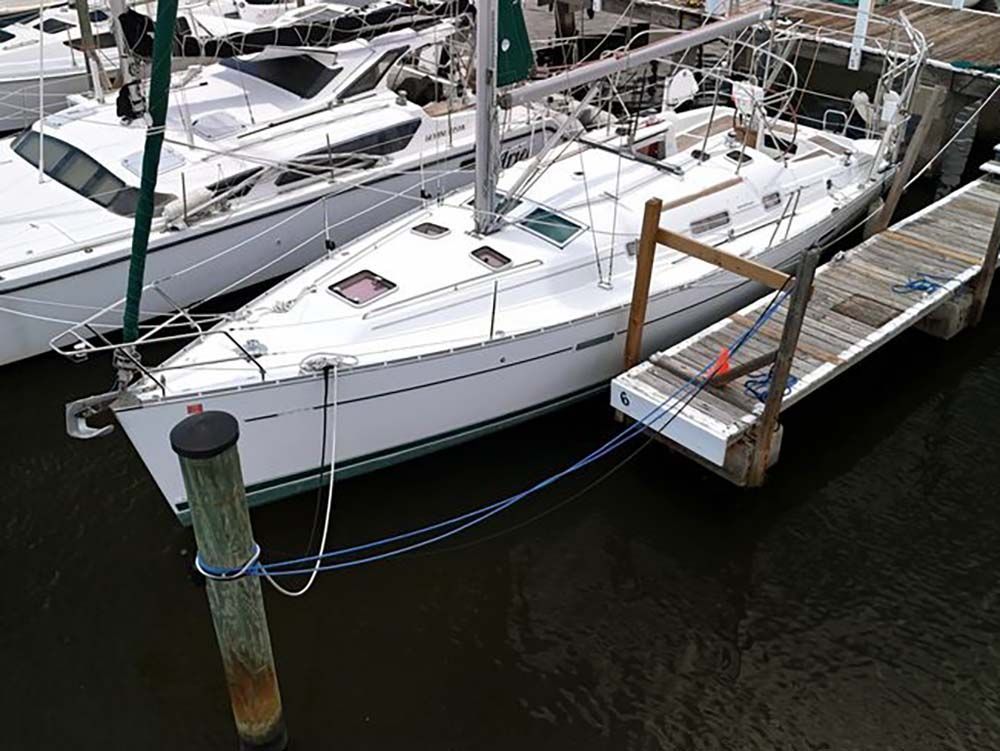
The Oceanis 343 represents a later trend toward wider sterns, more interior refinements and generally higher used prices; the Hunter answers with simplicity, lower buying cost and very generous cockpit and cabin space for its era. If your priority is modern systems and somewhat improved sailing numbers in light airs, the Beneteau has the edge; if you want to minimize purchase price while keeping a comfortable family cruiser, the Hunter remains competitive.
► Learn more about de Beneteau Oceanis 343
Maintenance Costs of a Hunter 336 in the U.S.
Below are practical, typical annual costs and notable one-time items—ranges depend on region, condition and how much work the owner does personally.
- Mooring / Slip or Marina Fees: $1,200–$12,000 per year — coastal marinas in the Northeast, Florida and premium West Coast harbors are at the top end.
- Insurance: $400–$1,800 per year — varies with cruising range, declared value and owner experience.
- Engine servicing (annual): $300–$1,200 — routine oil/filter changes, impeller, belts; expect higher bills for significant repairs.
- Antifouling & haulout (every 1–3 years): $600–$3,000 per haul/paint job — depends on paint choice and labor rates.
- Standing and running rigging (inspection / small repairs): $150–$800 annually for inspections/maintenance; full replacement every ~10–15 years: $3,000–$7,000.
- Sails (maintenance / replacement): $200–$1,000 yearly for repairs; new main + jib typically $2,500–$8,000 depending on cloth and cut.
- Electronics / navigation upgrades: $0–$6,000+ — upgrading chartplotter, AIS, autopilot improves safety and resale but adds upfront cost.
- Survey, winterization and consumables: $500–$3,000 per year — zincs, hoses, small repairs, insurance inspections.
Significant one-time costs to plan for include major sail replacement, rudder or keel repairs if a survey flags issues, and substantial deck-core or chainplate repairs if moisture damage is found. Many routine tasks (bottom painting, cleaning, minor systems work) are owner-doable and reduce cost, but structural, mechanical and certified surveys require professionals. Overall ownership for a Hunter 336 typically falls into the medium cost band for a 33–34-foot production cruiser: purchase prices are relatively low, but prudent buyers should maintain a reserve for periodic rig, sail and systems renewals. Properly maintained examples tend to hold reasonable resale value within the domestic used-boat market because Hunters are familiar to U.S. buyers and yards
Conclusion
The Hunter 336 is a pragmatic choice for buyers who prioritize interior volume, a social cockpit and an affordable entry into 30-plus-foot cruising. Its strengths are clear: big-boat accommodations on a modest budget, straightforward systems, and sailing characteristics that are forgiving and predictable in coastal conditions. Weaknesses are largely those of age and production-boat economics—expect to inspect rigging, deck fittings and steering components carefully and to budget for sail and electronics refreshes if you want modern reliability.
For someone seeking a comfortable coastal cruiser or a family-friendly weekender with the flexibility to upgrade systems over time, the Hunter 336 is worth pursuing; it represents good value for coastal cruising and weekend use, and when kept in sound condition it remains reasonably easy to resale to the broad American market that knows and trusts the Hunter name.
Specifications
| Hull Type | Fin w/bulb & spade rudder |
| Rigging Type | B&R |
| LOA | 33.50 ft / 10.21 m |
| LWL | 28.58 ft / 8.71 m |
| S.A. (reported) | 573.00 ft² / 53.23 m² |
| Beam | 11.67 ft / 3.56 m |
| Displacement | 11,030.00 lb / 5,003 kg |
| Ballast | 4,100.00 lb / 1,860 kg |
| Max Draft | 4.50 ft / 1.37 m |
| Construction | FG |
| First Built | 1995 |
| Builder | Hunter Marine (USA) |
| Designer | Rob Mazza |
| Auxiliary Power | Yanmar 3GM30F, Diesel, 27 HP |
| Fuel | 30 gals / 114 L |
| Water | 80 gals / 303 L |
| S.A. / Displ. | 18.57 |
| Bal. / Displ. | 37.17 |
| Disp. / Len. | 210.93 |
| Comfort Ratio | 21.50 |
| Capsize Screening Formula | 2.10 |
| S# | 2.75 |
| Hull Speed | 7.16 kn |
| Pounds/Inch Immersion | 1,191.73 pounds/inch |
| I | 43.00 ft / 13.11 m |
| J | 11.48 ft / 3.50 m |
| P | 43.63 ft / 13.30 m |
| E | 15.00 ft / 4.57 m |
| S.A. Fore | 246.82 ft² / 22.93 m² |
| S.A. Main | 327.23 ft² / 30.40 m² |
| S.A. Total | 574.05 ft² / 53.33 m² |
| S.A. / Displ. (calc.) | 18.60 |
| Est. Forestay Length | 44.51 ft / 13.57 m |
| Mast Height from DWL | 56.00 ft / 17.07 m |
Disclaimer
The considerations and analyses presented regarding the Hunter 336 sailboat are of a general nature and are based on the available information and technical data on this model, interpreted to the best of our knowledge and understanding. It is important to note that the specific characteristics of any particular sailboat may vary due to custom modifications, maintenance performed, and conditions of use over time, among other factors. Therefore, the details and performance of the boat you are considering may not exactly match the information provided here.
We strongly recommend that, before making any purchasing or usage decisions, you conduct a detailed inspection of the boat in question, consult with nautical professionals and other sailors, and consider your personal needs, expectations, and capabilities. Each sailboat may have unique particularities that affect its performance and suitability for different types of sailing and sailors.
The information contained in this analysis should be used as a general guide and not as a definitive reference. Professional evaluation and personal inspection are essential to ensure that the boat meets your specific requirements and expectations.