


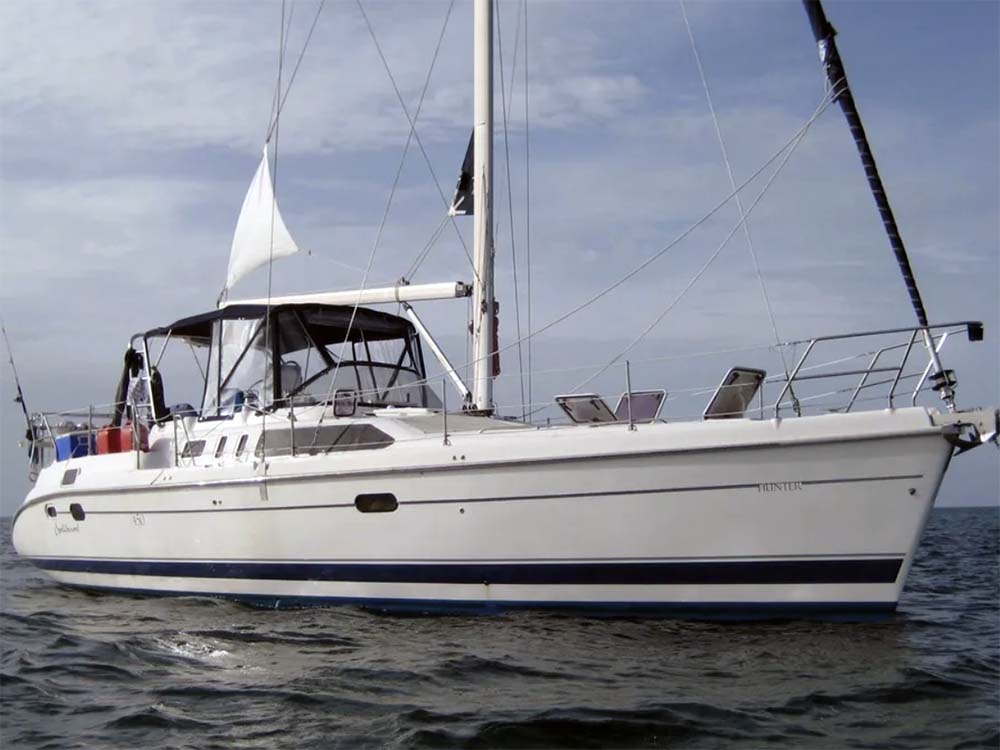
The Hunter 420 is a center-cockpit cruiser developed by the Hunter Design Team and produced by Hunter Marine between the late 1990s and the early 2000s. Conceived as a comfortable family cruiser rather than a club racer, the 420 blends a roomy, liveable interior with a sailplan (the B&R fractional rig) and deck layout aimed at short-handed handling and safe coastal passagemaking. Its launch target was couples and small families who wanted seaworthy 40-plus foot accommodations without the complexity of a pure blue-water yacht, and the model found steady demand on the used market for exactly that reason. Today the 420 is commonly offered as a second-hand buy and attracts private owners and cruisers looking for a cost-effective liveaboard or coastal cruiser; you’ll also see occasional examples marketed by brokers and yards in major U.S. sailing centers.
Design and Construction
Hunter’s 420 uses a conventional fiberglass monohull with a fin keel (standard deeper keel and a shoal-draft option) and an internally mounted spade rudder, paired with the manufacturer’s characteristic B&R swept-fractional rig. The center-cockpit layout creates an aft owner’s suite and a protected cockpit, while the stainless-steel mainsheet arch and integrated systems reflect Hunter’s focus on practical ergonomics and cockpit safety. Construction is production fiberglass with molded structural framing and core where specified; that approach keeps manufacturing cost and weight reasonable and makes routine repair straightforward for most yards. From a naval-architecture perspective, the design favors interior volume and initial comfort (beam carried well aft, broad deckhouse) over an ultra-slim racing hull. For a prospective owner that translates into a boat that is forgiving and comfortable in mixed conditions, with predictable maintenance needs (core/deck inspection, chainplate and through-deck bond checks) rather than exotic structure to worry about.
Performance
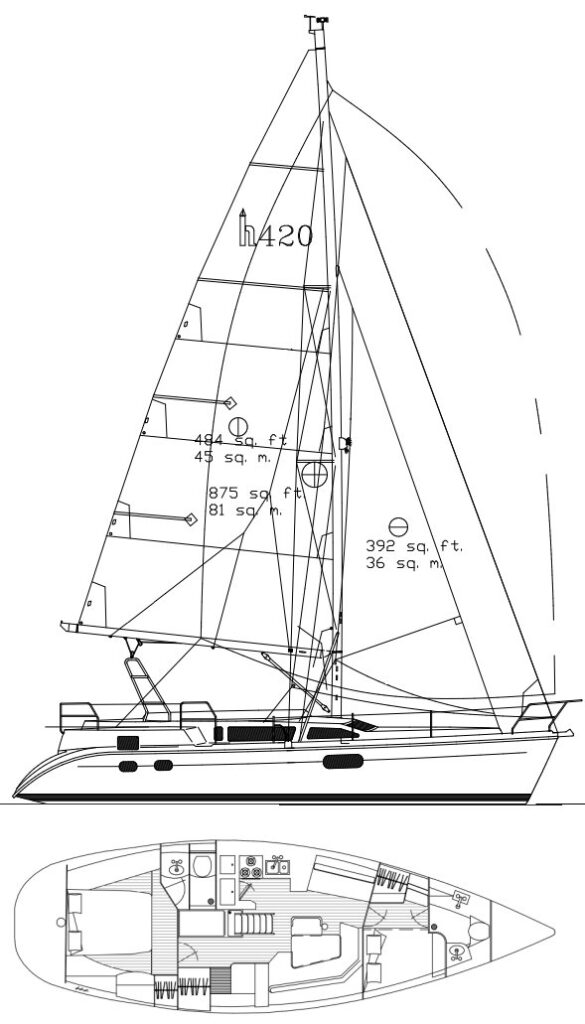
On the water the Hunter 420 is best described as a cruising yacht with respectable speed for its class rather than a performance-oriented design. The B&R rig provides a powerful mainsail shape with swept-back spreaders that reduce the need for a backstay and simplify sail handling, so short-handed crews find reefing and trimming manageable; the hull and keel choices give solid upwind ability for a cruiser, with a comfortable motion in a chop thanks to moderate displacement and a fairly generous beam. In light airs the 420 will not outpace lighter, more performance-oriented 42-footers, but in 8–20 knots it behaves confidently, tracks steadily and responds predictably to sail changes — traits praised by many owners who use the boat for multi-week coastal cruising. Owners’ reports and owner-forum discussions commonly highlight its ease of handling and comfortable ride, while noting that racing-oriented sailors will find the trade-offs toward comfort evident.
Comfort and Accommodations
Comfort is where the 420 scores heavily. The center-cockpit arrangement yields a private aft stateroom separated from the social areas — a very practical layout for couples or families who desire privacy aboard. The saloon and galley are laid out for cruising life: usable countertops, good locker space, a dinette that converts when needed, and headroom that makes living aboard easier than on older, lower-profile boats. Ventilation and natural light are adequate for temperate climates, and many later owners add targeted upgrades (additional fans, upgraded refrigeration or insulation) to extend liveaboard comfort for longer seasons. The joinery and finish on production Hunters are functional and age reasonably well; it’s common to see modest refits that modernize upholstery and electronics rather than wholesale structural changes, so buyers frequently find boats that are cosmetically refreshed to suit modern tastes.
Safety and Practicality
The 420’s center cockpit and mainsheet arch create a cockpit that feels secure and uncluttered, with good handholds and a defined working area for sail handling. Boarding via the walk-through transom and swim platform is easy — a practical advantage for family cruising and anchoring in summer destinations. For single- or short-handed sailing the fractional rig and roller-furling headsails minimize the need to go forward in rough weather; combined with robust winch placement, this makes managing sail changes with limited crew broadly realistic. Systems access is typical for production boats of this era: routine servicing of engine and systems is straightforward, but major engine or keel work still requires yard facilities. As-built the Hunter 420 is primarily a coastal and near-offshore cruiser; owners who plan extended ocean passages generally invest in redundancy (navigation, communications) and checks on tankage and seacocks before committing to long offshore legs.
Known Issues with the Hunter 420
Across owner reports and forum archives there are recurring itemized concerns a buyer should check for during survey:
- Deck-fitment bond and chainplate area: like many production cruisers, older sealant around fittings and chainplates can degrade and should be closely inspected during a survey.
- Systems/engine age: original installations (commonly Yanmar diesels in the 40–50 hp range) may have localized issues such as exhaust elbow deterioration or injection-pump wear if not maintained.
- Interior wear from charter or heavy use: cushions, cabinetry trim and heads show the typical cosmetic wear that many buyers refurbish rather than fully replace.
- Electronics obsolescence: older factory electronics are frequently replaced with modern multifunction displays.
Commonly recommended upgrades include modernizing navigation/electrical systems, fitting a more efficient prop or folding propeller to reduce drag under sail, and proactive resealing of deck hardware. These are routine, expected investments rather than structural red flags, but they affect the negotiation and ownership plan.
Market Availability and Pricing in the U.S.
The Hunter 420 is out of production and is available exclusively on the used market; many listings from late 1990s–early 2000s boats appear in U.S. coastal regions, notably Florida, the Mid-Atlantic/New England corridor and California. Inventory typically includes privately maintained cruisers, some broker-refitted examples and occasional ex-charter or yard-stored boats. Recent listing aggregates indicate typical asking prices in the U.S. marketplace clustering around $85,000–$130,000, with variations according to year, equipment level and refit history — earlier or cosmetically tired hulls can be below that band while freshly refit or lightly used examples approach the top end. Relative to contemporaries, the 420 generally offers good value for buyers seeking comfortable liveaboard features in a 42-foot hull and benefits from an active owner community, which helps with parts and practical owner knowledge.
Here is a comparison with three similar sailboats from the same era and size range:
| Model | LOA | Years Built (approx.) | Typical Used Price (U.S.) | Main Differences |
|---|---|---|---|---|
| Hunter 420 | ~43.4 ft | ~1998–2004 | $85,000–$130,000 | Center-cockpit, B&R fractional rig, owner-friendly cockpit arch, emphasis on private aft cabin and cockpit protection. |
| Jeanneau Sun Odyssey 42 DS | ~42.4 ft | ~2007–2011 | $110,000–$190,000 | Deck-saloon layout with panoramic glazing, lighter European styling, emphasis on interior light and modern lines. |
| Beneteau Oceanis 423 | ~42 ft | ~2003–2007 | $85,000–$170,000 | Production-focused interior volume and multiple layout options; comparable sailing characteristics with slight differences in finish and options. |
| Catalina 42 (MkII / similar) | ~42 ft | ~1990s–2000s | $60,000–$140,000 | Heavier displacement, conservative American design, reputation for simple systems and strong owner base in the U.S. |
Hunter 420 vs Jeanneau Sun Odyssey 42 DS

The Hunter 420 prioritizes a protected center cockpit and a private aft cabin, giving it strong appeal for couples who value separation between living and sleeping spaces; the Sun Odyssey 42 DS instead emphasizes the deck-saloon concept with large windows and a lighter, more open saloon feel. In practical ownership terms the Jeanneau’s DS layout often commands a premium for interior ambiance and modern European styling, while the Hunter can be simpler to maintain and more traditionally American in serviceability and parts availability, which matters to buyers who plan extensive DIY upkeep.
Under sail the two feel familiar as comfortable cruisers but with different emphases: the Hunter’s B&R rig and center cockpit create easy sail handling and a secure helm, whereas the Jeanneau tends to offer slightly crisper upwind performance and more natural light below; both require similar routine maintenance but the Jeanneau’s glazing and higher coachroof area add a few inspection items that the Hunter’s more conservative deck layout avoids.
► Learn more about de Jeanneau Sun Odyssey 42 DS
Hunter 420 vs Beneteau Oceanis 423
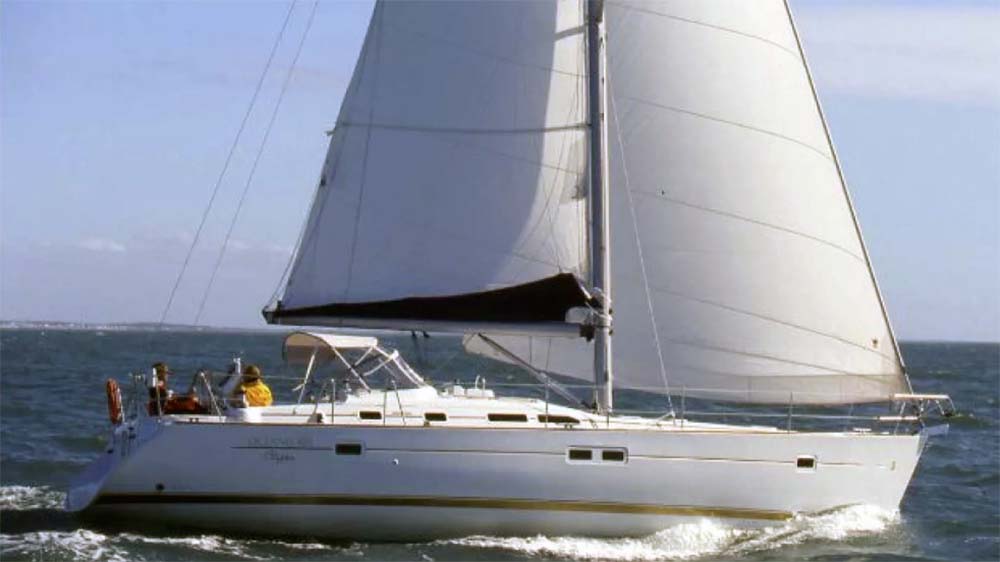
Both the Hunter 420 and Oceanis 423 are designed as family cruisers with an eye toward interior volume, but the Hunter often places more emphasis on cockpit protection and a dedicated aft suite, while the Oceanis line tends to optimize for modular interior layouts and sheer saloon space. Buyers comparing them will weigh the Hunter’s simpler systems and American support network against the Oceanis’s flexible layouts and sometimes more modern mass-production finishes.
Performance differences are subtle: both are competent coastal cruisers with predictable handling; the Oceanis may feel a touch lighter under sail depending on rig and keel choice, while the Hunter’s B&R rig offers one-less backstay and a mainsail shape that some short-handed sailors prefer. Maintenance and spare part sourcing may favor the Hunter in North America, though Beneteau’s dealer network is extensive enough that either model is serviceable.
► Learn more about de Beneteau Oceanis 423
Hunter 420 vs Catalina 42 MkII

Comparing the Hunter 420 with a Catalina 42 reveals a contrast between Hunter’s more modern features (mainsheet arch, B&R rig) and Catalina’s conservative, heavier approach focused on rugged simplicity. The Catalina frequently attracts buyers looking for a workmanlike platform with lower purchase price and easy-to-understand systems, while the Hunter offers more contemporary conveniences and a layout built around protected cockpit living.
Sailing behavior reflects that split: Catalina’s heavier displacement produces a steady, solid feel in confused seas, whereas the Hunter often feels a bit nimbler and more responsive, particularly in moderate conditions. For cost-minded buyers who intend to DIY many services, Catalina’s simpler fittings and long U.S. service history can be attractive; for owners wanting a more modern cruising experience with an emphasis on cockpit ergonomics, the Hunter retains an edge.
► Learn more about de Catalina 42 MkII
Maintenance Costs of a Hunter 420 in the USA
- Mooring/Marina fees: $3,000–$12,000/year depending on region (New England and California at the high end; Gulf or inland marinas lower).
- Insurance: $800–$3,000/year based on cruising range and coverage limits.
- Engine servicing: $500–$1,500/year for routine maintenance; larger repairs or replacement parts add significantly.
- Antifouling & haulout: $500–$3,000 every 1–2 years depending on whether you haul or use in-water services and on regional yard rates.
- Standing & running rigging: inspections low cost annually; plan $3,000–$8,000 for full rigging renewal every decade or so.
- Sails: maintenance modest annually; expect $6,000–$18,000 for a full set replacement depending on materials and cut.
Significant one-time expenses buyers should plan for include major electronics refits ($3,000–$15,000), propeller upgrades ($800–$2,500), and any structural or gelcoat refits which can easily exceed $10,000–$30,000 if comprehensive. Many routine tasks — winterization, simple engine servicing, some interior updates — can be owner-performed to reduce costs, but rigging work, major engine repairs and certified electrical/insurance-required jobs will require professionals. Overall, the Hunter 420 sits in the medium cost band for a 42-foot cruising boat: not cheap to run, but not unusually expensive given its size and accommodation level. With reasonable maintenance and sensible upgrades, resale value commonly reflects the investment, especially for boats with documented refits and sound surveys.
Conclusion
The Hunter 420 is a pragmatic, well-thought-out family cruiser that favors protected cockpit living, straightforward sail handling and comfortable accommodation over race-oriented performance. Its strengths are the private aft cabin, easy short-handed sailing thanks to the B&R rig and a production construction approach that keeps maintenance predictable and parts accessible. Weaknesses are the usual ones for production boats of its era: cosmetic wear on older examples, the need to check deck bonding and chainplate areas carefully, and the potential cost of modernizing electronics or sails. For couples or families seeking a reliable coastal cruiser with the capacity for multi-week cruising and comfortable liveaboard spells, the 420 is a solid choice and usually represents fair value in the used market. It is a particularly good match for buyers who want a comfortable, secure cockpit and private aft owner’s cabin without stepping up to much larger or more technically demanding yachts; with proper survey and reasonable upgrades it can hold resale value well in its class.
Specifications
| Hull Type | Fin w/spade rudder |
| Rigging Type | B&R |
| LOA | 43.42 ft / 13.23 m |
| LWL | 37.83 ft / 11.53 m |
| S.A. (reported) | 823.00 ft² / 76.46 m² |
| Beam | 13.83 ft / 4.22 m |
| Displacement | 19,500 lb / 8,845 kg |
| Ballast | 6,700 lb / 3,039 kg |
| Max Draft | 6.42 ft / 1.96 m |
| Construction | Fiberglass (FG) |
| Ballast Type | Lead |
| First Built | 1998 |
| Last Built | 2004 |
| Builder | Hunter Marine (USA) |
| Designer | Hunter Design Team |
Auxiliary Power / Tanks (original equipment) | |
|---|---|
| Make | Yanmar |
| Type | Diesel |
| HP | 50 |
| Fuel | 13 gals / 49 L |
Accommodations | |
| Water | 145 gals / 549 L |
Sailboat Calculations | |
| S.A. / Displ. | 18.25 |
| Bal. / Displ. | 34.36 |
| Disp. / Len. | 160.80 |
| Comfort Ratio | 23.08 |
| Capsize Screening Formula | 2.06 |
| S# | 3.38 |
| Hull Speed | 8.24 kn |
| Pounds/Inch Immersion | 1,869.41 pounds/inch |
Rig and Sail Particulars | |
| I | 47.75 ft / 14.55 m |
| J | 16.17 ft / 4.93 m |
| P | 45.42 ft / 13.84 m |
| E | 19.25 ft / 5.87 m |
| S.A. Fore | 386.06 ft² / 35.87 m² |
| S.A. Main | 437.17 ft² / 40.61 m² |
| S.A. Total (100% Fore + Main Triangles) | 823.23 ft² / 76.48 m² |
| S.A./Displ. (calc.) | 18.25 |
| Est. Forestay Length | 50.41 ft / 15.36 m |
| Mast Height from DWL | 61.00 ft / 18.59 m |
Disclaimer
The considerations and analyses presented regarding the Hunter 420 sailboat are of a general nature and are based on the available information and technical data on this model, interpreted to the best of our knowledge and understanding. It is important to note that the specific characteristics of any particular sailboat may vary due to custom modifications, maintenance performed, and conditions of use over time, among other factors. Therefore, the details and performance of the boat you are considering may not exactly match the information provided here.
We strongly recommend that, before making any purchasing or usage decisions, you conduct a detailed inspection of the boat in question, consult with nautical professionals and other sailors, and consider your personal needs, expectations, and capabilities. Each sailboat may have unique particularities that affect its performance and suitability for different types of sailing and sailors.
The information contained in this analysis should be used as a general guide and not as a definitive reference. Professional evaluation and personal inspection are essential to ensure that the boat meets your specific requirements and expectations.