


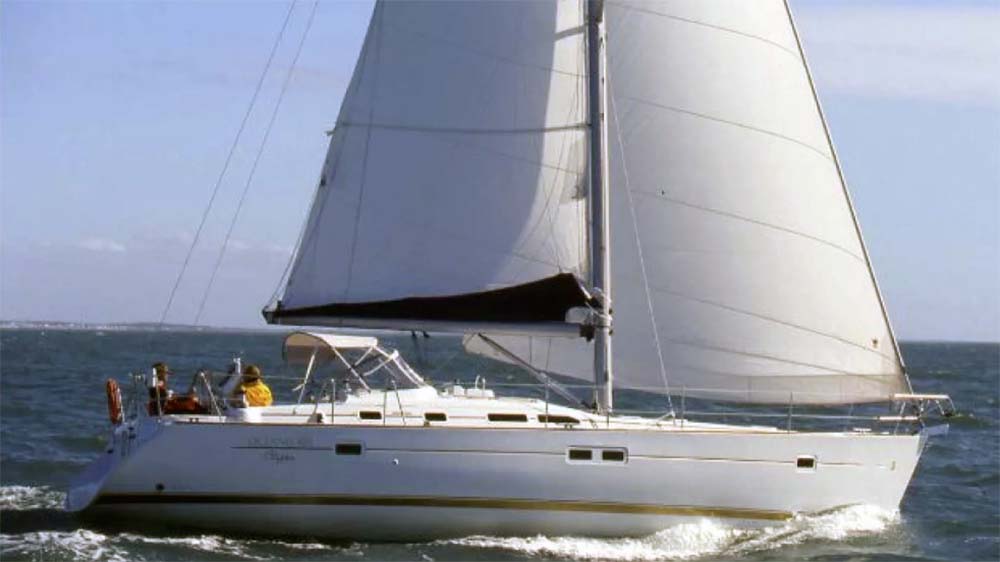
The Beneteau Oceanis 423 is a modern cruising sailboat designed primarily for comfortable bluewater or coastal cruising, with a layout and construction aimed at private owners, charter companies, and long-distance liveaboards. First introduced in the early 2000s by the renowned French builder Beneteau and designed by Groupe Finot, the 423 emerged during a wave of innovations in the cruising segment, with an emphasis on livability, ease of handling, and production efficiency. Its success on the international market was considerable, and it remains a sought-after model in the second-hand market today—particularly among cruising couples, sailing schools, and small families looking for a dependable, spacious, and well-equipped yacht under 45 feet.
Design and Construction
The Oceanis 423 features a moderate displacement hull with a fine entry, rounded stern sections, and an integral swim platform—a hallmark of the post-2000s cruising class. Its underbody includes a fin keel with a bulb for enhanced lift and reduced draft, paired with a spade rudder for responsive steering. The rig is a masthead sloop, simple and efficient, ideal for both short-handed sailing and cruising versatility.
Construction is primarily fiberglass (solid below the waterline, cored above), ensuring long-term durability with relatively low maintenance. The deck and cabin house are also reinforced with balsa core for stiffness and insulation. One of the design’s strengths is its practical, balanced layout: wide side decks, generous beam carried well aft, and a large cockpit with twin wheels—making for easy movement under sail and while at anchor. These design choices translate to good long-term value, simplified repairs, and solid resale appeal.
Performance
While the Oceanis 423 is no racer, it performs commendably for a cruiser. It carries enough sail area to move confidently in light to moderate airs and remains stable and predictable in heavy weather. The deep keel version (6’11”) offers better upwind ability, while the shoal draft (5’7″) variant is ideal for coastal cruising and gunkholing.
The helm is balanced and offers decent feedback, though some sailors note weather helm in gusty conditions. Compared to similar models like the Hunter 44 or Jeanneau Sun Odyssey 43 DS, the 423 holds its own in terms of tracking and overall speed, particularly on a reach. Its motion is relatively gentle thanks to moderate displacement and a generous beam, making it suitable for longer passages.
Comfort and Accommodations
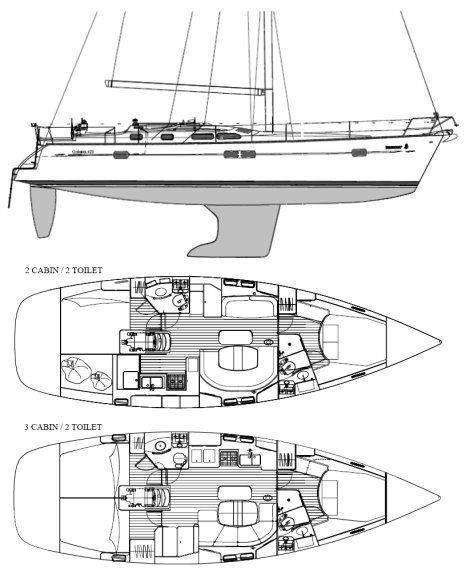
Interior comfort is one of the 423’s standout features. The saloon is wide and airy, with abundant natural light from hull ports and deck hatches. Layouts varied from 2- to 3-cabin versions, including options with a large owner’s cabin aft or forward, all with ample headroom (over 6’3”), solid wood joinery, and well-finished cabinetry.
For couples planning extended cruising, the two-cabin version offers massive storage and living space, while the three-cabin model remains practical for charters or families. The galley is U-shaped and secure underway, with decent counter space, a double sink, and large refrigeration capacity. Ventilation is good, though some owners retrofit additional fans or solar vents for tropical sailing. The interior generally ages well, though headliners and synthetic sole sections may need attention in older models.
Safety and Practicality
On deck, the Oceanis 423 is thoughtfully laid out for safe and practical sailing. The twin-wheel cockpit provides excellent visibility and access, with all lines led aft to winches within reach of the helm. The side decks are uncluttered, and the molded non-skid offers reliable footing.
High cockpit coamings add comfort but can be a challenge during boarding from a dock. The transom swim platform and integrated ladder provide easy water access—a plus for both recreation and safety. The boat is manageable with two people, and many owners report cruising single- or short-handed with ease. Systems access (plumbing, engine, tanks) is reasonable, and parts for its original Volvo or Yanmar engines remain widely available in the U.S., keeping maintenance costs moderate.
Known Issues with the Beneteau Oceanis 423
Common issues on the Oceanis 423 include:
- Leaky deck fittings or portlights, particularly in earlier models—usually addressed by resealing.
- Worn rudder bearings, especially if the boat was heavily used in charter—causing play at the helm.
- Electrical system upgrades are common, as factory-installed panels and wiring may be limited for modern cruising demands.
- Hatch crazing (UV damage) and headliner delamination in tropical climates.
Recommended upgrades include replacing the fixed three-blade prop with a feathering model for better performance under sail, solar or lithium systems for long-term cruising, and upgrading navigation electronics. Osmosis reports are rare, though a careful pre-purchase survey is still advised.
Market Availability and Pricing in the U.S.
The Beneteau Oceanis 423 is no longer in production, but the used market offers steady availability, especially in charter-friendly regions like Florida, the Caribbean, and California. Most examples range from $100,000 to $145,000 depending on year, condition, equipment, and whether the boat was previously in charter. Private-owner boats tend to be better maintained and hold stronger resale value.
Buyers will find that this model offers a very favorable cost-to-comfort ratio. Compared to peers, it’s easier to resell thanks to strong brand recognition and a wide base of experienced Beneteau owners.
Here is a comparison with three similar models commonly considered by cruisers:
| Model | LOA | Year | Used Price (USD) | Key Differences |
|---|---|---|---|---|
| Beneteau Oceanis 423 | 43.0 ft | 2003–2007 | $100,000–$145,000 | Spacious, good light, excellent value |
| Jeanneau Sun Odyssey 43 DS | 43.3 ft | 2001–2006 | $95,000–$135,000 | Raised saloon, sleek lines, more modern interior |
| Hunter 44 AC | 44.3 ft | 2003–2007 | $90,000–$130,000 | Beamy, B&R rig, spacious aft cabin |
| Catalina 42 MkII | 42.0 ft | 1996–2008 | $85,000–$125,000 | Classic layout, robust construction, strong U.S. following |
Beneteau Oceanis 423 vs Jeanneau Sun Odyssey 43 DS

The Beneteau Oceanis 423 and the Jeanneau Sun Odyssey 43 DS share a similar design philosophy as mid-2000s French-built cruising yachts focused on comfort, but they differ in execution. The Oceanis 423 features a conventional coachroof layout, prioritizing a balanced sailing profile and slightly sportier handling, while the 43 DS (Deck Salon) emphasizes elevated interior volume and light-filled spaces at the cost of a higher center of gravity and marginally reduced windward performance. Under sail, the Oceanis tends to feel livelier and more responsive, especially in moderate breezes, whereas the Jeanneau delivers steadier motion and superior interior visibility for extended living aboard.
From an ownership perspective, the 43 DS appeals to cruisers valuing comfort and interior aesthetics—excellent for liveaboard use or charter—while the 423 suits sailors seeking better trim feedback and helm responsiveness during longer coastal passages. Maintenance complexity is similar, though the Jeanneau’s deck salon glazing and headliner systems can add service costs over time. For most buyers, the choice reflects lifestyle priorities: the Oceanis 423 favors those who sail actively; the Sun Odyssey 43 DS favors those who live aboard extensively.
► Learn more about de Jeanneau Sun Odyssey 43 DS
Beneteau Oceanis 423 vs Hunter 44 AC

The Hunter 44 AC (Aft Cockpit) represents an American interpretation of the same cruising market—easy handling, comfort, and strong value—but with different design principles. The Oceanis 423’s hull and rig are more performance-oriented, with a deeper fin keel and conventional rig that rewards attentive sail trim, whereas the Hunter relies on its B&R rig and stainless arch for simplified sail handling, appealing to sailors who prefer minimal adjustment. Under sail, the Hunter tracks steadily but lacks the upwind bite and feedback of the Beneteau; conversely, its wide cockpit and low-maintenance systems make it exceptionally easy for short-handed crews.
The Oceanis 423’s interior finish and ergonomics lean more toward European refinement, while the Hunter emphasizes open living space and convenient access for maintenance. U.S. buyers often find the Hunter easier to service domestically and less expensive to maintain, but the Beneteau holds stronger resale internationally and appeals more to sailors who value balanced sailing characteristics. Ultimately, the Oceanis rewards the active cruiser seeking a blend of performance and comfort, while the Hunter is the pragmatic choice for easy, low-stress cruising in U.S. waters.
► Learn more about de Hunter 44 AC
Beneteau Oceanis 423 vs Catalina 42 MkII

Both yachts are proven 40-foot-class cruisers capable of extended coastal and limited offshore passages, yet their personalities differ noticeably. The Oceanis 423, with its Glenn Henderson hull and modern underbody, offers quicker acceleration, slightly higher pointing ability, and a smoother helm response, while the Catalina 42 MkII remains the archetype of American cruising dependability—solidly built, predictable, and designed for comfort over outright speed. The Catalina’s heavier displacement and conservative sail plan make it more forgiving in variable conditions but less engaging under sail than the livelier Beneteau.
Below deck, the Catalina favors traditional joinery and generous tankage for long-term cruising, whereas the Beneteau provides a more contemporary European interior with efficient use of space and a brighter ambiance. Maintenance costs are typically lower for the Catalina due to domestic parts support and simpler systems, while the Beneteau requires more attentive care of imported fittings but holds a broader international appeal. For buyers balancing sailing enjoyment with family comfort, the Oceanis 423 delivers a more dynamic sailing experience, while the Catalina 42 MkII remains a benchmark for reliability and easy ownership.
► Learn more about de Catalina 42 MkII
Maintenance Costs of a Beneteau Oceanis 423 in the USA
Typical annual maintenance expenses for a Beneteau Oceanis 423 are consistent with mid-40-foot cruising yachts and depend heavily on location, storage, and owner involvement. A breakdown of recurring costs includes:
- Mooring or Slip Fees: $3,000–$10,000 per year — lowest in smaller Gulf or inland marinas; highest in prime coastal regions like Florida, New England, or California.
- Insurance: $800–$2,000 annually — influenced by cruising range, coverage type, and owner experience.
- Engine Servicing: $500–$1,500 per year — routine Yanmar diesel maintenance (oil, filters, belts, impeller) plus occasional exhaust elbow or cooling system service.
- Antifouling and Bottom Maintenance: $1,500–$4,000 per haulout cycle — includes bottom paint, zincs, and minor hull work; frequency varies with water conditions.
- Standing and Running Rigging: $300–$1,200 annually for inspection and minor replacement; full standing rig renewal every 10–15 years typically costs $6,000–$10,000.
- Sails and Canvas: $500–$1,000 annually for repairs and UV treatment; full replacement of mainsail and genoa ranges $6,000–$9,000 depending on sailcloth and loft.
Significant one-time expenses include electronics upgrades ($4,000–$12,000) for new chartplotters, radar, or autopilot systems, and deck or rig refits ($5,000–$15,000) depending on age and usage. Many owners perform routine servicing—winch cleaning, filter changes, or minor electrical fixes—reducing costs substantially, but rigging and structural work almost always require professional labor.
Overall, the Oceanis 423 falls into the medium-to-high maintenance cost bracket for its class, typical of 42–44 ft cruising sailboats. Its systems are modern yet accessible, allowing partial owner maintenance without full reliance on yards. Given its strong resale value, especially in the coastal cruising segment, ownership costs are generally well justified by long-term durability and comfort at sea.
Conclusion
The Beneteau Oceanis 423 strikes a well-calculated balance between comfort, performance, and value. Its wide appeal to both private owners and charter operators is a testament to its practical design and reliable construction. For cruisers seeking a spacious, easy-to-handle sailboat capable of coastal and moderate offshore passages, it remains a very attractive choice.
It may not excite racing purists or those looking for extreme offshore pedigree, but for real-world sailing—weekends, seasonal voyages, or even liveaboard life—it delivers consistent, user-friendly performance. If you’re evaluating this boat, the answer is simple: yes, it’s worth seeking out. It’s one of the most underappreciated cruising platforms in its class and continues to offer excellent return on investment and a rewarding ownership experience.
Specifications
| Hull Type | Fin w/ bulb & spade rudder |
| Rigging Type | Masthead Sloop |
| LOA (Length Overall) | 43.14 ft / 13.15 m |
| LWL (Length at Waterline) | 38.55 ft / 11.75 m |
| Sail Area (Reported) | 860.00 ft² / 79.90 m² |
| Beam | 12.93 ft / 3.94 m |
| Displacement | 19,500.00 lb / 8,845 kg |
| Ballast | 5,836.00 lb / 2,647 kg |
| Max Draft | 5.58 ft / 1.70 m |
| Construction | Fiberglass (FG) |
| First Built | 2002 |
| Builder | Beneteau |
| Designer | Groupe Finot |
| Auxiliary Power | Volvo Diesel |
| S.A. / Displ. Ratio | 19.07 |
| Bal. / Displ. Ratio | 29.93 |
| Displ. / LWL Ratio | 151.95 |
| Comfort Ratio | 24.97 |
| Capsize Screening Formula | 1.93 |
| Hull Speed | 8.32 kn |
| Pounds/Inch Immersion | 1,781.02 lb/in |
Disclaimer
The considerations and analyses presented regarding the Beneteau Oceanis 423 sailboat are of a general nature and are based on the available information and technical data on this model, interpreted to the best of our knowledge and understanding. It is important to note that the specific characteristics of any particular sailboat may vary due to custom modifications, maintenance performed, and conditions of use over time, among other factors. Therefore, the details and performance of the boat you are considering may not exactly match the information provided here.
We strongly recommend that, before making any purchasing or usage decisions, you conduct a detailed inspection of the boat in question, consult with nautical professionals and other sailors, and consider your personal needs, expectations, and capabilities. Each sailboat may have unique particularities that affect its performance and suitability for different types of sailing and sailors.
The information contained in this analysis should be used as a general guide and not as a definitive reference. Professional evaluation and personal inspection are essential to ensure that the boat meets your specific requirements and expectations.