



The Hunter 44 AC arrived in the early 2000s as Hunter Marine’s response to owners who wanted a roomy, easily handled coastal cruiser that still sailed with a bit of zip. Designed by Glenn Henderson and produced as part of Hunter’s family of 44-foot hull variants (aft-cockpit, deck-salon and center-cockpit versions), the 44 AC was positioned as a performance-minded cruiser rather than a pure racer—an owner-focused boat for couples and small families who wanted comfortable accommodation without giving up reasonable passagemaking ability. Built in modest numbers during the mid-2000s and sold through Hunter’s dealer network, the model found a steady market on the used-boat circuit: you’ll most often see examples traded between private owners and brokers, and they appeal to weekend cruisers and liveaboard couples more than to racing sailors or bareboat charter fleets.
Design and Construction
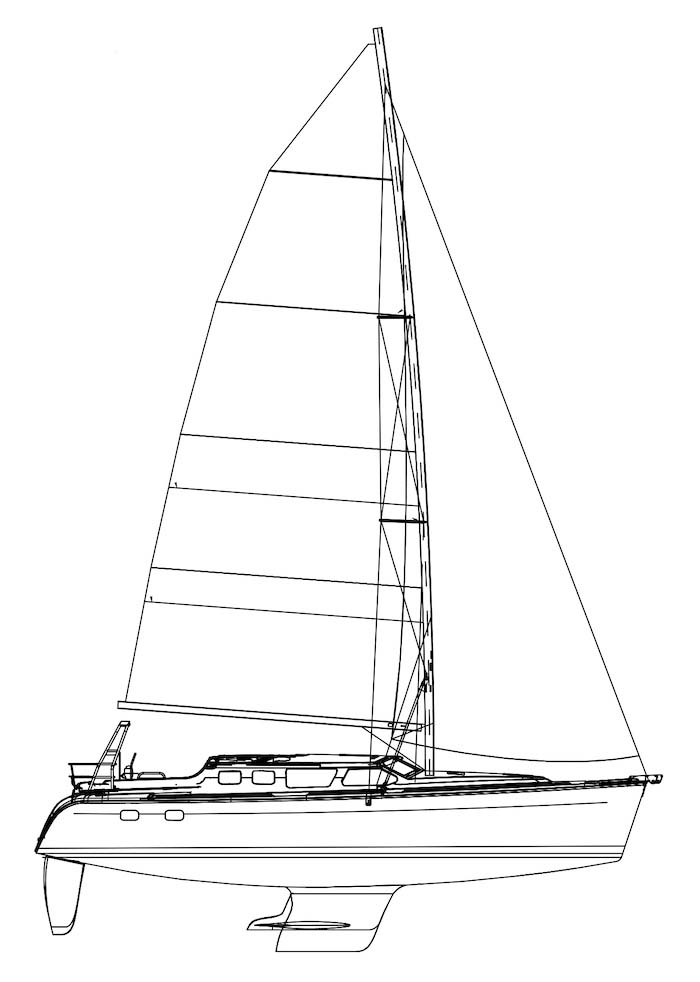
The 44 AC uses a fairly modern production-cruiser recipe: a moderate-to-wide beam carried aft, a fin keel, and an internally mounted spade rudder. That hull form gives interior volume and form stability while keeping wetted surface low enough for energetic acceleration in moderate winds. Hunter fitted the boat with their signature B&R fractional rig (swept spreaders and often no conventional backstay), a choice that allows a larger-roach mainsail and a smaller overlapping headsail—simplifying short-handed handling at the cost of some sail-plan tunability compared with a traditional mast and backstay layout.
Construction is classic fiberglass sandwich and molded production GRP, with localized reinforcements where loads concentrate (keel bolts, chainplate beds, mast step). Those choices make routine GRP repairs straightforward for an experienced rigger or yard, but they also mean that longevity depends on good bedding practices, regular inspection of deck penetrations and proactive attention to core and sealant condition—factors that directly influence long-term value and maintenance bills.
Performance
In real-world sailing the 44 AC sits squarely between voluminous coastal cruisers and dedicated performance cruisers. With a hull designed by Glenn Henderson, the boat accelerates promptly in 10–18 knot breezes and keeps momentum through short chop, thanks to the hull’s moderate displacement and a reasonably efficient keel. The B&R rig gives a powerful mainsail, so downwind and reaching legs feel lively; upwind you’ll find it points respectably for its class, though it won’t match the pointing angles of contemporary light-displacement racer-cruisers. Maneuverability under power is typically good for its size—an adequately powered diesel and responsive rudder make tight-quarters work manageable—but prospective buyers should expect motion that is livelier than a heavy full-keel cruiser when seas build. Owners and broker descriptions commonly note that the 44 family rewards sensible reefing and reef-first sail management, making it a dependable platform for realistic coastal passage-making.
Comfort and Accommodations
Where the 44 AC really sells itself is below: the aft-cockpit layout frees a generous aft cabin and creates an open saloon plan that feels larger than the overall length implies. Typical arrangements provide two cabins and two heads, with a roomy galley and a saloon settee area that converts easily for extra berths. Ventilation and natural light are decent for a production boat of the period, and storage lockers are generally well thought out (though owners upgrading for long-term liveaboard use frequently increase refrigeration, add solar capacity or tweak tankage). For a couple or a young family the boat is comfortable for multi-week cruising; for full-time liveaboard life some owners still choose to refit soft goods, equipment and insulation to modern standards. In short, the interior ages well when systems are maintained, and the 44 AC’s layout is a pragmatic balance between weekend comfort and extended cruising capability.
Safety and Practicality
Deck ergonomics on the 44 AC lean toward practical cruising: broad cockpit seating, easy-to-reach winches, and reasonably wide side decks. The B&R rig’s lack of a conventional backstay leaves the cockpit area freer and can make handling an easier single- or double-handed proposition, but it also means rig tuning relies on shroud and spreader geometry rather than backstay adjustments—important to understand for owners who plan offshore work or heavy-weather sailing. The fin-keel / spade-rudder arrangement gives crisp helm feel and nimble turning, but the rudder is less protected than a skeg-hung design, so grounding or impact risks should factor into offshore plans. Systems and mechanical access are generally logical for a production boat, although inspection of chainplate beds, mast step bedding and through-hulls should be a priority at survey because those are common service points that influence operational safety and ownership costs.
Known Issues with the Hunter 44 AC
Owners’ forums and survey reports highlight a few recurring attention items to watch for when evaluating a 44 AC. The most commonly cited concerns are deck and compression-post leaks (mast-step/step-through areas and around deck fittings), which over time can saturate core material if not properly rebedded and repaired—these problems are usually repairable but sometimes require significant localized structural work. Chainplate and deck-fitting bedding is often a routine find on older Hunters and should be inspected for leaks and core integrity. The B&R rig itself is well-tested, but it demands proper tuning and attention to spreader/mast connections and diamond stays; owners occasionally report chafe or setup issues that affect sail shape and longevity. Finally, because Hunters were production boats optimized for value, cosmetic oil-canning in panels, aging engine mounts or tired house systems turn up on survey lists more than catastrophic structural failures—measures such as scheduled rigging renewal, rebedding of hardware and updating electronics are typical upgrades sellers and buyers agree add value. Practical pre-purchase checks therefore focus on the mast step, chainplates, and a careful rig inspection.
Market Availability and Pricing in the U.S.
The 44 AC is out of production and is available only on the second-hand market. U.S. listings appear most often on the East Coast (New England and the Mid-Atlantic), Florida and on the West Coast—regions with active broker networks and cruising communities. Recent broker and classified listings show a wide spread in condition and price: project boats and older, lightly-equipped examples appear near the lower end of the market, while well-refitted, turn-key boats command prices at the top of the range. Asking prices in contemporary U.S. listings commonly sit in the $70,000–$150,000 band, though individual boats outside that range do appear depending on condition and equipment. The model generally trades as a good value among 40–45′ cruisers—buyers who prioritize interior comfort and manageable handling can often find reasonable deals, and boats that have addressed the typical maintenance items hold their marketability best.
Here is a comparison with three similar models commonly considered by cruisers:
| Model | LOA | Approx. Years Built | Typical US Used Price | Main Differences |
|---|---|---|---|---|
| Hunter 44 AC | ≈43.3 ft | 2003–2008 | $70,000–$150,000 | Aft-cockpit variant of the Hunter 44 family; B&R rig, performance-minded cruiser with roomy aft cabin. |
| Beneteau Oceanis 423 | ≈43.1 ft | 2003–2007 | $115,000–$160,000 | European hull lines, often lighter feel and slightly higher factory fit levels; good tankage and passagemaking credentials. |
| Catalina 42 MkII | ≈42 ft | late-1990s–2008 | $90,000–$180,000 | American-built, conservative hull form and systems designed for owner-serviceability and heavy cruising loads. |
| Dufour 405 (Grand Large) | ≈40 ft | 2009–2012 (common) | $130,000–$170,000 | Modern European performance cruiser with emphasis on deck ergonomics and efficient sail plan; often seen with upgraded gear. |
Hunter 44 AC vs Beneteau Oceanis 423
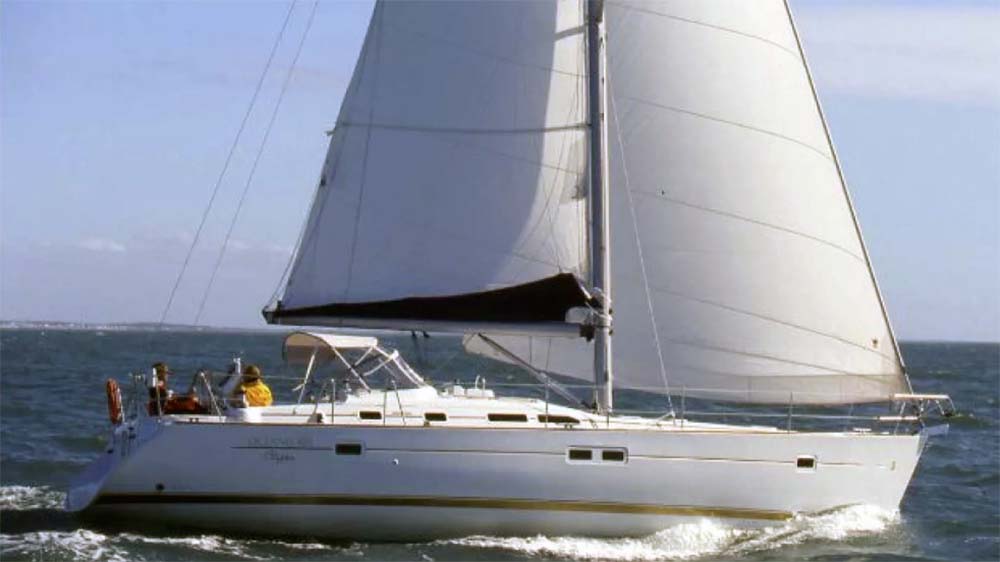
The Hunter’s strengths are its aft-cockpit layout, B&R rig and an interior tuned for comfortable cruising, which makes it feel like a slightly sportier, American-styled liveaboard; the Beneteau tends to present European hull lines and sometimes a lighter, more easily driven feel. Buyers choosing between them should weigh interior priorities: the Hunter often delivers a roomier aft cabin and easy cockpit ergonomics, while the Oceanis commonly wins on incremental sailing performance and finishes that appeal to long-distance passagemakers.
In maintenance terms the Beneteau and Hunter share production-boat service profiles (bedding, rigging, electronics), but differences in deck hardware layout and rig approach mean a buyer who values simpler tuning and a powerful mainsail will prefer the Hunter’s setup, whereas a buyer prioritizing marginal upwind gains or different interior styling may tilt toward the Oceanis.
► Learn more about de Beneteau Oceanis 423
Hunter 44 AC vs Catalina 42 MkII

Compared with the Catalina 42 MkII, the Hunter is generally the more contemporary-feeling boat belowdecks and the one that leans into easier short-handed sailing through the B&R rig; Catalina’s design, conversely, emphasizes straightforward systems, conservative hull shape and owner-serviceability. For an owner who intends to tinker and keep service costs low, the Catalina’s simpler systems and American-style build approach can be attractive; for someone who wants a brighter saloon, a larger aft cabin and a livelier sail plan, the Hunter’s layout and handling are a stronger match.
Both hold resale appeal in different buyer pools: Catalina buyers often prize robustness and simple repairs, while Hunter buyers trade some of that conservatism for modern features and interior comfort—choice is therefore guided by intended use rather than a single “better” platform.
► Learn more about de Catalina 42 MkII
Hunter 44 AC vs Dufour 405 Grand Large

The Dufour 405 presents itself as a modern European performance cruiser with clean deck ergonomics and efficient sailplan, while the Hunter 44 AC emphasizes roomy aft accommodation and a mainsail-forward B&R philosophy that simplifies headsail handling. If your sailing is often spirited or you care about maximizing upwind VMG, the Dufour’s hull and deck ergonomics may be marginally preferable; if you prioritize interior volume, social cockpit space and a powerful mainsail suited to short-handing, the Hunter will likely feel more immediately comfortable.
From an ownership perspective both brands are production-oriented and require the same attentiveness to bedding, rigging renewal and electronics upgrades; the Dufour typically trades at a premium for more recent model years, while the Hunter can be a more budget-friendly route to similar overall capability.
► Learn more about de Dufour 405 Grand Large
Maintenance Costs of a Hunter 44 AC in the USA
A realistic annual maintenance picture—scaled to a 43-44′ production cruiser—looks like this (each item bolded, with a short comment):
- Mooring / Slip / Storage: $3,000–$15,000 per year depending on location (Marinas in New England and California are at the high end; warm-water Southeast can be cheaper).
- Insurance: Typically 1%–2% of insured value annually; expect $1,000–$3,000+ depending on cruising range and insured value.
- Engine servicing & routine mechanicals: $500–$2,000 annually for routine consumables; larger injectors, gearboxes or transmissions are multi-thousand dollar events.
- Antifouling & haul-out: $800–$3,000 depending on frequency, paint system and yard labor rates.
- Standing & running rigging (reserve): Budget $300–$1,000 per year in reserves; full standing-rigging replacement every 10–15 years costs roughly $3,000–$8,000+.
- Sails (amortized): $0–$6,000 per year amortized; mains and primary headsails replacement runs several thousand dollars apiece when due.
- Electronics & electrical (batteries, displays): $200–$1,500 per year amortized; a full chartplotter/AIS/radar refit can be $5k–$15k depending on brand and installation.
- Miscellaneous (plumbing, canvas, cushions, gelcoat): $500–$4,000/year variable depending on age and owner preferences.
Significant one-time costs to budget for include sail replacement, standing-rigging renewal, major engine work, haul-out structural repairs (if a survey finds core issues) and full electronics refits. Many Hunter owners can handle bedding, varnish touchups, electrical troubleshooting and routine engine service themselves, but compression-post or through-hull structural repairs and complex engine or transmission work generally require professional yards. Overall, given the boat’s size and market position, expect medium ownership costs in its class; careful pre-purchase maintenance and addressing the usual Hunter attention items tend to preserve resale value and reduce surprise expenses.
Conclusion
The Hunter 44 AC is a pragmatic choice for buyers who want a 40-plus foot cruiser that blends a comfortable aft cabin and social cockpit with a sailplan optimized for short-handed handling. Its strengths are interior volume, practical cruising ergonomics and an energetic feel under sail for the class; its trade-offs are the typical production-boat maintenance items—bedding, rigging tuning and occasional cosmetic or core attention—that need to be managed proactively. For coastal cruising, weekend to multi-week passages, and liveaboard couples, the 44 AC generally offers good value and an enjoyable ownership experience when purchased after a careful survey and when common upgrades (rigging checks, rebedded fittings, electronics) are accounted for. The market for well-kept examples remains reasonable, and buyers who invest in addressing the model’s known attention items tend to see that investment reflected in resale—making the 44 AC a defensible choice for those prioritizing comfort and practical sailing capability over offshore-only ruggedness or club-race performance.
Specifications
| Hull Type: | Fin w/spade rudder |
| Rigging Type: | B&R Fractional |
| LOA: | 43.21 ft / 13.17 m |
| LOD: | 42.17 ft / 12.85 m |
| LWL: | 39.17 ft / 11.94 m |
| S.A. (reported): | 962.00 ft² / 89.37 m² |
| Beam: | 14.50 ft / 4.42 m |
| Displacement: | 22,936.00 lb / 10,404 kg |
| Ballast: | 7,237.00 lb / 3,283 kg |
| Max Draft: | 6.50 ft / 1.98 m |
| Construction: | FG |
| Ballast Type: | Lead keel |
| First Built: | 2004 |
| Builder: | Hunter Marine (USA) |
| Designer: | Glenn Henderson |
| Auxiliary Power (orig. equip.): | Yanmar Diesel, 56 HP |
| Fuel Capacity: | 51 gals / 193 L |
| Water Capacity: | 125 gals / 473 L |
| Headroom: | 7.00 ft / 2.13 m |
| S.A. / Displ.: | 19.14 |
| Bal. / Displ.: | 31.55 |
| Disp. / Len.: | 170.38 |
| Comfort Ratio: | 24.93 |
| Capsize Screening Formula: | 2.05 |
| S#: | 3.03 |
| Hull Speed: | 8.39 kn |
| Pounds/Inch Immersion: | 2,029.40 pounds/inch |
| I: | 47.92 ft / 14.61 m |
| J: | 14.67 ft / 4.47 m |
| P: | 46.50 ft / 14.17 m |
| E: | 20.75 ft / 6.32 m |
| S.A. Fore: | 351.49 ft² / 32.65 m² |
| S.A. Main: | 482.44 ft² / 44.82 m² |
| S.A. Total (100% Fore + Main): | 833.93 ft² / 77.47 m² |
| S.A./Displ. (calc.): | 16.59 |
| Est. Forestay Length: | 50.12 ft / 15.28 m |
| Mast Height from DWL: | 57.33 ft / 17.47 m |
Disclaimer
The considerations and analyses presented regarding the Hunter 44 AC sailboat are of a general nature and are based on the available information and technical data on this model, interpreted to the best of our knowledge and understanding. It is important to note that the specific characteristics of any particular sailboat may vary due to custom modifications, maintenance performed, and conditions of use over time, among other factors. Therefore, the details and performance of the boat you are considering may not exactly match the information provided here.
We strongly recommend that, before making any purchasing or usage decisions, you conduct a detailed inspection of the boat in question, consult with nautical professionals and other sailors, and consider your personal needs, expectations, and capabilities. Each sailboat may have unique particularities that affect its performance and suitability for different types of sailing and sailors.
The information contained in this analysis should be used as a general guide and not as a definitive reference. Professional evaluation and personal inspection are essential to ensure that the boat meets your specific requirements and expectations.