



The Jeanneau Sun Dream is a compact family cruiser conceived in the late 1980s as an accessible, comfortable coastal passagemaker rather than a race boat. Designed by Tony Castro and produced by Jeanneau beginning in 1987, the model (commonly encountered as the Sun Dream 28) was intended to give couples or small families a roomy, easy-to-handle sailboat with respectable sailing manners and an interior that felt larger than the hull dimensions might suggest.
Over the years the Sun Dream found stronger uptake in European markets than in North America; it’s largely a discontinued model and most examples today trade on the used market, often sought by coastal cruisers, club sailors and private owners rather than charter fleets.
Design and Construction
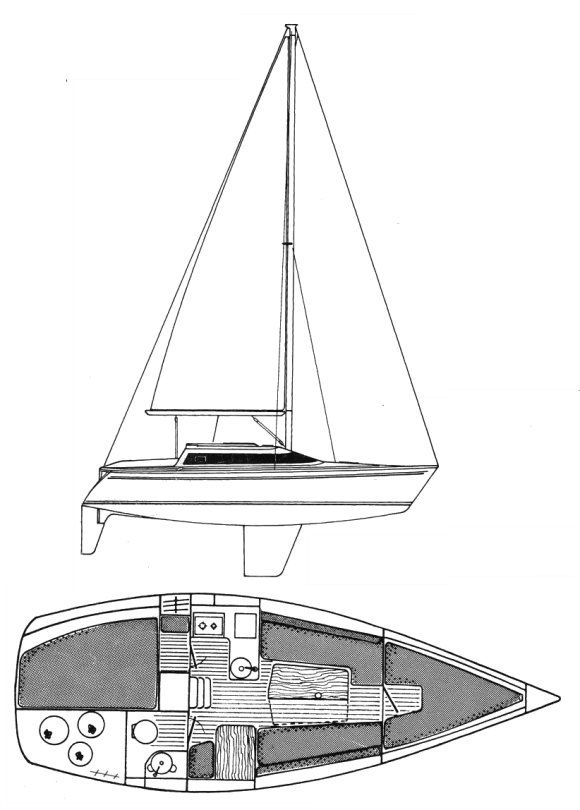
Jeanneau’s Sun Dream follows a conventional late-20th-century layout: a fiberglass monohull with a relatively beamy midsection, a fin keel (with some lifting-keel variants produced), and a spade rudder. The sailplan is a masthead sloop, which keeps rigging and sail handling straightforward for short-handed crews. These choices give the boat predictable behavior under sail and simplify maintenance compared with more complex rigs.
Fiberglass hull construction and a relatively high ballast ratio (ballast around 2,425 lb on a roughly 5,900 lb displacement) translate to a stiff platform for its size—helpful when you want a secure feel for family cruising. The interior layout emphasizes natural light and headroom (Jeanneau quotes near 5’11”), with two cabins and a practical galley and nav station—decisions that trade off pure race performance for liveability and resale appeal.
From a long-term ownership perspective fiberglass construction and the simple keel/rudder arrangement make hull repairs and repaints routine for most yards; however, the usual caveats apply for older boats—core/through-hull attention, keel bolt inspection and periodic gelcoat/antifouling work are owners’ responsibilities if you want to protect value.
Performance
On paper the Sun Dream’s hull speed sits in the mid-6-knot range, and real-world owners report comfortable cruising at 5–6 knots in moderate conditions with gusts up to the low-20s knot range manageable with reefing. The fairly full midsection and moderate sail area give confidence off the wind and a forgiving motion in short chop, though the boat is not a high-pointing machine—expect decent beam reach performance and competent upwind ability for coastal work.
Compared with contemporaries like the Catalina 30 or Hunter 30 the Sun Dream leans toward a more European hull form: slightly finer entry and a focus on internal volume rather than flat planing surfaces. That makes it feel steadier in confused seas but a bit less lively in light airs than the light-displacement club racers of a similar length. Overall it earns a reputation among owners for being dependable and well-balanced for real cruising rather than outright speed.
Comfort and Accommodations
The interior is where the Sun Dream often “punches above its weight.” Clever use of cabin windows and headroom gives a bright saloon and cabins that sleep four comfortably; the aft cabin in particular is roomy for a sub-30 footer. The galley and chart table are practical, and storage is adequate for weekend and week-long cruises—owners aiming at longer liveaboard projects typically upgrade ventilation and refrigeration, but many find the standard fit acceptable for seasonal cruising.
A practical implication for buyers: the boat works extremely well for a couple or small family who value a comfortable cockpit and a sheltered interior. For extended passagemaking or full-time liveaboard use you’ll want to budget for modernizing systems (water, refrigeration, heating, and electronics) but the base layout—two cabins, decent headroom and a sociable saloon—ages well and is often the reason owners keep these hulls for years.
Safety and Practicality
Deck layout on the Sun Dream emphasizes straightforward lines and accessible winches, which helps in short-handed sailing and in rough weather where safe footwork matters. Cockpit coamings and toe-braces are typical of the era—solid but not as ergonomic as newer designs—so non-slip and extra handholds are common owner upgrades. The moderate draft on the fin keel provides a good compromise between pointing ability and access to shallow anchorages; lifting-keel variants, where fitted, increase versatility for trailer-or-shallower-water use.
Systems are generally accessible: engine bays are compact but reachable, through-hulls are standard and most electrics are simple DC systems. That accessibility reduces labor time for routine maintenance and makes this hull favorable for owners who prefer to do their own servicing rather than always calling a technician.
Known Issues with the Jeanneau Sun Dream 28
Owners’ forums and broker notes show a handful of recurring themes: aging standing and running rigging, cosmetic interior wear, and the usual diesel engine wear items on older Yanmar installations. There are also occasional reports of loose interior joinery or small leaks around older deck fittings and hatches—symptoms more of age and deferred maintenance than of design failure.
Osmosis is not widely flagged as a chronic issue for this model, but any Sun Dream over 25–30 years old should be carefully inspected for gelcoat blistering, keel-bolt condition and soft spots around chainplates. Commonly recommended improvements when buying are replacing standing rigging if age-expired, updating electronics for navigation/safety, and reviewing engine service history; many owners also swap to more efficient propellers or modern wind instruments as practical, value-adding upgrades.
Market Availability and Pricing in the U.S.
The Sun Dream is no longer in production and most examples are circulating on the used market—predominantly in Europe, though individual boats appear in North America from time to time. European listings commonly show low-to-mid five-figure asking prices, which means a well-located, well-maintained example can be economical to buy and restore.
In the U.S. the model is uncommon and tends to surface in coastal hubs where European imports are more frequent (e.g., parts of New England, the Great Lakes and occasional Florida listings), typically as private sales or brokered imports rather than big-fleet listings. Based on recent international and U.S. listing patterns, a reasonable U.S. guide range for purchase is $12,000–$35,000, with condition, refit level and location determining where within that band a particular boat will fall.
Below is a comparison with similar sailboats from the same era:
| Model | LOA | Approx. Years | Typical U.S. Used Price | Main difference |
|---|---|---|---|---|
| Jeanneau Sun Dream | ~29.5 ft | 1987–1991 | $12,000–$35,000 | European design emphasis on interior volume and stiffness for coastal cruising. |
| Catalina 30 | ~29.9 ft | 1970s–1990s | $10,000–$35,000 | Classic U.S. trailerable cruiser with huge parts/support network and simple systems. :contentReference[oaicite:12]{index=12} |
| Hunter 30 | ~29–31 ft | 1980s–1990s | $8,000–$30,000 | Often a more performance-oriented deck layout and different interior ergonomics; widely available in the U.S. market. :contentReference[oaicite:13]{index=13} |
| Dufour 31 | ~31 ft | 1980s–1990s | $9,000–$25,000 | European build quality with layouts comparable to Sun Dream but less common in the U.S. market. :contentReference[oaicite:14]{index=14} |
Jeanneau Sun Dream 28 vs Catalina 30

The Sun Dream’s European hull lines and the relatively generous ballast ratio give it a steady, comfortable motion and slightly better initial stability in confused seas, while the Catalina 30 often trades that stiffness for a broader availability of parts and a larger U.S. owner community. In practical ownership terms, the Catalina’s resale and support network in the U.S. can make it easier and sometimes cheaper to maintain, whereas Sun Dream buyers get a bit more interior sophistication for the same length.
For a buyer focused on weekend family cruising in U.S. waters, the Catalina’s parts and broker ecosystem may be decisive; for someone who values a snuger hull feel and a bright, European interior, the Sun Dream offers a modest performance edge in comfort and stiffness.
► Learn more about de Catalina 30
Jeanneau Sun Dream 28 vs Hunter 30

Compared to the Hunter 30, the Sun Dream emphasizes straightforward cruising ergonomics and a conservative rig that’s easy to handle short-handed; Hunters often present slightly more modern deck hardware and a design that can feel more “performance-tuned” in light airs. This means a Hunter may accelerate sooner in light winds, but the Sun Dream’s interior fit and heavier feel lend it confidence in choppier, coastal conditions.
Buyers who race casually or prioritize light-air speed will lean to a Hunter, while couples or families prioritizing a solid, comfortable platform and simpler maintenance will find the Sun Dream to be the more pragmatic choice.
► Learn more about de Hunter 30
Jeanneau Sun Dream 28 vs Dufour 31

Both the Sun Dream and Dufour 31 share European design priorities—solid build, liveable interiors, and a focus on comfortable cruising—yet the Dufour often offers slightly more modern lines or refinements in later builds and can be a touch roomier depending on the exact model year. When it comes to upkeep, Dufour parts and broker presence vary by region and may be harder to source in the U.S. than the more ubiquitous Hunter/Catalina lines, putting the Sun Dream in a middle ground of serviceability and interior comfort.
For owners planning extended coastal cruising or light offshore passages, either boat is suitable once properly maintained; the decision tilts on condition at purchase, local service access, and whether the buyer prefers the Sun Dream’s particular blend of stiffness and interior layout.
► Learn more about de Dufour 31
Maintenance Costs of an Jeanneau Sun Dream 28 in the U.S.
Below is a concise, owner-focused breakdown of typical annual and occasional costs (estimates are given as ranges because location, condition and owner skill vary widely):
- Mooring / slip fees – $2,000–$8,000/year depending on marina and region (Florida & major northeast marinas are at the top end).
- Insurance – $300–$1,200/year for liability & hull cover (age, sail area and cruising range affect premiums).
- Engine servicing – $300–$900/year for routine service; major overhauls every 3–6 years cost more.
- Antifouling (haul, paint, small repairs) – $400–$1,200 every 1–2 years depending on bottom condition and paint choice.
- Standing rigging inspection/replacement – $0–$3,500 (inspection often inexpensive; full replacement typically every 10–15 years and is a significant periodic expense).
- Sails (maintenance & replacement) – $200–$800/year for repairs; full suit replacement $1,500–$6,000 depending on quality and number of sails.
- Electrical & electronics – $200–$1,500/year for incremental upgrades; full electronics refit $3,000–$10,000+ if modern nav/comm systems are installed.
- General yard work & insurance repairs – variable; budget a reserve of $1,000–$3,000/year for unexpected repairs and consumables.
Regional differentiation: slips and haul-out labor are most expensive in New England and parts of California; Florida can be expensive for insurance and storms but competitive on labor. Significant one-time costs to plan for include standing rigging replacement, repowering or major engine work, a complete sail wardrobe replacement, and a bottom refit if osmosis or delamination is found.
An owner with solid DIY skills can handle many routine maintenance items (polishing, antifouling prep, basic engine checks), which keeps annual costs toward the low end; owners who prefer professional yards should budget toward the higher end. For a sub-30-foot cruiser used for coastal cruising, overall ownership costs are generally medium—not as cheap as a trailer sailer but far less than a larger bluewater yacht—and the boat’s reasonable resale value often offsets sensible maintenance investments.
Conclusion
The Sun Dream’s strengths are clear: a thoughtfully proportioned European hull, a comfortable and bright interior for its length, and a simple, serviceable rig that suits short-handed family cruising. Weaknesses are mostly age-related—older systems, potential rigging renewal and the usual cosmetic updates—and the fact that the model is rarer in the U.S., which can slightly complicate sourcing parts or finding local examples to survey.
For a buyer in the market for a coastal cruiser under 30 feet who values comfort, a reassuring motion and a layout that sleeps a small family well, the Sun Dream is worth seeking out—especially if you can find a well-maintained example within the $12,000–$35,000 band. It’s not the obvious choice for someone whose priority is racing performance or who requires extensive dealer support in every U.S. port, but as a pragmatic coastal cruiser with decent resale prospects among knowledgeable owners, it represents a solid, often economical choice.
Specifications
| Hull Type | Fin w/ spade rudder |
| Rigging Type | Masthead Sloop |
| LOA | 29.50 ft / 8.99 m |
| LWL | 24.58 ft / 7.49 m |
| S.A. (reported) | 370.00 ft² / 34.37 m² |
| Beam | 10.58 ft / 3.22 m |
| Displacement | 5,936 lb / 2,693 kg |
| Ballast | 2,425 lb / 1,100 kg |
| Max Draft | 5.37 ft / 1.64 m |
| Construction | Fiberglass (FG) |
| First Built | 1987 |
| Last Built | 1991 |
| Builder | Jeanneau (France) |
| Designer | Tony Castro |
Sailboat Calculations | |
|---|---|
| S.A. / Displ. | 18.11 |
| Bal. / Displ. | 40.85 |
| Disp. / Len. | 178.44 |
| Comfort Ratio | 15.21 |
| Capsize Screening Formula | 2.34 |
| S# | 3.12 |
| Hull Speed | 6.64 kn |
| Pounds/Inch Immersion | 929.21 lb/inch |
Rig and Sail Particulars | |
| I | 35.27 ft / 10.75 m |
| J | 11.71 ft / 3.57 m |
| P | 30.19 ft / 9.20 m |
| E | 10.83 ft / 3.30 m |
| S.A. Fore | 206.51 ft² / 19.19 m² |
| S.A. Main | 163.48 ft² / 15.19 m² |
| S.A. Total | 369.99 ft² / 34.37 m² |
| S.A. / Displ. (calc.) | 18.11 |
| Est. Forestay Length | 37.16 ft / 11.33 m |
Disclaimer
The considerations and analyses presented regarding the Jeanneau Sun Dream 28 sailboat are of a general nature and are based on the available information and technical data on this model, interpreted to the best of our knowledge and understanding. It is important to note that the specific characteristics of any particular sailboat may vary due to custom modifications, maintenance performed, and conditions of use over time, among other factors. Therefore, the details and performance of the boat you are considering may not exactly match the information provided here.
We strongly recommend that, before making any purchasing or usage decisions, you conduct a detailed inspection of the boat in question, consult with nautical professionals and other sailors, and consider your personal needs, expectations, and capabilities. Each sailboat may have unique particularities that affect its performance and suitability for different types of sailing and sailors.
The information contained in this analysis should be used as a general guide and not as a definitive reference. Professional evaluation and personal inspection are essential to ensure that the boat meets your specific requirements and expectations.