


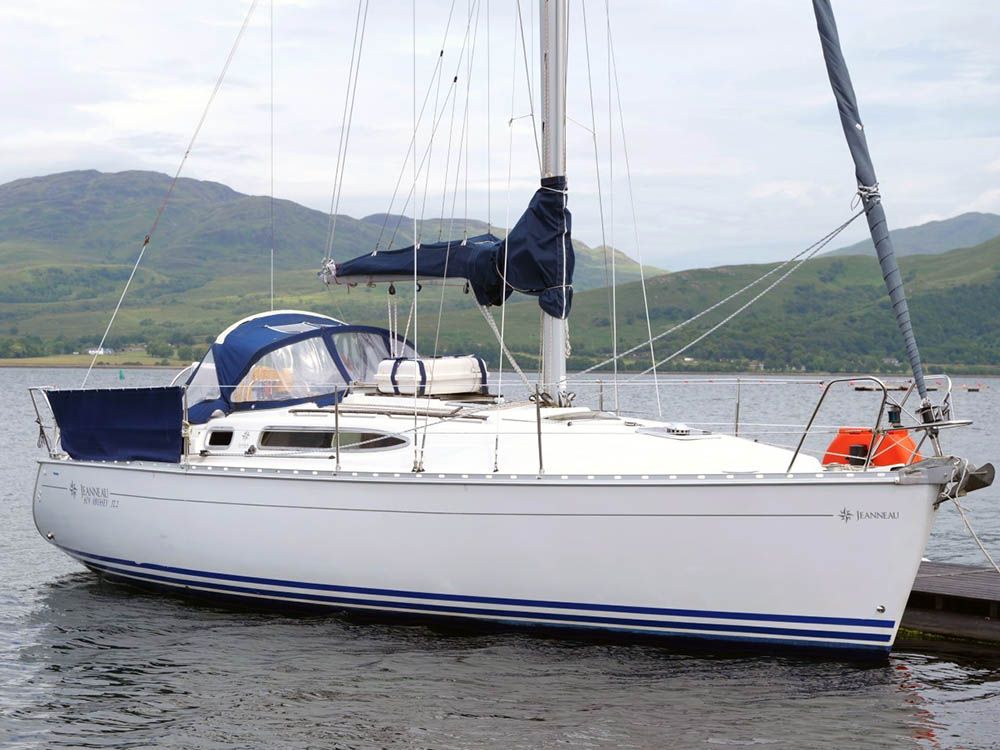
The Jeanneau Sun Odyssey 32.2 arrives on the radar as a purpose-built coastal cruiser: a modestly sized, comfortable family cruiser conceived for weekenders and coastal passagemaking rather than hard-core racing. Designed by Jacques Fauroux and introduced around the turn of the millennium, the 32.2 continued Jeanneau’s approach of offering seaworthy, user-friendly yachts with modern lines and practical deck layouts; it was produced in the late 1990s and early 2000s and is no longer in production. Wikipedia
That origin story shapes who this boat was built for: couples and small families who want something manageable for short cruises, clubs and owners who value easy handling and straightforward systems, and private owners who need a 30–32-foot hull that will sleep four to six without feeling cramped. On the used market the 32.2 appears with reasonable frequency—often alongside other late-90s/early-2000s European cruisers—making it a common choice for private buyers and for skippers upgrading from trailerable or smaller coastal boats.
Design and Construction
The Sun Odyssey 32.2 follows a classic late-90s French cruiser recipe: a fiberglass (GRP) hull and deck, a fin keel (with lifting-keel variants offered on some units), and a masthead sloop rig with aluminum spars. Jeanneau’s published data lists a LOA around 9.5 m (≈31’2″), a relatively moderate beam and a displacement in the mid-4000 kg range depending on keel choice; tankage is small but practical for weekend to short-cruise use. These production specs underline the boat’s intent—light enough to be responsive, but substantial enough to carry basic cruising stores.
From a naval-architecture standpoint the 32.2’s hull form and ballast distribution favor stability at rest and predictable behavior under sail: the fin keel with a weighted bulb gives a reasonable righting moment without excessive wetted surface, while the spade rudder and relatively short waterline make the yacht nimble when tacking and maneuvering in marinas. Construction-wise the GRP layup common to Jeanneau of this era is repairable and well understood by fibreglass yards—important for long-term maintenance and for preserving value. Owners should, however, inspect core/deck joins, seacock and chainplate areas and the transom/through-hull fittings carefully, since age-related delamination or localized osmotic issues are the usual suspects on boats of this vintage.
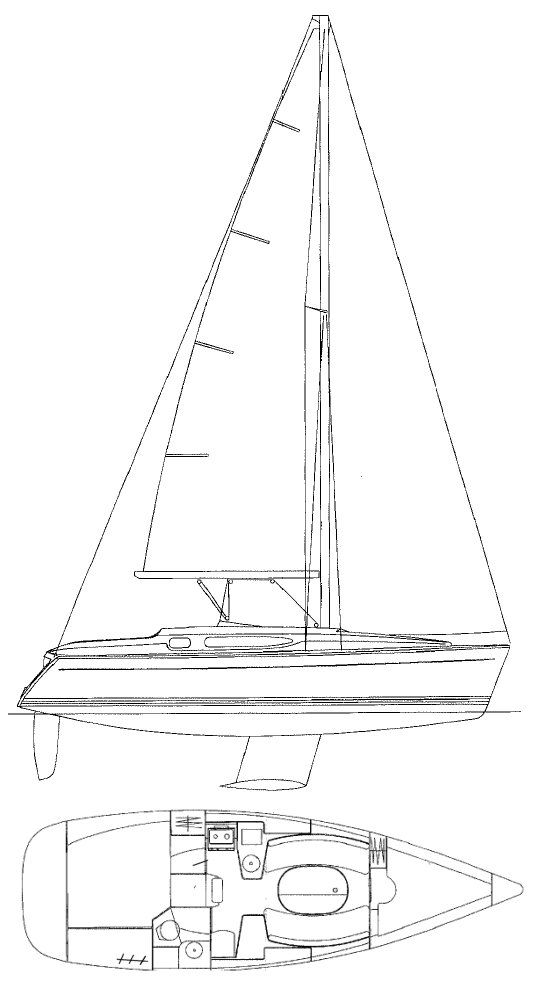
Performance
On the water the 32.2 behaves like a true coastal cruiser: sail area and displacement produce a hull speed in the high-6 to low-7 knot range, so passages are measured and economical rather than sporty. Upwind she tacks predictably and will point satisfactorily for a cruising boat of this size; in moderate chop the hull soaks up waves without being brutally tossed, though a short waterline and moderate displacement make longer-period seas more tiring than a larger offshore cruiser. In light airs the boat can feel sluggish compared with modern lighter designs, so a buyer who expects to race or to rely on fast passage making in light conditions should plan for a larger genoa or a well-trimmed spinnaker to compensate.
Maneuverability in tight spaces is a practical strength: the well-balanced rudder and wheel layout make close-quarters handling straightforward for a single helm or a two-person crew. Compared with heavier American cruisers of similar length it often feels a touch more European in temperament—livelier but less voluminous; compared with contemporary performance cruisers it is more forgiving rather than razor-sharp. The net effect is a boat that is sensible for realistic cruising scenarios: weekend hops, coastal legs, and occasional overnight passages.
Comfort and Accommodations
The interior of the 32.2 was laid out with pragmatic cruising in mind: typically two cabins (forward V-berth and an aft cabin), a separate head, and a compact galley opposite a chart table. Headroom is reasonable for average height users, and storage is distributed in lockers and under-berth spaces—enough for short cruises but limited for long-term liveaboard expectations. Ventilation is adequate by period standards (hatches and ports) but many owners retrofit extra fans or improve opening ports for summer comfort.
For a couple or a small family the boat’s ergonomics are friendly: galley work is possible underway, berths are comfortable for overnight legs, and the saloon converts to additional sleeping space as needed. That said, prolonged liveaboard life—months at a time—will quickly expose the limitations of tankage, locker volume and water capacity unless someone invests in upgrades (bigger tanks, additional refrigeration, solar, and extra water-makers or water jerry cans). Many 32.2 interiors age gracefully, as the joinery on these Jeanneaus tends to be simple and modular, and it is common to find lightly modernized refits rather than complete overhauls.
Safety and Practicality
On deck the 32.2’s cockpit is compact and secure: coamings and lifelines provide reasonable protection, and a small cockpit locker setup keeps lines tidy for short-handed sailing. Deck hardware is appropriately sized for the boat, and the sloop rig makes sail handling straightforward; an owner can easily set the boat up for single- or double-handed sailing with a reefing main and a roller-furling headsail. Access to the water is standard for the class (swim ladder off the transom), and the transom steps on many boats make boarding from a dinghy easier than older slab transoms.
The systems layout tends to be accessible—engine bay, tanks and seacocks are reachable without extreme contortions—so routine servicing (filters, belt changes, impeller replacement) is owner-doable for a mechanically inclined buyer. For offshore blue-water use the 32.2 would require upgrades (bigger water and fuel capacity, stronger ground tackle, redundant navigation/electrical systems); left as factory standard it is best thought of as a coastal cruiser rather than an offshore passagemaker.
Known Issues with the Jeanneau Sun Odyssey 32.2
Owners and forum threads commonly report a handful of recurring issues that a prospective buyer should check closely:
- Age-related deck-to-hull joint and chainplate leak paths—often due to old bedding or compression set on sealant.
- Routine engine wear typical of older Volvo/Yanmar units: check compression, hours, and service history.
- Localized gelcoat blisters or minor osmosis reported in some European examples—inspect for soft spots and survey for osmosis.
- Electronic panels and wiring that reflect period installations and are often upgraded (plotter, instruments, wiring bundles).
- Standing rigging nearing end-of-life on older boats; replacement is an expected medium-term cost.
Practical, commonly recommended upgrades include installing a modern folding prop or new fixed-pitch prop for better thrust and reverse control, upgrading navigation electronics to current chartplotter/GPS standards, and replacing worn upholstery or modular galley components during a cosmetic refit—improvements that materially increase both comfort and resale appeal.
Market Availability and Pricing in the U.S.
The Sun Odyssey 32.2 is out of production and available only on the used market; listings appear intermittently in the U.S., mostly as private sales or broker-handled brokerage listings rather than dealer-stock new boats. Examples in brokerage databases show late-90s to early-2000s hulls listed across coastal states, with specific U.S. listings observed in California and occasional entries elsewhere. boattrader.com+1
A realistic current U.S. market range for well-maintained examples is roughly $35,000–$75,000 depending on year, gear, recent refits and location. A few boats with extensive upgrades or low hours can sit near the top of that band, while project boats with deferred maintenance are more likely toward the lower end.
Here’s a comparison with similar models:
| Model | LOA | Approx. years | Typical U.S. used price | Main differences |
|---|---|---|---|---|
| Catalina 320 | ~32.5 ft | 1993–2008 | $40,000–$80,000. :contentReference[oaicite:7]{index=7} | Roomier interior and American-style accommodations; typically heavier displacement and very common in U.S. used market. |
| Hunter 33 (various) | ~33 ft | 1977 (original) / 2004+ (modern variants) | $50,000–$75,000. :contentReference[oaicite:8]{index=8} | Varied pedigree (older Cherubini designs vs later Marlow-Hunter models); later Hunters emphasize easy handling and creature comforts. |
| Dufour 32 Classic | ~32.7 ft | mid-1990s–early 2000s | $35,000–$65,000. :contentReference[oaicite:9]{index=9} | French hulls with slightly performance-leaning lines and often higher-spec finishes; similar size but variable standard equipment. |
Jeanneau Sun Odyssey 32.2 vs Catalina 320

The Jeanneau carries the hallmarks of a late-90s European cruiser—narrower beam relative to LOA, lighter displacement and an emphasis on efficient hull form—while the Catalina 320 typically prioritizes interior volume and American-style comfort. In practice that means the 32.2 will feel more responsive to sail trim and may be more pleasant to single-hand in and out of tacks, whereas the Catalina often provides more storage, a wider saloon and greater tankage for longer family cruises.
From an ownership perspective the Catalina’s ubiquity in U.S. marinas makes finding parts and local community knowledge easier; the Jeanneau often wins on resale appeal to buyers who prefer European lines and slightly sharper performance, but it can be marginally more work to source certain original fittings depending on region.
► Learn more about the Catalina 320
Jeanneau Sun Odyssey 32.2 vs Hunter 33

Compared to the Hunter 33 family, differences come down to intent and era: older Hunter 33s are more conservative and robust in interior layout, while later Hunter-branded designs (2004 and later) emphasize easy, modern sail handling and cockpit ergonomics. The 32.2’s simpler sloop rig and balanced hull make it a pragmatic choice for weekend cruising with predictable handling; certain Hunter variants (especially later Marlow-Hunter models) push on-board comfort and systems integration further, which can be attractive for owners who value creature comforts over a taut sailing feel.
Maintenance patterns differ: Hunters often have more aftermarket electrical/electronic kit already installed in U.S. examples, whereas Jeanneau 32.2s sometimes need modest updates—both paths are normal and manageable but influence short-term refresh costs.
► Learn more about the Hunter 33
Jeanneau Sun Odyssey 32.2 vs Dufour 32 Classic

The Dufour 32 Classic is a close contemporary and shares the European focus on efficient hulls and sailing capability; where they differ is in finish and tuning—Dufour often leaned slightly toward performance-oriented owners, while Jeanneau balanced comfort with ease-of-use. Owners seeking a boat that will point crisply and reward careful sail trim may prefer the Dufour, while someone who wants a forgiving, comfortable short-handed cruiser with a proven support network might favor the 32.2.
In practice both make sensible coastal cruisers; differences are nuances—layout ergonomics, finish level and the particular condition of any used hull will usually outweigh the small design divergences.
► Learn more about the Dufour 32 Classic
Maintenance Costs of a Jeanneau Sun Odyssey 32.2 in the U.S.
Estimated annual maintenance items and typical U.S. cost ranges (ballpark; vary by region and condition):
- Mooring/Slip: — $1,200 to $8,000 per year depending on marina and location (cheaper in small Gulf coast marinas, highest in prime California/New England slips).
- Insurance: — $400 to $1,500 per year for an older 32-ft cruiser (varies with coverage level, cruising range and owner experience).
- Engine servicing: — $300 to $1,000 annually for routine service (oil, filters, impeller; higher if major work needed).
- Antifouling (haul, paint, zincs): — $400 to $1,500 every 1–2 years depending on paint choice and haul fees.
- Standing/Running rigging (inspection/repairs): — routine inspections are cheap; full standing-rigging replacement can be $2,000–$5,000 as a one-time multi-year expenditure.
- Sails (maintenance / replacement): — small repairs annually $100–$600; replacement mains/genoa $1,500–$6,000 depending on cloth and cut.
- Bottom and brightwork upkeep, small systems (pumps, seacocks): — $300–$1,200 annual average.
- Survey, yard fees and unexpected repairs: — budget a contingency of $1,000–$3,000 yearly for wear items and surprises.
Regional differentiation matters: haul and yard labor are generally more expensive in the Northeast and California than in the Gulf or inland coasts; conversely, Florida can be high for insurance if the policy covers offshore exposure. Significant one-time costs that a buyer should anticipate include sail replacement ($1,500–$6,000), major rigging replacement ($2k–$5k), or a significant electronics refit ($2k–$8k). Many routine tasks (engine oil/filter, varnish touchups, cleaning, small plumbing) can be owner-performed if the buyer has skills and tools; structural work, major rigging changes and complex electrical refits normally require professional services. Overall for a 32-foot cruiser of this age the annual ownership cost profile is medium: not trivial, but typical and predictable if you budget and maintain on a schedule. A well-maintained example retains resale value better and generally offsets upkeep costs over time.
Conclusion
The Jeanneau Sun Odyssey 32.2 is a sensible, well-balanced coastal cruiser: designed to be sailed comfortably by a small crew or couple, built on a tried-and-true fiberglass platform and supported by a strong used-boat market. Its strengths are manageable size, predictable handling, a practical interior for weekend to short-term cruising, and relatively straightforward maintenance. Weaknesses—when compared to newer designs—are limited tankage, somewhat dated systems on older boats, and the need to budget for routine upgrades (electronics, sails, standing rigging) when buying used.
For buyers seeking an honest, capable coastal cruiser that is pleasant to single-hand or to cruise with family, the 32.2 is worth considering: it strikes a good balance between sailing manners and livability and often represents fair value on the used market when bought with a recent survey and clear maintenance records. For an owner focused on liveaboard comfort or offshore blue-water passages without modification, a larger or more recently built model would be a better match. In short, the 32.2 is a solid, mid-range investment for coastal cruising—one whose resale prospects remain reasonable provided the owner keeps up with the usual preventive maintenance and sensible equipment upgrades.
Specifications
| General Information | |
|---|---|
| Hull Type | Fin w/ bulb & spade rudder |
| Rigging Type | Masthead Sloop |
| LOA | 31.17 ft / 9.50 m |
| LWL | 26.97 ft / 8.22 m |
| Beam | 9.84 ft / 3.00 m |
| Displacement | 8,929 lb / 4,050 kg |
| Ballast | 3,020 lb / 1,370 kg |
| Max Draft | 4.76 ft / 1.45 m |
| Construction | Fiberglass (FG) |
| First Built | 1998 |
| Last Built | 2002 |
| Builder | Jeanneau (France) |
| Designer | Jacques Fauroux |
Auxiliary Power & Tanks | |
| Engine Make | Volvo |
| Type | Diesel |
| Horsepower | 18 HP |
| Fuel Capacity | 12 gal / 45 L |
| Water Capacity | 37 gal / 140 L |
| Headroom | 5.92 ft / 1.80 m |
Sailboat Calculations | |
| S.A. (reported) | 547 ft² / 50.82 m² |
| S.A./Displ. | 20.40 (reported) / 15.16 (calc.) |
| Bal./Displ. | 33.82 |
| Disp./Len. | 203.19 |
| Comfort Ratio | 23.25 |
| Capsize Screening Formula | 1.90 |
| S# (Stability) | 2.45 |
| Hull Speed | 6.96 kn |
| Pounds/Inch Immersion | 948.25 lb/in |
Rig and Sail Particulars | |
| I | 39.37 ft / 12.00 m |
| J | 11.22 ft / 3.42 m |
| P | 33.79 ft / 10.30 m |
| E | 10.99 ft / 3.35 m |
| S.A. Fore | 220.87 ft² / 20.52 m² |
| S.A. Main | 185.68 ft² / 17.25 m² |
| Total Sail Area (100%) | 406.55 ft² / 37.77 m² |
| Estimated Forestay Length | 40.94 ft / 12.48 m |
Disclaimer
The considerations and analyses presented regarding the Jeanneau Sun Odyssey 32.2 sailboat are of a general nature and are based on the available information and technical data on this model, interpreted to the best of our knowledge and understanding. It is important to note that the specific characteristics of any particular sailboat may vary due to custom modifications, maintenance performed, and conditions of use over time, among other factors. Therefore, the details and performance of the boat you are considering may not exactly match the information provided here.
We strongly recommend that, before making any purchasing or usage decisions, you conduct a detailed inspection of the boat in question, consult with nautical professionals and other sailors, and consider your personal needs, expectations, and capabilities. Each sailboat may have unique particularities that affect its performance and suitability for different types of sailing and sailors.
The information contained in this analysis should be used as a general guide and not as a definitive reference. Professional evaluation and personal inspection are essential to ensure that the boat meets your specific requirements and expectations.