



The Jeanneau Sun Odyssey 36 is part of Jeanneau’s long-running Sun Odyssey line of family cruisers: a design family intended to blend comfortable accommodations with manageable sailing systems for couples and small families. The “36” label covers several related 36-foot designs Jeanneau produced across the 1990s–2000s (the Sun Odyssey 36.2, designed by Jacques Fauroux, is the most commonly encountered variant in the used-boat market). These boats were launched to satisfy owner-cruisers and charter operators who wanted a boat that would be easy to handle short-handed but still perform respectably in coastal passages; the result is a cruiser that sits in the middle of the pack between heavy, long-range hulls and outright performance designs. On the used market the Sun Odyssey 36 family is popular with coastal cruisers and couples upgrading from smaller boats, and you’ll also see examples offered by private owners and brokers more than in dealer stocks.
Design and Construction
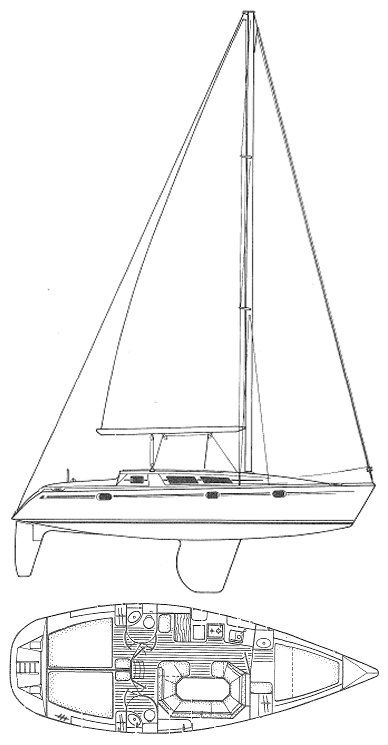
Jeanneau’s 36-foot Sun Odyssey variants typically use a moderate-displacement hull with a fin keel and spade rudder, a sloop rig (masthead on some early versions, fractional on later “i” variants), and a deck configuration focused on safe, uncluttered cockpit ergonomics. Construction is conventional fiberglass with balsa or foam coring in deck structures and molded liners below—standard production techniques that keep weight reasonable and interior finish tidy. These choices reflect a design philosophy that favors interior volume, deck safety for family cruising, and relatively simple repairs: a fiberglass hull is straightforward to repair, and dealers/parts for Jeanneau boats are widely available, but coring and deck-to-hull interfaces do require attention in any older boat. From a naval-architect standpoint the Sun Odyssey balances beam and waterline length to extract good light-air performance while keeping a comfortable motion; that balance tends to preserve value for buyers who want a modern cruising feel without exotic maintenance demands.
Performance
On the water, the Sun Odyssey 36 family is best described as a performance-oriented cruiser: lighter than many American production boats of the 1980s, it accelerates relatively quickly and often points higher to wind than heavier contemporaries. In moderate sea states you’ll notice a livelier helm and quicker response to sail trim—advantageous for coastal passages where winds vary and light-air performance matters. In confused or short-chop conditions the boat is not as heavy-mannered as classic blue-water cutters, so motion can feel a bit livelier; many owners accept that trade-off because it gives a more engaging ride and quicker passages. Maneuverability in marinas is generally good and systems are arranged for short-handed sailing (sheet leads, reliable winch placement, and optional roller-furling headsails), which makes the design attractive to couples. Compared with heavier cruisers like older Cherubini designs, the Sun Odyssey will typically deliver faster passages in light to moderate conditions but will require more reefing sooner in heavy seas to preserve comfort and heel angles.
Comfort and Accommodations
A strong selling point for the Sun Odyssey 36 is its interior layout: bright, modern joinery, a well-appointed galley, and cabin arrangements that prioritize livability for weekenders and families. Jeanneau tended to maximize natural light and headroom in this size class, so cabins feel open and circulation is good—attributes that make the boat feel larger than its LOA on paper. Storage and tankage on many versions are adequate for coastal cruising, and owners commonly report that the interior components (cabinets, upholstery, and systems) are straightforward to modernize without major structural work. For a couple or small family the boat is very comfortable for multi-day cruising and can be adapted for seasonal liveaboard use with modest upgrades (ventilation, refrigeration, shore power). Unlike very old production interiors that require complete refits, Sun Odyssey joinery and modular systems usually age gracefully and are frequently updated incrementally by owners.
Safety and Practicality
Deck ergonomics on the Sun Odyssey 36 favor safe movement and short-handed handling: wide cockpit seats, sensible toe rails and optional swim platforms on later variants ease anchoring and boarding. The rigging arrangements and often included roller-furling options let a small crew reduce sail quickly, which is a practical safety feature for coastal cruisers. Access to service points (engine, cutouts to tanks, pump locations) is generally good for a production boat, keeping routine maintenance approachable for owner-mechanics. For serious offshore work you’d still want to invest in upgraded safety kit (liferaft, emergency beacons, beefed-up ground tackle) and a careful survey of rigging and seacocks, but with those reasonable steps the platform is capable of offshore hops as well as coastal cruising.
Known Issues with the Jeanneau Sun Odyssey 36
Owners and surveyors commonly flag the usual production-boat items rather than unique design failures: deck-fitting bedding and hatch/portlight seals, electrical panels that have been piecemeal upgraded, and occasional core wetness under poorly sealed fittings. Because many Sun Odysseys were used in charter roles, some examples show higher engine hours or simplified interior wear—always check service records. Standing rigging, chainplates and mast bases should be inspected for age-related wear, and a survey often reveals targeted gelcoat repairs or localized deck core remediation as the most common necessary work. Typical, recommended pre-purchase upgrades include modern navigation electronics (to reduce panel and wiring complexity), re-bedding of deck fittings and hatches, new propellers tuned to the installed engine and shaft, and renewal of old sail cloth—improvements that materially reduce ownership risk and increase enjoyment without changing the boat’s fundamental character.
Market Availability and Pricing in the U.S.
Jeanneau’s Sun Odyssey 36 variants are out of production in their original forms, so availability is entirely on the used market. Listings across major broker sites show a healthy supply of Sun Odyssey 36.2 and 36i boats in North America, with asking prices that reflect year, equipment and condition: many 36.2 examples from the late 1990s–2000s trade in the roughly $55,000–$95,000 range depending on outfitting and region, while later “36i” models (mid-2000s onward) command higher asking prices when well equipped. Because Jeanneau sold extensively into European and Mediterranean charter markets, you will see boats in coastal U.S. hot spots (Florida, the Southeast, and California) as well as in New England and the Pacific Northwest—condition varies widely from well-maintained owner cruisers to ex-charter hulls that need more attention. Overall the Sun Odyssey 36 family tends to sit in the good value / medium premium segment: better light-air performance and a modern interior than many older American cruisers, but often priced below newly designed yachts of similar lengthThe Cherubini Hunter 37 is out of production (last hulls built in the mid-1980s), so all availability is on the used market. Because the run produced several hundred hulls, examples appear across U.S. regions—Florida and the Southeast, the mid-Atlantic and Chesapeake, New England and parts of the Great Lakes and West Coast—which gives buyers options when searching for a well-maintained hull versus a project boat. Asking prices for usable, cruiser-equipped examples typically sit in the low-to-mid tens of thousands, while turnkey refitted boats can command higher figures depending on upgrades and location. Recent listings and broker pages show asking and sold figures that cluster between roughly $15,000 for a project hull and around $50,000–$60,000 for clean, refit examples; many active listings and historical sales fall comfortably inside $15,000–$60,000.
Below is a comparison table with two commonly considered alternatives (typical used-market ranges are approximate and will vary by region and condition).
| Model | LOA | Years Built (approx.) | Typical U.S. Used Price | Main Differences |
|---|---|---|---|---|
| Jeanneau Sun Odyssey 36 / 36.2 / 36i | ~36.0′ | 1990s–2010s (variants) | **$55,000–$95,000** | European build, lighter displacement, bright modern interiors; good light-air performance and popular as coastal cruisers/charter boats. |
| Catalina 36 (Mk I / Mk II) | ~36.3′ | 1982–2005 | **$25,000–$100,000** | U.S. production, roomy interior and many boats on the market; heavier and more conservative hull form in earlier years. |
| Beneteau Oceanis 361 | ~36.1′ | Late 1990s–2000s | **$50,000–$95,000** | European hull with emphasis on interior volume and light-air performance; often preferred for modern interiors and charter markets. |
| Hunter 36 / 37 | ~36.0′–37.0′ | 1978–2010s (different versions) | **$35,000–$85,000** | American production with varied layouts; some models designed by John Cherubini (classic cutter heritage) and later ones with B&R rigs; interiors typically spacious for family cruising. |
Jeanneau Sun Odyssey 36 vs Catalina 36

The Sun Odyssey 36 (and its 36.2/36i variants) generally emphasizes lighter displacement, contemporary European hull lines and brighter, more modern interiors; that tends to translate into better light-air speed and a livelier helm. The Catalina 36, by contrast, leans on a traditionally conservative American cruiser philosophy—slightly heavier in displacement for earlier years, wider coachroof choices in MkII models, and an interior layout optimized for storage and simple systems. For buyers this means the Jeanneau will usually yield quicker passages in variable winds and a more modern onboard feel, while the Catalina trades some outright speed for perceived ruggedness, easier parts sourcing in some U.S. regions, and an owner-friendly maintenance footprint.
Below decks the Jeanneau’s emphasis on natural light and contemporary finishes often makes it feel more spacious per linear foot, which appeals to buyers who prioritize comfort and resale in charter-oriented markets. The Catalina’s interior, while sometimes more conservative, is praised for its practical storage and straightforward systems that many DIY owners find easier to service; resale liquidity often favors the Catalina in markets where buyers prize name recognition and long production runs. Both boats are sensible coastal cruisers, but the Jeanneau suits owners who value modern ergonomics and light-air performance, whereas the Catalina favors those who value simplicity and broad aftermarket support.
► Learn more about de Catalina 36
Jeanneau Sun Odyssey 36 vs Beneteau Oceanis 361

Jeanneau and Beneteau share a broadly similar European design language, but subtle differences color ownership choices: the Sun Odyssey 36 variants tend to balance performance and comfort with slightly sportier tuning in some years, while the Oceanis 361 often pushes interior volume and a mellow motion through a wider aft section. On the water the Oceanis 361 is typically comfortable and easy-sailing with good light-wind acceleration thanks to efficient hull lines; the Sun Odyssey 36 can feel a touch livelier and more responsive to sail trim, which benefits owners who enjoy active sail management and quicker passages. For buyers this means the Oceanis may be marginally better for liveaboard comfort and charter-style usage, while the Jeanneau offers a stronger compromise toward performance without sacrificing family-friendly features.
Maintenance and parts sourcing differ mainly in detail rather than magnitude: both brands use European suppliers and similar production practices, though regional dealer and yard familiarity can vary—buyers in U.S. coastal zones should check local dealer support for spares and service experience. Interior comfort favors the Oceanis for owners who want volume and a mellow motion; the Sun Odyssey will reward owners who prioritize a slightly sportier sailing character and cleaner helm feedback. In resale, both boats are desirable, but local demand for interior layout and brand familiarity will often determine which holds price better in your market.
► Learn more about de Beneteau Oceanis 361
Jeanneau Sun Odyssey 36 vs Hunter 36

When placed against a Beneteau Oceanis 361, the Hunter 37 reads as the more conservative, sea-stable platform and the Beneteau as the more volume-efficient, performance-leaning cruiser. The Oceanis 361’s hull form and modern deck arrangements tend to offer larger interior volume and a lighter feel on the helm, which shows up as slightly better performance in light to moderate conditions; the Hunter’s heavier displacement rewards load-carrying and provides a calmer motion in heavier seas. Buyers who want modern ergonomics, easy light-air sailing and resale appeal in charter or coastal markets will often prefer the Beneteau; buyers focused on durability, simple systems and the ability to carry heavy stores for extended cruising will find the Hunter’s compromises more appealing.
Maintenance and upgrade expectations differ: Beneteau parts and service follow European supply chains and sometimes command different pricing, while Hunter replacement parts and the broad domestic owner base mean knowledge and spares are often locally available. In resale terms the Oceanis models can command firm prices in markets that prize interior volume and modern lines, while the Hunter trades on a niche reputation for seaworthiness among classic cruiser buyers—each has a clear owner profile and corresponding market.
► Learn more about de Hunter 36
Maintenance Costs in the U.S.
A typical annual or periodic cost breakdown (ranges approximate; regional differences are significant):
- Slip / Mooring — $3,000–$15,000 per year. Marina costs vary dramatically by location (New England and California are at the high end; Southeast and Gulf harbors can be cheaper).
- Insurance — $400–$1,500 per year. Policy cost depends on cruising area (hurricane exposure raises premiums), insured value, and owner experience.
- Engine & Mechanical Service — $300–$1,500 annually. Routine maintenance (oil, filters, impeller, belts) is owner-doable for many; major engine work or repower is substantially higher.
- Antifouling & Haul/Bottom Work — $800–$4,000 every 1–3 years depending on prep and whether core or blister repair is required. Winter haul and paint in high-cost yards pushes the top end.
- Rigging & Sails — $200–$4,000/year (averaged). Running rigging and minor repairs are inexpensive; new cruising sails or standing rig replacement are major periodic expenses ($2k–$8k+).
- Electronics & Safety Upgrades — $500–$6,000 (one-off or incremental). Modern chartplotters, AIS, autopilots and VHF upgrades are common and often prioritized before offshore work.
- Survey/Refit Items — $500–$10,000+. Pre-purchase surveys commonly reveal items to address (re-bedding, portlight seals, upholstery, tank work) and owners budget accordingly.
A motivated owner can do many routine items—oil changes, rig checks, sail repair patches, basic electrical work—thus lowering ongoing costs, but structural work, mast/rig replacement and major engine repairs require professionals and materially increase expenses. Relative to other boats of its length and era the Sun Odyssey 36 sits in a medium maintenance cost band: higher than a small pocket cruiser but usually lower than larger or more complex yachts. Sensible preventive maintenance preserves resale value and typically makes the investment worthwhile for buyers seeking a modern 36-foot coastal cruiser
Conclusion
The Sun Odyssey 36 family offers a contemporary European take on the 36-foot cruising category: reasonably quick in light to moderate winds, comfortable below for couples and families, and designed for straightforward short-handed sailing. Its strengths are modern interiors, good light-air performance, and an owner/charter market that keeps supply steady; its trade-offs are the usual production-boat maintenance items (fitting bedding, core attention, and occasional wiring updates) and the fact that heavier blue-water cruisers will feel more seakindly when heavily loaded. For buyers seeking a comfortable, manageable coastal cruiser with a modern feel and respectable passage performance, the Sun Odyssey 36 variants are very attractive — they deliver a useful mix of performance, amenities and resale appeal in many U.S. markets. With a careful survey and targeted upgrades (electronics, bedding, and standing-rig checks) the Sun Odyssey 36 is a solid, cost-effective choice for weekend sailors, coastal cruisers and couples aiming for occasional offshore work.
Specifications
| Hull Type | Fin w/spade rudder |
| Rigging Type | Masthead Sloop |
| LOA | 36.09 ft / 11.00 m |
| LWL | 30.16 ft / 9.19 m |
| Sail Area (reported) | 575.00 ft² / 53.42 m² |
| Beam | 12.50 ft / 3.81 m |
| Displacement | 12,566 lb / 5,700 kg |
| Ballast | 4,189 lb / 1,900 kg |
| Max Draft | 6.67 ft / 2.03 m |
| Construction | Fiberglass (FG) |
| First Built | 1990 |
| Last Built | 1992 |
| Builder | Jeanneau (France) |
| Designer | J&J Design / D. Andrieu |
| Engine Make / Model | Yanmar 3GM, Diesel, 30 HP |
| Fuel Capacity | 40 gals / 151 L |
| Water Capacity | 80 gals / 303 L |
| S.A./Displacement | 17.07 |
| Ballast/Displacement | 33.34% |
| Displacement/Length | 204.48 |
| Comfort Ratio | 21.04 |
| Capsize Screening Formula | 2.15 |
| Hull Speed | 7.36 kn |
| Rig Dimensions (I / J / P / E) | I: 45.08 ft / 13.74 m, J: 12.30 ft / 3.75 m, P: 39.40 ft / 12.01 m, E: 15.09 ft / 4.60 m |
| Sail Area (Fore / Main / Total) | Fore: 277.24 ft² / 25.76 m², Main: 297.27 ft² / 27.62 m², Total: 574.51 ft² / 53.37 m² |
| Estimated Forestay Length | 46.73 ft / 14.24 m |
Disclaimer
The considerations and analyses presented regarding the Jeanneau Sun Odyssey 36 sailboat are of a general nature and are based on the available information and technical data on this model, interpreted to the best of our knowledge and understanding. It is important to note that the specific characteristics of any particular sailboat may vary due to custom modifications, maintenance performed, and conditions of use over time, among other factors. Therefore, the details and performance of the boat you are considering may not exactly match the information provided here.
We strongly recommend that, before making any purchasing or usage decisions, you conduct a detailed inspection of the boat in question, consult with nautical professionals and other sailors, and consider your personal needs, expectations, and capabilities. Each sailboat may have unique particularities that affect its performance and suitability for different types of sailing and sailors.
The information contained in this analysis should be used as a general guide and not as a definitive reference. Professional evaluation and personal inspection are essential to ensure that the boat meets your specific requirements and expectations.