


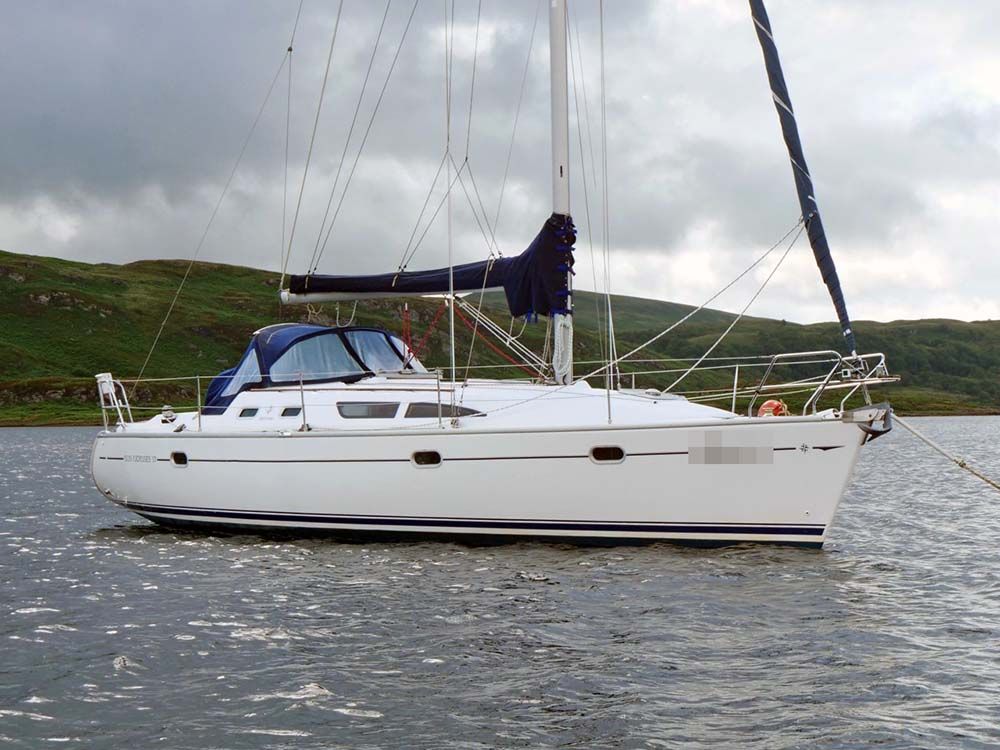
The Jeanneau Sun Odyssey 37 arrived in the late 1990s as a purpose-built cruiser that also catered to charter and club-sailor markets; designed by Jacques Fauroux and introduced around 1998–2001, the model was intended to blend comfortable liveaboard accommodations with straightforward sailing characteristics suitable for couples, small families, and charter fleets. Its role as a practical coastal and short-offshore cruiser — and the fact that the hull was also marketed in Moorings charter versions — helped the 37 find steady traction on the used market: many examples circulated through charter fleets and private ownership, which in turn has kept the model abundant and visible in resale inventories. For buyers and sellers today, demand tends to be steady rather than frantic: private cruisers seeking a roomy 36–38′ platform and brokers prepping turn-key ex-charter boats make up most transactions, and availability is healthy on both U.S. coasts and in European brokerage listings.
Design and Construction
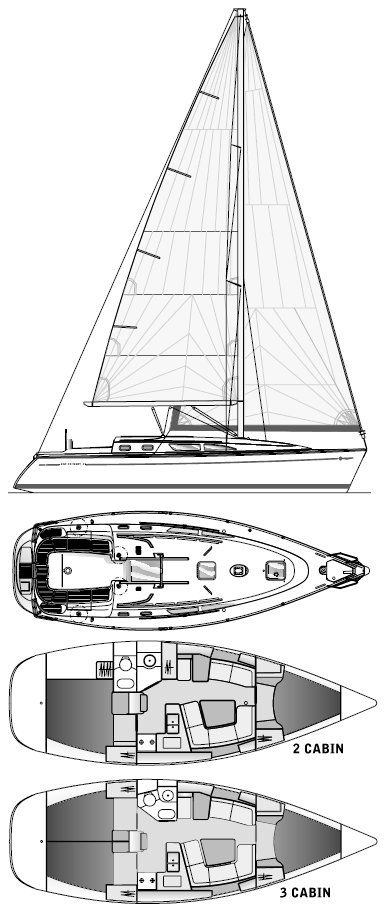
The Sun Odyssey 37 is a monohull built of hand-laid fiberglass with strategic reinforcements and a balsa-cored deck in many areas; Jeanneau used vinylester in outer plies and Kevlar or reinforced laminates around high-load zones such as the keel and mast step to improve resistance to impact and blistering. The hull form is a fin keel with a bulb and a spade or skeg-supported rudder depending on the variant, and the production boats most commonly sport a masthead sloop rig — a conservative, easily-serviced setup that suits cruising duties and charter use. Internally, Jeanneau’s approach for this era favored structural grid construction (stringers and floors bonded into a hull grid) rather than removable molded liners, which improves stiffness and simplifies some types of repairs but means through-hull and deck-core penetrations should be checked carefully during survey. These choices affect long-term ownership in predictable ways: the solid, hand-laid hull tends to be durable and repairable, the cored deck delivers weight savings and thermal insulation but raises the importance of properly rebedded fittings, and the mast/keel reinforcements reduce the likelihood of catastrophic laminate failure when loads are concentrated — all factors that help preserve value if routine maintenance is done.
Performance
On the water the 37 is generally described as a comfortable, predictable cruiser rather than a light-air thoroughbred: she keeps momentum in typical coastal conditions, steers crisply, and rewards conservative sail trim with steady speeds and a forgiving motion through confused seas. The hull’s moderate displacement and beam produce respectable initial stability, while the fin-and-bulb keel gives a reasonable righting moment for a boat her size; upwind she will not point like a dedicated racer but will make comfortable passage-making speeds and is easy to handle short-handed. Compared with similarly sized production cruisers of the late 1990s and early 2000s, the Sun Odyssey 37 often lands in the “balanced” category — a little livelier than heavier traditional cruisers but not as aggressively tuned as contemporary racer-cruisers — which is why owners frequently praise her for being reliable and predictable on realistic cruising passages.
Comfort and Accommodations
The interior layout is one of the 37’s strongest selling points: Jeanneau offered two- and three-cabin plans with well-proportioned saloons, practical galleys and generous tankage options, giving the boat flexibility to serve couples, families, or a small charter crew. Storage and locker space are typically abundant for the size, circulation and ventilation are reasonable for Mediterranean-style cruising, and the structural grid under the sole gives a solid feel below decks. Because many boats saw charter or heavy use, it is common to encounter owner-upgrades — modern refrigeration, updated electronics, and refreshed upholstery — so prospective buyers should expect a range of finish conditions; when well-maintained, the 37’s interior can comfortably support extended cruises, but as with most production boats from this era, long-term liveaboard comfort will benefit from selective system upgrades and insulation or heating improvements in colder climates.
Safety and Practicality
Deck layout and cockpit ergonomics were designed with cruising practicality in mind: wheel steering, decent cockpit coaming, and relatively uncluttered deck runs (depending on rigging options) make sail handling safe for a short-handed crew. Access to systems is typically acceptable — engines are under companionway or chart-table access panels and plumbing/electrical runs are reachable beneath the sole or behind cabinets — which lowers the cost and complexity of routine maintenance. For true offshore work the 37 is capable with proper preparation (solid ground tackle, upgraded electronics, redundant pumps, and careful attention to seacock and deck-core integrity), but buyers should not assume blue-water readiness from an unmodified, ex-charter example; instead, budgeting for targeted upgrades turns this comfortable coastal cruiser into a reliable passage-maker.
Known Issues with the Jeanneau Sun Odyssey 37
Discussion threads and survey reports flag a handful of recurring items rather than a single model-crippling fault. Chainplate and deck-fitting leaks — driven by degraded bedding or localized core saturation — are commonly mentioned and, when present, require cutting out and re-coring or thorough epoxy remediation to do properly. Owners also report routine wear from charter service on running rigging, sails, and deck hardware, so replacement of those items is a frequent, predictable post-purchase expense. Practical Sailor’s construction notes emphasize the use of iron ballast and balsa-cored decks in some areas, which implies owners should watch for corrosion and deck-core degradation during surveys; electrical updates, fresh seacocks and a careful engine inspection (especially mixing elbows and hoses) are typical items on a buyer’s checklist. Common, practical upgrades recommended by experienced owners include modern chart electronics/AIS, new or revised standing and running rigging if ages are unknown, and propeller changes (folding/3-blade) for improved under-power maneuverability.
Market Availability and Pricing in the U.S.
The Sun Odyssey 37 is no longer in production and is sold only on the used market; examples regularly show up on U.S. broker sites and classifieds, often with concentrations in Florida, New England, and around larger coastal hubs where charter and private cruisers change hands. Condition varies widely — you’ll see well-cared-for owner boats, ex-charter hulls that have been refreshed for resale, and some examples priced low because they need structural or systems work. Recent U.S. and international listings cluster commonly in the range $60,000–$95,000 for clean, average-condition boats, with lower-priced bargains available where survey work is required and higher asking prices for heavily refitted, turnkey examples. That range places the Sun Odyssey 37 competitively against late-1990s to mid-2000s family cruisers: it often represents good value for buyers prioritizing interior volume and a proven production platform, while sellers who document upgrades and maintenance generally find steady interest.
Below is a table that positions the boat against common alternatives in the same size/era.
| Model | LOA | Years (approx.) | Typical used price (U.S.) | Key differences |
|---|---|---|---|---|
| Jeanneau Sun Odyssey 37 | ≈37.4 ft | ~1998–2005 | $60,000–$95,000 | Cruiser with charter pedigree, hand-laid fiberglass hull, comfortable interior, moderate performance. |
| Beneteau Oceanis 37 | ≈37 ft | ~2000s | $65,000–$110,000 | Euro hull form, often larger tankage and slightly different motion at sea; strong dealer network in Europe/US. |
| Catalina 36 (MkII) | ≈36.0 ft | ~1995–2005 | $40,000–$100,000 | Very common in U.S.; conservative rigging, broad community support and plentiful parts/service options. |
| Hunter 36 (various) | ≈36.0 ft | ~1997–2010 (various models) | $45,000–$95,000 | U.S.-centric design priorities with options for simplified short-handed sailing and roomy cockpits; varied build details by model year. |
Jeanneau Sun Odyssey 37 vs Beneteau Oceanis 37

The Sun Odyssey 37 and Beneteau Oceanis 37 both aim at comfortable family cruising, but their hull and deck philosophies give each a distinct personality. Jeanneau’s 37 emphasizes a solid, well-reinforced hull with a roomy interior and practical deck layout suited to charter and owner-operator use, while the Oceanis often presents a slightly different hull tuning with an eye toward steadier offshore motion and often larger tankage; this translates into the Oceanis feeling marginally more composed in longer offshore passages, whereas the Jeanneau rewards owners with a more immediately usable saloon and easier service access in many cases.
From a rigging and maintenance perspective, both boats use conventional sloop rigs, but dealer and parts networks differ — Beneteau’s wider European footprint sometimes gives it an edge for parts in certain markets, and Jeanneau’s production choices make survey and repair straightforward for yards familiar with the marque. For interior comfort and liveability the 37 typically wins favor for social saloon ergonomics and flexible layouts, while the Oceanis may be preferred by buyers prioritizing tankage and offshore provisioning. In short, choose Jeanneau if you want a workmanlike, comfortable cruiser that’s easy to kit out for coastal cruising; choose Beneteau if you prioritize slightly more offshore-focused motion and longer provisioning capacity.
► Learn more about de Beneteau Oceanis 37
Jeanneau Sun Odyssey 37 vs Catalina 36 MK II

Comparing the Sun Odyssey 37 to the Catalina 36 highlights the cultural differences between European and American production cruiser design. The Jeanneau tends to have a slightly higher finish per foot in the saloon and a hull form tuned toward a balanced compromise between comfort and lively handling, while the Catalina’s design philosophy skews toward conservatism: a familiar rig, broad community support and layouts that many U.S. buyers find intuitively comfortable. That means Catalina owners often prize simplicity, abundant aftermarket advice, and the ability to find parts and service quickly, whereas Jeanneau owners benefit from a hull and deck structure that, when in good condition, can feel stiffer and better organized for charter-style usage.
For a buyer the trade-offs are practical: the Catalina may be marginally cheaper to maintain in some American regions due to parts familiarity and a large owner base, but the Jeanneau can deliver a more modern cruising experience with slightly more European styling and compartmentalization. If dock handling and simple upgrades are top priorities, the Catalina’s widespread support network is compelling; if interior ergonomics, slightly newer design language, and a hull tailored to mixed coastal/offshore use matter more, the Jeanneau is likely the better match.
► Learn more about de Catalina 36 MK II
Jeanneau Sun Odyssey 37 vs Hunter 36

The Hunter 36 series reflects a U.S.-centric focus on cockpit ergonomics and short-handed convenience, while the Jeanneau Sun Odyssey 37 shows a Euro emphasis on hull stiffness and interior flexibility. Hunters often bring design touches that simplify single- or couple-handling — easily-led lines, user-friendly traveler geometry, and sometimes optional shoal keels — whereas the Jeanneau tends to retain a more conventional keel/rig balance that favors consistent performance across a range of sea states. Practically, this makes the Hunter an attractive option for owners who prioritize dockside handling and simplified cockpit control, while the Jeanneau appeals to those who place a premium on structural reinforcement and a saloon designed for comfortable cruising life.
Maintenance expectations differ by region: Hunters are usually straightforward to keep in North American yards familiar with the brand, and Jeanneau benefits from strong European build practices that use reinforcements (Kevlar or thicker laminates) in high-load areas, which can mean different attention points at survey (for example, chainplate bedding and deck-core checks). Buyers who expect to race frequently or seek a sportier feel might favor a Hunter variant that emphasizes cockpit control and a lighter displacement; buyers seeking a consistent, well-supported cruiser for mixed coastal/ocean passages will find the Jeanneau’s combination of construction and interior layout attractive.
► Learn more about de Hunter 36
Maintenance Costs for a Jeanneau Sun Odyssey 37 in the USA
A realistic annual ownership budget for a well-used 37 should include the following common items (amounts are approximate and will vary regionally):
- Mooring / slip fees: $2,400–$10,000 per year — marina rates vary widely (higher in New England and California, lower in many Gulf and inland areas).
- Insurance: $800–$2,500 per year — depends on cruising range, owner experience, and agreed value.
- Engine servicing (annual): $500–$1,500 — oil/filter, impeller, belts; more if mixing elbow or transmission work is needed.
- Antifouling / haulout: $800–$2,500 per haulout (annual or biennial) — regional growth rates and paint choices affect frequency and cost.
- Standing & running rigging checks / partial replacement: $300–$3,000 annually averaged; full standing rigging replacement every 10–15 years can run $3,000–$8,000.
- Sails (repairs / replacement): $200–$2,000 for repairs annually; a full sail wardrobe replacement commonly $4,000–$12,000 depending on material and sailmaker.
- Deck and bedding work (re-bedding stanchions/chainplates): $500–$6,000 — small re-bed jobs are cheap, re-core or structural repairs cost significantly more.
- Electronics & batteries: $300–$3,000 annually averaged; full chartplotter/AIS/VHF refits $2,000–$8,000 as one-time upgrades.
- Miscellaneous (upholstery, pumps, plumbing, varnish): $500–$4,000.
Region matters: New England owners should budget for winterization and haulout-related expenses; Florida owners often pay more for hurricane coverage and may spend less on seasonal haulouts. Significant one-time costs include chainplate/through-bolt repairs or deck re-coring ($1,500–$10,000 depending on scope), major electronics refit ($2,000–$8,000), or a complete standing rig replacement. Many routine tasks (oil changes, through-hull service, varnish touch-ups) can be owner-performed if the buyer has skills and space, but critical structural, rigging and engine work should be done by professionals, which raises labor costs. Overall, the Sun Odyssey 37 sits in the medium ownership-cost tier for its size: not inexpensive, but predictable, and resale values for well-maintained examples generally make sensible financial sense compared with extensive refit costs on older or less common platforms.
Conclusion
The Jeanneau Sun Odyssey 37 is a pragmatic, well-rounded cruising platform that pairs solid construction practices with versatile accommodation plans and approachable sailing characteristics. Its strengths are an intelligently reinforced hull, flexible interior layouts useful for families or charter conversion, and a sailing temperament that rewards prudent trimming rather than constant tweaking. Trade-offs include the need to pay attention to deck-core and chainplate bedding on older boats and the likely investment in refreshed sails and electronics for buyers who want turnkey cruising readiness. For buyers focused on coastal cruising with occasional offshore passages, or for those seeking a comfortable liveaboard in the 36–38′ class, the Sun Odyssey 37 is worth actively considering; it offers a sensible balance of comfort, durability and resale appeal when purchased after a careful survey and with known service history.
Specifications
| Hull Type | Fin w/ bulb & spade rudder |
| Rigging Type | Masthead Sloop |
| LOA | 37.44 ft / 11.41 m |
| LWL | 31.75 ft / 9.68 m |
| Sail Area (reported) | 552.00 ft² / 51.28 m² |
| Beam | 12.08 ft / 3.68 m |
| Displacement | 14,175 lb / 6,430 kg |
| Ballast | 4,453 lb / 2,020 kg |
| Max Draft | 6.33 ft / 1.93 m |
| Construction | Fiberglass (FG) |
| First Built | 1998 |
| Builder | Jeanneau (France) |
| Designer | Jacques Fauroux |
| Auxiliary Power | Volvo 29 HP Diesel |
| Fuel Capacity | 30 gals / 114 L |
| Water Capacity | 70 gals / 265 L |
| S.A. / Displ. | 15.13 |
| Bal. / Displ. | 31.41 |
| Disp. / Len. | 197.72 |
| Comfort Ratio | 23.71 |
| Capsize Screening | 2.00 |
| S# | 2.50 |
| Hull Speed | 7.55 kn |
| Pounds/Inch Immersion | 1,370.43 lbs/inch |
| Rig Dimensions (I, J, P, E) | I: 44.78 ft, J: 12.53 ft, P: 39.04 ft, E: 13.91 ft |
| Sail Areas (Fore, Main, Total) | Fore: 280.55 ft², Main: 271.52 ft², Total: 552.07 ft² |
| Mast Height from DWL | 51.50 ft / 15.70 m |
Disclaimer
The considerations and analyses presented regarding the Jeanneau Sun Odyssey 37 sailboat are of a general nature and are based on the available information and technical data on this model, interpreted to the best of our knowledge and understanding. It is important to note that the specific characteristics of any particular sailboat may vary due to custom modifications, maintenance performed, and conditions of use over time, among other factors. Therefore, the details and performance of the boat you are considering may not exactly match the information provided here.
We strongly recommend that, before making any purchasing or usage decisions, you conduct a detailed inspection of the boat in question, consult with nautical professionals and other sailors, and consider your personal needs, expectations, and capabilities. Each sailboat may have unique particularities that affect its performance and suitability for different types of sailing and sailors.
The information contained in this analysis should be used as a general guide and not as a definitive reference. Professional evaluation and personal inspection are essential to ensure that the boat meets your specific requirements and expectations.