


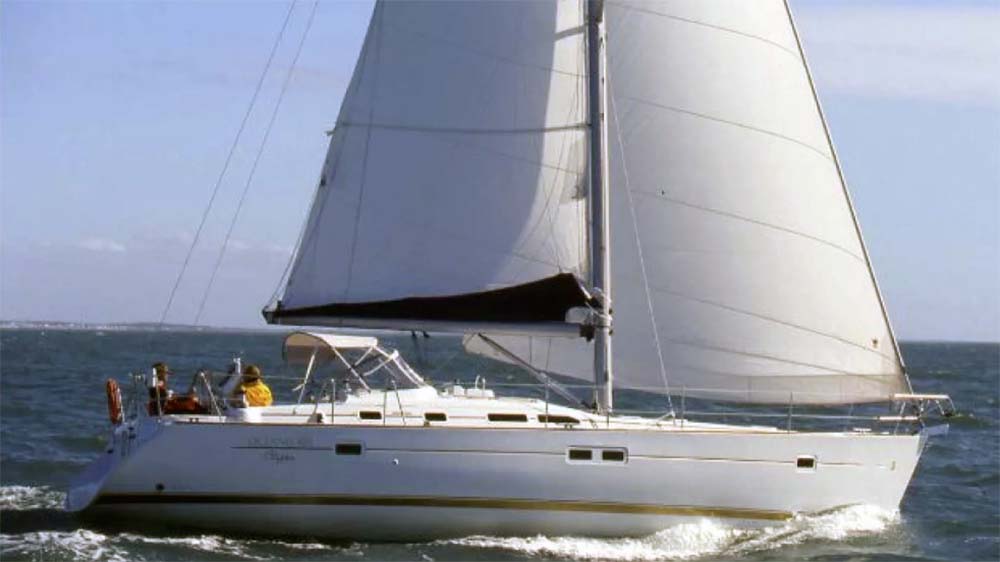
The Jeanneau Sun Odyssey 43 DS arrived in the mid-1990s as a deck-saloon cruiser that tried to bridge comfortable, light-filled cruising and respectable passage-making performance. Designed by Daniel Andrieu and built by Jeanneau, the 43 DS was marketed as a cruiser-racer/comfortable family cruiser with a bright, raised salon that gives the feel of a larger yacht while keeping an easily handled sloop rig and manageable systems. That combination—generous interior volume, multiple useful layouts, and production-boat pricing—helped the model find a steady niche on the used market: you’ll see them sold by private owners, brokers and the charter sector, usually to cruisers and couples upgrading to a more comfortable liveaboard platform rather than to owners focused on club racing.
Design and Construction
The Sun Odyssey 43 DS is a single-hulled, fin-keel design with a spade rudder and a masthead sloop rig—choices that favor a balance between straight-line speed, maneuverability, and interior volume. The deck-saloon layout raises the coachroof and uses large windows to deliver panoramic light, trading a bit of low-profile aesthetics for a much more usable social space below. Jeanneau built the hulls in fiberglass (glass-reinforced plastic) with production techniques typical for the era; structural loads are taken by localized reinforcements around the keel, chainplates and mast step rather than massive solid layups, which keeps weight and cost down but makes attention to core and bedding details important at survey.
Those architecture choices mean the boat sails with a relatively lively feel for its length, while the spade rudder and moderate wetted surface make it responsive in maneuvers—advantages for owners who want an easy single- or short-handed boat that still handles coastal passages well. Over the long term, the construction approach implies reasonable repairability (standard GRP repairs are straightforward) but also a need for proactive maintenance where deck fittings, windows and compression structures meet the deck and salon—areas that older production boats commonly require survey attention to preserve durability and resale value.
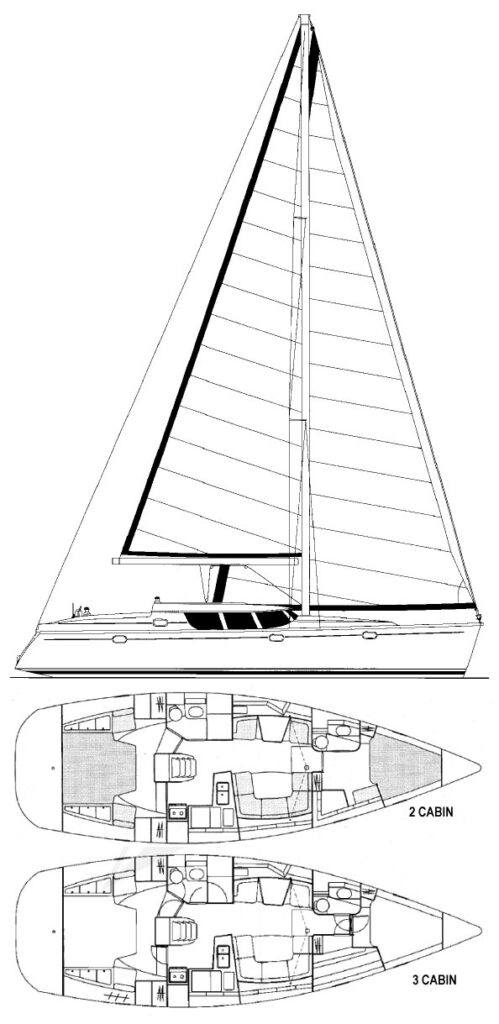
Performance
Under sail the 43 DS tends to feel like a modern cruising hull of its era: it accelerates cleanly in moderate breezes, maintains momentum through short chop, and points respectably for a beamy deck-saloon cruiser. In 12–18 knots it will commonly make hull speed or better when trimmed, and its fin-keel/bulb arrangement gives a compromise between reaching performance and reasonable draft for many harbors.
Heavier seas and strong winds expose the limits of a production cruiser—motion becomes fuller than a narrow, performance-oriented design and heavy chop accentuates pitching—yet for typical coastal and island-hopping cruises the platform is stable and predictable. Maneuverability in tight marinas is aided by the moderate rudder area and auxiliary power (common diesel installations in the 50–75 hp range), so docking with two people is usually straightforward. Compared to true performance cruisers of similar length, the 43 DS sacrifices some upwind speed and pointing for comfort and interior volume; compared with older, heavier full-keel cruisers it will feel noticeably livelier and easier to single-hand.
Comfort and Accommodations
Where the 43 DS stands out is the saloon experience: the raised coachroof and large ports create an airy central space that reads larger than the boat’s length would suggest, and many layouts offer two large aft cabins or a three-cabin plan useful for family cruising. Storage is generally good for a production boat—lockers under berths and in the galley are generous—though the bright interior means more joinery and trim surfaces that require upkeep. Headroom in the deck saloon and forward salon area makes day-to-day living comfortable for taller crew, and the separation of cabins gives privacy useful for couples or charter use.
For extended liveaboard use the boat is practical but not lavish: tankage and systems are adequate for coastal cruising and island chains, with common owner upgrades including larger refrigeration, extra solar or a watermaker for long stays. Interiors of well-kept examples tend to age gracefully, but it’s also common to find owner refits—updated cushions, electronics and galley gear—because personalized upgrades significantly improve liveability and marketability.
Safety and Practicality
On deck the 43 DS was laid out for cruising practicality: broad coachroof seats, reasonably wide side decks, and sturdy toerails that make moving forward possible in moderate conditions. The combination of a fin keel and spade rudder makes the boat responsive, but owners should respect that spade rudders, like all unprotected rudder designs, are more vulnerable than skeg-hung systems—important when thinking about remote cruising or gravel seabeds.
Access to the water is straightforward if the transom platform or swim ladder options are fitted, and cockpit ergonomics generally favor comfortable watchkeeping and short-handed sail handling. Systems are typically accessible enough for routine maintenance, although the mid-2000s production approach means that areas where the deck penetrations, compression post and mast step meet the structure need careful inspection; these items affect not only safety but also the long-term cost and effort of ownership.
Known Issues with the Jeanneau Sun Odyssey 43 DS
Owners and surveyors commonly point to a few recurring issues that a potential buyer should probe during a survey and sea trial. The most discussed item is the compression-post and mast-step area: older 43 DS boats have shown rotted wooden blocks or inadequate local reinforcement where the vertical post meets the hull/core—repairs range from composite reinforcements to full re-lamination around the post. Leaks around chainplates, coachroof windows and the hull-to-deck joint are also flagged periodically; these are usually the result of aging sealants or compromised core beneath fittings and are fixable but must be identified early. Osmosis has been reported on some older fiberglass hulls, though not universally, and routine issues such as aging engine mounts, heat-exhaust systems, and electrical/electronic refreshes appear on many survey lists for boats of this vintage.
Commonly recommended upgrades include reinforcing or replacing the compression post support, renewing standing rigging on schedule, rebedding chainplates and windows, and modernizing navigation electronics—practical improvements that make the boat safer, more reliable and easier to resell.
Market Availability and Pricing in the U.S.
The Sun Odyssey 43 DS is no longer in production and is sold only on the pre-owned market; current U.S. listings tend to cluster around the East Coast (New England and the Mid-Atlantic), Florida, and California/Pacific Northwest—areas with active brokerages and large cruising communities. Asking prices on U.S. broker sites over recent seasons have typically ranged $75,000–$140,000 depending on year, equipment level and condition, with well-equipped, freshly refitted examples at the top of that bracket and older, lower-spec boats toward the bottom. When compared to contemporaries, the 43 DS usually offers stronger interior volume and a more contemporary deck-saloon experience, while competing models may offer different trade-offs in sailing feel or systems robustness. Overall, the model tends to hold decent resale value for a production cruiser of its size if surveys are clean and common structural attention items have been addressed—making it attractive to buyers seeking comfort and usable interior space in a manageable sailing package.
Here is a comparison with three similar models commonly considered by cruisers:
| Model | LOA | Approx. Years Built | Typical US Used Price | Main Differences |
|---|---|---|---|---|
| Jeanneau Sun Odyssey 43 DS | 43’4\” | mid-1990s – 2000s | $75,000–$140,000 | Deck saloon, bright interior, moderate draft, production GRP build—comfort oriented with decent performance. |
| Beneteau Oceanis 423 | ≈43’1\” | early-2000s | $100,000–$160,000 | Slightly lighter/roomy hull, comparable tankage, often marketed as performance-oriented cruiser with Finot design lines. |
| Catalina 42 MkII | ≈42′ | late-1990s – 2000s | $90,000–$160,000 | Robust, American-built cruiser with conservative hull form and large tanks; known for straightforward systems and owner-serviceability. |
| Dufour 405 (Grand Large) | ≈40′ | 2000s–2010s | $90,000–$170,000 | Modern European styling, emphasis on sailing performance and deck ergonomics; interiors lean toward streamlined layouts. |
Jeanneau Sun Odyssey 43 DS vs Beneteau Oceanis 423
The Sun Odyssey 43 DS emphasizes a bright deck-saloon and comfortable social spaces below, while the Beneteau 423 (Oceanis) is usually conceived with a slightly fuller performance profile and higher sail area for its displacement. Practically, a buyer who prizes panoramic interior light and social comfort will lean to the Jeanneau; someone prioritizing slightly sharper passage times and a more traditional deckline may prefer the Beneteau.
In ownership terms the Jeanneau often requires the familiar attention points (compression post, window bedding) and rewards interior upgrades, whereas the Oceanis line tends to offer a similar maintenance profile but with marginally different structural details (Finot hull form and fittings emphasis) that may appeal to buyers seeking different sailing/handling characteristics.
► Learn more about de Beneteau Oceanis 423
Jeanneau Sun Odyssey 43 DS vs Catalina 42 MkII

Compared with the Catalina 42 MkII, the 43 DS trades a touch of Catalina’s heavy-feel stability for lighter, more responsive handling and much brighter living spaces due to the deck saloon. The Catalina feels more traditional and robust—appealing to owners who value simple systems and ease of owner maintenance—while the Jeanneau targets owners who want a modern interior experience and slightly livelier sailing behavior. For a family or couple focused on weekend cruising and easy upkeep, the Catalina can be attractive; for those who want liveaboard comfort and more hotel-like accommodations, the Jeanneau’s salon and cabin layouts make it more compelling.
► Learn more about de Catalina 42 MkII
Jeanneau Sun Odyssey 43 DS vs Dufour 405 Grand Large

The Dufour 405 leans more toward performance-oriented European cruiser design with clean deck ergonomics and an emphasis on sailing efficiency, whereas the Jeanneau 43 DS privileges interior volume and visibility with its raised salon. Buyers who expect to spend time making passages and want sharper upwind speed may favor the Dufour; those who prioritize comfort, panoramic living space and a sense of a larger yacht for the same length will prefer the Jeanneau. Maintenance profiles are similar in that both are production GRP builds, but the Dufour’s systems and deck hardware layouts may be easier to optimize for weekend-racing or spirited cruising, while the Jeanneau’s interior upgrades often drive higher soft-goods and cosmetic refresh costs.
► Learn more about de Dufour 405 Grand Large
Maintenance Costs of a Jeanneau Sun Odyssey 43 DS in the USA
A realistic annotated annual cost picture for a 43-foot production cruiser in the U.S. looks like this:
- Mooring / Slip / Storage: Expect roughly $2,500–$12,000 per year depending on region (lower in parts of the Southeast; significantly higher in high-demand New England or California marinas).
- Insurance: Roughly $800–$2,500 annually (value, cruising area and deductibles matter).
- Engine servicing & consumables: $500–$1,800 per year (routine oil, filters, belts, impeller; larger interventions cost more).
- Antifouling & haul-out: $600–$2,000 annually, depending on paint, frequency and yard rates.
Comment: Bottom prep and professional paint add to longevity and speed retention. - Standing & running rigging (annual reserve): set aside $300–$1,000 per year, with a scheduled standing-rigging replacement every 10–15 years costing $3,000–$8,000.
- Sails: $0–$6,000+ per year in amortized costs; replacing a mainsail or a decent furling genoa can be several thousand dollars each.
- Electronics & batteries: $200–$1,200 per year amortized; full electronics upgrades (chartplotter, radar, AIS) are one-time costs of several thousand dollars.
- Miscellaneous maintenance (plumbing, cushions, gelcoat, rigging fittings): $500–$3,000 annually variable.
Significant one-time costs to budget for include major sail replacement(s), a standing-rigging renewal, a full electronics refit, or structural repairs if survey reveals core or compression-post work. Many owners can handle routine servicing, bedding and small electrical tasks, but compression-post repairs, major through-hull work, or complex engine transmission service usually require a professional yard. Taken together, annual running costs for this class generally fall into a medium range for 40–45′ cruisers; when surveys are clean and known issues addressed, resale value tends to reflect proactive maintenance, so the investment in upkeep is usually recovered to an extent at sale time.
Conclusion
The Jeanneau Sun Odyssey 43 DS is best understood as a comfortable, well-proportioned deck-saloon cruiser that appeals to couples and families who value interior light, private cabin arrangements and a boat that is easy to handle for coastal and island cruising. Its strengths are interior volume, a sociable salon, and an accessible sail plan—qualities that make it a practical and enjoyable coastal cruiser or liveaboard. The trade-offs are the usual ones for production deck-saloon designs of its era: attention to bedding, compression-post and chainplate areas is essential, and older examples often benefit from targeted structural and systems upgrades. For buyers focused on comfortable coastal cruising and charter-style accommodation, the 43 DS is worth seeking out—if you prioritize raw upwind speed or minimalist offshore robustness you might compare closely with the Beneteau, Dufour or Catalina alternatives. In short, for coastal and island cruising the Jeanneau Sun Odyssey 43 DS generally represents a sensible balance of comfort, capability and market availability when purchased after a careful survey and with routine maintenance items addressed.
Specifications
| Hull Type | Fin w/bulb & spade rudder |
| Rigging Type | Masthead Sloop |
| LOA | 42.13 ft / 12.84 m |
| LWL | 37.50 ft / 11.43 m |
| S.A. (reported) | 768.00 ft² / 71.35 m² |
| Beam | 13.75 ft / 4.19 m |
| Displacement | 21,054 lb / 9,550 kg |
| Ballast | 6,515 lb / 2,955 kg |
| Max Draft | 6.56 ft / 2.00 m |
| Construction | Fiberglass (FG) |
| First Built | 1994 |
| Last Built | 2006 |
| Builder | Jeanneau (France) |
| Designer | Daniel Andrieu |
| Auxiliary Power | Diesel, 75 HP |
| Fuel Capacity | 53 gal / 201 L |
| Water Capacity | 145 gal / 549 L |
| S.A. / Displ. | 16.18 |
| Bal. / Displ. | 30.94 |
| Disp. / Len. | 178.23 |
| Comfort Ratio | 25.51 |
| Capsize Screening Formula | 2.00 |
| S# | 2.87 |
| Hull Speed | 8.21 kn |
| Pounds/Inch Immersion | 1,842.38 lb/inch |
| I | 50.80 ft / 15.48 m |
| J | 15.29 ft / 4.66 m |
| P | 44.49 ft / 13.56 m |
| E | 17.06 ft / 5.20 m |
| S.A. Fore | 388.37 ft² / 36.08 m² |
| S.A. Main | 379.50 ft² / 35.26 m² |
| S.A. Total (100% Fore + Main Triangles) | 767.87 ft² / 71.34 m² |
| S.A./Displ. (calc.) | 16.18 |
| Est. Forestay Length | 53.05 ft / 16.17 m |
Disclaimer
The considerations and analyses presented regarding the Jeanneau Sun Odyssey 43 DS sailboat are of a general nature and are based on the available information and technical data on this model, interpreted to the best of our knowledge and understanding. It is important to note that the specific characteristics of any particular sailboat may vary due to custom modifications, maintenance performed, and conditions of use over time, among other factors. Therefore, the details and performance of the boat you are considering may not exactly match the information provided here.
We strongly recommend that, before making any purchasing or usage decisions, you conduct a detailed inspection of the boat in question, consult with nautical professionals and other sailors, and consider your personal needs, expectations, and capabilities. Each sailboat may have unique particularities that affect its performance and suitability for different types of sailing and sailors.
The information contained in this analysis should be used as a general guide and not as a definitive reference. Professional evaluation and personal inspection are essential to ensure that the boat meets your specific requirements and expectations.