



The Jeanneau Tonic 23 was launched in the early 1980s during a period when European builders were focusing on creating compact yet versatile cruisers that blended performance with comfort. Designed by Tony Castro for Jeanneau, the Tonic 23 was conceived as a family-oriented coastal cruiser with enough agility to satisfy sailors who still enjoyed a lively sail. It was not a pure racer, but rather a fast cruiser that could double as a club racing boat when pressed. Over the years, it has built a reputation in the secondhand market as one of the more refined pocket cruisers of its time. Today, it appeals to individual owners looking for an affordable yet stylish small cruiser, as well as sailing schools and clubs that value its balance between ease of handling and livability.
Design and Construction
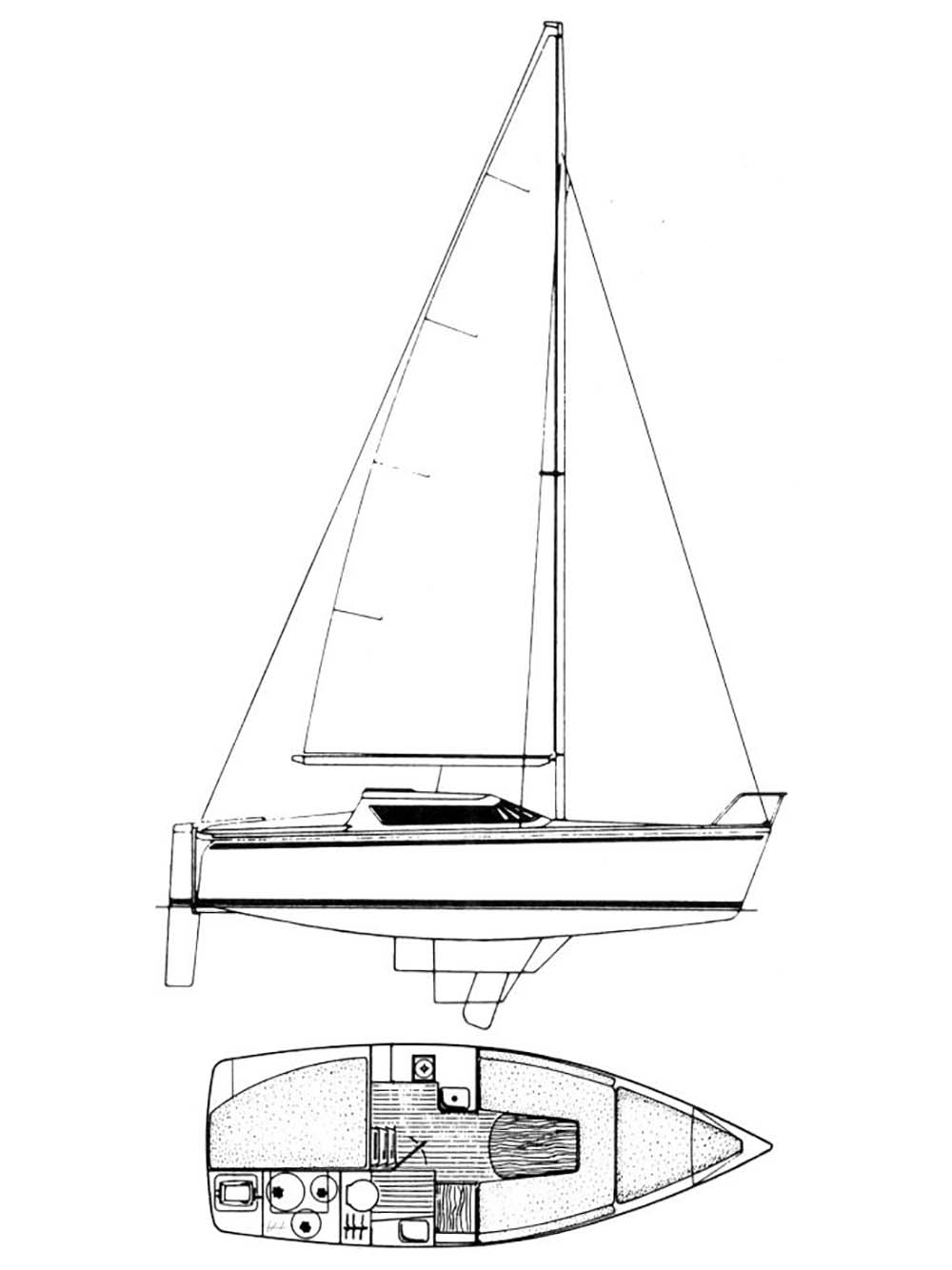
The Tonic 23’s hull is a product of the 1980s European design language: relatively wide beam carried well aft, providing both stability and interior volume. Buyers could choose between a fixed keel or a lifting keel version, the latter being particularly attractive for shallow waters and trailering. The spade rudder gives the boat quick, responsive handling, though at the cost of more vulnerability than transom-hung rudders.
Rigged as a masthead sloop, the sail plan is efficient and simple, providing versatility for cruising without excessive complexity. The fiberglass construction is solid for its era, and Jeanneau’s production standards at the time were higher than many American counterparts, leading to interiors that aged more gracefully. The combination of light displacement, wide beam, and sufficient ballast resulted in a boat that feels stable enough for coastal cruising while still being easily driven under sail. These design choices impact long-term ownership favorably: fiberglass hulls are durable and straightforward to repair, while the clean deck layout keeps maintenance costs predictable.
Performance
Under sail, the Tonic 23 stands out for its lively performance relative to its size. It accelerates quickly in light to moderate winds, points well to weather, and offers rewarding helm feedback thanks to its spade rudder. In choppy seas, its light displacement makes motion more pronounced compared to heavier boats, but its wide beam and form stability keep it safe and predictable. With a hull speed of just under 6 knots, it performs competitively within its size bracket.
Compared with the Catalina 22, the Jeanneau feels more modern and responsive; against the Hunter 23, it offers better build quality and stability. Owners often praise its agility in coastal conditions, where it is both forgiving for novices and enjoyable for experienced sailors who appreciate crisp handling.
Comfort and Accommodations
Inside, the Tonic 23 benefits from Jeanneau’s emphasis on livability. Despite its modest length, the interior layout provides berths for four, with a small galley and a compact but practical head. The use of light-colored wood veneers and thoughtful port placement makes the cabin feel more open than American boats of similar vintage. Storage is adequate for weekend cruising, though extended cruising will test its limits.
For a couple or a small family, the boat offers a pleasant space for two- or three-day trips. Headroom is limited, as expected in this size range, but ergonomics are good for sitting and lounging. Many examples have been refurbished with modern upholstery, LED lighting, or upgraded galleys, which extends comfort well beyond the original factory standard. While not intended for long-term liveaboard use, it provides an excellent balance of practicality and comfort for its size.
Safety and Practicality
On deck, the Tonic 23 is straightforward and safe. Side decks are accessible, and the lifelines and stanchions provide reasonable security for coastal sailing. The cockpit is deep enough to feel secure, with good drainage. For handling in rough weather, the boat remains manageable, though its light displacement means it requires prudent seamanship.
From a safety standpoint, the boat is best suited for coastal waters and nearshore passages rather than extended offshore work, unless extensively upgraded. Systems are generally accessible, with outboard power being the norm, which simplifies maintenance and reduces ownership costs. Single- or double-handed sailing is practical, thanks to the uncomplicated rig and responsive tiller steering.
Known Issues with the Jeanneau Tonic 23
Common issues reported by owners include deck core softening around hardware, particularly stanchions and chainplates, and occasional osmotic blistering on older hulls. The spade rudder requires periodic inspection for structural soundness. Electrical systems from the 1980s are often outdated and benefit from modern rewiring. Many boats have seen upgrades in sails, outboards, and navigation electronics, which can be significant value points on the used market. Recommended improvements include re-bedding deck fittings, upgrading standing rigging if original, and replacing aged outboards with modern four-stroke engines.
Market Availability and Pricing in the U.S.
The Jeanneau Tonic 23 is long out of production, with units appearing only on the secondhand market. While more common in Europe, a number of boats have made their way to the U.S., particularly in the Northeast and Florida, where they were imported by enthusiasts or relocated through secondhand sales. Condition varies widely: some are well-kept by private owners, while others require cosmetic or structural work after years of neglect.
Current listings in the U.S. place the Tonic 23 in the $6,500–$12,000 range, depending on condition and upgrades. This positions it above American counterparts like the O’Day 23 or Catalina 22, but the higher price is often justified by superior interior finish and more modern design. Resale demand is more limited, but among knowledgeable buyers, it retains strong appeal.
Comparison with similar boats:
| Model | LOA | Production Years | Typical Used Price (U.S.) | Notable Differences |
|---|---|---|---|---|
| Jeanneau Tonic 23 | 23 ft | 1981–1987 | $6,500–$12,000 | European design; higher interior finish; responsive sailing; less common in U.S. |
| Catalina 22 | 22 ft | 1969–present | $4,500–$9,000 | Very common; strong class association; simpler interior. |
| Hunter 23 | 23 ft | 1985–1992 | $4,000–$8,500 | Modern styling; light displacement; less robust feel. |
| O’Day 23 | 23 ft | 1972–1979 | $3,500–$7,500 | Affordable; trailerable; simpler construction and finish. |
Jeanneau Tonic 23 vs Catalina 22
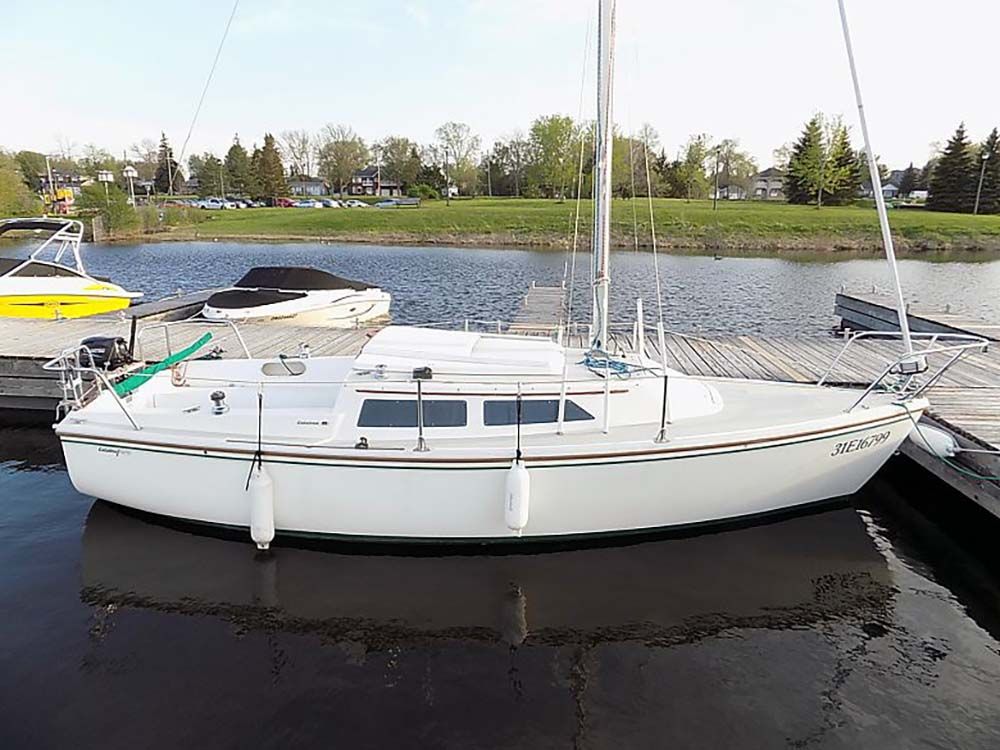
The Jeanneau Tonic 23 and Catalina 22 are both compact trailerable cruisers, but the Tonic 23 leans slightly more toward modern European styling and construction, with a lighter, more responsive hull. The Catalina 22 emphasizes simplicity, stability, and ease of handling, making it highly popular among beginners and families. While the Tonic 23 may offer a slightly sportier sailing experience and more contemporary lines, the Catalina 22 provides a proven platform with spacious accommodations relative to its size and excellent resale value. Buyers choosing between these two often weigh performance and modern design against familiarity and ease of use.
► Learn more about de Catalina 22
Jeanneau Tonic 23 vs Hunter 23

Comparing the Jeanneau Tonic 23 with the Hunter 23 highlights subtle differences in sailing feel and layout. The Tonic 23 is nimble, with a stiff hull that responds well to wind, making it enjoyable for sailors who value agility and performance. The Hunter 23 emphasizes stability and user-friendly sailing, with a slightly more conservative hull shape that ensures predictable handling in varied conditions. Interior accommodations are modest in both boats, but the Hunter’s layout often prioritizes comfort for weekend cruising, while the Tonic focuses on efficient use of space for a sportier feel. Sailors selecting between these two tend to decide based on whether handling precision or cruising ease is more important.
► Learn more about de Hunter 23
Jeanneau Tonic 23 vs O’Day 23

The Jeanneau Tonic 23 and O’Day 23 both target the small cruiser market, but their approaches differ. The Tonic 23 has modern European lines, a responsive hull, and a slightly performance-oriented rig, delivering lively sailing and good pointing ability. The O’Day 23 emphasizes stability, straightforward handling, and ease of maintenance, which makes it appealing to beginner sailors and casual weekend cruisers. Interior layouts are similar in terms of space efficiency, though the Tonic often feels more open due to its European design philosophy. Buyers often choose between these boats by weighing performance and style against simplicity and proven track record.
► Learn more about de O’Day 23
Maintenance Costs of an Jeanneau Tonic 23 in the USA
Annual ownership costs for a Tonic 23 are moderate, though slightly higher than comparable American-built boats due to parts availability:
- Dockage or mooring: $1,500–$3,500 annually, depending on region, with higher costs in California and the Northeast.
- Insurance: $200–$500 per year, reflecting its modest market value.
- Outboard servicing: $250–$600 annually, depending on usage and engine age.
- Bottom paint (antifouling): $500–$1,000 per year.
- Rigging and sails: Annual checks cost $200–$500; replacement of standing rigging runs $1,500–$2,500; new sails $2,000–$3,000.
- Electronics upgrades: Modern chartplotters, VHF, or solar panels add $1,500–$3,000 as one-time investments.
Many owners handle routine maintenance themselves, though specialized work such as rigging replacement or fiberglass repairs typically requires professionals. Overall, costs are low-to-moderate for a boat of this size. Considering its resale value, the Tonic 23 balances its expenses well, with most investments reflected in eventual sale price if the boat is kept in good condition.
Conclusion
The Jeanneau Tonic 23 combines European design flair with practical cruising capabilities. Its strengths include responsive sailing performance, a comfortable and well-finished interior, and an enduring reputation as a capable pocket cruiser. Its drawbacks are limited headroom, motion in heavier seas, and a smaller resale market in the U.S. compared to domestic boats.
For coastal cruising, weekend trips, and owners seeking a stylish yet manageable sailboat, the Tonic 23 remains an excellent option. While rarer in the American used market, it represents a strong value proposition for buyers willing to invest in a boat that offers both character and capability.
Specifications
| General | |
|---|---|
| Hull Type | Fin w/ transom hung rudder |
| Rigging Type | Fractional Sloop |
| LOA | 23.94 ft / 7.30 m |
| LWL | 20.33 ft / 6.20 m |
| S.A. (reported) | 248.00 ft² / 23.04 m² |
| Beam | 8.20 ft / 2.50 m |
| Displacement | 2,866.00 lb / 1,300 kg |
| Ballast | 990.00 lb / 449 kg |
| Max Draft | 2.30 ft / 0.70 m |
| Construction | FG |
| First Built | 1985 |
| Last Built | 1989 |
| Builder | Jeanneau (FRA) |
| Designer | Philippe Harle |
Sailboat Calculations / Definitions | |
| S.A. / Displ. | 19.72 |
| Bal. / Displ. | 34.54 |
| Disp. / Len | 152.27 |
| Comfort Ratio | 12.54 |
| Capsize Screening Formula | 2.31 |
| S# | 3.72 |
| Hull Speed | 6.04 kn |
| Pounds / Inch Immersion | 595.66 pounds/inch |
Rig and Sail Particulars | |
| I | 25.92 ft / 7.90 m |
| J | 7.87 ft / 2.40 m |
| P | 27.87 ft / 8.49 m |
| E | 10.50 ft / 3.20 m |
| S.A. Fore | 102.00 ft² / 9.48 m² |
| S.A. Main | 146.32 ft² / 13.59 m² |
| S.A. Total (100% Fore + Main Triangles) | 248.32 ft² / 23.07 m² |
| S.A. / Displ. (calc.) | 19.74 |
| Est. Forestay Length | 27.09 ft / 8.26 m |
Disclaimer
The considerations and analyses presented regarding the Jeanneau Tonic 23 sailboat are of a general nature and are based on the available information and technical data on this model, interpreted to the best of our knowledge and understanding. It is important to note that the specific characteristics of any particular sailboat may vary due to custom modifications, maintenance performed, and conditions of use over time, among other factors. Therefore, the details and performance of the boat you are considering may not exactly match the information provided here.
We strongly recommend that, before making any purchasing or usage decisions, you conduct a detailed inspection of the boat in question, consult with nautical professionals and other sailors, and consider your personal needs, expectations, and capabilities. Each sailboat may have unique particularities that affect its performance and suitability for different types of sailing and sailors.
The information contained in this analysis should be used as a general guide and not as a definitive reference. Professional evaluation and personal inspection are essential to ensure that the boat meets your specific requirements and expectations.