



The Ranger 26 was launched in the early 1970s by Ranger Yachts, a California builder known for producing performance-oriented fiberglass sailboats. Designed by Gary Mull, one of the most respected naval architects of the era, the Ranger 26 was conceived primarily as a racer-cruiser, capable of competing in club-level racing while still offering enough comfort for weekend cruising. Its compact size, lively performance, and manageable rig made it especially attractive to sailors looking for an entry-level keelboat that could balance fun on the racecourse with short family outings. On today’s used market, the Ranger 26 maintains steady interest among budget-conscious sailors and club racers, though it is less common in charter fleets or training schools compared to more forgiving designs.
Design and Construction
The Ranger 26 features a fin keel with a spade rudder, a combination that delivers excellent maneuverability and responsiveness, hallmarks of Gary Mull’s design philosophy. It is rigged as a masthead sloop, giving it a versatile sail plan that can be easily managed by a small crew while still providing good drive. Hulls were built in solid fiberglass, typical of the period, making them robust and relatively easy to repair. Decks often incorporated plywood coring, which requires inspection for moisture intrusion. The overall lines are sleek and purposeful, reflecting its dual racing and cruising role. From a naval architecture perspective, the Ranger 26 prioritizes speed and agility while still maintaining sufficient stability for coastal sailing. Its straightforward construction contributes to durability, reasonable resale potential, and ease of maintenance.
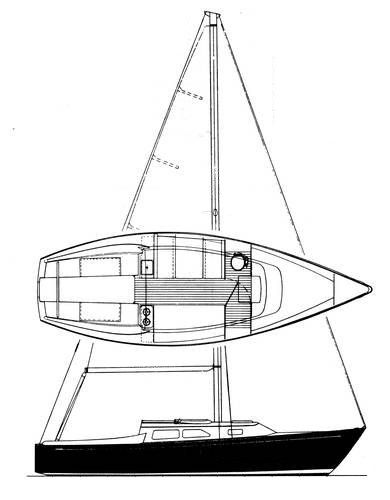
Performance
Under sail, the Ranger 26 is known for being lively and quick. It points well to windward thanks to its efficient fin keel and spade rudder, and it accelerates easily in light air. Downwind, the boat remains responsive and benefits from its balanced helm. Compared with heavier cruisers, it can feel tender in gusty conditions, but experienced sailors appreciate the feedback and agility. In club racing environments, it has long been respected as a competitive design within its size range. Against similar boats like the Catalina 27 or Ericson 27, the Ranger 26 usually comes out ahead in performance, though it sacrifices some interior comfort for that speed.
Comfort and Accommodations
Inside, the Ranger 26 is compact but serviceable for weekend cruising. Layouts typically feature a small V-berth forward, settee berths in the saloon, and a simple galley arrangement. Storage is modest, and headroom is limited compared to larger cruisers, which restricts its appeal as a long-term liveaboard. Ventilation comes from hatches and opening ports, sufficient for short stays. The interior finish is practical rather than luxurious, though many boats have seen interior refits that add modern touches. For couples or small families, the accommodations are adequate for weekend trips, but the boat is best suited as a day sailor or short-range coastal cruiser rather than an extended cruising platform.
Safety and Practicality
The Ranger 26’s deck layout favors efficient sailing. The cockpit is adequately sized for a small crew, though tight for entertaining larger groups. Side decks are narrow, but handholds and lifelines provide reasonable security. Its light displacement and fin-keel/spade-rudder design make it less forgiving in heavy seas compared to full-keel cruisers, but for coastal waters it is safe and predictable in capable hands. Systems are basic and accessible, reducing long-term ownership costs. With its simple rig and manageable size, it is a boat that can be easily handled by two people or even singlehanded with minor adjustments.
Known Issues with the Ranger 26
Like many boats of its era, the Ranger 26 may show signs of deck core moisture around chainplates and hardware. Rudder bearings and keel bolts should be inspected, as age can lead to wear. Some examples still carry original gasoline engines, which may require replacement with a modern small diesel or outboard solution. Blistering (osmosis) can be present in the hull, though repairs are usually straightforward. Owners often recommend upgrading standing rigging, sails, and electronics to modern standards. These improvements enhance both safety and resale value while keeping the boat competitive.
Market Availability and Pricing in the U.S.
The Ranger 26 is no longer in production and is found only on the used market. It is most common on the West Coast, particularly in California, though examples appear across the U.S. Condition varies widely, from neglected hulls needing major work to carefully maintained racing boats. Typical asking prices fall between $4,000 and $10,000 USD, depending on condition and upgrades. This positions the Ranger 26 as one of the most affordable entry-level racer-cruisers available. Its value proposition lies in strong sailing performance for relatively little investment, though resale markets are smaller compared to Catalina or Hunter models.
Below is a comparison with similar sailboats:
| Model | LOA | Years Built | Typical U.S. Price | Main Differences |
|---|---|---|---|---|
| Ranger 26 | 26 ft | 1971–1978 | $4,000–$10,000 | Fast racer-cruiser, limited interior comfort |
| Catalina 27 | 27 ft | 1971–1991 | $6,000–$15,000 | Very popular, larger interior, less sporty performance |
| Ericson 27 | 27 ft | 1971–1978 | $7,000–$14,000 | Heavier displacement, comfortable ride, less agile |
| J/24 | 24 ft | 1977–present | $5,000–$12,000 | Purer racer, minimal accommodations, highly competitive fleet |
Maintenance Costs of a Ranger 26 in the USA
Annual ownership costs for a Ranger 26 are relatively low compared to larger cruisers. Slip fees typically range from $1,500–$3,500 per year in smaller marinas, rising to $4,000–$6,000 in higher-demand coastal areas like California. Insurance is modest, often $300–$700 annually. Engine servicing is inexpensive if repowered with a small outboard, but maintaining an older inboard can add $400–$800 annually. Antifouling bottom paint every 1–2 years costs $800–$1,500. Sail replacement runs around $3,000–$5,000, and standing rigging replacement every decade averages $2,500–$4,000. Many owners perform routine maintenance themselves, keeping costs manageable. Overall, maintenance expenses are low to medium for its size, making it an attractive boat for sailors seeking affordable ownership with minimal professional service requirements. Resale values are modest but stable given its reputation as a solid performer.
Conclusion
The Ranger 26 stands out as a nimble and affordable racer-cruiser from the 1970s. Its strengths are excellent sailing performance, simple construction, and low ownership costs. Its weaknesses are limited interior comfort, modest offshore capability, and age-related maintenance issues. For sailors interested in a responsive and budget-friendly boat for club racing or coastal cruising, the Ranger 26 remains a compelling option. It may not have the broad recognition of a Catalina, but for those who value speed and sailing enjoyment over interior volume, it is an underrated choice that can still deliver plenty of value and fun on the water.
Specifications
| General Information | |
|---|---|
| Hull Type | Fin w/spade rudder |
| Rigging Type | Masthead Sloop |
| LOA | 26.25 ft / 8.00 m |
| LWL | 21.75 ft / 6.63 m |
| S.A. (reported) | 322.00 ft² / 29.91 m² |
| Beam | 8.67 ft / 2.64 m |
| Displacement | 5,860.00 lb / 2,658 kg |
| Ballast | 2,050.00 lb / 930 kg |
| Max Draft | 4.33 ft / 1.32 m |
| Construction | FG |
| Ballast Type | Iron |
| First Built | 1969 |
| Last Built | 1975 |
| Builder | Ranger Yachts (USA) |
| Designer | Gary Mull |
Sailboat Calculations | |
| S.A. / Displ. | 15.90 |
| Bal. / Displ. | 34.98 |
| Disp. / Len. | 254.26 |
| Comfort Ratio | 22.07 |
| Capsize Screening Formula | 1.93 |
| S# | 2.03 |
| Hull Speed | 6.25 kn |
| Pounds/Inch Immersion | 673.79 pounds/inch |
Rig and Sail Particulars | |
| I | 33.00 ft / 10.06 m |
| J | 11.50 ft / 3.51 m |
| P | 26.40 ft / 8.05 m |
| E | 10.00 ft / 3.05 m |
| S.A. Fore | 189.75 ft² / 17.63 m² |
| S.A. Main | 132.00 ft² / 12.26 m² |
| S.A. Total (100% Fore + Main Triangles) | 321.75 ft² / 29.89 m² |
| S.A./Displ. (calc.) | 15.89 |
| Est. Forestay Length | 34.95 ft / 10.65 m |
Disclaimer
The considerations and analyses presented regarding the Ranger 26 sailboat are of a general nature and are based on the available information and technical data on this model, interpreted to the best of our knowledge and understanding. It is important to note that the specific characteristics of any particular sailboat may vary due to custom modifications, maintenance performed, and conditions of use over time, among other factors. Therefore, the details and performance of the boat you are considering may not exactly match the information provided here.
We strongly recommend that, before making any purchasing or usage decisions, you conduct a detailed inspection of the boat in question, consult with nautical professionals and other sailors, and consider your personal needs, expectations, and capabilities. Each sailboat may have unique particularities that affect its performance and suitability for different types of sailing and sailors.
The information contained in this analysis should be used as a general guide and not as a definitive reference. Professional evaluation and personal inspection are essential to ensure that the boat meets your specific requirements and expectations.