


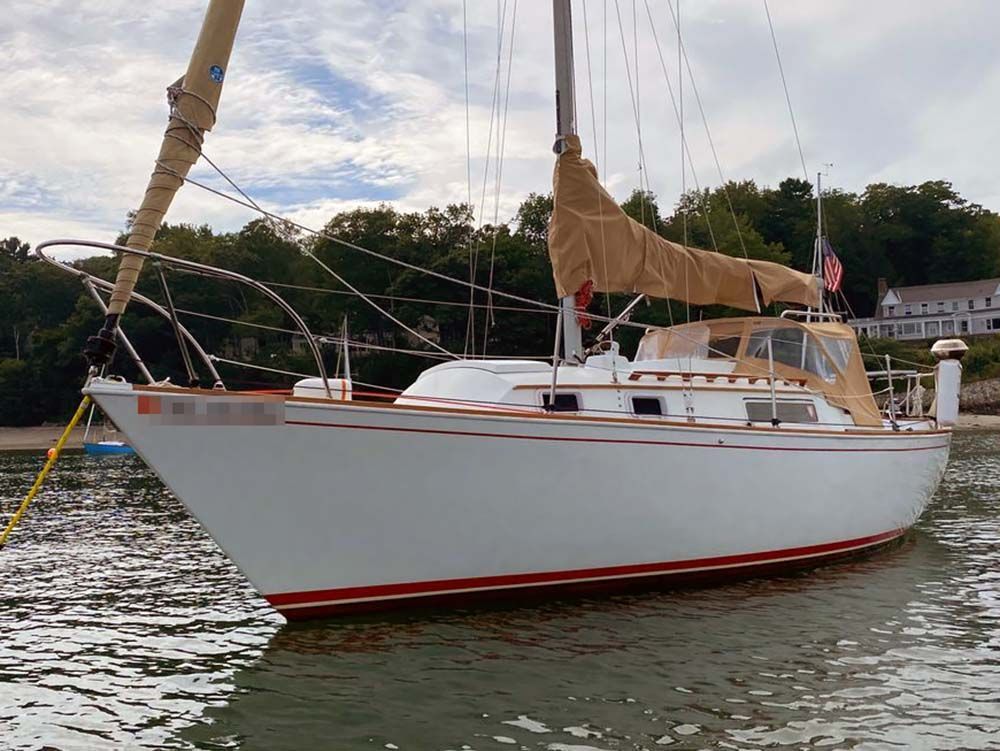
The Sabre 28 is a classic American-built sailboat designed in the early 1970s by Roger Hewson and produced by Sabre Yachts in Maine. Conceived as a coastal cruiser with solid performance credentials, it was intended to offer a balance between comfortable family sailing and competitive club racing. During its production run, which lasted into the 1980s, the Sabre 28 earned a reputation as a well-built, versatile yacht, particularly appealing to sailors seeking New England craftsmanship and seaworthy design in a manageable size. On today’s used-boat market, the model maintains steady popularity, primarily among private owners and coastal cruisers, though it is less common in the charter sector or sailing schools.
Design and Construction
The Sabre 28 carries a moderate displacement hull with a fin keel and a skeg-hung rudder, a combination that was forward-thinking for its era. This design provides a good compromise between directional stability and maneuverability. The rig is a masthead sloop, the most practical and versatile setup for a boat of this size, allowing for easy sail handling and adaptability to varying conditions.
Construction is robust, with a hand-laid fiberglass hull and quality joinery below decks. Sabre Yachts was known for higher-than-average standards in finish, particularly compared to mass-produced contemporaries. From a naval architecture standpoint, the moderate beam and balanced underwater profile contribute to durability, predictable handling, and relatively low maintenance, which supports long-term residual value
.
Performance
Under sail, the Sabre 28 delivers respectable performance for its size. It is not a racer, but it handles well to windward and maintains decent speed on a reach. In moderate to heavy air, the hull form provides reassuring stability, while in light conditions the boat responds adequately without feeling sluggish. Compared with peers like the Catalina 27 or Hunter 27, the Sabre 28 often feels more solid and slightly more performance-oriented, though not as quick as certain French designs of the same era. Owners appreciate its balance on the helm, its seaworthiness in choppy waters, and its forgiving nature, which makes it suitable for both new sailors and seasoned cruisers looking for a reliable coastal boat.
Comfort and Accommodations
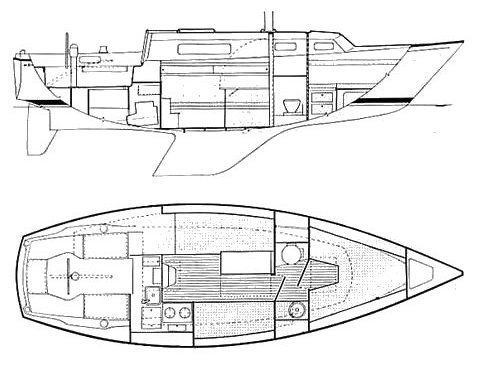
The interior layout is compact but thoughtfully executed. It typically features a V-berth forward, a small enclosed head, a salon with settees that double as berths, and a modest galley. Headroom is limited compared to larger yachts, but adequate for a 28-footer of the 1970s. Ventilation is reasonable, with opening ports and hatches that help in warmer climates. For a couple or a small family, the Sabre 28 offers weekend or short-cruise comfort, though extended living aboard would feel tight. The wood finish inside ages gracefully, and many boats on the market still carry their original charm, though updated upholstery and modern electronics are common upgrades.
Safety and Practicality
On deck, the Sabre 28 is straightforward and secure. Side decks are reasonably wide, grab rails are well-placed, and the cockpit offers good protection. The rigging layout allows for shorthanded sailing, which appeals to cruising couples. While primarily designed for coastal cruising, many owners have used the boat for longer passages with appropriate upgrades. Access to systems—engine, plumbing, and electrical—is generally good, which reduces maintenance costs and supports owner-led upkeep.
Known Issues with the Sabre 28
As with many fiberglass boats of its era, osmosis (blistering) can be an issue, though Sabre’s build quality means fewer severe cases than among mass-market competitors. The original Atomic 4 gasoline engines, if still installed, are often due for replacement or repowering. Deck leaks around fittings and hatches may appear with age, as can worn standing rigging if not updated. Many owners opt to upgrade electronics, add roller furling, or modernize the galley. Structurally, the boats tend to hold up well, but buyers should carefully inspect for moisture intrusion in decks and bulkheads.
Market Availability and Pricing in the U.S.
The Sabre 28 is no longer in production and is available only on the secondhand market. Listings are most common in New England and the Mid-Atlantic, though examples appear nationwide. Well-maintained boats are more common in regions where Sabre Yachts originally had a strong presence. Typical asking prices in the U.S. range from $12,000 to $22,000, depending on condition, upgrades, and engine status. Compared with competitors, the Sabre 28 often commands a small premium due to build quality and reputation.
Below is a comparison with similar sailboats:
| Model | LOA | Years Built | Typical U.S. Price | Key Differences |
|---|---|---|---|---|
| Sabre 28 | 28 ft | 1971–1986 | $12,000–$22,000 | Higher build quality, solid cruiser with good resale value |
| Catalina 27 | 27 ft | 1971–1991 | $8,000–$15,000 | More numerous, cheaper, but lighter construction |
| Hunter 27 | 27 ft | 1974–1984 | $7,000–$14,000 | Budget-friendly, less robust, more basic interior |
| Pearson 28 | 28 ft | 1975–1980s | $9,000–$18,000 | Similar New England heritage, but slightly less refined finish |
Maintenance Costs of a Sabre 28 in the USA
Annual maintenance costs for a Sabre 28 vary widely by region. In the Northeast or Great Lakes, marina fees and winter storage can total $3,000–$5,000 annually, while in Florida or California, year-round slips may run $4,000–$6,500 depending on location. Insurance for a boat of this value is relatively modest, typically $300–$700 per year.
Engine servicing and routine checks average $500–$1,000 annually, with major overhauls or repowers costing $6,000–$10,000 if required. Bottom paint (antifouling) usually runs $1,200–$2,000 annually, and sail replacement can range from $3,000 for a basic mainsail and genoa to $6,000 or more for higher-spec sails. Electronics upgrades, now common on older boats, may add $2,000–$8,000 depending on scope.
Many owners perform basic upkeep themselves, which can reduce costs significantly. Overall, the Sabre 28 falls into the “moderate” cost category for boats under 30 feet—higher than mass-market peers like Catalina but offset by better long-term resale potential.
Conclusion
The Sabre 28 remains a strong candidate for sailors seeking a manageable coastal cruiser with above-average build quality and timeless New England styling. Its strengths lie in its balanced sailing performance, robust construction, and enduring reputation. Limitations include modest interior space and the potential need for engine or systems upgrades in older examples. For a couple or small family interested in reliable coastal cruising, the Sabre 28 is a rewarding investment. Its resale market is steady, making it a practical choice for buyers who value craftsmanship and predictability over bargain pricing. In many respects, it is an underrated option in the under-30-foot cruising segment, offering a blend of performance and quality that continues to justify its reputation.
Specifications
| Hull & Rig | |
|---|---|
| Hull Type | Fin with rudder on skeg |
| Rigging Type | Masthead Sloop |
| LOA | 28.00 ft / 8.53 m |
| LWL | 22.83 ft / 6.96 m |
| S.A. (reported) | 391.00 ft² / 36.33 m² |
| Beam | 9.00 ft / 2.74 m |
| Displacement | 6,900.00 lb / 3,130 kg |
| Ballast | 2,900.00 lb / 1,315 kg |
| Max Draft | 4.25 ft / 1.30 m |
| Construction | FG |
| Ballast Type | Lead |
| First Built | 1971 |
| Last Built | 1976 |
| # Built | 199 |
| Builder | Sabre Yachts (USA) |
| Designer | Roger Hewson / Sabre |
Auxiliary Power / Tanks (Original Equipment) | |
| Make | Universal |
| Model | Atomic 4 |
| Type | Gas |
| HP | 30 |
| Fuel | 20 gals / 76 L |
Accommodations | |
| Water | 20 gals / 76 L |
| Headroom | 6.00 ft / 1.83 m |
Sailboat Calculations | |
| S.A. / Displ. | 17.31 |
| Bal. / Displ. | 42.03 |
| Disp. / Len. | 258.87 |
| Comfort Ratio | 23.43 |
| Capsize Screening Formula | 1.89 |
| S# | 2.13 |
Disclaimer
The considerations and analyses presented regarding the Sabre 28 sailboat are of a general nature and are based on the available information and technical data on this model, interpreted to the best of our knowledge and understanding. It is important to note that the specific characteristics of any particular sailboat may vary due to custom modifications, maintenance performed, and conditions of use over time, among other factors. Therefore, the details and performance of the boat you are considering may not exactly match the information provided here.
We strongly recommend that, before making any purchasing or usage decisions, you conduct a detailed inspection of the boat in question, consult with nautical professionals and other sailors, and consider your personal needs, expectations, and capabilities. Each sailboat may have unique particularities that affect its performance and suitability for different types of sailing and sailors.
The information contained in this analysis should be used as a general guide and not as a definitive reference. Professional evaluation and personal inspection are essential to ensure that the boat meets your specific requirements and expectations.