


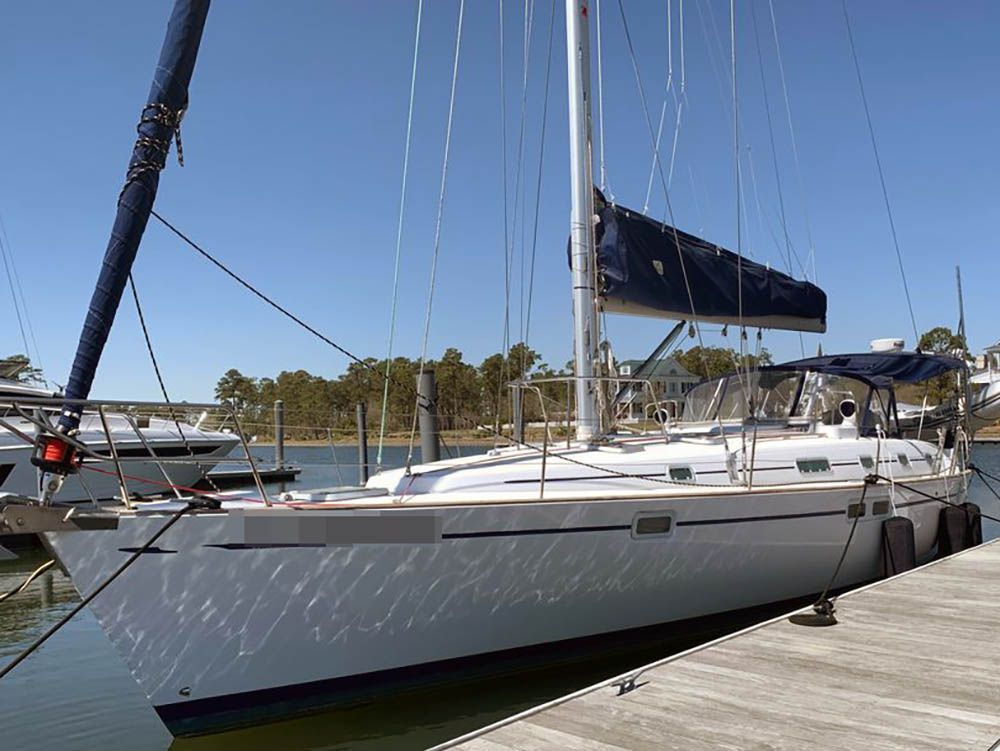
The Beneteau Oceanis 461 is a mid- to late-1990s cruising sailboat designed for comfortable bluewater and coastal cruising. Introduced in 1996 and designed by Bruce Farr in collaboration with the French builder Beneteau, this model was part of a broader shift in production boats toward performance cruisers with more livable interiors. The 461 was conceived primarily as a cruiser, though with enough performance under sail to appeal to more ambitious sailors. With hundreds built until around 2001, the model gained popularity among private owners and charter fleets alike, particularly in Europe and the Caribbean.
Today, the Oceanis 461 remains a sought-after vessel in the used boat market, especially among cruising couples and families looking for a solid, spacious, and reasonably priced liveaboard or long-range cruiser. Its layout and systems also make it a strong candidate for charter companies and sailing schools.
Design and Construction
The Oceanis 461 features a sleek hull with moderate freeboard, a fin keel with bulb, and a balanced spade rudder, typical of Bruce Farr’s performance-oriented designs. The hull is constructed of solid fiberglass below the waterline and cored fiberglass above, which provides strength while keeping weight down. Decks are balsa-cored. The rig is a fractional sloop with double spreaders and an in-mast or standard mainsail configuration depending on the version.
These design choices provide a good balance between sailing performance, interior volume, and ease of handling. The construction method used by Beneteau in this era—hand-laid fiberglass with a molded liner—offers decent structural integrity, though some owners report the need for periodic inspection of bulkhead bonding and keel bolts, especially in boats that have seen heavy use.
Overall, the Oceanis 461 holds its value well due to its versatile layout, attractive lines, and solid cruising credentials. The fiberglass work is generally well executed and easy to maintain or repair if needed.
Performance
Under sail, the Oceanis 461 is no slouch for a cruising boat of its size. With a sail area-to-displacement ratio around 18 and a ballast/displacement ratio near 30%, it offers respectable upwind performance and very stable tracking on longer passages. It is particularly well-regarded for its balance on the helm and ability to maintain good speeds in a variety of wind conditions.
In moderate breezes (10–15 knots), the boat typically cruises between 6.5 and 7.5 knots, and its long waterline (over 39 feet) gives it a theoretical hull speed of just under 8.5 knots. In heavier seas, the boat remains composed, with a motion that is comfortable and predictable—an important factor for long-distance cruisers.
Compared to other boats of its generation, such as the Hunter 460 or the Jeanneau Sun Odyssey 45.2, the Oceanis 461 sits solidly in the middle: more performance-oriented than the Hunter but more comfort-focused than the Jeanneau.
Comfort and Accommodations
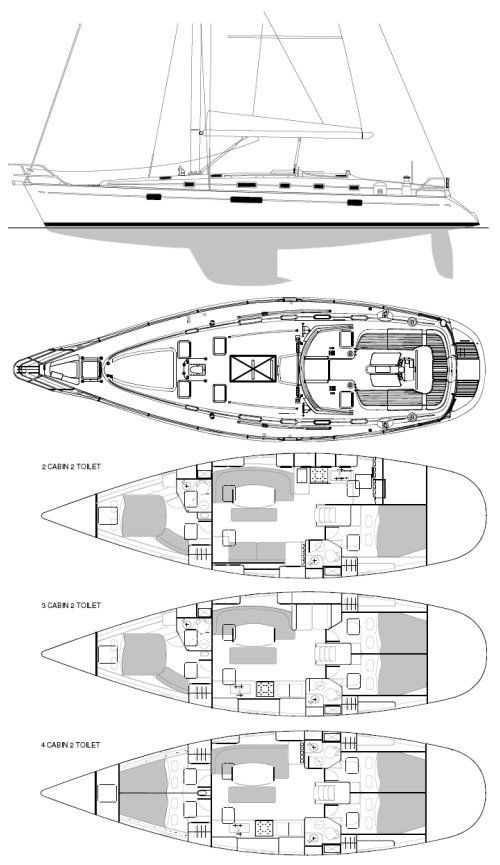
One of the 461’s standout features is its interior volume and layout flexibility. It was offered in multiple versions: typically 2, 3, or 4 cabins with 2 or 3 heads, making it adaptable for families, charter fleets, or couples who want extra space for guests or storage. The salon is bright and airy, with generous headroom (6’5”+), large ports, and effective ventilation.
Storage is plentiful both above and below decks, and the galley—often L-shaped—offers good workspace and secure bracing points while under sail. The cabins have real-world liveaboard potential, and many boats remain in extended cruising use today, especially in the Caribbean and the U.S. East Coast.
The styling has aged reasonably well, though lighter wood tones and traditional upholstery can feel a bit dated. Some owners have opted for custom refits or upgrades, which can significantly modernize the feel and functionality of the interior.
Safety and Practicality
From a safety perspective, the Oceanis 461 was designed for offshore passages but remains practical for coastal sailing as well. The wide side decks, sturdy double lifelines, and solid grab rails contribute to secure movement on deck. The cockpit is spacious yet well protected, with twin wheels providing excellent visibility and redundancy.
Systems access is another strong point: the engine compartment (typically a Yanmar 75 HP diesel) is accessible from multiple sides, and through-hull valves and electrical panels are generally well placed. With proper maintenance, these systems are relatively inexpensive to service and reliable over time.
Singlehanding or sailing with a small crew is feasible thanks to the deck layout, which allows for most lines to be led aft. The optional in-mast furling system, while convenient, can be a point of concern over time and may require servicing or replacement.
Known Issues with the Beneteau Oceanis 461
Several common issues have been noted by owners and surveyors:
- Keel bolts: Boats that have run aground or seen extensive offshore service should have keel bolts and their bedding inspected.
- Chainplate leaks: Some models develop minor leaks at the chainplates due to deck flexing.
- Deck core moisture: Like many boats with balsa-core decks, water intrusion is possible if fittings have not been properly sealed.
- Rudder bearings: Wear on rudder bushings is reported in older models but is serviceable.
- In-mast furling mainsails (where installed) can jam or age poorly if not maintained or used properly.
Recommended upgrades often include:
- Adding solar panels or lithium batteries for better energy independencevey.sail, upgrading the house battery bank, or retrofitting solar panels and a watermaker for longer passages.
- Replacing original electronics (now outdated).
- Converting to a traditional mainsail for better performance.
Market Availability and Pricing in the U.S.
The Oceanis 461 is no longer in production and is available only on the used market. It’s most commonly found in sailing hubs like Florida, the Chesapeake Bay, Southern California, and New England. Many examples on the market today are ex-charter boats that have been well maintained or refurbished, while private owner boats tend to be better equipped for long-term cruising.
As of 2025, typical asking prices in the U.S. range from $110,000 to $160,000, depending on condition, year, layout, and upgrades. Compared to similarly sized boats from Catalina, Hunter, or Jeanneau, the Oceanis 461 offers a strong value, especially for buyers prioritizing comfort and offshore capability.
Here’s a quick comparison with similar models:
| Model | LOA | Year | Typical Price (USD) | Main Differences |
|---|---|---|---|---|
| Beneteau Oceanis 461 | 46.5 ft | 1996–2001 | $110,000–$160,000 | Solid offshore cruiser, large interior, Farr design |
| Hunter 460 | 46.1 ft | 1999–2005 | $95,000–$140,000 | Spacious but slower, easier handling systems |
| Jeanneau Sun Odyssey 45.2 | 45.2 ft | 1997–2003 | $100,000–$150,000 | More agile, slightly narrower, high charter use |
| Catalina 470 | 47.6 ft | 1999–2008 | $120,000–$170,000 | Robust and well equipped for cruising, U.S. built |
Beneteau Oceanis 461 vs Hunter 460

The Oceanis 461 and Hunter 460 both cater to cruising sailors who value comfort and ease of handling, yet their philosophies differ. The Beneteau features a more performance-oriented hull with a moderate displacement that provides better balance between speed and comfort under sail, while the Hunter’s broader beam and B&R rig favor maximum interior volume and simplified rigging over pure sailing finesse. The Oceanis delivers more responsive handling and steadier motion in varying sea conditions, making it more suitable for extended passages, whereas the Hunter shines as a spacious liveaboard or coastal cruiser. Buyers prioritizing sailing feel and offshore capability may lean toward the Beneteau, while those valuing cabin space and low-effort systems may find the Hunter more practical.
► Learn more about de Hunter 460
Beneteau Oceanis 461 vs Jeanneau Sun Odyssey 45.2
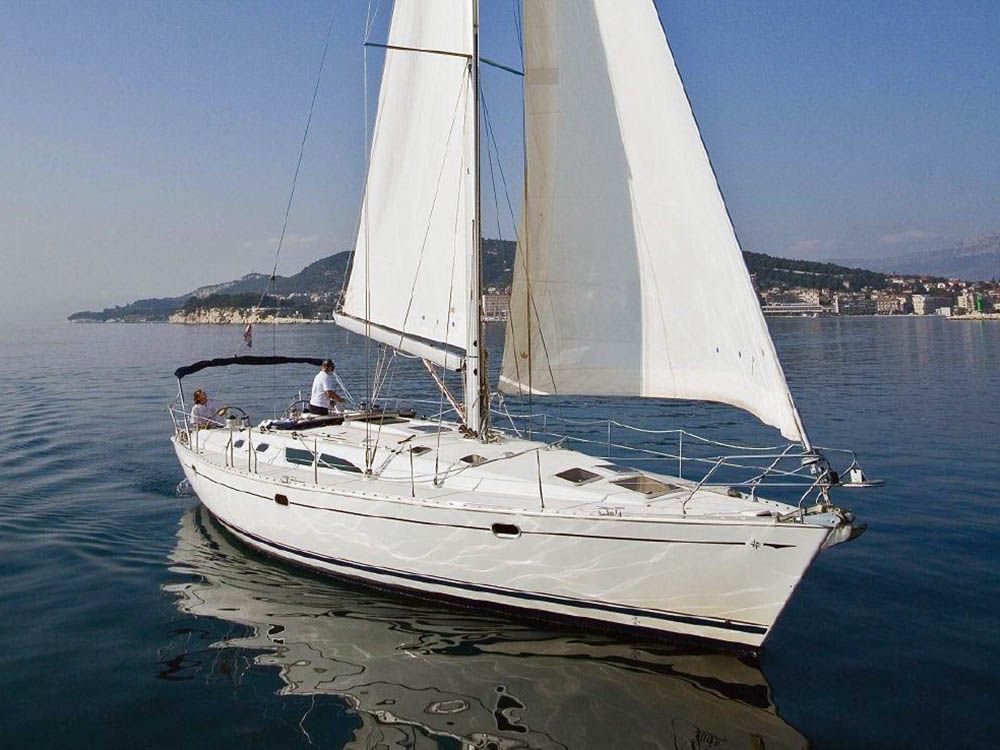
As close competitors within the French production cruiser segment, the Oceanis 461 and Sun Odyssey 45.2 share similar build quality and cruising intent but diverge in handling character. The Beneteau tends to offer a slightly more forgiving helm and heavier displacement, which enhances comfort and stability on long coastal runs. The Jeanneau, with its narrower hull and more performance-oriented rig, responds faster and delivers a livelier feel under sail, appealing to owners who enjoy trim adjustments and sailing efficiency. Interior-wise, the Oceanis 461 offers a warmer, more traditional layout ideal for families, whereas the Jeanneau favors an open, modern salon design. The Oceanis stands out as the steadier family cruiser, while the Sun Odyssey attracts those who prefer spirited coastal performance with contemporary styling.
► Learn more about de Jeanneau Sun Odyssey 45.2
Beneteau Oceanis 461 vs Catalina 470

The Catalina 470, built with the American cruising market in mind, emphasizes robustness and straightforward systems, contrasting the Oceanis 461’s European blend of comfort and sailing balance. Under sail, the Beneteau feels lighter and more agile, whereas the Catalina delivers solid directional stability and forgiving motion, ideal for bluewater or long-distance passagemaking. The Catalina’s systems are often more accessible for owner maintenance, while the Beneteau integrates higher-end fittings that may require professional servicing. In terms of interior comfort, the Oceanis presents a more refined, yacht-like ambiance, while the Catalina offers practical layouts suited to extended liveaboard use. For buyers focused on self-reliance and offshore endurance, the Catalina is compelling; for those seeking a balance of sailing performance and modern comfort, the Oceanis 461 holds the advantage.
► Learn more about de Catalina 470
Maintenance Costs of a Beneteau Oceanis 461 in the USA
Typical annual ownership expenses for a Beneteau Oceanis 461 vary by region and usage, ranging from $12,000 to $20,000 per year for an actively cruised vessel. Key components include:
- Mooring or slip fees: $4,000–$8,000 per year, depending on location (lowest in the Gulf Coast, highest in New England or Southern California).
- Insurance: $1,500–$3,000 annually, influenced by cruising area and hurricane exposure.
- Engine servicing: Approximately $800–$1,200 for annual maintenance, more if auxiliary systems require overhaul.
- Antifouling paint and hull maintenance: $1,500–$3,000 per season, with higher costs in warm-water regions due to frequent fouling.
- Standing and running rigging inspections/replacement: $500–$1,000 annually for inspections; full replacement ($6,000–$9,000) every 10–12 years.
- Sail care and replacement: $500–$1,000 for annual cleaning/repairs; new sail set around $10,000–$14,000 as a major one-time expense.
Additional one-time costs may include electronics upgrades ($5,000–$10,000), canvas or upholstery refits ($3,000–$6,000), or deck equipment replacements. Many Oceanis 461 owners perform routine maintenance themselves—oil changes, varnish, minor rigging work—keeping costs moderate, but professional yard service is often needed for antifouling and mechanical or electrical systems.
Overall, maintenance costs for the Oceanis 461 are medium to upper-medium within its size and class, reflecting its quality fittings and systems. While not inexpensive, its durability, comfort, and broad resale market tend to offset the long-term investment, making it a balanced choice for serious cruisers seeking manageable ownership within the 45–47 ft range.
Conclusion
The Beneteau Oceanis 461 remains a compelling choice for cruisers looking for a well-designed, spacious, and proven offshore-capable sailboat. Its strengths lie in its balance of performance and comfort, ample interior volume, and solid build quality from an era when Beneteau emphasized durability. While some systems and components may now require updating, the boat continues to represent excellent value in the used market.
For sailors seeking a capable liveaboard, a family cruiser, or a step-up boat with real passage-making potential, the Oceanis 461 is absolutely worth considering. With careful selection and some upgrades, it can offer years of safe, enjoyable sailing and maintain a steady resale value—a true sleeper hit among late-’90s production cruisers.
Specifications
| Hull Type | Fin w/bulb & spade rudder |
| Rigging Type | Masthead Sloop |
| LOA | 46.59 ft / 14.20 m |
| LWL | 39.37 ft / 12.00 m |
| Beam | 13.95 ft / 4.25 m |
| Draft (max) | 5.74 ft / 1.75 m |
| Displacement | 20,944 lb / 9,500 kg |
| Ballast | 7,496 lb / 3,400 kg |
| Construction | Fiberglass (FG) |
| First Built | 1996 |
| Builder | Beneteau |
| Designer | Bruce Farr & Armel Briand |
| Engine Make | Yanmar |
| Engine Type | Diesel |
| Fuel Capacity | 53 gals / 201 L |
| Water Capacity | 145 gals / 549 L |
| S.A. / Displacement | 17.59 |
| Ballast / Displacement | 35.79 |
| Displacement / Length | 153.22 |
| Comfort Ratio | 23.30 |
| Capsize Screening Formula | 2.03 |
| Motion Comfort (S#) | 3.40 |
| Hull Speed | 8.41 kn |
| Pounds/Inch Immersion | 1,962.39 lb/inch |
| I | 54.53 ft / 16.62 m |
| J | 15.94 ft / 4.86 m |
| P | 46.55 ft / 14.19 m |
| E | 17.06 ft / 5.20 m |
| S.A. Foretriangle | 434.60 ft² / 40.38 m² |
| S.A. Mainsail | 397.07 ft² / 36.89 m² |
| Total Sail Area | 831.67 ft² / 77.26 m² |
| Calculated S.A. / Displacement | 17.58 |
| Estimated Forestay Length | 56.81 ft / 17.32 m |
| Mast Height from DWL | 59.06 ft / 18.00 m |
Disclaimer
The considerations and analyses presented regarding the Beneteau Oceanis 461 sailboat are of a general nature and are based on the available information and technical data on this model, interpreted to the best of our knowledge and understanding. It is important to note that the specific characteristics of any particular sailboat may vary due to custom modifications, maintenance performed, and conditions of use over time, among other factors. Therefore, the details and performance of the boat you are considering may not exactly match the information provided here.
We strongly recommend that, before making any purchasing or usage decisions, you conduct a detailed inspection of the boat in question, consult with nautical professionals and other sailors, and consider your personal needs, expectations, and capabilities. Each sailboat may have unique particularities that affect its performance and suitability for different types of sailing and sailors.
The information contained in this analysis should be used as a general guide and not as a definitive reference. Professional evaluation and personal inspection are essential to ensure that the boat meets your specific requirements and expectations.