



The Catalina Capri 22 was introduced in 1983 by Catalina Yachts as a sportier, performance-oriented cousin to the immensely popular Catalina 22. Designed by Frank Butler and Gerry Douglas, the Capri 22 was aimed at sailors seeking a responsive and fun boat that still retained enough comfort for overnight cruising. Built in California, the boat quickly found favor among club racers and weekend cruisers alike. Unlike pure race boats, the Capri 22 offers a hybrid appeal: easy enough for casual sailors to handle, yet competitive enough to hold its own on the local racing circuit. Over the years, it has built a loyal following in the used boat market, particularly among solo sailors, sailing schools, and budget-conscious cruisers.
Design and Construction
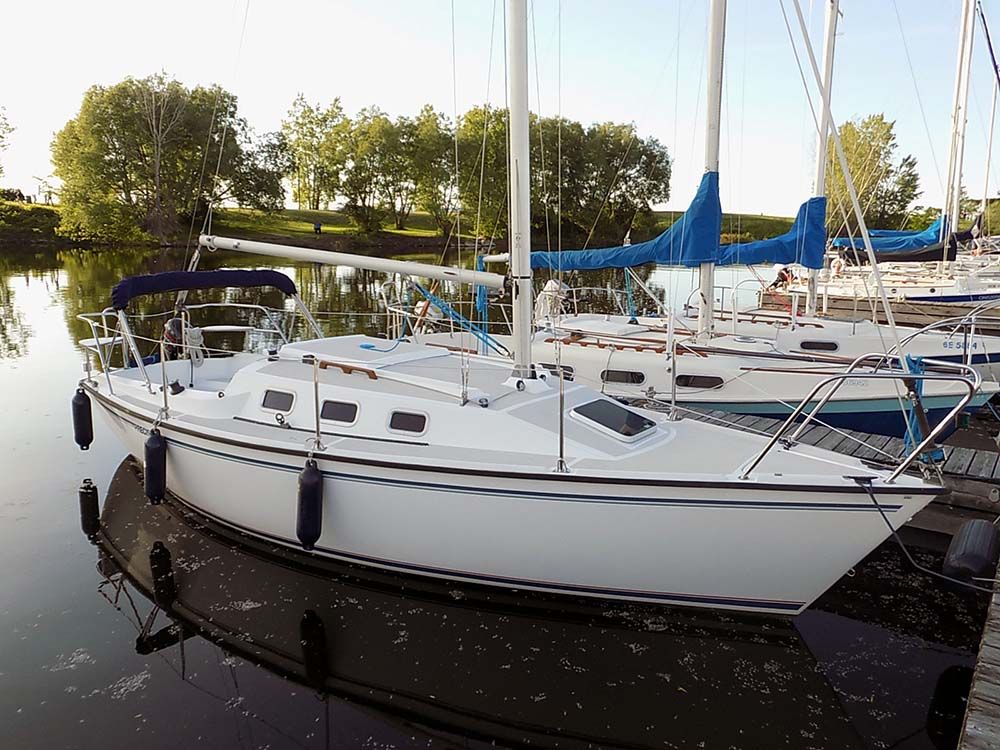
The Capri 22 features a moderate-displacement fiberglass hull with a plumb bow, fin keel, and a balanced spade rudder, reflecting its performance-cruiser roots. The rig is a fractional sloop, which provides a good balance between sail area and ease of handling, especially upwind. Buyers can find models with either a fin keel or a wing keel—the former offering better pointing ability, the latter better shallow-water access.
Construction is typical of Catalina Yachts in the 1980s and 1990s: solid fiberglass hull with plywood-cored decks. While not built to offshore standards, the Capri 22 is durable enough for coastal use and easily repairable. The design favors simplicity over complexity, which keeps maintenance costs low and enhances the boat’s long-term usability. The tiller steering adds to the responsive feel and minimizes mechanical complications.

Performance
Under sail, the Capri 22 is lively and rewarding. Its relatively light displacement and efficient hull shape make it quick to accelerate in light to moderate winds. It handles gusts and shifts predictably, and with proper trim, can sail upwind at respectable angles compared to similar-size boats.
Downwind, the boat can be surprisingly quick with a spinnaker, making it a favorite in PHRF fleets. In heavier seas, its short length does impose some limitations on comfort and tracking, but experienced sailors can manage it well. Compared to other 22-footers like the Hunter 216 or the Precision 23, the Capri 22 stands out for its balance between ease of handling and engaging performance.
Comfort and Accommodations
The interior of the Capri 22 is functional but compact. It typically includes a V-berth forward, two settee berths, and minimal galley space. Headroom is limited (as expected in a boat of this size), but the open-plan layout avoids feeling claustrophobic. Storage is modest but sufficient for weekend gear.
Ventilation is handled through a forward hatch and companionway, and older models often benefit from added portlights. While not intended for extended liveaboard use, the boat is well-suited for couples or small families doing overnight or weekend cruising. Interiors often show their age in older boats, but due to their simplicity, they’re easy to update or customize with modest investment.
Safety and Practicality
Safety features include high coamings, adequate handholds, and a simple, uncluttered deck layout. The small size and light displacement make the Capri 22 sensitive to overloading, so thoughtful crew and gear distribution are key to safety. The outboard engine setup keeps systems simple and accessible, though maneuvering in tight quarters requires some practice.
With a low freeboard and open transom on later models, boarding from the water is easy. Sailing shorthanded is very manageable, thanks to the fractional rig, light helm, and straightforward deck gear. This makes it a particularly attractive option for solo sailors or older cruisers looking for simplicity.
Known Issues with the Catalina Capri 22
The Capri 22 has a solid reputation, but like any older fiberglass boat, it has some known quirks. Deck delamination around hardware fittings is a common issue due to poorly bedded deck fittings in early models. Water intrusion around the chainplates and hatch can also occur if not properly sealed.
On some boats, the original aluminum rudder blades can corrode or warp over time, especially in saltwater environments. Owners often replace or reinforce rudders with newer composites. The stock rigging, if original, is now well past its service life and should be inspected or replaced.
Osmosis is rare but not unheard of in boats kept in the water year-round. Common upgrades include replacing aging running rigging, installing solar panels, and modernizing electronics. Most of these are modest-cost improvements that can significantly increase usability and resale value
Market Availability and Pricing in the U.S.
The Catalina Capri 22 is no longer in production but remains widely available in the U.S. used boat market. It’s especially common in coastal regions such as Southern California, the Great Lakes, and the Chesapeake Bay, where active one-design fleets still exist. Many listings are boats used for light racing or casual cruising, and condition varies accordingly.
Prices typically range from $4,000 to $12,000, depending on the model year, keel type, and condition. Wing keel versions tend to command slightly higher prices due to their versatility. Compared to similar models like the Hunter 216 or the Precision 23, the Capri 22 offers excellent value and a broader owner community, which aids in resale.
Below is a comparison with similar sailboats from the same era:
| Model | LOA | Year Built | Typical Used Price (USD) | Main Differences |
|---|---|---|---|---|
| Catalina Capri 22 | 22.00 ft | 1983–2008 | $4,000–$12,000 | Sporty, tiller steering, strong fleet presence |
| Hunter 216 | 21.50 ft | 2003–2007 | $6,000–$10,000 | More modern hull, performance-oriented, open transom |
| Precision 23 | 23.42 ft | 1990s–2000s | $8,000–$14,000 | Roomier interior, swing keel, better for shallow waters |
| San Juan 21 | 21.00 ft | 1970s–1980s | $2,000–$6,000 | Older design, popular racing class, lighter displacement |
Catalina Capri 22 vs Hunter 216

The Catalina Capri 22 and the Hunter 216 appeal to sailors seeking a responsive, trailerable daysailer, yet their construction and handling differ markedly. The Capri 22’s solid fiberglass hull provides a more traditional, durable feel, offering better stability in gusty conditions compared to the Hunter’s lightweight thermoformed hull, which prioritizes ease of trailering and acceleration. Under sail, the Capri tracks steadily and feels forgiving, making it ideal for family cruising and club racing, while the Hunter’s large roach mainsail and open transom deliver livelier performance but less comfort in choppy water. The Capri’s small but enclosed cabin allows for overnighting—a clear advantage for weekend sailors—whereas the Hunter 216 focuses more on open-cockpit usability. For those valuing long-term sturdiness and moderate performance, the Catalina holds the edge; for minimal maintenance and casual, fast sailing, the Hunter is the lighter commitment.
► Learn more about de Hunter 216
Catalina Capri 22 vs Precision 23
When compared to the Precision 23, the Catalina Capri 22 leans slightly more toward sportiness than cruising comfort. The Precision’s longer waterline and deeper cockpit enhance comfort and provide a drier ride, while the Capri’s lighter displacement and responsive helm favor agility and ease of handling under varying conditions. Interior space in the Precision 23 is more usable for weekend cruising, featuring a small galley and greater headroom, but the Capri’s layout is simpler and easier to maintain. In terms of performance, the Capri accelerates faster and rewards attentive sail trimming, making it a favorite for club racers who occasionally cruise. Overall, the Precision 23 suits sailors wanting a compact yet cozy cruiser, while the Capri 22 remains a versatile performer with lower upkeep and a sportier character.
► Learn more about de Precision 23
Catalina Capri 22 vs San Juan 21

The San Juan 21 is an older but admired design known for its racing heritage and simplicity, contrasting with the Catalina Capri 22’s more refined balance between performance and comfort. The San Juan’s lighter weight and narrower beam make it quick and nimble in moderate winds, but less stable and less forgiving for family sailing. The Capri 22, with its broader beam and heavier ballast, delivers better comfort and stability, particularly appealing to novice crews or those sailing with children. Maintenance on the Capri tends to be easier due to modern fittings and parts availability, while older San Juan models may require refurbishment. In essence, the San Juan 21 is for sailors prioritizing racing spirit and nostalgia, while the Capri 22 better serves those wanting a practical, family-friendly all-rounder.
► Learn more about de San Juan 21
Maintenance Costs of a Catalina Capri 22 in the U.S.
Typical annual maintenance expenses for a Catalina Capri 22 can vary depending on whether the boat is stored on a trailer, in a marina slip, or on a mooring. Below is an approximate breakdown for U.S. owners:
- Mooring or slip fees: $800–$3,000 per year, depending on coastal versus inland location.
- Insurance: $150–$400 annually, typically lower for trailer-kept boats.
- Engine servicing (outboard): $100–$300 per year, including oil changes and impeller checks.
- Antifouling paint and bottom maintenance: $250–$800 yearly, depending on frequency of use and water type.
- Standing and running rigging inspection/replacement: $100–$400 annually (major rigging replacement every 10–12 years may cost $1,200–$2,000).
- Sails: Annual care and repairs around $150–$300; full replacement every 8–10 years at $2,000–$3,500.
Regional differences are significant—Great Lakes and inland sailors typically spend 30–40% less due to freshwater conditions and winter storage, while coastal owners face higher antifouling and mooring costs. Occasional one-time expenses include electronics upgrades ($500–$2,000), repainting topsides ($1,000–$2,500), or interior refits ($500–$1,500).
The Catalina Capri 22 is generally owner-maintainable, with most tasks—such as bottom painting, sail care, and small repairs—manageable by a hands-on sailor. Choosing professional services increases costs but simplifies upkeep for those short on time. Overall, its maintenance profile is low to medium within its class, offering excellent value retention thanks to strong resale demand and the enduring Catalina brand reputation.
Conclusion
The Catalina Capri 22 remains a smart, accessible choice for sailors seeking a dual-purpose boat that blends spirited performance with practical cruising. Its ease of handling, affordability, and enduring community support make it ideal for weekend sailors, racing novices, or budget-conscious buyers looking for a low-maintenance coastal cruiser.
While not built for offshore passages or long-term liveaboard life, the Capri 22 offers more than enough for learning, racing, or exploring local waters. With steady market availability and simple systems, it’s a sound investment for those who value sailing joy over onboard luxuries. As a first boat or a “step down” for seasoned cruisers, it continues to punch above its weight.
Specifications
| Hull Type | Fin w/transom hung rudder |
| Rigging Type | Fractional Sloop |
| LOA | 24.66 ft / 7.52 m |
| LOD | 22.00 ft / 6.71 m |
| LWL | 20.00 ft / 6.10 m |
| Sail Area (reported) | 229.00 ft² / 21.27 m² |
| Beam | 8.17 ft / 2.49 m |
| Displacement | 2,200.00 lb / 998 kg |
| Ballast | 650.00 lb / 295 kg |
| Max Draft | 4.00 ft / 1.22 m |
| Construction | Fiberglass (FG) |
| Ballast Type | Lead |
| First Built | 1984 |
| # Built | 1,800 |
| Builder | Catalina Yachts (USA) |
| Designer | Gary Mull / Frank Butler |
| S.A. / Displ. | 21.71 |
| Bal. / Displ. | 29.55 |
| Disp. / Len. | 122.77 |
| Comfort Ratio | 9.68 |
| Capsize Screening Formula | 2.52 |
| S# | 4.51 |
| Hull Speed | 5.99 kn |
| Pounds/Inch Immersion | 583.85 pounds/inch |
| I | 25.00 ft / 7.62 m |
| J | 8.16 ft / 2.49 m |
| P | 26.00 ft / 7.92 m |
| E | 9.75 ft / 2.97 m |
| S.A. Fore | 102.00 ft² / 9.48 m² |
| S.A. Main | 126.75 ft² / 11.78 m² |
| S.A. Total (100% Fore + Main) | 228.75 ft² / 21.25 m² |
| S.A./Displ. (calc.) | 21.69 |
| Est. Forestay Length | 26.30 ft / 8.02 m |
Disclaimer
The considerations and analyses presented regarding the Catalina Capri 22 sailboat are of a general nature and are based on the available information and technical data on this model, interpreted to the best of our knowledge and understanding. It is important to note that the specific characteristics of any particular sailboat may vary due to custom modifications, maintenance performed, and conditions of use over time, among other factors. Therefore, the details and performance of the boat you are considering may not exactly match the information provided here.
We strongly recommend that, before making any purchasing or usage decisions, you conduct a detailed inspection of the boat in question, consult with nautical professionals and other sailors, and consider your personal needs, expectations, and capabilities. Each sailboat may have unique particularities that affect its performance and suitability for different types of sailing and sailors.
The information contained in this analysis should be used as a general guide and not as a definitive reference. Professional evaluation and personal inspection are essential to ensure that the boat meets your specific requirements and expectations.