


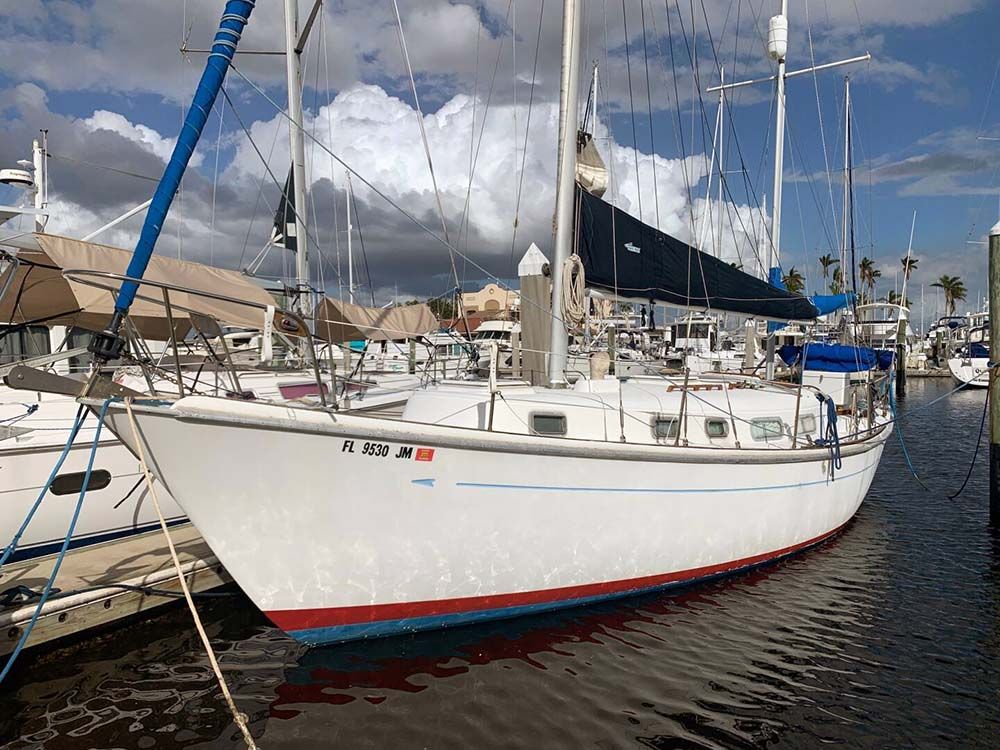
The Allied Princess 36 was introduced in the early 1970s by Allied Boat Company, a New York–based builder recognized for producing durable offshore cruisers in the fiberglass era’s formative years. Designed as a bluewater-capable motorsailer, it aimed to provide the best of both worlds: reliable sailing performance under canvas and a strong auxiliary engine for extended motoring. Its target audience was cruising couples and small families looking for a comfortable long-range vessel, often with ambitions of extended coastal or even transoceanic passages. Over the decades, the Princess 36 has carved out a reputation in the secondhand market as a practical, heavy-displacement cruiser that appeals mainly to liveaboards and long-distance voyagers rather than racers or charter operators.
Design and Construction
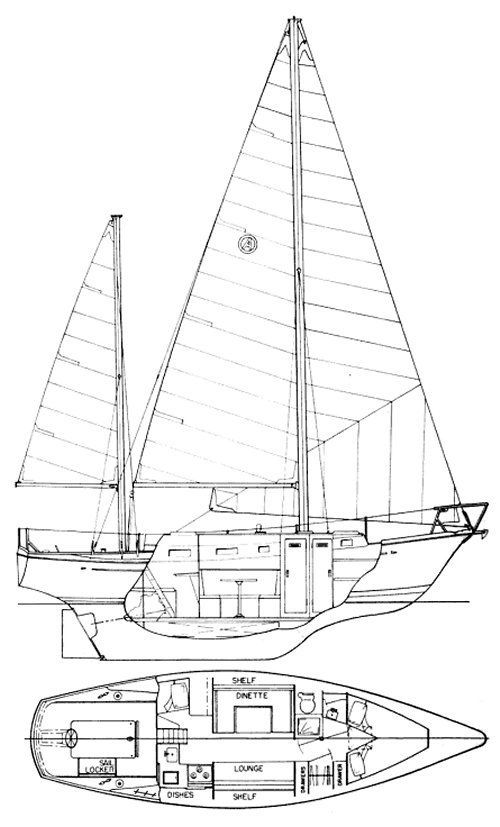
The Allied Princess 36 features a full keel with a cutaway forefoot, giving her both directional stability and slightly improved maneuverability compared to older full-keel designs. The rudder is attached to the trailing edge of the keel, making it exceptionally robust—an important trait for offshore sailing where collision or grounding risks exist. Most examples were rigged as ketches, though some sloops exist. The ketch rig spreads sail area into smaller, more manageable sections, ideal for short-handed crews or heavy-weather sailing.
Construction is solid fiberglass with heavy laminates typical of Allied’s conservative build philosophy. Decks are often cored, but with thick layups compared to lighter production boats. This “overbuilt” approach means most Princess 36 hulls have aged well structurally, though cosmetic refits are common. From a naval architecture perspective, the combination of a full keel, moderate beam, and heavy displacement emphasizes seaworthiness, tracking ability, and durability over raw performance. Owners often highlight how easily the boat can be repaired with straightforward fiberglass work, a trait that sustains its long-term value.
Performance
On the water, the Princess 36 sails conservatively. Cruising speeds under sail typically range from 5 to 6 knots, with a theoretical hull speed around 7 knots. While not fast by modern standards, the boat makes steady progress in a wide variety of conditions. Upwind ability is limited compared to fin-keel cruisers, but her full keel and displacement give her a comfortable, predictable motion in heavy seas.
Under power, the design shines, as many were equipped with robust inboard diesels and designed with motoring efficiency in mind. This makes her well-suited for passagemaking in mixed conditions where calm spells are frequent. Compared with similar boats such as the Morgan Out Island 36 or Pearson 365, the Princess is less spacious but more solidly constructed, with a reputation for being a “go anywhere, at its own pace” cruiser.
Comfort and Accommodations
The interior of the Allied Princess 36 reflects her motorsailer role. The raised deckhouse allows for a bright, airy saloon with good visibility, often fitted with a dinette to port and a galley nearby. Layouts vary, but most include a forward V-berth, a saloon with convertible berths, and an aft quarter berth or pilot berth. Headroom is generous, and ventilation is aided by opening ports and hatches.
For a couple or small family, the accommodations are well-suited to extended living aboard. Storage is plentiful, and the boat’s heavier displacement allows for carrying significant stores and gear. The interior finish is traditional, with wood joinery that ages gracefully, though many boats on the market show evidence of refits to update upholstery, galleys, and heads. While not as open or modern as newer cruisers, the design prioritizes practicality and durability over fashion.
Safety and Practicality
Safety is a strong point of the Princess 36. The full keel and attached rudder reduce vulnerability, while high bulwarks and stout handholds provide security on deck. The ketch rig offers versatile sail handling options, making it easier to reduce sail area gradually in deteriorating conditions. For bluewater voyaging, this redundancy is highly valued.
The cockpit is moderate in size—safe in heavy weather but not overly spacious for entertaining. Access to the water is more challenging compared to modern transom designs, but this reflects the offshore ethos of the era. Systems access varies: some installations allow decent access to the engine and tanks, while others can feel cramped. Still, the simplicity of systems compared to modern cruisers makes maintenance straightforward for owners who prefer hands-on upkeep.
Known Issues with the Allied Princess 36
Like many boats of its age, the Princess 36 is subject to typical aging challenges:
- Deck core moisture around fittings and chainplates, which may require localized recoring.
- Old auxiliary engines, as many are still running original or early replacements. Repowering is a common and costly refit.
- Rigging fatigue, especially on ketch-rigged boats, where two masts mean higher replacement costs.
- Blistering/gelcoat issues, though Allied’s thick hulls often fare better than lighter-built competitors.
- Outdated electrical systems that usually require upgrades for modern cruising.
Common upgrades include new standing rigging, improved electronics, autopilot installations, and tank replacements. Buyers should expect at least some refit work unless purchasing a recently restored example.
Market Availability and Pricing in the U.S.
The Allied Princess 36 is long out of production, with most examples built between the early 1970s and late 1970s. Today, they are found primarily on the East Coast and Gulf Coast, with occasional listings in the Pacific Northwest. Many are owned by liveaboards or dedicated cruisers, so condition varies widely—some boats are neglected projects, while others are carefully maintained voyaging yachts.
Current asking prices typically range between $25,000 and $45,000 depending on condition, upgrades, and engine status. Compared with alternatives, the Princess 36 offers strong value for those seeking ruggedness and seaworthiness over interior volume or speed. Resale potential is steady, though the market is smaller than for higher-production brands like Catalina.
Below is a comparison with similar sailboats:
| Model | LOA | Years Built | Typical U.S. Price | Key Differences |
|---|---|---|---|---|
| Allied Princess 36 | 36 ft | 1972–1978 | $25,000–$45,000 | Heavily built motorsailer, full keel, ideal for liveaboard and passagemaking. |
| Pearson 365 | 36.5 ft | 1974–1982 | $28,000–$50,000 | Spacious interior, ketch rig common, better light-air performance but lighter build. |
| Morgan Out Island 36 | 36 ft | 1970–1983 | $20,000–$40,000 | Very roomy interior, shoal draft, more suited to comfort than bluewater work. |
| Westsail 32 | 32 ft | 1971–1981 | $30,000–$55,000 | True bluewater cruiser, heavy displacement, smaller interior but legendary seaworthiness. |
Maintenance Costs of a Allied Princess 36 in the USA
Annual ownership costs fall in the medium-to-high range for boats of this size and vintage. Typical figures include:
- Dockage and mooring: $3,000–$7,500 per year depending on location (higher in the Northeast and California).
- Insurance: $900–$2,000 annually depending on value and cruising area.
- Engine maintenance: $500–$1,500 annually; repower can exceed $15,000.
- Bottom paint: $2,000–$3,500 every 1–2 years.
- Standing rigging: inspection $400–$700 annually; full replacement for both masts $10,000–$15,000.
- Sails: A new mainsail or mizzen typically costs $3,000–$4,000; a full suit of sails may reach $12,000+.
Electronics and refits are major variables—upgrading to modern navigation, autopilots, and solar systems can add $5,000–$20,000 depending on scope. Owners with mechanical and fiberglass skills can reduce costs significantly, as this boat’s simplicity allows for much owner-maintenance. Overall, costs are medium-high for a 36-footer, but the Princess holds resale value well when maintained, making the investment justifiable for serious cruisers.
Conclusion
The Allied Princess 36 is a rugged, capable motorsailer designed for sailors who value strength, practicality, and offshore readiness over speed or contemporary styling. Its strengths lie in its solid fiberglass construction, conservative ketch rig, and seaworthy full keel, all of which appeal to voyagers and liveaboards. Weaknesses include modest sailing performance, dated interiors, and the likelihood of refits for aging systems.
For buyers seeking a dependable, ocean-capable cruiser at an affordable entry price, the Princess 36 remains a smart option. While not for those chasing speed or modern layouts, it continues to offer enduring value as a trustworthy passage-maker and liveaboard vessel. Within its category, it may well be one of the most underestimated classics still available on the American used-boat market.
Specifications
| Hull & Dimensions | |
|---|---|
| Hull Type | Long Keel |
| Rigging Type | Masthead Ketch |
| LOA | 36.00 ft / 10.97 m |
| LWL | 27.50 ft / 8.38 m |
| S.A. (reported) | 603.00 ft² / 56.02 m² |
| Beam | 11.00 ft / 3.35 m |
| Displacement | 14,400.00 lb / 6,532 kg |
| Ballast | 5,000.00 lb / 2,268 kg |
| Max Draft | 4.50 ft / 1.37 m |
| Construction | FG |
| Ballast Type | Lead |
| First Built | 1972 |
| Last Built | 1982 |
| # Built | 140 |
| Builder | Wright/Allied Yachts (USA) |
| Designer | Arthur Edmunds |
Auxiliary Power / Tanks (orig. equip.) | |
| Make | Westerbeke/Perkins |
| Type | Diesel |
| Fuel | 40 gals / 151 L |
Accommodations | |
| Water | 80 gals / 303 L |
Sailboat Calculations | |
| S.A. / Displ. | 16.36 |
| Bal. / Displ. | 34.72 |
| Disp. / Len. | 309.11 |
| Comfort Ratio | 30.38 |
| Capsize Screening Formula | 1.81 |
| S# | 1.43 |
| Hull Speed | 7.03 kn |
| Pounds/Inch Immersion | 1,080.87 pounds/inch |
Rig and Sail Particulars | |
| I | 41.00 ft / 12.50 m |
| J | 12.60 ft / 3.84 m |
| P | 36.00 ft / 10.97 m |
| E | 14.00 ft / 4.27 m |
| PY | 22.00 ft / 6.71 m |
| EY | 8.50 ft / 2.59 m |
| S.A. Fore | 258.30 ft² / 24.00 m² |
| S.A. Main | 252.00 ft² / 23.41 m² |
| S.A. Total (100% Fore + Main Triangles) | 510.30 ft² / 47.41 m² |
| S.A. / Displ. (calc.) | 13.84 |
| Est. Forestay Length | 42.89 ft / 13.07 m |
Disclaimer
The considerations and analyses presented regarding the Allied Princess 36 sailboat are of a general nature and are based on the available information and technical data on this model, interpreted to the best of our knowledge and understanding. It is important to note that the specific characteristics of any particular sailboat may vary due to custom modifications, maintenance performed, and conditions of use over time, among other factors. Therefore, the details and performance of the boat you are considering may not exactly match the information provided here.
We strongly recommend that, before making any purchasing or usage decisions, you conduct a detailed inspection of the boat in question, consult with nautical professionals and other sailors, and consider your personal needs, expectations, and capabilities. Each sailboat may have unique particularities that affect its performance and suitability for different types of sailing and sailors.
The information contained in this analysis should be used as a general guide and not as a definitive reference. Professional evaluation and personal inspection are essential to ensure that the boat meets your specific requirements and expectations.