


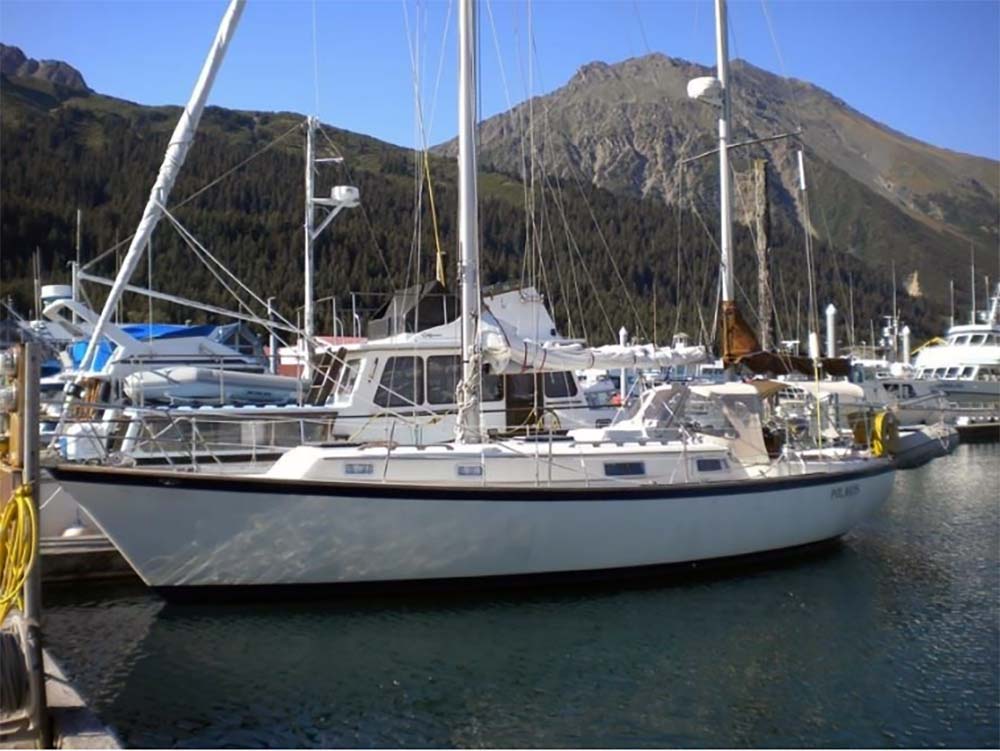
The Pearson 365 is a 36-foot cruising sailboat designed in the mid-1970s by William Shaw and built by Pearson Yachts in Rhode Island, USA. Conceived as a capable bluewater and coastal cruiser, it was aimed at sailors who valued comfort, rugged construction, and straightforward handling over racing performance. Its introduction coincided with a growing interest in liveaboard lifestyles and extended cruising among American sailors, and the 365 quickly became known for its ketch rig, voluminous interior, and seaworthiness. On today’s used market, it attracts private owners planning long-term cruising, as well as coastal liveaboards seeking a solid, traditional platform that can be upgraded for offshore work. Demand remains steady, particularly in regions with active cruising communities.
Design and Construction
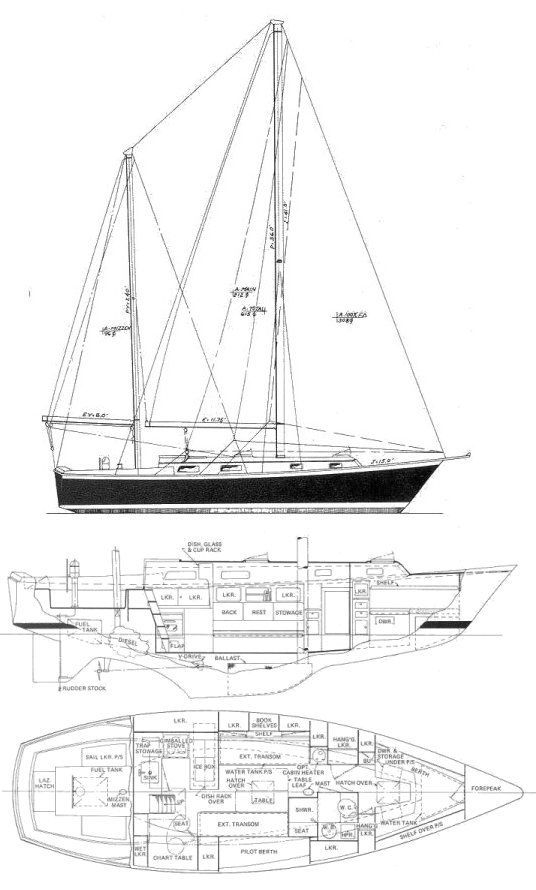
The Pearson 365 features a moderate-displacement hull with a long fin keel and a skeg-hung rudder, combining directional stability with some maneuverability advantages over a full-keel design. Its ketch rig offers sail-handling flexibility, especially in varying wind strengths, and keeps individual sail sizes manageable for short-handed crews. Built with a solid fiberglass hull and balsa-cored deck, it delivers both strength and reasonable weight savings, though the deck core requires inspection for moisture over time. The layout below decks typically features a spacious V-berth, a roomy saloon with ample seating, a dedicated navigation station, and a generous galley—elements that enhance liveaboard viability. The design reflects sound naval architecture principles, prioritizing durability, straightforward repairs, and a hull form that maintains value in the resale market.
Performance
The Pearson 365 is not a fast boat by modern standards, but it delivers steady, predictable motion and excellent comfort at sea. In light air, the ketch rig can be slightly slower than a sloop, but in heavy weather the divided sail plan comes into its own, allowing for balanced reefing options and reduced helm pressure. The hull form provides a comfortable ride in a seaway, with a bit more leeway when beating compared to fin-keel sloops. Its hull speed is around 7.5 knots, and it excels in passage-making where comfort and safety outweigh outright speed. Compared with boats like the Gulfstar 36 or Islander Freeport 36, the Pearson 365 is slightly more conservative in sail area but equally robust.
Comfort and Accommodations
The interior volume of the Pearson 365 is one of its strong suits. With over 6’3″ of headroom, wide berths, and abundant storage, it works well for couples planning extended voyages or even full-time living aboard. Ventilation is good thanks to multiple opening ports and hatches, and the large tankage for water and fuel supports longer periods away from marinas. The galley is sea-friendly, with secure handholds, and the saloon seating is generous. Many examples have seen upgrades to upholstery, joinery, and systems, which speaks to both the boat’s long-term habitability and the value owners place on modernization.
Safety and Practicality
The Pearson 365 has a deep, secure cockpit and wide, unobstructed side decks, making it safe to move around even in rough seas. The ketch rig’s smaller individual sails reduce handling strain, and the rig geometry allows for multiple reefing options, improving control in heavy weather. Ground tackle arrangements are robust, often with space for dual anchors. Systems access is generally good, though the engine (often a Westerbeke diesel) can be tight to service without removing panels. Out of the factory, the boat was suitable for serious coastal work, and with common offshore upgrades—storm sails, self-steering gear, upgraded electronics—it has proven capable in bluewater passages.
Known Issues with the Pearson 365
Owners and surveyors often point out potential deck core moisture, especially around fittings, as a maintenance concern. Older boats may have original fuel tanks that require replacement due to corrosion. Engine hours vary widely; many have repowers or overhauls. Standing rigging age is critical to assess before offshore use. The original portlights can develop leaks, and chainplate inspection is essential given the boat’s age. Popular upgrades include self-tailing winches, modern autopilots, electric windlasses, and improved refrigeration.
Market Availability and Pricing in the U.S.
No longer in production, the Pearson 365 appears regularly on the used market, especially along the U.S. East Coast—New England, Chesapeake Bay, and Florida being hotspots—plus the Pacific Northwest. Well-kept examples with cruising gear generally list between $35,000 and $55,000, while project boats can dip below $30,000.
Below is a comparison with similar sailboats from the same era:
| Model | LOA | Approx. Build Years | Typical Used Price (U.S.) | Main Differences |
|---|---|---|---|---|
| Pearson 365 | 36′ | 1976–1982 | $35,000–$55,000 | Ketch rig, solid fiberglass hull, excellent liveaboard comfort |
| Gulfstar 36 | 36′ | 1972–1978 | $32,000–$50,000 | Ketch or sloop options, slightly lighter displacement, good coastal capability |
| Islander Freeport 36 | 36′ | 1976–1984 | $40,000–$65,000 | Pilothouse layout, more sail area, better light-air performance |
| Endeavour 37 | 37′ | 1977–1983 | $38,000–$60,000 | Ketch rig, heavier displacement, slower but extremely stable offshore |
Maintenance Costs of a Pearson 365 in the USA
Annual upkeep ranges from $4,000 to $8,000 depending on location and owner involvement. Slip fees can be $2,000 in smaller marinas to over $5,000 in major metropolitan areas. Insurance typically runs $500–$1,200 annually. Routine diesel servicing costs $400–$800 per year, while bottom paint runs $1,000–$2,000. Standing rigging replacement—often required for older examples—costs $3,500–$6,000. A new mainsail may cost $3,000–$4,000, while replacing the mizzen is slightly less. Electronics refits can range widely, from $2,000 for basic upgrades to $10,000+ for full offshore packages. Owners with mechanical skills can cut annual expenses significantly, making the 365 medium-cost to maintain for its size and cruising role.
Conclusion
The Pearson 365 delivers a strong mix of liveaboard comfort, proven offshore capability, and solid build quality. Its ketch rig, secure deck layout, and generous storage make it ideal for cruising couples or small families who prioritize safety and habitability over raw performance. While age-related maintenance is inevitable, the design’s inherent strength and upgrade potential keep it relevant in today’s market. For buyers seeking a dependable, traditional cruising yacht with a loyal following and stable resale value, the 365 is a worthy contender that often punches above its price point.
Specifications
| Hull Type | Fin with rudder on skeg |
| Rigging Type | Masthead Sloop |
| LOA | 36.42 ft / 11.10 m |
| LOD | |
| LWL | 30.00 ft / 9.14 m |
| S.A. (reported) | 570.00 ft² / 52.95 m² |
| Beam | 11.42 ft / 3.48 m |
| Beam WL | |
| Displacement | 17,700.00 lb / 8,029 kg |
| Ballast | 7,300.00 lb / 3,311 kg |
| Max Draft | 4.50 ft / 1.37 m |
| Construction | FG |
| Ballast Type | Lead |
| First Built | 1976 |
| Last Built | 1982 |
| Builder | Pearson Yachts (USA) |
| Designer | William Shaw |
| Auxiliary Power/Tanks (orig. equip.) | |
| Make | Perkins |
| Model | 4-108 |
| Type | Diesel |
| HP | 41 |
| Fuel | 50 gals / 189 L |
| Accommodations | |
| Water | 150 gals / 568 L |
| Sailboat Calculations | |
| S.A. / Displ. | 13.48 |
| Bal. / Displ. | 41.24 |
| Disp: / Len | 292.66 |
| Comfort Ratio | 33.44 |
| Capsize Screening Formula | 1.76 |
| S# | 1.50 |
| Hull Speed | 7.34 kn |
| Pounds/Inch Immersion | 1,224.15 pounds/inch |
| Rig and Sail Particulars | |
| I | 43.00 ft / 13.11 m |
| J | 15.00 ft / 4.57 m |
| P | 38.00 ft / 11.58 m |
| E | 13.00 ft / 3.96 m |
| S.A. Fore | 322.50 ft² / 29.96 m² |
| S.A. Main | 247.00 ft² / 22.95 m² |
| S.A. Total (100% Fore + Main Triangles) | 569.50 ft² / 52.91 m² |
| S.A./Displ. (calc.) | 13.47 |
| Est. Forestay Length | 45.54 ft / 13.88 m |
Disclaimer
The considerations and analyses presented regarding the Pearson 365 sailboat are of a general nature and are based on the available information and technical data on this model, interpreted to the best of our knowledge and understanding. It is important to note that the specific characteristics of any particular sailboat may vary due to custom modifications, maintenance performed, and conditions of use over time, among other factors. Therefore, the details and performance of the boat you are considering may not exactly match the information provided here.
We strongly recommend that, before making any purchasing or usage decisions, you conduct a detailed inspection of the boat in question, consult with nautical professionals and other sailors, and consider your personal needs, expectations, and capabilities. Each sailboat may have unique particularities that affect its performance and suitability for different types of sailing and sailors.
The information contained in this analysis should be used as a general guide and not as a definitive reference. Professional evaluation and personal inspection are essential to ensure that the boat meets your specific requirements and expectations.