



The O’Day 23 is a classic American trailerable cruiser introduced in the early 1970s by O’Day Corporation, a yard known for producing practical, accessible sailboats designed by leading naval architects such as C. Raymond Hunt Associates. Built with the goal of offering affordable family cruising rather than racing, the O’Day 23 carved out a reputation as a versatile entry-level boat. Its design struck a balance between simplicity and capability, making it suitable for weekend coastal cruising, learning to sail, or as a first ownership step for new sailors. On today’s secondhand market, it remains popular with budget-conscious buyers, sailing schools looking for durable trainers, and individuals seeking a manageable boat with minimal overhead costs.
Design and Construction
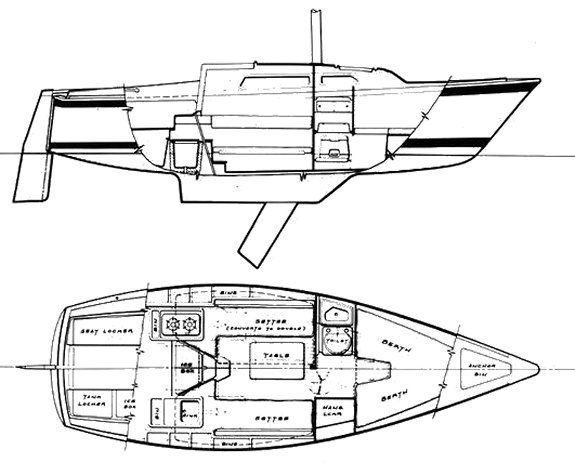
The O’Day 23 features a moderate displacement fiberglass hull with a relatively beamy form for its length, which provides both stability and usable interior space. It was offered with either a fixed keel or a centerboard, giving buyers the choice between deeper performance under sail or shallow-draft versatility for trailer launching and gunkholing. Its transom-hung rudder is simple and effective, though more exposed than skeg-mounted alternatives, which means easier repairs but greater vulnerability to grounding.
Rigged as a masthead sloop, the sailplan is straightforward and efficient, well-suited to sailors who prefer low-maintenance handling. Fiberglass was the dominant construction material of the era, chosen for its durability and ease of mass production; the O’Day 23 benefited from this shift away from wood, making it relatively immune to rot but still prone to issues like deck core softening if neglected. From a naval architecture perspective, its moderate ballast ratio and beam-to-length proportions were designed to optimize stability while keeping the vessel trailerable—a design compromise that has aged well for casual cruising.
.
Performance
Under sail, the O’Day 23 delivers competent if not exhilarating performance. With light to moderate winds, it points reasonably well to weather, though heavier seas can expose its limited waterline length and light displacement, leading to more motion compared to heavier 25- or 27-footers. Its speed potential is modest, but within expectations for a pocket cruiser of this era. Handling is forgiving, which appeals to beginners, and the boat can be comfortably managed by a solo sailor or a couple. Compared with contemporary competitors such as the Catalina 22 or Hunter 23, it offers a steadier, more solid feel, though not necessarily more speed. Its reputation is not that of a racer, but of a steady, family-friendly cruiser that inspires confidence.
Comfort and Accommodations
The interior of the O’Day 23 was cleverly designed for its size, with sleeping berths for up to four. A small galley and portable head were standard, sufficient for weekend sailing but cramped for long-term living aboard. Storage is adequate for short trips, though limited compared to slightly larger cruisers. Ventilation is acceptable thanks to opening ports and a forehatch, but in hot climates, owners often add fans. Ergonomically, it works best for couples or small families, but extended cruising is more ambitious than comfortable. Many surviving examples have been refurbished with upgraded upholstery, improved lighting, and modernized galleys, making interiors highly variable across the used market.
Safety and Practicality
Deck layout is simple and uncluttered, with lifelines and grabrails providing a reasonable sense of security for coastal sailing. The cockpit is spacious for a boat of this size, though wet in rougher conditions. The O’Day 23 is best suited to sheltered and coastal waters; offshore use would require significant modifications, including reinforced rigging and upgraded safety systems. For shorthanded sailing, its light rig and tiller steering make it highly manageable, even for less experienced sailors. System accessibility is generally good—engine (often an outboard), electrical wiring, and rigging adjustments are straightforward to service, keeping costs low.
Known Issues with the O’Day 23
Typical issues reported by owners include deck core delamination around fittings, minor osmotic blistering on older hulls, and wear on original hardware. Outboard well designs sometimes cause ventilation or cavitation problems under power, leading some owners to upgrade to more modern outboards or external brackets. Many boats have had electronics replaced, as factory installations are outdated by today’s standards. Common improvements include reinforcing the chainplates, re-bedding deck hardware to prevent leaks, and replacing aging standing rigging. These upgrades, while not unusual, should be factored into the purchase decision.
Market Availability and Pricing in the U.S.
The O’Day 23 is no longer in production and is found only on the used market, most frequently in New England and along the East Coast, where O’Day had its strongest presence. On today’s listings, well-kept examples typically fall in the $3,500–$7,500 range, depending on condition, trailer availability, and upgrades. This makes it one of the most affordable family cruisers of its size, often cheaper than comparable Catalina or Hunter models, though resale demand is slightly narrower.
Below is a comparison with similar boats:
| Model | LOA | Production Years | Typical Used Price (U.S.) | Notable Differences |
|---|---|---|---|---|
| O’Day 23 | 23 ft | 1972–1979 | $3,500–$7,500 | Trailerable; shallow draft centerboard option; modest accommodations. |
| Catalina 22 | 22 ft | 1969–present | $4,500–$9,000 | Even larger production numbers; strong class racing community; slightly smaller interior. |
| Hunter 23 | 23 ft | 1985–1992 | $4,000–$8,500 | More modern styling; lighter displacement; better performance in light air but less stable feel. |
| Jeanneau Tonic 23 | 23 ft | 1981–1987 | $6,500–$12,000 | European design; better interior finish; slightly pricier; less common in U.S. market. |
O’Day 23 vs Catalina 22
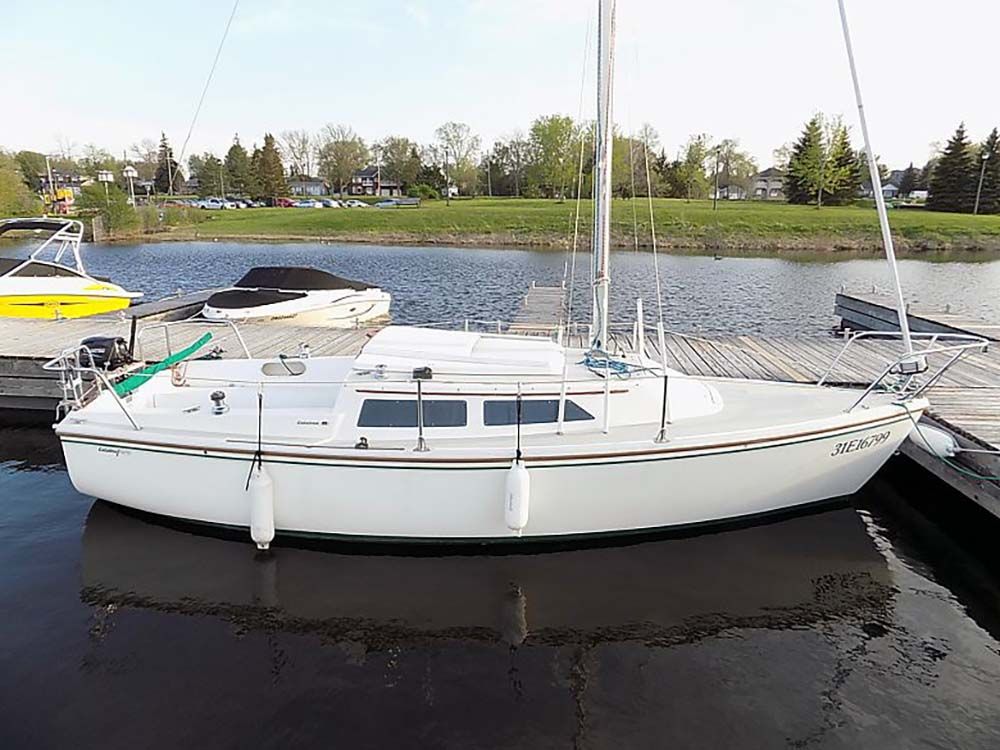
The O’Day 23 and Catalina 22 are both compact, trailerable cruisers aimed at weekend sailors and beginner-friendly coastal cruising, but they approach design and performance differently. The O’Day 23 features a slightly more substantial hull with moderate beam, which provides stability and predictable handling in varied conditions. Its sail plan and rigging offer sufficient power for light- to moderate-wind performance, giving a confident, balanced feel under sail. The Catalina 22, on the other hand, emphasizes simplicity and ease of use, with a narrower, lighter hull that accelerates quickly in lighter winds but may feel more tender in choppy conditions.
Interiors on both boats are compact yet functional; the O’Day 23 often provides slightly better sleeping arrangements and storage, making it marginally more comfortable for small crews or family outings. Maintenance requirements are comparable, though the O’Day’s systems are straightforward and accessible, while Catalina’s widespread popularity ensures parts and aftermarket support are easily available. In practice, the O’Day 23 appeals to sailors who value a stable, slightly roomier platform for weekend cruising, while the Catalina 22 draws those who prioritize trailering convenience and simple, proven handling.
Both boats are suitable for protected waters and casual coastal exploration, but the O’Day may provide a more reassuring experience in moderate conditions. Overall, buyers weighing cabin comfort, stability, and versatility may lean toward the O’Day 23, while those seeking lightweight, easily trailered performance often choose the Catalina 22.
► Learn more about de Catalina 22
O’Day 23 vs Hunter 23

When comparing the O’Day 23 with the Hunter 23, differences in sailing character and layout become more apparent despite their similar size. The Hunter 23 is designed for ease of handling and beginner-friendly sailing, with a balanced rig and forgiving hull that prioritizes predictable responses over performance. The O’Day 23, by contrast, provides a slightly stiffer and more responsive hull, giving a livelier feel under sail, particularly in moderate wind conditions.
Both interiors are compact, but the O’Day 23 generally offers more functional storage and slightly better ergonomics for weekend cruising, whereas the Hunter 23’s interior is straightforward but optimized for simplicity and ease of maintenance. Maintenance demands are moderate for both, though the O’Day benefits from its long production history and widespread availability of parts. In terms of use, the Hunter 23 is particularly attractive to new sailors seeking a forgiving, low-maintenance coastal cruiser, while the O’Day 23 can suit slightly more experienced sailors who enjoy spirited handling and occasional club racing. Stability, deck layout, and rigging differences make the O’Day feel more performance-oriented without compromising safety, while the Hunter emphasizes comfort and ease.
Buyers prioritizing versatility, sailing feedback, and minor performance advantages may prefer the O’Day 23, while those focused on user-friendly cruising will find the Hunter 23 appealing.
► Learn more about de Hunter 23
O’Day 23 vs Jeanneau Tonic 23

Comparing the O’Day 23 with the Jeanneau Tonic 23 highlights contrasts between American and European small cruiser design philosophies. The Tonic 23 typically features a lighter, more responsive hull with a modern, performance-oriented rig that rewards agile handling and precise control, particularly appealing to sailors who enjoy sporty weekend sailing or club racing. The O’Day 23, in contrast, emphasizes stability, interior space, and straightforward handling, offering a more forgiving experience for family outings or coastal cruising.
Inside, the O’Day provides slightly more practical storage and a traditional American layout, while the Tonic’s interior feels modern but more compact, reflecting a European efficiency in space usage. Maintenance considerations differ as well: the O’Day benefits from decades of domestic production and widespread parts availability, whereas the Tonic may require more specialized attention or imported components. In terms of sailing experience, the Tonic is livelier in lighter air and points well upwind, while the O’Day excels in stability and comfort in variable conditions.
The O’Day 23 is ideal for buyers seeking a versatile, family-friendly cruiser with moderate upkeep, whereas the Tonic 23 attracts sailors who prioritize performance, responsiveness, and contemporary styling. Ultimately, the choice hinges on whether the buyer values ease, comfort, and reliability over sportier handling and European design sophistication.
► Learn more about the Jeanneau Tonic 23
Maintenance Costs of an O’Day 23 in the USA
Typical annual costs for owning an O’Day 23 are moderate for its size:
- Dockage or mooring: $1,200–$3,000 per year, depending on region (higher in California or Florida).
- Insurance: $150–$400 annually, thanks to the boat’s low value and risk profile.
- Outboard engine servicing: $200–$500 yearly, unless repowered.
- Bottom paint (antifouling): $400–$900 per season, depending on usage.
- Rigging inspections and sail care: $200–$600 per year, with sail replacement every 10–15 years costing $1,800–$2,500.
- Electronics and systems: Occasional upgrades (chartplotter, VHF, solar) can add $1,000–$3,000 as a one-time cost.
Owners often do much of the work themselves, which significantly reduces costs; professional yard work is rarely essential except for rigging or fiberglass repair. Overall, the O’Day 23 sits at the low end of ownership expenses in its size class, making it attractive for budget-minded sailors. Resale values remain consistent enough that most of these costs can be partially offset if the boat is well maintained.
Conclusion
The O’Day 23’s strengths lie in its affordability, ease of handling, and practicality as a coastal family cruiser. Its weaknesses—limited offshore capability, dated interior layouts, and modest performance—are less relevant for buyers seeking simple weekend sailing rather than long passages. It is best suited to new sailors, small families, or those wanting a trailerable boat with real cruising potential. For buyers evaluating an entry-level coastal cruiser, the O’Day 23 remains a sound investment: inexpensive to acquire, affordable to own, and dependable enough to offer years of rewarding sailing.
Specifications
| General | |
|---|---|
| Hull Type | Keel / Cbrd. |
| Rigging Type | Masthead Sloop |
| LOA | 22.75 ft / 6.93 m |
| LWL | 19.50 ft / 5.94 m |
| S.A. (reported) | 246.00 ft² / 22.85 m² |
| Beam | 7.92 ft / 2.41 m |
| Displacement | 3,425.00 lb / 1,554 kg |
| Ballast | 1,200.00 lb / 544 kg |
| Max Draft | 5.33 ft / 1.62 m |
| Min Draft | 2.25 ft / 0.69 m |
| Construction | FG |
| Ballast Type | Lead |
| First Built | 1978 |
| Last Built | 1984 |
| # Built | 1000 |
| Builder | O’Day Corp. (USA) |
| Designer | C. Raymond Hunt Assoc. |
Auxiliary Power / Tanks (original equip.) | |
| Type | Outboard |
| HP | 15 |
Accommodations | |
| Headroom | 5.00 ft / 1.52 m |
Sailboat Calculations / Definitions | |
| S.A. / Displ. | 17.37 |
| Bal. / Displ. | 35.04 |
| Disp. / Len | 206.21 |
| Comfort Ratio | 16.41 |
| Capsize Screening Formula | 2.10 |
| S# | 2.67 |
| Hull Speed | 5.92 kn |
| Pounds / Inch Immersion | 551.83 pounds/inch |
Rig and Sail Particulars | |
| I | 28.00 ft / 8.53 m |
| J | 10.00 ft / 3.05 m |
| P | 23.42 ft / 7.14 m |
| E | 9.00 ft / 2.74 m |
| S.A. Fore | 140.00 ft² / 13.01 m² |
| S.A. Main | 105.39 ft² / 9.79 m² |
| S.A. Total (100% Fore + Main Triangles) | 245.39 ft² / 22.80 m² |
| S.A. / Displ. (calc.) | 17.33 |
| Est. Forestay Length | 29.73 ft / 9.06 m |
| Mast Height from DWL | 32.00 ft / 9.75 m |
Disclaimer
The considerations and analyses presented regarding the O’Day 23 sailboat are of a general nature and are based on the available information and technical data on this model, interpreted to the best of our knowledge and understanding. It is important to note that the specific characteristics of any particular sailboat may vary due to custom modifications, maintenance performed, and conditions of use over time, among other factors. Therefore, the details and performance of the boat you are considering may not exactly match the information provided here.
We strongly recommend that, before making any purchasing or usage decisions, you conduct a detailed inspection of the boat in question, consult with nautical professionals and other sailors, and consider your personal needs, expectations, and capabilities. Each sailboat may have unique particularities that affect its performance and suitability for different types of sailing and sailors.
The information contained in this analysis should be used as a general guide and not as a definitive reference. Professional evaluation and personal inspection are essential to ensure that the boat meets your specific requirements and expectations.