


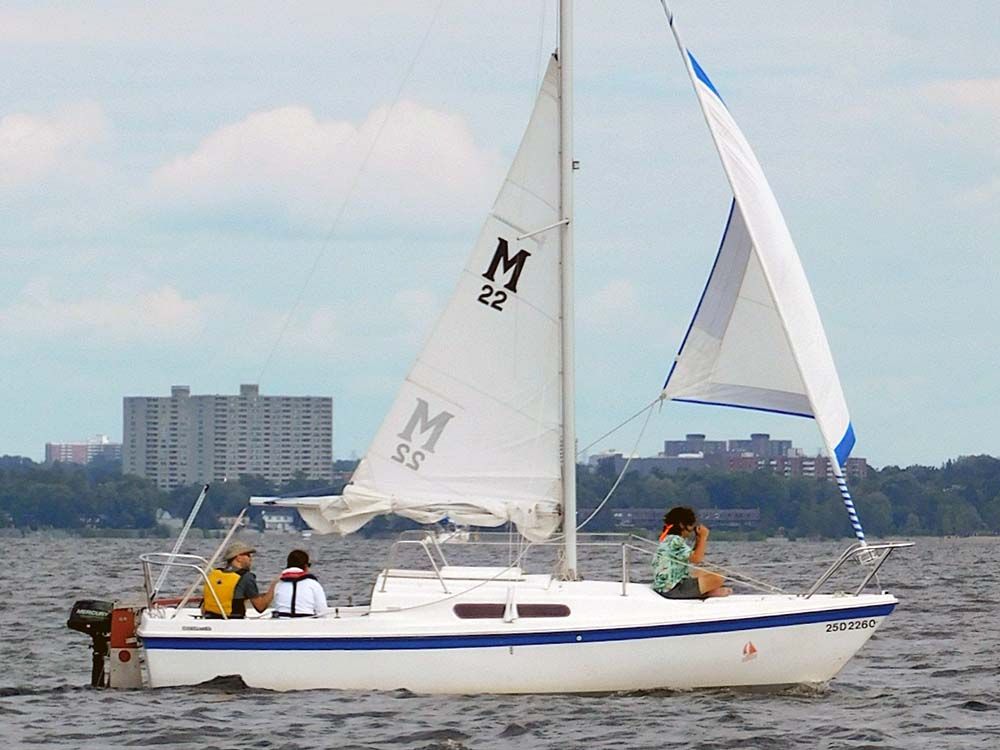
The MacGregor 22 was introduced in the 1970s by Roger MacGregor’s California-based yard, a company known for producing affordable, trailerable sailboats aimed at recreational sailors. Conceived primarily as a pocket cruiser rather than a race boat, the MacGregor 22 was designed to offer accessible sailing for families, couples, and newcomers. Its emphasis on trailerability, shallow draft, and ease of handling reflects the brand’s philosophy of making sailing more approachable to a broader public. Today, on the second-hand market, the MacGregor 22 still draws interest from budget-conscious sailors, sailing schools with small training fleets, and private owners who want an inexpensive entry into coastal or lake sailing.
Design and Construction
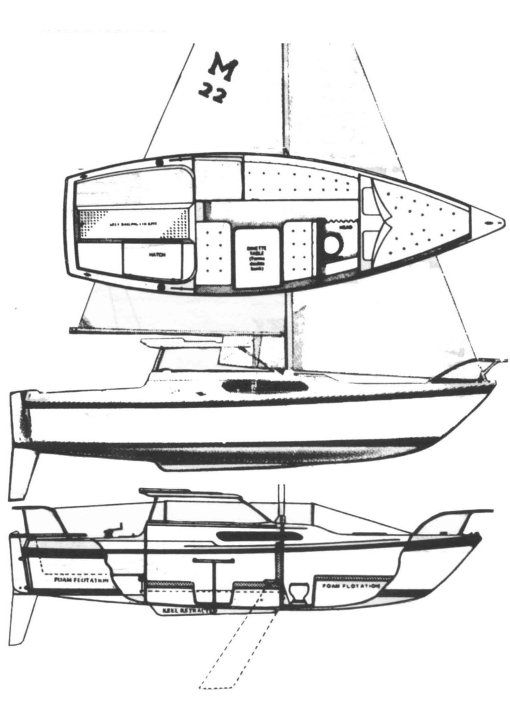
The hull design follows the simple lines of 1970s trailer-sailers: a relatively narrow beam, a light fiberglass layup, and a swing keel that allows both shallow-water exploration and reasonable upwind performance. The rudder is transom-hung, easily serviceable and removable for trailering. The rig is a fractional sloop, with manageable sail areas well-suited to small crews or even single-handed sailing.
Construction is entirely fiberglass with minimal structural reinforcements compared to heavier cruisers of the same era. This keeps the boat light and towable, but also means that long-term durability depends heavily on maintenance. Interiors are basic, with molded fiberglass components and light plywood joinery. These choices made the boat affordable and easy to repair, but also give it a more “utilitarian” feel compared to higher-end brands. For buyers, this translates into a vessel that can be repaired and refitted without excessive costs, though resale values are modest.
Performance
On the water, the MacGregor 22 is agile in light to moderate air, thanks to its light displacement and swing keel. It can reach respectable speeds for its size, particularly on a reach, but lacks the stiffness and momentum of heavier 22-footers like the Catalina 22. In choppy or heavy seas, the boat feels tender and requires reefing early, which limits its use as an offshore platform. Upwind performance is reasonable for casual sailing but will not satisfy competitive racers.
When compared with similar trailer-sailers, it is praised for its ease of handling and forgiving nature, though it is often considered less solid in feel than competitors. For casual weekend cruising or lake sailing, however, its performance is more than adequate and contributes to its enduring popularity.
Comfort and Accommodations
The interior of the MacGregor 22 is functional but modest. It usually provides four berths (two settees and a forward V-berth), a small galley module, and space for a portable toilet. Headroom is limited, and storage is basic, reflecting its trailer-sailer identity. Ventilation depends on small hatches and companionway openings.
For a couple or small family, it works well for weekend trips and short overnights, but extended living aboard quickly becomes cramped. Many second-hand examples show owner modifications, ranging from custom cabinetry to updated cushions, reflecting efforts to improve comfort over the bare-bones original interior. As with many boats of this era, the aging interiors often benefit from cosmetic refits, though the simplicity makes upgrades straightforward.
Safety and Practicality
Safety at sea is adequate for coastal and inland waters but not designed for offshore passages. The swing keel mechanism requires inspection, as poor maintenance can affect both performance and safety. On deck, the simple layout, light loads, and fractional rig make handling straightforward for beginners or small crews. Access to the water is easy, and trailering is one of the boat’s main practical strengths, enabling owners to avoid marina costs and extend their cruising grounds.
Systems are minimal, which reduces failure points but also means fewer built-in safety redundancies. The boat is manageable with a small outboard engine, further enhancing practicality and reducing operating costs.
Known Issues with the MacGregor 22
Common issues reported by owners include keel pivot wear, water intrusion around deck fittings, and aging gelcoat prone to chalking. The light fiberglass layup can flex under stress, especially if poorly maintained, and original hardware may require replacement after decades of use. Osmosis is less common than in heavier cruisers of the era, but still possible. Many boats still carry original outboards that are well past their prime, and upgrading to a modern four-stroke engine is a common and recommended improvement. Electrical systems, if installed, are usually very basic and often need updating.
Market Availability and Pricing in the U.S.
The MacGregor 22 is no longer in production and is available only on the used market. Listings appear most frequently in regions with active trailer-sailing communities, such as the Great Lakes, the Pacific Northwest, and inland lakes in the Midwest and South. On the coasts, they are less common, though still found in Florida and California.
Well-maintained examples typically sell between $2,500 and $6,500, making it one of the most affordable ways into keelboat sailing. Project boats can be found for less, but usually require significant effort to bring up to sailing condition. Compared with similar boats, the MacGregor 22 is less expensive than a Catalina 22 or Hunter 23, but also holds lower resale value. Its affordability and trailerability, however, make it easy to buy and resell within the active entry-level market.
Below is a comparison with similar sailboats from the same era:
| Model | LOA | Years Built | Typical U.S. Price | Key Differences |
|---|---|---|---|---|
| MacGregor 22 | 22 ft | 1971–1983 | $2,500–$6,500 | Light, trailerable, simple build, very affordable entry-level cruiser. |
| Catalina 22 | 22 ft | 1970–2000s | $4,000–$12,000 | Heavier, stiffer, stronger class association, better long-term value. |
| Hunter 23 | 23 ft | 1985–1992 | $5,000–$10,000 | More modern design, larger cockpit, slightly more complex systems. |
| O’Day 23 | 23 ft | 1971–1979 | $3,500–$8,000 | Sturdier build, swing keel or fixed keel options, more traditional interior. |
MacGregor 22 vs Catalina 22
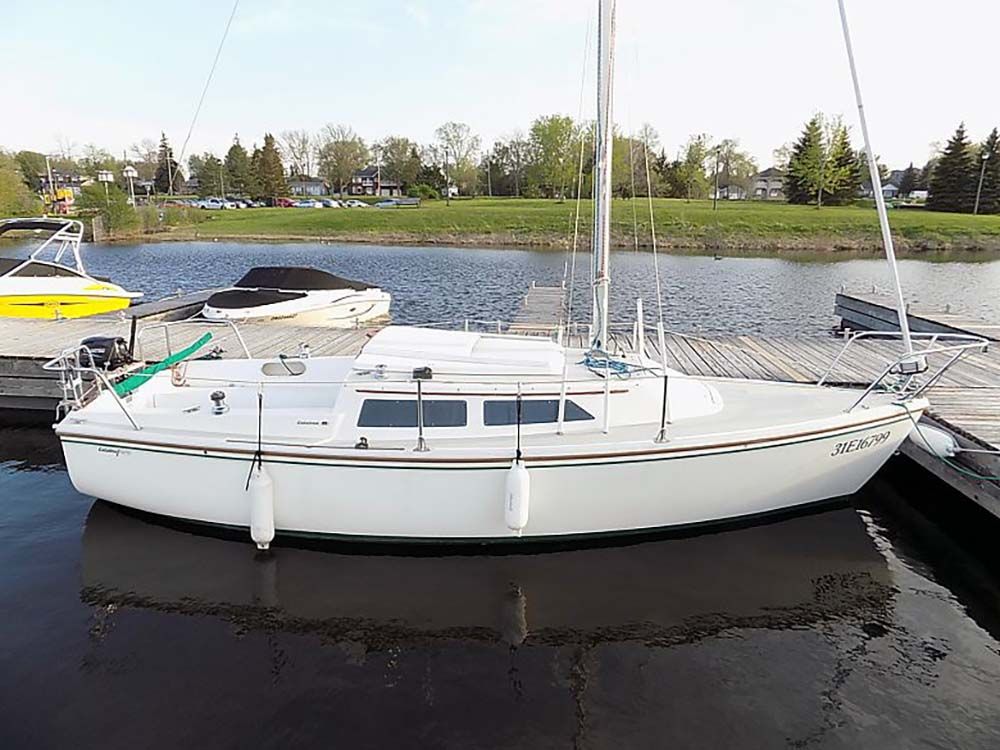
The MacGregor 22 and Catalina 22 are two of the most recognizable pocket cruisers from the 1970s and 1980s, yet they appeal to slightly different sailors. The MacGregor, with its lightweight construction and water ballast in later versions, was designed to be easily trailered, launched, and handled by a small crew, making it particularly attractive for budget-minded owners who value portability and simplicity. The Catalina 22, by contrast, is heavier and more solidly built, which translates into a more reassuring ride under sail and greater long-term durability for coastal cruising.
On the water, the MacGregor tends to accelerate more quickly in light winds but can feel tender in stronger breezes, whereas the Catalina offers steadier handling and better all-around balance, appealing to families who prioritize comfort over speed. Interior layouts reflect this philosophy: the Catalina provides more usable space and storage for weekend cruising, while the MacGregor keeps things simple and functional for shorter outings. Maintenance is generally easier on the MacGregor due to its light build and outboard-focused systems, though Catalinas benefit from an extensive owner community and readily available spare parts.
Buyers should weigh mobility and low cost of ownership in favor of the MacGregor, versus stability, comfort, and resale strength with the Catalina.
► Learn more about de Catalina 22
MacGregor 22 vs Hunter 23

The MacGregor 22 and Hunter 23 serve similar entry-level markets, but they take different approaches in execution. The MacGregor emphasizes lightness and trailerability, making it easy to transport and launch even for sailors with modest vehicles, while the Hunter 23 leans toward a slightly more substantial build that gives it better stiffness under sail.
On the water this difference is clear: the MacGregor is responsive and agile in moderate conditions but demands early reefing in stronger winds, whereas the Hunter feels more composed and capable of carrying sail with confidence. The Hunter’s fractional rigging also allows for easier tuning and handling in gusty conditions, which appeals to sailors who want a bit more performance versatility. Below deck, the Hunter offers a more refined interior with practical accommodations for a small family, while the MacGregor’s cabin is simpler and best suited for short stays or minimal cruising gear. Maintenance favors the MacGregor in terms of lower cost and lighter systems, but the Hunter’s better finish materials often age more gracefully.
For buyers, the decision boils down to choosing the MacGregor for low-cost, mobile sailing or the Hunter for a sturdier, more performance-oriented pocket cruiser that feels at home in varied conditions.
► Learn more about de Hunter 23
MacGregor 22 vs O’Day 23

The MacGregor 22 and O’Day 23 differ primarily in their balance between portability and cruising capability. The MacGregor’s defining advantage is its light displacement and ease of trailering, making it appealing to sailors who want flexibility and the option to store the boat at home rather than in a marina.
The O’Day, with its heavier displacement and keel-centerboard design, delivers more confident sailing characteristics, especially upwind, and feels more stable for family use in choppy coastal waters. In terms of rigging, the MacGregor’s simple sloop arrangement makes it easy to manage, while the O’Day’s setup, though still straightforward, is optimized for more efficient sail balance and stability at different points of sail. Inside, the O’Day has a more functional cruising interior, with enough space for a couple or small family to realistically spend weekends aboard, compared to the more minimalist accommodations of the MacGregor. Maintenance again reflects philosophy: the MacGregor is cheap to own and simple to repair, but the O’Day’s more robust build means it generally holds up better over decades of use.
Buyers prioritizing cost, mobility, and simplicity will find the MacGregor an attractive entry into sailing, while those who want a stronger, more versatile platform for family cruising will likely prefer the O’Day.
► Learn more about the O’Day 23
Maintenance Costs of a MacGregor 22 in the U.S.
The MacGregor 22 is one of the most economical sailboats to maintain in its size range. Trailer storage alone eliminates the largest single cost—slip fees—and keeps annual upkeep accessible to budget-minded sailors.
- Dockage or storage: Trailer storage $200–$600 annually. Moorings $600–$1,500. Marina slips $2,000–$3,500 in most regions, higher in California or Florida.
- Insurance: $150–$300 per year, reflecting its low market value and limited systems.
- Engine servicing: Outboards are inexpensive to maintain, with annual service $100–$250. A new small four-stroke costs $1,500–$2,000.
- Bottom paint (antifouling): Not required for trailered boats. For boats kept in water, $500–$1,000 every 1–2 years.
- Standing and running rigging: Minimal loads make inspection simple. Full replacement costs $1,000–$1,800, required roughly every 10–15 years.
- Sails: A new mainsail or jib costs $800–$1,500 each. Casual owners stretch sail life for 10+ years; active sailors should budget $200 annually for repairs.
Periodic costs
- Electronics upgrades: Small GPS or VHF $500–$1,000.
- Refits: Cushion replacement, cosmetic interior work, and hardware upgrades can add $1,000–$3,000, but are typically DIY-friendly.
DIY vs. professional services
The simplicity of the MacGregor 22 means most maintenance can be performed by the owner, drastically reducing costs. Professional yards are only needed for bottom jobs or rigging replacements. This keeps long-term costs low compared to fixed-keel cruisers.
Overall assessment
Typical ownership costs range from $500 to $2,500 annually, depending on storage method and region. This places the MacGregor 22 firmly in the low-cost category for keelboats, making it a very economical entry into sailing. Its resale values are modest, but thanks to its affordability and strong entry-level appeal, boats in good condition usually find buyers without difficultytion, and abundance of buyers—it remains one of the most economical entry-level sailboats in the U.S.
Conclusion
The MacGregor 22 is a classic trailer-sailer that continues to fulfill its original mission: offering affordable, approachable sailing for beginners and casual cruisers. Its strengths are accessibility, low maintenance, and the freedom of trailerability, while its weaknesses lie in modest interior comfort and limited offshore capability.
For sailors seeking a budget-friendly boat for lakes, bays, and coastal cruising, the MacGregor 22 delivers excellent value. It is not the right choice for those wanting bluewater ambitions or long-term liveaboard comfort, but as a weekend cruiser and learning platform, it remains a smart investment. With its low costs and active resale market, the MacGregor 22 represents one of the most economical and practical ways to enjoy sailing in the United States.
Specifications
| Hull Type | Swing Keel |
| Rigging Type | Masthead Sloop |
| LOA | 22.00 ft / 6.71 m |
| LWL | 19.50 ft / 5.94 m |
| S.A. (reported) | 214.00 ft² / 19.88 m² |
| Beam | 7.33 ft / 2.23 m |
| Displacement | 1,800.00 lb / 816 kg |
| Ballast | 500.00 lb / 227 kg |
| Max Draft | 5.50 ft / 1.68 m |
| Min Draft | 1.00 ft / 0.30 m |
| Construction | FG |
| First Built | 1967 |
| Last Built | 1975 |
| Builder | Macgregor Yacht Corp. (USA) |
| Designer | Roger Macgregor |
| S.A. / Displ. | 23.19 |
| Bal. / Displ. | 27.78 |
| Disp: / Len | 108.37 |
| Comfort Ratio | 9.67 |
| Capsize Screening Formula | 2.41 |
| S# | 5.04 |
| Hull Speed | 5.92 kn |
| Pounds/Inch Immersion | 510.72 pounds/inch |
| I | 25.30 ft / 7.71 m |
| J | 9.20 ft / 2.80 m |
| P | 21.30 ft / 6.49 m |
| E | 9.20 ft / 2.80 m |
| S.A. Fore | 116.38 ft² / 10.81 m² |
| S.A. Main | 97.98 ft² / 9.10 m² |
| S.A. Total (100% Fore + Main Triangles) | 214.36 ft² / 19.91 m² |
| S.A./Displ. (calc.) | 23.23 |
| Est. Forestay Length | 26.92 ft / 8.21 m |
Disclaimer
The considerations and analyses presented regarding the MacGregor 22 sailboat are of a general nature and are based on the available information and technical data on this model, interpreted to the best of our knowledge and understanding. It is important to note that the specific characteristics of any particular sailboat may vary due to custom modifications, maintenance performed, and conditions of use over time, among other factors. Therefore, the details and performance of the boat you are considering may not exactly match the information provided here.
We strongly recommend that, before making any purchasing or usage decisions, you conduct a detailed inspection of the boat in question, consult with nautical professionals and other sailors, and consider your personal needs, expectations, and capabilities. Each sailboat may have unique particularities that affect its performance and suitability for different types of sailing and sailors.
The information contained in this analysis should be used as a general guide and not as a definitive reference. Professional evaluation and personal inspection are essential to ensure that the boat meets your specific requirements and expectations.