



The Hunter 25 is a compact, trailerable coastal cruiser that was introduced in the 1970s as an affordable, family-friendly pocket cruiser with a fairly conservative, easy-care sail plan. Designed by John Cherubini and Bob Seidelmann and built by Hunter Marine beginning in the early 1970s, the hull aimed to balance simple trailering and launching with reasonable interior accommodations for weekend cruising and club-level club-racing when wanted. Early “Mark I” examples kept a wedge-shaped cabin trunk that prioritized a lower profile and lighter weight; a later “box-top” Mark II relaxed that constraint to give noticeably more interior volume. The boat was never intended as an offshore passagemaker but as a practical coastal cruiser for couples, young families or owners moving from daysailers to a small live-aboard experience. It is no longer in production (the nameplate has been reused several times by Hunter for later and unrelated 25-foot designs), and most activity now is in the used-boat market where the model tends to appeal to weekend cruisers, trailer sailors and budget-minded buyers rather than charter fleets or professional schools.
Design and Construction
Hunter’s 25-foot design follows a straightforward naval architecture recipe for its era: a fiberglass monohull, moderate beam (about 8.0 ft), a fin keel (with shoal options on some versions), and a masthead sloop rig. The arrangement produces a relatively short LWL (around 20.2 ft) and a modest sail area, which keeps handling manageable for small crews but limits top speed. The construction is solid GRP (hand-laid fiberglass typical of the period) with internal ballast (around 1,800 lb on early Mark I examples) — a ballast/displacement ratio that, depending on the exact sub-model, typically sits in the low-to-mid 40% range, which explains why owners commonly describe the boat as relatively stiff for a 25-footer. The basic deck layout and simple standing rigging were chosen for ease of maintenance and low cost: fewer systems to fail, an outboard or small inboard for docking, and through-decks and fittings that a competent DIY owner can service. Those choices make the boat inexpensive to keep running compared with aluminum or high-tech composites, but they also concentrate long-term value on hull condition, deck core health around fittings, and the state of running/standing rigging — items that, if neglected, are the main depreciation drivers.
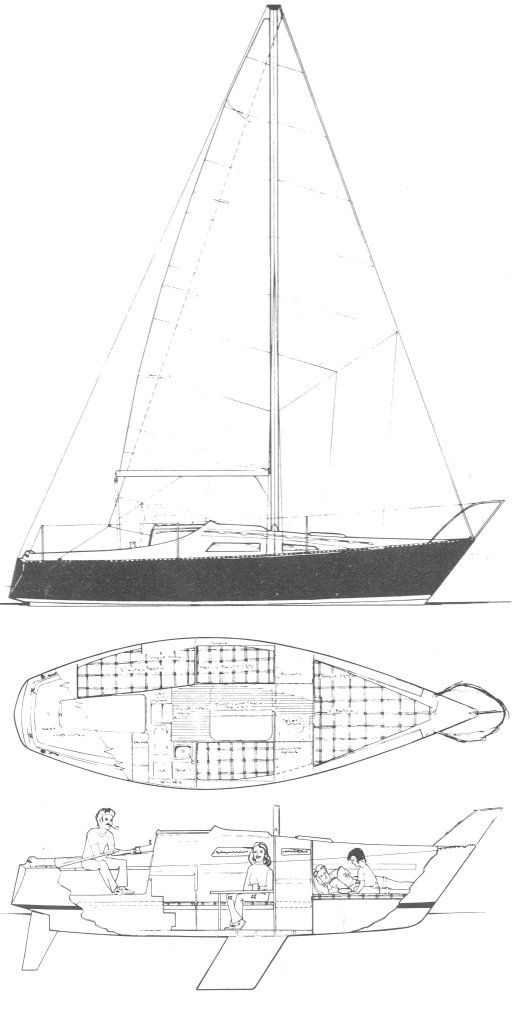
Performance
On the water the Hunter 25 behaves exactly like a sensible coastal cruiser: comfortable in lighter winds, predictable when pressed, and not designed to win many trophies in mixed-fleet club races. Hull speed — given the roughly 20.17 ft LWL — is around 6.0 knots, which matches owner experience: good at a cruising pace but slow to accelerate and limited when trying to drive through steep chop. The fin keel and relatively high ballast fraction deliver a reassuring feel when heeled, and the boat can point reasonably well for its class, though it will be outsailed to windward by sleeker modern 25- to 27-foot designs. Maneuverability in tight harbors is helped by a small outboard or light inboard, and the simple sloop rig makes reefing and sail changes straightforward for a shorthanded crew. In short, expect a forgiving, steady platform for coastal passages and daysails rather than a nimble racer; many owners praise the model’s reliability and forgiving handling in realistic cruising conditions. (For comparative performance context, PHRF ratings for boats of this vintage and size commonly put the Hunter 25 toward the slower end of pocket cruisers.)
Comfort and Accommodations
Interior packaging is where the Hunter 25 shows both its strengths and compromises. The Mark I’s wedge cabin trunk is compact — you get a forward V-berth, two settees in the salon and a small quarter berth — which makes sleeping five possible on paper but cozy in practice; the Mark II’s box-top increases headroom and storage and feels much more liveable for a couple or small family. Galley space is minimal but functional (usually an L-shaped arrangement near the companionway), and ventilation relies on hatches and small ports, so summer comfort depends on good breeze or an auxiliary fan. Storage is limited compared with larger cruisers, so owners typically adopt tight stowage discipline or add custom lockers and organizers. For weekenders and seasonal coastal cruising the interior is workable and ages tolerably well if kept dry; longer-term liveaboards often invest in modest upgrades (better cushions, improved galley gear, LED electrical refits) to push habitability closer to a comfortable two-person cruising boat. Practical Sailor and long-time owners note that while the Hunter 25’s finishes are simple, the interior’s modular nature makes sensible, cost-effective upgrades straightforward.
Safety and Practicality
Deck ergonomics and cockpit layout are conservative and sensible: a modest cockpit that seats a crew comfortably for day sails and a low, protected cabin trunk that reduces windage. The low freeboard and modest cockpit coamings make moving forward with a small crew manageable in rougher conditions, but the boat is not optimized for heavy offshore work without structural and systems upgrades (bigger bilge pumps, reinforced chainplate beds, upgraded navigation suites). For buyers who want simple ownership, systems are generally accessible — sails, halyards and most through-decks are reachable without complex disassembly — which reduces both yard time and servicing bills. Because most examples were delivered with outboards, engine access is usually easier and less costly than on boats with inboard diesels, but outboards also mean the owner must pay attention to mount integrity, fuel supply (when applicable), and winter storage. In practical terms, Hunter 25 is best thought of as a coastal platform for weekend and summertime cruising or as a trailerable weekender rather than a blue-water passagemaker.
Known Issues with the Hunter 25
Owners’ threads and older magazine reviews highlight a predictable set of wear-and-age problems rather than a single fatal design flaw. A recurring theme is leaking or improperly bedded deck fittings and chainplates; if the chainplate area is not inspected and maintained, water intrusion can rot deck cores and make repairs expensive. Some older Hunters also show bilge tabbing or small hull-to-keel seam seepage in neglected examples, and keel-bolt corrosion has occasionally been reported on boats that have sat in brackish water with persistent moisture in the bilge. Osmosis (blistering) is not widely reported as a class-wide epidemic on these Hunters, but localized gelcoat cracking and surface crazing crop up on older, sun-exposed boats. Common owner improvements include re-bedding chainplates and fittings, replacing aged standing rigging, updating electrical panels, and switching to more modern, reefable headsails; these fixes raise reliability and resale value, and are recommended budget items on any survey. If you buy one, get a focused survey that inspects deck core, chainplates, keel bolts and the outboard/inboard mounting area — that will identify the big ticket repairs before purchase.
Market Availability and Pricing in the U.S.
The original Hunter 25 (the 1972–1983 production run) is out of production and is available only on the used market; later, unrelated 25-foot Hunters (e.g., the 2005 Hunter 25-2) exist but are different boats. Listings for classic Hunter 25s in the U.S. show a wide condition-driven spread: bargain projects and long-neglected hulls appear under $5,000, while well-refitted examples with recent systems work and newer sails trade in the mid-teens; some trailerable or unusually well-equipped later models can list higher. Based on recent U.S. listings and broker pages, a practical buying range for operable Hunter 25s is roughly $3,500–$18,000, though individual asking prices can fall outside this band for exceptional condition or unusual configurations. Hunters of this size and era commonly turn up in Florida, New England and along the U.S. West Coast and Great Lakes — in other words, where active coastal and lake sailing communities support a market for affordable pocket cruisers — and the condition mix tends to include true weekenders, some restored examples, and a number of boats that need mechanical or cosmetic attention. For comparison, similar 25-foot cruisers from rivals like Catalina and O’Day often occupy the same price band but differ in interior volume, standard options, and owner expectations:
| Model | LOA | Approx. years built | Typical used price (US) | Principal differences |
|---|---|---|---|---|
| Hunter 25 | ~24.8 ft | 1972–1983 (original) | **$3,500–$18,000** | Trailerable, compact interior, fin keel, simple systems — oriented to budget coastal cruising. |
| Catalina 25 | ~25.0 ft | 1970s–1990s (various variants) | $4,000–$18,000 | Generally larger interior volume on some variants, strong owner support and parts availability. |
| O’Day 25 | ~25.0 ft | 1970s–1980s | $3,000–$8,000 | Conservative cruiser; often simpler systems and lower asking prices for project boats. |
| MacGregor 26 (26X/26M) | ~25.8 ft | 1986–2013 (various models) | $7,000–$25,000 | Trailerable powersailer concept; faster under power, but compromises in pure-sail performance and interior finish. |
Hunter 25 vs Catalina 25

The Hunter 25 and the Catalina 25 occupy the same pocket-cruiser niche, but they approach it with different emphases that matter to buyers. Hull-for-hull, the Catalina variants often exploit a slightly larger interior volume on some pop-top or wing-keel models and prioritize comfortable salon space for a small family, while the Hunter’s earlier Mark I leaned toward lower profile and lighter displacement with a later Mark II trade-off bringing more headroom.
Under sail, the Hunter’s fin keel and relatively high ballast fraction give it a stable, stiff feel that many owners find reassuring in chop, but the Catalina’s broader market evolution produced versions with shoal keels and pop-tops that are easier to trailer, launch, and live aboard for some users; the practical outcome is that Catalinas often win on interior comfort and parts/owner-support, while the Hunter wins on a compact, predictable sailing behavior. Maintenance considerations diverge: Catalina owners benefit from a very large parts and service ecosystem which can reduce repairs and resale friction, whereas Hunter 25 owners should be attentive to chainplate bedding and keel-seam checks — straightforward but important pre-purchase items. For a buyer prioritizing weekend comfort and aftermarket support, Catalina 25 variants frequently offer better resale liquidity; for someone prioritizing a slightly stiffer ride, easier trailering and a simpler systems list the Hunter can be the smarter buy.
Crew ergonomics and cockpit size are comparable, but the Catalina’s broader community often translates to more local advice, used sails and spares; the Hunter compensates with simpler mechanicals (often an outboard) that are cheaper to maintain. In short, choose the Catalina if interior volume, dealer/network access and resale liquidity are top priorities; choose the Hunter if you favor a compact, straightforward coastal cruiser with low initial purchase cost and a hands-on ownership style.
► Learn more about de Catalina 25
Hunter 25 vs O’Day 25

Comparing Hunter 25 to O’Day 25 highlights differences in market positioning and owner expectations rather than radical design contrasts. Both are 25-foot fiberglass pocket cruisers from the same general era aimed at small crews, but O’Day models often present as the more conservative, traditional cruiser with an emphasis on simple systems and a straightforward interior layout; Hunters sometimes aimed to pack slightly more modern touches or different cabin shapes (wedge vs box-top) into the same footprint.
On the water, both boats are modest performers and neither is designed for serious racing; handling is generally forgiving on each, though the Hunter’s ballast ratio and fin keel can make it feel a touch stiffer in breeze compared with some O’Day keel/centerboard combinations. The practical ownership differences matter: O’Days often trade at lower prices because they were built in large numbers and many survive as economical project boats, which can be attractive for a buyer comfortable doing maintenance. Buyers who prefer a bit more interior headroom and an easier path to finding used replacement parts may edge toward O’Day, while those who want a slightly firmer feel under sail and a model that can be upgraded cheaply (sails, hardware) can prefer the Hunter. Maintenance on either is straightforward by small-boat standards, but the buyer should watch for the same aging items — chainplate bedding, standing rigging, and keel-to-hull joints — and should budget similarly for sails and rigging.
Ultimately, the choice often comes down to condition and local availability: in many regions, an O’Day in good order will be cheaper to buy, while a Hunter 25 in comparable shape can be marginally more desirable to those prioritizing sailing feel and trailerability.
► Learn more about de O’Day 25
Hunter 25 vs MacGregor 26
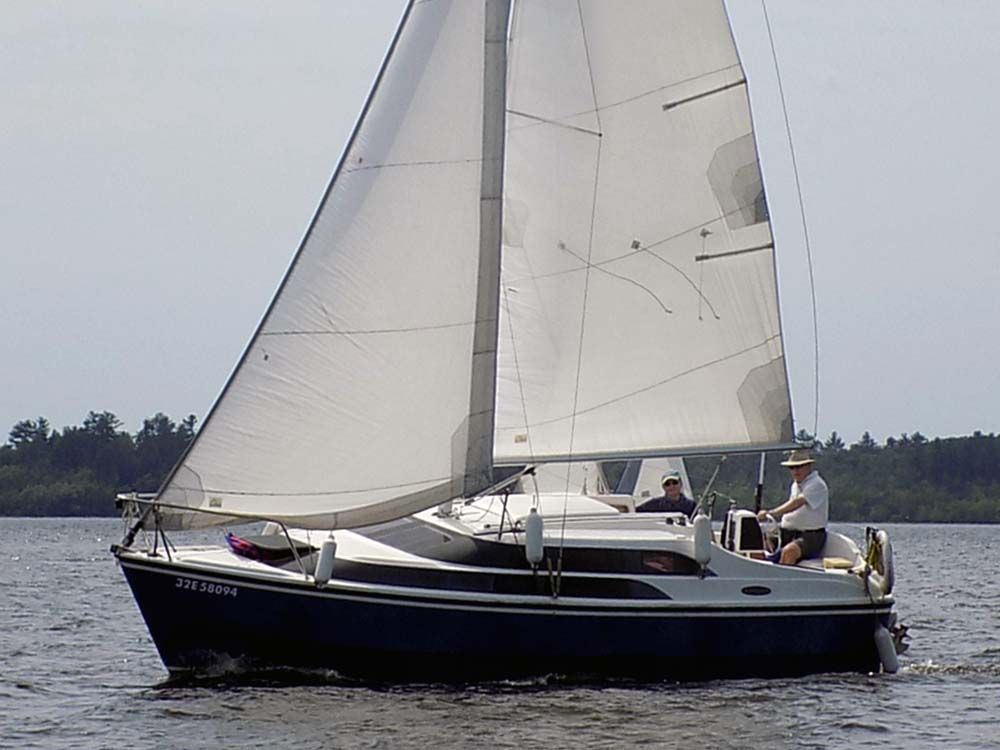
When you put the Hunter 25 beside a MacGregor 26 you are comparing two very different ownership philosophies under roughly the same LOA. The MacGregor series (26X/26M) is a powersailer/trailerable hybrid that emphasizes motoring speed, beachability and flexible ballast systems (water ballast/daggerboards), so it will usually out-run a Hunter under power and provide shallow-water freedom that a fixed-keel Hunter can’t match.
Under sail, however, the MacGregor’s compromises (lighter displacement, water ballast that behaves differently than fixed lead, and often a fractional rig) typically mean lower pointing ability and a less solid feel in chop compared with the Hunter’s fin-keel stiffness; the Hunter 25 is the more traditionally reliable sail platform. Interior comfort is different rather than strictly better in either case: MacGregors often have convertible interiors tuned for dayboats and power-assisted cruise, while the Hunter’s layout is a straightforward small-cruiser design that ages well with modest upgrades. Maintenance regimes diverge: the MacGregor’s mechanical and water-ballast systems require familiarization (and occasionally different maintenance attention), whereas the Hunter’s simplicity keeps servicing time predictable and often cheaper.
For buyers wanting a fast trailerable weekend platform with strong motoring performance and access to shallow anchorages, the MacGregor makes sense; for buyers seeking a small, solid sailing cruiser with a simpler maintenance profile and better traditional upwind sailing, the Hunter 25 is the better match. Resale dynamics also differ: MacGregors attract buyers who want the powersailer lifestyle, while Hunters draw steady demand from coastal cruisers seeking simplicity and a modest buy-in price.
► Learn more about the MacGregor 26
Maintenance Costs of a Hunter 25 in the U.S.
- Slip / mooring (annual): $1,000–$7,000. Rates vary dramatically by region — inland lakes and small harbors are at the low end, Florida, California and high-demand northeastern slips push toward the high end or higher; seasonal (summer-only) haul-in options can lower cost but reduce convenience. (See U.S. marina rate examples and regional guides.)
- Insurance (annual): $200–$800. Typical small-boat policies fall between a few hundred dollars per year for basic liability and several hundred more for agreed-value hull coverage in higher risk zones like Florida. Premiums depend on value, navigation area and claims history.
- Engine / outboard service: $150–$700 per year. Routine tune, seasonal flushing, lower unit service and occasional small repairs; full outboard replacement is more if required.
- Bottom paint & haul-out (every 1–3 years): $1,000–$3,500. A full haul, power-wash, blocking, and two coats of antifouling on a 25-ft hull typically sits in this range depending on local yard rates and prep needed.
- Sails & running gear (periodic): $500–$4,000. A new cruising main or a genoa for a 25-ft boat can range from the low thousands for economy dacron to several thousand for higher performance or roller-furling systems; replacement frequency depends on use and care.
- Standing rigging / hardware (every 10–20 years or on survey): $500–$3,000+ depending on whether you replace toggles, swage and labor or need a full re-rig. Labor and mast service can add to costs.
- Survey / occasional repairs / yard work: $400–$2,500 annually (averaged). Routine small repairs, zincs, bilge pump replacement and the occasional fiberglass touch-up add up; a pre-purchase survey is a one-time cost ~ $400–$900 but often prevents much larger surprises.
- Registration, winterization & miscellaneous: $200–$1,200. Trailer upkeep and storage, shrink-wrap or indoor storage (if used) will add seasonal costs.
Can the owner do the work? Many of these tasks are within reach of a competent owner — re-bedding fittings, preventive maintenance on an outboard, simple electrical upgrades and even some sail repairs — and doing them yourself can materially reduce annual cost. Structural work (deck core repairs, major rigging service, keel bolt replacement) typically requires professional help and can become the big ticket items that change a buy/no-buy decision. On balance, a Hunter 25’s maintenance profile and associated bills are medium for its size: higher than a small daysailer but substantially lower than a 30–40-ft blue-water cruiser. When bought in sound condition, the modest buying price and straightforward systems usually mean resale value holds up enough to justify the running costs for coastal cruising buyers.
Conclusion
The Hunter 25 is a pragmatic, low-complexity pocket cruiser that rewards buyers who want an affordable, trailerable coastal boat they can manage and maintain without an army of specialists. Its strengths are predictable handling, a relatively stiff ride for a 25-footer, simple systems and the ability to be upgraded selectively (sails, bedding and small electrical updates) to suit personal cruising style. Weaknesses are the small interior on early versions, the need to be vigilant about bedding/chainplate and keel inspections on older hulls, and modest straight-line speed compared with modern hull designs. For a prospective owner focused on weekend coastal cruising, learning hands-on maintenance, and minimizing purchase price while retaining useful resale prospects, it is worth actively seeking one in good survey condition; for someone seeking immediate interior comfort, a larger-volume 27–30-ft cruiser or a Catalina 25 pop-top variant might suit better. In short: the Hunter 25 is a sensible, good-value option for coastal cruisers and trailer sailors who value simplicity over speed — a practical, thrift-minded choice that can give years of enjoyable, low-stress sailing if purchased with a careful survey and a modest maintenance budget.
Specifications
| Hull Type | Fin with rudder on skeg |
| Rigging Type | Masthead Sloop |
| LOA | 25.00 ft / 7.62 m |
| LWL | 20.17 ft / 6.15 m |
| Sail Area (reported) | 256.00 ft² / 23.78 m² |
| Beam | 8.00 ft / 2.44 m |
| Displacement | 4,400 lb / 1,996 kg |
| Ballast | 1,800 lb / 816 kg |
| Max Draft | 3.92 ft / 1.19 m |
| Construction | Fiberglass (FG) |
| First Built | 1972 |
| Last Built | 1983 |
| Builder | Hunter Marine (USA) |
| Designer | John Cherubini / Bob Seidelmann |
| S.A. / Displ. | 15.30 |
| Bal. / Displ. | 40.91 |
| Disp. / Len. | 239.38 |
| Comfort Ratio | 19.71 |
| Capsize Screening Formula | 1.96 |
| S# | 2.11 |
| Hull Speed | 6.02 kn |
| Pounds/Inch Immersion | 576.56 lb/inch |
| I | 30.00 ft / 9.14 m |
| J | 10.50 ft / 3.20 m |
| P | 24.79 ft / 7.56 m |
| E | 8.00 ft / 2.44 m |
| S.A. Fore | 157.50 ft² / 14.63 m² |
| S.A. Main | 99.16 ft² / 9.21 m² |
| S.A. Total (100% Fore + Main) | 256.66 ft² / 23.84 m² |
| S.A. / Displ. (calc.) | 15.34 |
| Est. Forestay Length | 31.78 ft / 9.69 m |
| Mast Height from DWL | 34.08 ft / 10.39 m |
Disclaimer
The considerations and analyses presented regarding the Hunter 25 sailboat are of a general nature and are based on the available information and technical data on this model, interpreted to the best of our knowledge and understanding. It is important to note that the specific characteristics of any particular sailboat may vary due to custom modifications, maintenance performed, and conditions of use over time, among other factors. Therefore, the details and performance of the boat you are considering may not exactly match the information provided here.
We strongly recommend that, before making any purchasing or usage decisions, you conduct a detailed inspection of the boat in question, consult with nautical professionals and other sailors, and consider your personal needs, expectations, and capabilities. Each sailboat may have unique particularities that affect its performance and suitability for different types of sailing and sailors.
The information contained in this analysis should be used as a general guide and not as a definitive reference. Professional evaluation and personal inspection are essential to ensure that the boat meets your specific requirements and expectations.