



The O’Day 25 is a classic American pocket cruiser from the mid-1970s that was designed to be a family-friendly, trailerable coastal cruiser rather than an offshore passagemaker or an all-out racer. Conceived by C.R. Hunt & Associates and built by O’Day Corp. between about 1975 and 1984, the design aimed to give new sailors a roomy-feeling 25-footer with options that fit different launching and sailing styles (centerboard for shallow water and trailering, or a fixed keel for simpler under-water profile). With nearly 2,900 hulls produced it became one of the high-volume, mainstream choices of its era and today remains a common sight on the used-boat market—favored by budget-minded couples, trailer sailors, and club cruisers rather than charter operators or schools. These production figures and the dual-keel/centerboard approach explain why the O’Day 25 still turns up regularly in coastal regions and lakes where owners prize a forgiving, easy-to-handle small cruiser.
Design and Construction
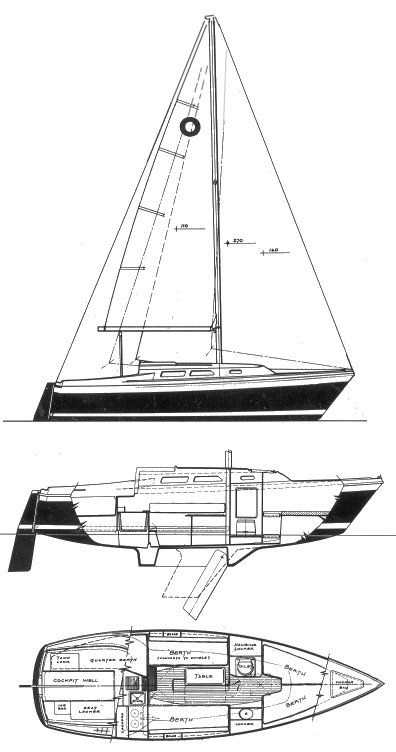
The O’Day 25 follows the proven small-cruiser recipe of its day: a hand-laid fiberglass hull with modest topsides, a masthead sloop rig and two principal underwater configurations — a pivoting centerboard in a shallow trunk or a fixed fin keel on some versions. That combination gives buyers choices: the centerboard version reduces draft for trailer launching and shallow bays but requires routine inspection of the trunk and its pivot hardware; the fixed-keel variant is simpler below and slightly more forgiving structurally. Beam (about 8′) and a waterline near 21′ deliver interior volume that feels generous for a 25-footer, while modest displacement and a healthy ballast fraction produce a stable, uncomplicated motion under sail. From a maintenance and resale perspective, the fiberglass hull ages well if kept dry and sleeker than wood or early composites, but hidden soft spots around deck fittings, chainplates or the centerboard trunk can be the long-term value killers if not addressed promptly. The relatively simple systems, transom-hung rudder (on many examples) and accessible engine arrangements favor owner-maintenance and keep professional yard time—and costs—manageable for a careful buyer.
Performance
On the water the O’Day 25 behaves like a true coastal cruiser: steady, forgiving, and not tuned for top speed. With a hull speed in the low 6-knot range and PHRF numbers typically in the low-to-mid 230s, its cruising pace is comfortable for weekends and daysails but will be outpaced by sleeker modern pocket cruisers. The centerboard model gives the owner the best of both worlds—shallower draft for gunkholing with the board up and better windward ability with it down—while the fixed-keel versions tend to feel a bit more settled upwind. The masthead sloop is simple to manage for short-handed crews, reefing is straightforward, and the boat’s motion in chop is generally described by owners as benign rather than lively. In short, expect a reliable, predictable platform: not cutting-edge performance, but confidence and ease of handling that suit coastal cruising and club racing with modest expectations.
Comfort and Accommodations
Interior packaging is one of the O’Day 25’s selling points: for a 25-foot hull the cabin feels surprisingly roomy thanks to sensible layout choices. Typical arrangements include a forward V-berth, a modest galley area near the companionway, a dinette that converts to a double berth and a small quarter berth or storage area—ample for a couple or a small family on weekend trips. Storage and headroom are constrained compared with larger cruisers, but the O’Day’s space is efficiently used and often improved by simple owner upgrades (better cushions, LED lighting, and creative locker organizers). Ventilation depends on hatches and opening ports, so summer comfort improves with extra vents or a small DC fan. The interior finishes were utilitarian to control cost, so many surviving boats show tasteful homeowner upgrades rather than factory luxury; that means buyers should expect to invest a bit of time if they want modern comforts, but the modest size also keeps refurb costs reasonable.
Safety and Practicality
Deck layout and cockpit ergonomics on the O’Day 25 are conservative and functional: a modest cockpit that seats a small crew comfortably, accessible lifelines, and a low cabin trunk that reduces windage. The centerboard option adds practicality for shallow harbors and trailer launching, though it introduces an additional inspection and maintenance point (board pivot, trunk seals). For coastal cruising and near-shore passages the boat is a good match as-built; for serious offshore work you would want to upgrade pumps, navigation electronics, and reinforce key through-deck fittings. Systems accessibility rates well for owner-mechanics—outboards are common and easy to service, wiring and plumbing runs are accessible, and the relatively simple rigging spares are widely available—so day-to-day ownership tends to be straightforward and economical.
Known Issues with the O’Day 25
Longtime owner forums and surveys point to a predictable set of age-related problems rather than a single catastrophic design fault. The common items to watch for on older O’Day 25s are deck leaks and soft core around chainplates and other deck penetrations, localized deck or bulkhead rot where water has tracked in, and wear or binding in centerboard trunks and pivots on the CB models. Owners also report the occasional survey finding of keel-bolt corrosion on boats that have spent long periods in brackish water, and like many boats of the era, electrical panels and switches may have been modernized or need attention. Typical, recommended buyer actions are practical: a targeted survey focused on chainplate foundations, centerboard trunk condition, keel bolts and through-deck bedding; replacement of storm-worn standing rigging if age-worn; and updating old wiring and navigation lights for safety and resale value. These fixes are common, well-understood and usually straightforward for experienced yard crews, but they are the most frequent reasons that asking prices vary so widely.
Market Availability and Pricing in the U.S.
The O’Day 25 is out of production and exists solely on the used market; because nearly 2,900 were built, supply is steady and local availability depends on region and season. Listings show a wide condition-driven price spread: project boats and long-neglected hulls can appear for just a few thousand dollars, while well-kept or recently refitted examples trade higher. A practical, evidence-based range for operable O’Day 25s in the U.S. is roughly $3,000–$12,000, with outliers above and below depending on refits, trailer and equipment packages, or unusual rigging. You’ll find O’Day 25s most often in the eastern seaboard states, the Great Lakes, and Florida—areas with active club fleets and trailer-friendly ramps—so geographic search will strongly affect price and condition mix. Against alternatives, the O’Day 25 generally offers very good value for buyers wanting a roomy 25-footer at a modest purchase price, though Catalinas or MacGregors may offer stronger resale liquidity (Catalina’s larger owner community) or different use cases (MacGregor’s power/sail hybrid):
| Model | LOA | Approx. years built | Typical used price (US) | Principal differences |
|---|---|---|---|---|
| O’Day 25 | ~24.8 ft | 1975–1984 | **$3,000–$12,000** | Trailerable centerboard or fixed keel options, roomy interior for the size, common and inexpensive to maintain when surveyed well. |
| Catalina 25 | ~25.0 ft | 1978–1994 | **$4,000–$18,000** | Very large production numbers, strong owner support, multiple keel options (fin, wing, swing) and many pop-top variants for extra headroom. |
| Hunter 25 | ~24.8 ft | 1972–1983 (original) | **$3,500–$18,000** | Compact, trailerable designs; earlier Marks emphasize simpler systems and a stiffer feel under sail in many owners’ experience. |
| MacGregor 26 | ~25.8 ft | 1987–2003 (various models) | **$4,000–$30,000** | Trailerable powersailer concept with water ballast and strong motoring performance; different buyer profile (shallow water, fast under power). |
O’Day 25 vs Catalina 25

The O’Day 25 and Catalina 25 are both ubiquitous 25-foot American cruisers from the late 1970s and early 1980s, but they reflect different emphases that matter to buyers. The Catalina generally pushed interior volume and owner support—many variants, pop-tops and higher production numbers mean parts, community help and used-sail availability are often easier to find—whereas the O’Day leans toward straightforward, conservative engineering with an emphasis on simple trailering and shallow-water versatility (centerboard options).
Under sail the Catalina fin-keel versions can point and drive well for the class, while the O’Day centerboard gives a tactical advantage in shoal water and trailer launching; both are modest performers compared with modern hulls, but the Catalina’s large user base tends to offer more aftermarket upgrades and documented owner fixes. Maintenance considerations are practical: Catalina owners benefit from a broad aftermarket and vendor ecosystem that can reduce downtime, while O’Day buyers often find lower purchase prices but should pay attention to chainplate bedding and centerboard trunk condition. For weekend cruising and family outings, both boats are sensible, but choose Catalina if resale liquidity and interior comfort are top priorities, and choose O’Day if shallow-water access, lower initial purchase price and a do-it-yourself approach appeal more to you.
► Learn more about de Catalina 25
O’Day 25 vs Hunter 25

Comparing O’Day 25 with Hunter 25 highlights handling and layout choices that influence typical ownership. The Hunter 25 often feels a touch stiffer under sail thanks to its ballast and keel decisions, which some sailors prefer for a predictable short-sea ride; the O’Day’s centerboard flexibility makes it better for gunkholing and launching from ramps. Internally, both boats work well for couples and small families, but layout differences mean one may feel roomier to certain buyers—the O’Day’s arrangement is efficient, while some Hunter Marks trade lower profile for different headroom and storage.
From a maintenance viewpoint, Hunters and O’Days of this vintage share common aging issues (deck fitting bedding, standing rigging, and electrical refreshes), so survey findings and condition trump model lines in purchase decisions. Practically, if you prioritize a slightly firmer sailing feel and a simple fin-keel package, Hunter appeals; if you want trailerability and shallow-draft exploration, the O’Day centerboard variant is likely the better day-to-day choice.
► Learn more about de Hunter 25
O’Day 25 vs MacGregor 26
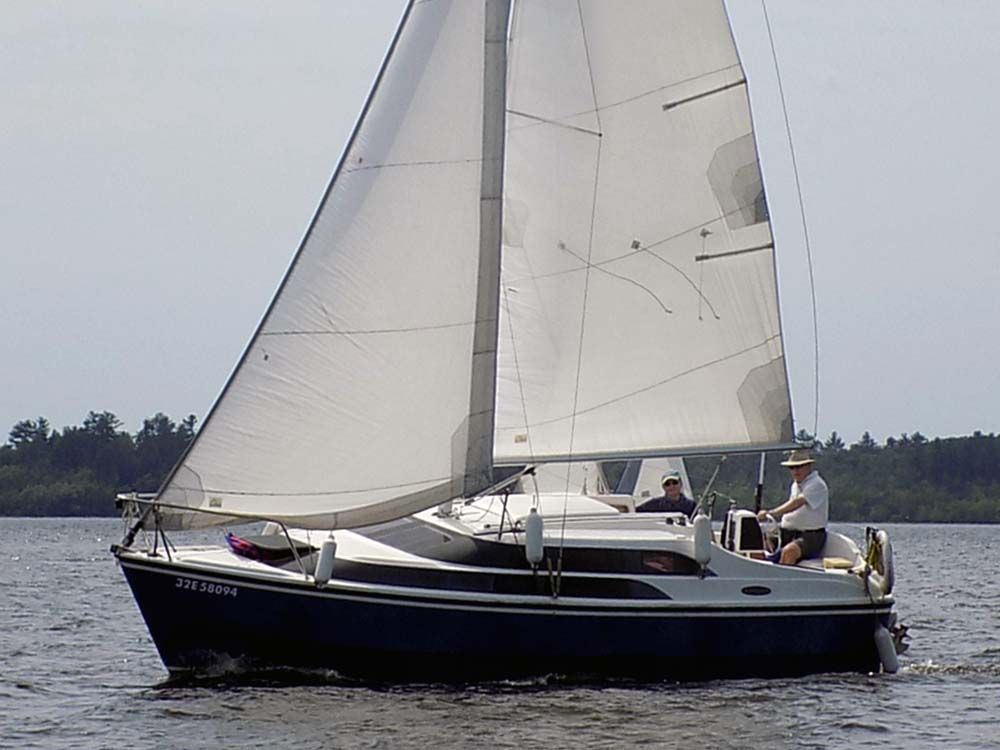
The O’Day 25 and MacGregor 26 are boats with overlapping LOA but very different mission profiles, which should steer buyer choice quickly. The MacGregor line is a powersailer/trailerable hybrid that prioritizes motoring performance, shallow-water access and flexible ballast systems (water ballast), making it attractive to owners who want weekend versatility and high-speed motoring; the O’Day is a conventional small cruiser that favors sailing qualities, simpler systems and traditional sailboat motion.
Under sail the O’Day will generally feel more solid and predictable, especially upwind, whereas the MacGregor’s water-ballast and lighter displacement often produce compromises in pointing and motion in chop but a clear advantage under power and in very shallow anchorages. Interior layouts reflect those tradeoffs: MacGregors often configure for convertible dayboat use and bulky engine wells, while the O’Day provides more of a conventional cruising cabin. Maintenance differs materially too—MacGregors require attention to water-ballast systems and drive/train integration, while the O’Day’s routine costs center on the usual aging items (deck fittings, rigging, bottom maintenance). For buyers who want a true sailing cruiser with simple upkeep and predictable resale among coastal sailors, O’Day is the safer bet; for buyers after trailerable speed under power and access to shoal areas, MacGregor is worth considering despite the different sailing compromises.
► Learn more about the MacGregor 26
Maintenance Costs of a O’Day 25 in the U.S.
- Slip / mooring (annual): $1,000–$4,000+. Marina slip costs vary widely by region—small inland harbors and seasonal moorings are toward the low end; high-demand coastal slips (New England, Florida, California) commonly exceed a few thousand dollars annually. Example municipal and private slips for 24–25 ft range from roughly $2,500–$3,900 per season in some northeast marinas.
- Insurance (annual): $200–$900. Typical small-boat sail policies fall roughly in this band depending on coverage level, navigation limits and region (Florida tends to be toward the high end).
- Engine / outboard service: $150–$800 per year. Routine tune-ups, seasonal flushing and small repairs; full outboard replacement costs substantially more.
- Bottom paint & haul-out (every 1–3 years): $700–$3,500. Costs depend on local yard rates, paint choice and prep (pressure washing vs. sanding or blasting can raise the bill significantly).
- Sails & running gear (periodic): $300–$3,500. A new cruising main or jib for a 25-ft boat can be a few hundred to a few thousand dollars depending on fabric and whether roller-furling is involved.
- Standing rigging / mast service (every 10–20 years or on survey): $600–$3,000+. Full re-rigging, toggles and mast removal/service add labor costs.
- Survey / occasional repairs / yard work: $400–$3,000 annually (averaged). Pre-purchase survey $400–$900 is a one-time cost that usually prevents bigger surprises; annual minor repairs and parts—notably bedding fittings, zincs, bilge pumps—add up.
Many O’Day 25 tasks—bedding fittings, small electrical upgrades, outboard servicing, sail maintenance—are within reach of a competent owner, which materially reduces running costs if the buyer is hands-on. Structural items (deck core repairs, major keel or centerboard trunk work, keel-bolt replacement) require professional help and can be the primary “budget shock” items on older boats. Overall the O’Day 25’s maintenance burden sits in the medium range for a 25-ft coastal cruiser: higher than a small daysailer but considerably lower than larger blue-water yachts, and its modest purchase price often makes the lifecycle ownership cost attractive when boats are bought with a good survey.
Conclusion
The O’Day 25 is a pragmatic, well-proven pocket cruiser that gives budget-minded buyers a comfortable small cabin, trailerable or shallow-draft options and a forgiving sailing experience. Its strengths are accessibility (both in purchasing price and in owner-serviceability), a roomy interior for its length, and a versatile centerboard/keel choice that suits varied sailing areas. Weaknesses are the usual suspects on older fiberglass production boats: potential deck-fitting leaks, centerboard trunk wear and aging electrical or rigging items—none fatal but worth identifying with a targeted survey. For a couple or small family looking for coastal cruising, club daysails, and a boat they can reasonably maintain themselves, the O’Day 25 is frequently worth seeking out; it tends to represent good value for coastal use and usually holds enough resale interest to justify a careful purchase. If your priority is outright speed, blue-water capability, or a fully modern systems package, look upward in size or toward newer designs; if you want an affordable, practical, sail-focused 25-footer with a large aftermarket and an active owner base, the O’Day 25 remains a solid choice.
Specifications
| Hull Type | Keel/Cbrd. |
|---|---|
| Rigging Type | Masthead Sloop |
| LOA | 24.83 ft / 7.57 m |
| LWL | 21.00 ft / 6.40 m |
| S.A. (reported) | 270.00 ft² / 25.08 m² |
| Beam | 8.00 ft / 2.44 m |
| Displacement | 4,007.00 lb / 1,818 kg |
| Ballast | 1,825.00 lb / 828 kg |
| Max Draft | 6.00 ft / 1.83 m |
| Min Draft | 2.25 ft / 0.69 m |
| Construction | FG |
| Ballast Type | Lead |
| First Built | 1975 |
| Last Built | 1984 |
| # Built | 2898 |
| Builder | O’Day Corp. (USA) |
| Designer | Hunt & Associates |
| Auxiliary Power | Outboard, 15 HP |
| S.A. / Displ. | 17.17 |
| Bal. / Displ. | 45.55 |
| Disp. / Len. | 193.16 |
| Comfort Ratio | 17.52 |
| Capsize Screening Formula | 2.02 |
| S# | 2.80 |
| Hull Speed | 6.14 kn |
| Pounds/Inch Immersion | 600.28 pounds/inch |
| I | 30.00 ft / 9.14 m |
| J | 10.60 ft / 3.23 m |
| P | 24.50 ft / 7.47 m |
| E | 9.00 ft / 2.74 m |
| S.A. Fore | 159.00 ft² / 14.77 m² |
| S.A. Main | 110.25 ft² / 10.24 m² |
| S.A. Total | 269.25 ft² / 25.01 m² |
| S.A. / Displ. (calc.) | 17.12 |
| Est. Forestay Length | 31.82 ft / 9.70 m |
| Mast Height from DWL | 33.67 ft / 10.26 m |
Disclaimer
The considerations and analyses presented regarding the O’Day 25 sailboat are of a general nature and are based on the available information and technical data on this model, interpreted to the best of our knowledge and understanding. It is important to note that the specific characteristics of any particular sailboat may vary due to custom modifications, maintenance performed, and conditions of use over time, among other factors. Therefore, the details and performance of the boat you are considering may not exactly match the information provided here.
We strongly recommend that, before making any purchasing or usage decisions, you conduct a detailed inspection of the boat in question, consult with nautical professionals and other sailors, and consider your personal needs, expectations, and capabilities. Each sailboat may have unique particularities that affect its performance and suitability for different types of sailing and sailors.
The information contained in this analysis should be used as a general guide and not as a definitive reference. Professional evaluation and personal inspection are essential to ensure that the boat meets your specific requirements and expectations.