



The Hunter 28.5 is a mid-1980s American cruiser-racer aimed at sailors who want a forgiving, relatively roomy weekend boat that will also be competitive in club racing. Designed by the Hunter design team and produced by Hunter Marine beginning in 1985, the 28.5 sits squarely in the era when builders were blending comfortable interiors with modern underbody shapes and modest performance ambitions. It was offered with a conventional fin keel or a shoal/wing-keel option and equipped from the factory with an inboard diesel and a B&R-style rig (split backstay on many boats), signaling a focus on easy sail handling for short-handed owners. On the used market the model is a steady seller among coastal cruisers and owners who want a small, liveable boat with decent sailing manners—appealing to couples, small families and club racers who value space and simplicity over outright speed.
Design and Construction
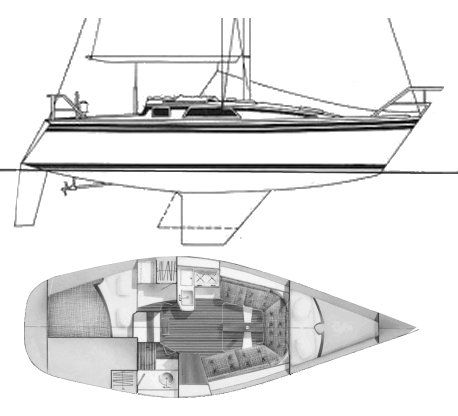
Hunter’s 28.5 combines a relatively modern fin-keel hull with an internally mounted spade rudder and a beam that’s generous for a late-1980s 28-footer; that breadth buys interior volume without making the hull sluggish. Construction is predominantly fiberglass with wood trim as was typical of the period, and the rig is a B&R-influenced masthead/near-masthead setup that keeps rigging loads manageable and allows for smaller, easier headsails. Keel choices—standard deeper fin versus optional shoal/wing—affect upwind performance and draft constraints, and buyers should match keel variant to how and where they sail (deeper keel for performance and pointing, shoal for shallow harbors). From a naval-architecture perspective the displacement and sail-area balance place the 28.5 in the cruiser/racer band: enough sail to be lively in light airs but conservative enough to remain stable and forgiving as conditions build. For prospective owners this combination means relatively straightforward maintenance (accessible engine bay, common hardware) and repairability: routine items and systems are familiar to yards and independent mechanics, which helps preserve value over time.
Performance
On paper the boat’s hull speed sits in the mid-6-knot range and real-world owners report comfortable cruise speeds that match that expectation; a well-trimmed deep-keel 28.5 will feel noticeably sharper to windward than the shoal version. PHRF examples for the deep or performance setups often cluster around the low 180s (wing/SD and local ratings vary), which places the 28.5 as competitive in club starts but not a hot-shoe racer—its strength is steady, controllable performance rather than all-out pace. In mixed conditions the boat is praised for its pointing ability and forgiving helm, though like many older hulls it is sensitive to bottom condition and prop drag—clean bottom and a well-matched prop make a real difference to acceleration and speed in light air. Compared with contemporaries the 28.5 usually outpoints many beamier coastal cruisers of the period while trading a little downwind zest for upwind manners, making it an appealing pick for sailors who prioritize weekend passages and club race circuits that favor handling and tactics over bursts of speed.
Comfort and Accommodations
The Hunter 28.5’s interior is one of its strongest selling points: a relatively beamy cabin, practical galley, dedicated nav station, an enclosed head and sensible tankage for coastal cruising — manufacturers quoted roughly 27 gallons of freshwater and a modest fuel tank, numbers that support multi-day weekends without large system upgrades. Headroom and the layout are class-leading for the length, which makes living aboard for a week or an extended weekend far more comfortable than many older 28-footers. Storage is competent for this size and the saloon converts comfortably for guests; ventilation relies on the usual mix of forehatch and opening ports and is commonly improved by owners with low-power fans and LED lighting during refits. Because the joinery tends to be basic but well-executed, cosmetic refits and modernization (cushions, headliner, electronics) deliver a high perceived value and are generally affordable compared with structural work—an important consideration for buyers who want a tidy, updated interior without a full restoration.
Safety and Practicality
Deck ergonomics are conservative and practical: non-slippery walkways, solid toerails and an accessible cockpit layout make short-handed sailing and boarding straightforward. The B&R-style rig generally reduces the size of the headsail and concentrates control on mainsheet and traveler trimming, which is an advantage for two-person crews; however owners should verify standing-rigging age and the condition of chainplates as routine survey items. Systems access (engine, steering quadrant, electrical) is adequate for owner maintenance, which keeps running costs down and makes pre-purchase checks less invasive. For true offshore work the platform would benefit from standard upgrades—storm sails, lifelines and redundancy in communications/power—but as a coastal and near-offshore cruiser the 28.5 is well within its capabilities when properly prepared.
Known Issues with the Hunter 28.5
Like many production boats of the era, the most commonly reported problems are age-related rather than fundamental design failures. Owners commonly call out sensitivity to hull fouling (a dirty bottom noticeably reduces speed and increases vibration), which makes effective antifouling and regular maintenance non-negotiable. Forum threads and owner reports also flag the usual suspects: cutlass bearing wear and prop-related vibration, deck-hardware leaks where bedding has deteriorated, and the need to inspect and possibly replace older standing rigging on a schedule. Electronics and wiring are frequently outdated on working examples and are among the first systems buyers choose to modernize; repowering or service of an original diesel is another frequent line item. Recommended improvements are pragmatic: a folding or feathering prop to reduce drag, a rig inspection or replacement depending on date and usage, and modest electronics upgrades (chartplotter, VHF/AIS) to bring the boat in line with contemporary safety and cruising expectations.
Market Availability and Pricing in the U.S.
The Hunter 28.5 is out of production and available only on the used market; listings tend to appear regionally and inventory is modest but steady. Asking prices in recent U.S. listings typically fall in the $9,000–$15,000 band for sound, cruising-ready examples, with lower numbers for project boats and higher figures for boats with recent engines, rigging, and cosmetic refits. Concentrations of inventory and buyer interest show up in the Northeast (New England, Mid-Atlantic) and the Great Lakes as well as pockets along the Atlantic seaboard; individual examples are also advertised in the Southeast and Pacific Northwest from time to time. In terms of value the 28.5 is often a good buy: it offers more interior volume than many contemporaries, decent performance for club racing, and parts/maintenance familiarity—all factors that keep resale from collapsing provided structural dryness and driveline health are documented at sale.
Below is a comparison with similar sailboats from the same era:
| Model | LOA | Era (approx.) | Typical U.S. used price | Notable differences |
|---|---|---|---|---|
| Hunter 28.5 | ~28.4 ft | 1985–1988 | $9k–$15k | Beamier, B&R-style rig, good interior volume for its length; offered with deep or shoal keels. |
| Catalina 28 (incl. MKII) | ~28.5 ft | 1991–2010 (various) | $10k–$35k (wide spread by year & condition) | Very large production run, strong owner support network; conservative handling and roomy aft cabin on later variants. |
| Beneteau First 285 | ~28.2 ft | 1985–1993 | $10k–$22k | European design (Finot) with lighter displacement and more performance bias in some versions. |
| Pearson 28-2 | ~28.5 ft | 1985–1989 | $8k–$18k | Contemporary U.S. design with balanced performance and family cruising layout; PHRF tends to be slightly quicker. |
Hunter 28.5 vs Catalina 28

The Hunter 28.5 presents a beamier, more interior-focused hull compared with the Catalina 28 line, and that extra width shows up as a noticeably roomier saloon and more commodious quarterberth situation for live-aboard comfort. Under sail, the Hunter 28.5’s B&R-influenced rig and fin-keel options allow it to point well and feel responsive to helm inputs, especially in its deeper keel form; the Catalina typically trades some pointing for a steady, predictable ride and benefits from a larger owners’ support network that makes parts and advice easy to source. When conditions say puffs and shifts, the Hunter can be slightly livelier, but a clean bottom and good sails matter more to both boats than the hull badge—both are sensitive to fouling and prop drag.
From a practical ownership view the Catalina ecosystem is a major asset: parts, aftermarket upgrades and a huge community lower friction for first-time buyers and DIY owners. The Hunter answers with better value-for-volume in many markets, letting buyers spend less on purchase price and more on sails or electronics upgrades that materially improve cruising comfort. For weekend couples who want interior space and reasonable sailing performance, Hunter is compelling; for owners who prioritize resale ease and near-universal parts availability, the Catalina’s pedigree is persuasive.
► Learn more about the Catalina 28
Hunter 28.5 vs Beneteau First 285
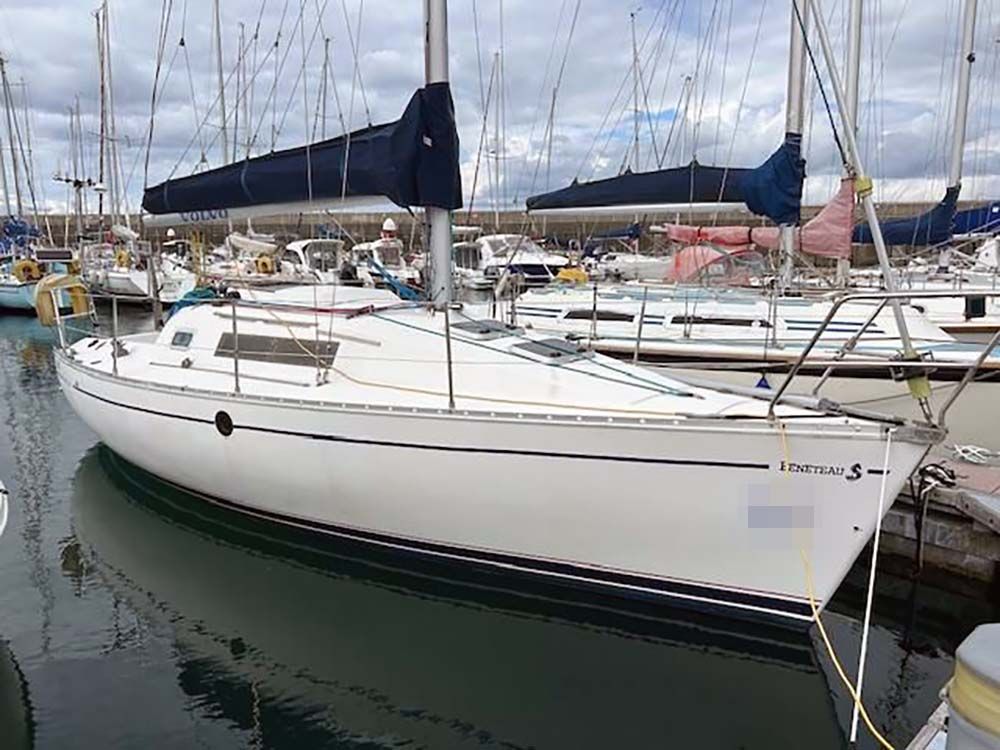
Compared with the Beneteau First 285, the Hunter 28.5 tilts toward interior volume and ease of handling, while the First 285 reveals its Finot pedigree with a somewhat lighter displacement and a slightly sharper performance edge in brisk conditions. The Beneteau’s fractional rig and finer underwater sections typically make it quicker to accelerate and a touch more sensitive to trim, rewarding crews who like to tune and chase performance. By contrast, the Hunter’s setup favors short-handed owners who want a forgiving, easy-to-manage sailplan and an interior that reads as comfortable family-cruiser rather than race-focused.
On maintenance and upgrades the Beneteau may require more attention to sail inventory to realize its potential, whereas the Hunter often gives better baseline comfort without immediate heavy investment. For an owner who wishes to mix club racing with family cruising the First 285 can be enticing if you accept a leaner interior and more active sail management; the Hunter is better for buyers who prefer lower upfront complexity and a larger living area for the same LOA.
► Learn more about the Beneteau First 285
Hunter 28.5 vs Pearson 28-2

The Pearson 28-2 is closely contemporaneous with the Hunter 28.5 and shares similar modern lines, but differences in displacement, keel configuration and finish change the ownership calculus. The Pearson often carries a reputation for slightly crisper upwind speed and a build quality that can feel a touch more conservative in structural choices, while the Hunter leans on interior volume and the benefits of a B&R-style rig for easy sail handling. In practice the Pearson may reward owners who want occasional club performance, whereas the Hunter scores on comfort per dollar and simpler short-handed operation.
When comparing interior ergonomics, both boats are competitive for couples or small families, though Pearson’s layout may feel more classically arranged while the Hunter’s beamy saloon feels roomier at anchor. Maintenance philosophies diverge only modestly—both are straightforward for competent DIY owners—but local market demand will drive resale: in racing-oriented ports the Pearson’s slightly quicker character can sell, while in family-cruising marinas the Hunter’s livability often outperforms on classifieds.
► Learn more about de Pearson 28-2
Maintenance Costs of a Hunter 28.5 in the U.S.
Below are typical ownership cost items and realistic ranges; regional variation can move these numbers substantially (New England and California marinas tend to sit at the high end; inland lakes and smaller East/ Gulf marinas are lower).
- Mooring / slip (annual): $1,000–$6,000 (low-cost club/mooring up to premium marina berths).
- Insurance (annual): $250–$700 for basic hull & liability on older 28′ boats; higher in hurricane zones or with offshore riders.
- Engine servicing (annual): $300–$700 for routine service; expect $1,000–$3,000 for major repairs or repower planning every few years.
- Antifouling & haul/launch (annual): $800–$2,000 depending on paint and yard labor; DIY can reduce costs.
- Standing rigging replacement (one-time): $2,000–$5,000 every ~10–15 years depending on scope.
- Running rigging & winch service (periodic): $300–$1,200 over a few years, depending on how much you replace.
- Sails (one-time/periodic): $2,000–$5,000 for a new cruising main and 135% headsail—many owners budget on a 7–12 year replacement cadence for active boats.
- Electronics refit (one-time): $2,000–$6,000 to modernize instruments, GPS/chartplotter, VHF/AIS and wiring cleanup.
- Miscellaneous (annual): safety gear, canvas, ground tackle, small systems work — $500–$1,500.
Sources and owner surveys suggest average annual upkeep for small cruisers typically lands in the low-to-mid thousands, and larger line items (sails, rigging, engine work) are cyclical rather than recurring every year. Many Hunter 28.5 owners perform a great deal of maintenance themselves—reducing labor costs substantially—while the more technical jobs (rig replacement, major engine work, structural repairs) often require professional yards. Taken together, ownership costs for the 28.5 are medium for the size class: neither the cheapest to run nor unusually expensive, and sensible upgrades (fresh rig, healthy diesel, decent sails) tend to preserve or improve resale value
Conclusion
The Hunter 28.5 is a pragmatic compromise: a small cruiser that sails respectably, offers a roomy interior for its length, and is straightforward to maintain. Its strengths are liveability, ease of short-handed sailing and good value on the used market; its weaknesses are the age-related maintenance items that all boats of this vintage share—rigging age, possible prop/cutlass issues, and the need to modernize electronics or systems if the previous owner deferred upgrades. For a couple or small family who want a comfortable weekend boat with occasional club racing, the 28.5 is an excellent candidate and a reasonably safe buy when a survey confirms dry structure and mechanical health. For coastal cruising it offers a very good mix of comfort and capability; as a long-term offshore platform it would require targeted upgrades but remains capable in competent hands. If your priorities are interior comfort, manageable systems and decent all-around sailing, the Hunter 28.5 is worth seeking out—and when bought wisely and maintained, it holds value well within its niche.
Specifications
| Hull Type | Fin w/spade rudder |
| Rigging Type | B&R |
| LOA | 28.42 ft / 8.66 m |
| LWL | 23.75 ft / 7.24 m |
| S.A. (reported) | 398.00 ft² / 36.98 m² |
| Beam | 10.50 ft / 3.20 m |
| Displacement | 7,000 lb / 3,175 kg |
| Ballast | 3,000 lb / 1,361 kg |
| Max Draft | 5.18 ft / 1.58 m |
| Construction | Fiberglass (FG) |
| First Built | 1985 |
| Last Built | 1988 |
| Builder | Hunter Marine (USA) |
| Designer | Hunter Design |
Auxiliary Power / Tanks (original) | |
|---|---|
| Type | Diesel |
| Fuel | 11 gals / 42 L |
Accommodations | |
| Water | 27 gals / 102 L |
Sailboat Calculations | |
| S.A. / Displ. | 17.46 |
| Bal. / Displ. | 42.86 |
| Disp. / Len. | 233.27 |
| Comfort Ratio | 18.77 |
| Capsize Screening Formula | 2.20 |
| S# | 2.38 |
| Hull Speed | 6.53 kn |
| Pounds/Inch Immersion | 891.04 pounds/inch |
Rig and Sail Particulars | |
| I | 37.33 ft / 11.38 m |
| J | 12.08 ft / 3.68 m |
| P | 31.75 ft / 9.68 m |
| E | 10.83 ft / 3.30 m |
| S.A. Fore | 225.47 ft² / 20.95 m² |
| S.A. Main | 171.93 ft² / 15.97 m² |
| S.A. Total (100% Fore + Main) | 397.40 ft² / 36.92 m² |
| S.A./Displ. (calc.) | 17.43 |
| Est. Forestay Length | 39.24 ft / 11.96 m |
| Mast Height from DWL | 41.25 ft / 12.57 m |
Disclaimer
The considerations and analyses presented regarding the Hunter 28.5 sailboat are of a general nature and are based on the available information and technical data on this model, interpreted to the best of our knowledge and understanding. It is important to note that the specific characteristics of any particular sailboat may vary due to custom modifications, maintenance performed, and conditions of use over time, among other factors. Therefore, the details and performance of the boat you are considering may not exactly match the information provided here.
We strongly recommend that, before making any purchasing or usage decisions, you conduct a detailed inspection of the boat in question, consult with nautical professionals and other sailors, and consider your personal needs, expectations, and capabilities. Each sailboat may have unique particularities that affect its performance and suitability for different types of sailing and sailors.
The information contained in this analysis should be used as a general guide and not as a definitive reference. Professional evaluation and personal inspection are essential to ensure that the boat meets your specific requirements and expectations.