


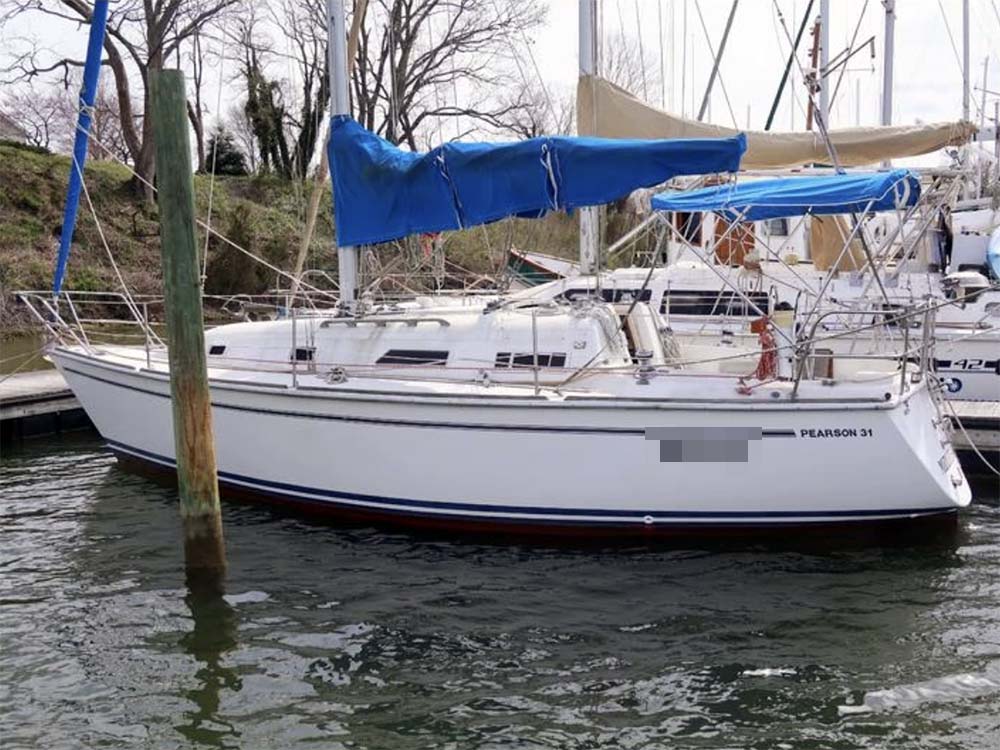
The Pearson 31-2 is a late-1980s compact cruiser that was conceived as a capable coastal passagemaker with a hint of club-racer heritage — a practical design for sailors who wanted reasonable performance without sacrificing interior comfort. Designed by William “Bill” Shaw and produced during Pearson’s late-80s run (roughly 1987–1991 in its main series), the 31-2 followed the company’s tradition of building solid, user-friendly fiberglass boats for American cruisers and club racers alike. The target owner was a couple or small family who wanted a forgiving, easily handled boat for weekend cruising and occasional longer trips; as a result the model has maintained modest but steady demand on the used market where buyers prize good construction, straightforward systems, and roomy accommodations for the length.
Design and Construction
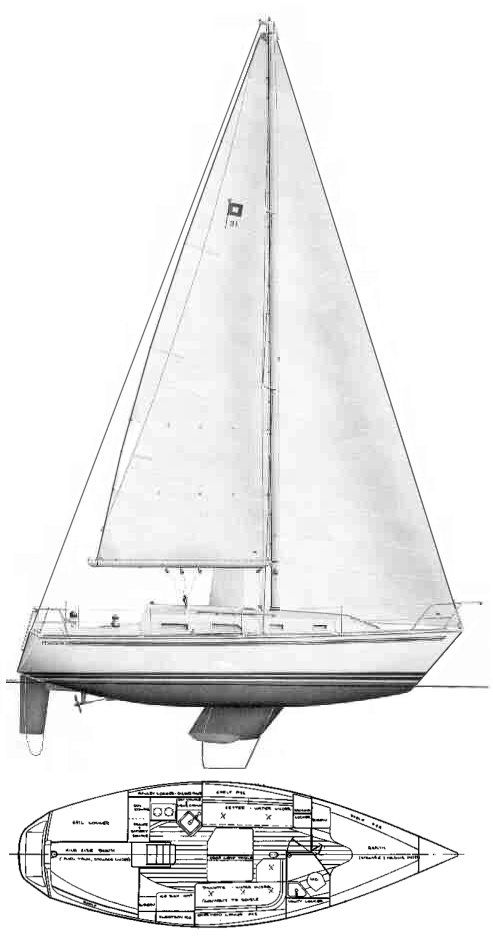
The Pearson 31-2 uses a contemporary late-80s hull shape by Shaw — moderate beam, relatively long waterline for the length, and a choice of deep elliptical fin or shoal/wing keel — paired with a conventional spade rudder. Construction follows standard production practice of the era: hand-laid or chopper-gun fiberglass hull with molded deck and interior joinery suited to volume production; keel attachment, chainplate backing and through-deck hardware are all places a surveyor will pay attention to on an older example. Those design choices translate into tangible owner benefits: the hull proportions preserve interior volume (saloon and quarterberth space are generous for a 31-footer), the keel options make the boat adaptable to inshore shoal areas or deeper-water cruising, and the production construction makes repairs and part replacement broadly straightforward at U.S. yards. In short, the 31-2 balances durability and serviceability with a hull form that aimed to give everyday sailors usable speed without complex systems to maintain.
Performance
On the water the Pearson 31-2 sits in the sweet spot between comfortable cruising speed and respectable club performance. With a hull speed in the mid-6 knot range and an SA/D in the high teens, owners report a boat that accelerates cleanly in moderate breeze, points reasonably well and tracks steadily when reefed; PHRF numbers recorded in databases place it comfortably in the cruiser/racer bracket rather than among pure racers. The deeper fin keel versions show better upwind bite and reduced leeway, while the wing/shoal options are a worthwhile trade-off for owners wanting more anchorages and trailer-towable draft — but expect a small loss of pointing ability with the shallower keel. Overall, the 31-2’s reputation among owners is of a reliable, sea-kindly coastal cruiser that can keep up in club races but rewards prudent sail trim and reefing for comfort in heavier conditions.
Comfort and Accommodations
Below decks the Pearson 31-2 leverages its beam and waterline to offer a roomy saloon, a practical galley and a substantial quarterberth — features that made it attractive to families who wanted weekend comfort without stepping up to a 34–36-footer. Storerooms and lockers tend to be well-proportioned for provisioning, and the original layouts often include a proper chart table and a head with shower — elements that make short liveaboard stints perfectly feasible for couples. Because the boat was built to production standards with conventional joinery, interior refits (new upholstery, upgraded refrigeration, electronics) are common and straightforward; many used examples show modest cosmetic upgrades rather than major structural work, which keeps refit bills reasonable for buyers. For extended full-time liveaboard use the tankage and systems of stock boats may feel limited, but for weekenders and seasonal cruisers the 31-2 is unusually comfortable for its length..
Safety and Practicality
Deck ergonomics and cockpit layout on the 31-2 favor practical cruising: a secure cockpit with good coaming, sensible handholds and primary controls that can be led aft for short-handed sailing. The structural design and ballast ratios give the boat a stable feel in a seaway when appropriately reefed, and the keel variations permit owners to choose the draft that best matches their cruising grounds — further enhancing practicality for coastal cruising. Systems are conventional (inboard diesel, through-hulls, accessible engine under the companionway) and thus accessible for survey and routine maintenance; this reduces surprises at pre-purchase inspection and simplifies owner maintenance. While the 31-2 is not a blue-water thoroughbred, fitted and equipped sensibly it is easily capable of offshore passages in competent hands, and its strengths are most clearly realized on coastal passages and weekend to week-long cruises.
Known Issues with the Pearson 31-2
Nothing in owner forums or broker reports suggests systemic, model-specific structural failure — rather, the recurring issues are the familiar aging-boat items that buyers must inspect. Common items flagged in owner threads and listings include deck-fitting bedding failures around chainplates and cabin-top hardware, the need to inspect and possibly service keel bolts and the hull/keel joint on older boats, and routine standing-rigging replacement on age-based schedules. Some owners note cosmetic aging (soft-trim, dated cabinetry) and the occasional soft deck/core repair where water ingress was neglected — problems that are repairable but add cost if discovered late. Recommended pre-purchase checks therefore focus on keel-bolt integrity, chainplate and backing inspection, rigging age and engine hours/service history; common buyer upgrades include modern navigation electronics, sail refreshes and targeted cosmetic refits to improve comfort and resale appeal.
Market Availability and Pricing in the U.S.
The Pearson 31-2 is out of production and circulates on the resale market; availability tends to be steady but regional, with more examples listed in traditional sailing areas (New England, Chesapeake Bay, Great Lakes and parts of Florida). Asking prices vary widely with condition, engine, rig and equipment, but recent U.S. listings and broker records suggest a practical range of roughly $12,000–$35,000 for market examples in typical condition — tidy, well-equipped boats appear toward the top of that band while project boats trade at the lower end. That spread reflects typical variables (keel type, refit history, electronics, sails, standing rigging) and mirrors pricing for comparable late-80s 30–32-ft production cruisers. For buyers who value interior space and a solid pedigree, the 31-2 frequently represents good value and reasonably steady resale demand within owner-for-owner sales and broker circles.
Below is a comparison with similar sailboats from the same era:
| Model | LOA | Approx. years | Typical used price (US) | Main differences |
|---|---|---|---|---|
| Pearson 31-2 | ~31.0 ft | 1987–1991 | $12,000–$35,000 | Bill Shaw hull, fin or wing keel options; roomy interior for length; cruiser/racer balance. |
| Catalina 30 | ~29.9 ft | 1974–2008 (various marks) | $8,000–$30,000 | Very large owner base, simple systems, broad parts availability, mainstream U.S. cruiser. |
| Hunter 30 (classic) | ~30.0 ft | 1970s–1990s (variants) | $6,000–$28,000 | U.S. production cruiser with varied rigs and a reputation for roomy layouts at modest cost. |
| Beneteau First 305 | ~30.5 ft | Mid-1980s | $12,000–$30,000 | Racer-cruiser bias, lighter displacement and more performance-oriented deckgear and sailplan. |
Pearson 31-2 vs Catalina 30

The Pearson 31-2 and the Catalina 30 both target families and coastal cruisers, but they emphasize different trade-offs: the Pearson leans on a slightly more modern Shaw hull form with optional fin or wing keel choices that favor interior volume and a balanced helm, while the Catalina’s decades of production emphasize simplicity, parts availability and a proven commodity-market appeal. Buyers will notice the 31-2 feels a touch tighter to the wind and a bit more “engineered” in hull shape, while the Catalina often wins on easy domestic servicing and a larger resale audience.
From an ownership perspective the Catalina can be the lower-hassle pick (cheap parts, large user base), whereas the Pearson rewards buyers who prioritize a slightly newer hull design and better interior ergonomics at the same length — a practical choice for those who plan modest refits and want comfortable weekend cruising.
► Learn more about de Catalina 30
Pearson 31-2 vs Hunter 30 (Classic)

Compared to classic Hunter 30 variants, the Pearson 31-2 generally presents a more contemporary hull section and somewhat higher motion-comfort figures, translating to a roomier saloon and a steadier feel in short chop. Hunters of the same era often carry heavier displacement and simpler rigging choices that appeal to owners wanting an easy, workmanlike boat; the 31-2 trades some of that straightforwardness for improved interior ergonomics and slightly sharper lines.
Practically, a buyer who wants rugged simplicity and the widest after-market support might favor a Hunter; a buyer who values interior volume, a modern underwater profile and a marginal edge in upwind capability for coastal passages will appreciate the Pearson.
► Learn more about de Hunter 30
Pearson 31-2 vs Beneteau First 305
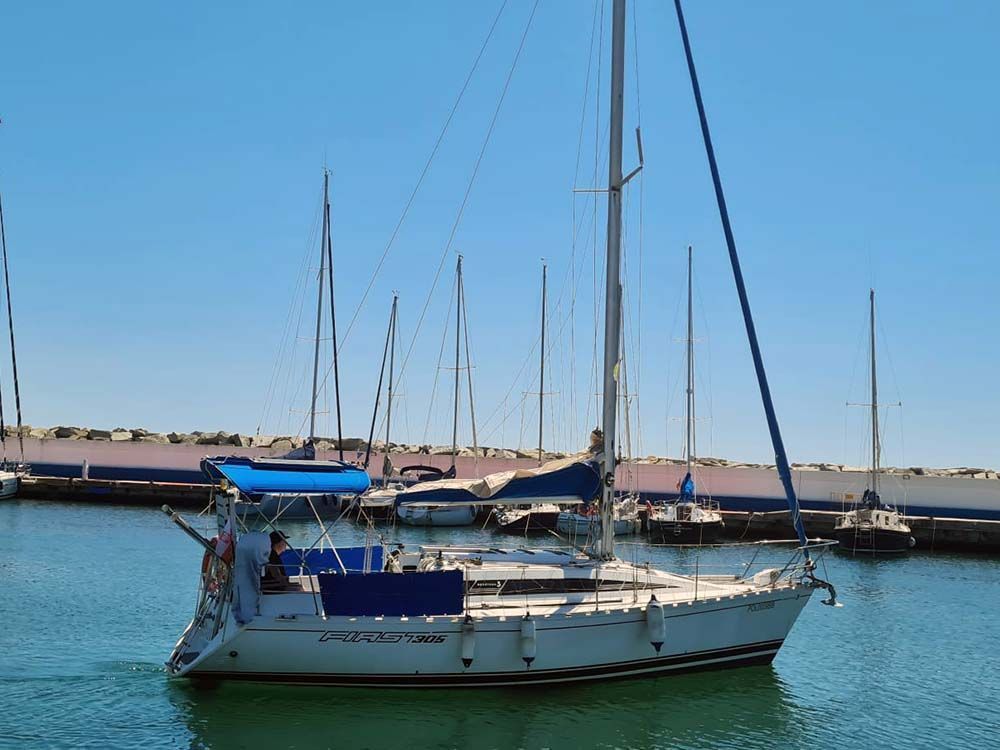
The Beneteau First 305 is the performance-leaning counterpoint to the Pearson 31-2’s cruiser-balanced design: Beneteau’s First line emphasizes lighter displacement, sportier sailplans and deck layouts tuned for quicker handling and racing-adjacent performance. In contrast, the Pearson favors comfort, tankage and a more forgiving helm for family cruising; the First 305 will typically accelerate quicker, point a touch higher and attract owners interested in club competition.
Consequently, maintenance and outfitting choices diverge: owners of a First 305 often prioritize sails and deck gear for performance, while Pearson owners more commonly spend on interior comforts, systems reliability and keel/keel-joint care — each matching a different owner profile and practical use case.
► Learn more about de Beneteau First 305
Maintenance Costs of a Pearson 31-2 in the U.S.
Below are practical cost ranges and notes to budget realistically (ranges reflect regional differences — New England and California on the high end, Southeast/Gulf generally lower). Use these as planning estimates, not hard quotes.
- Mooring / Slip / Storage: seasonal slips and winter haul/yard storage vary widely — $1,000–$10,000/year depending on location and whether you keep the boat in a marina or on a mooring.
- Insurance: typical hull/liability for a 31-ft cruiser runs $400–$1,500/year, higher in hurricane zones or with higher agreed value.
- Engine servicing (inboard diesel): annual service, impeller, filters and belts commonly $400–$1,200/year; overhaul or transmission work is extra.
- Antifouling / haul-out / bottom paint: a professional haul, prep and two-coat antifoul job often sits in the $600–$4,000 range depending on yard rates and prep scope.
- Standing & running rigging: routine inspections annually; partial running-rig refreshes are modest, full standing-rig replacement ranges $1,500–$6,000 depending on materials and labor.
- Sails: mains + working headsail replacements for a 30-ft cruiser typically $2,000–$8,000 depending on cloth and loft; plan staged replacements.
- Hull/keel/structural checks: occasional keel-bolt and hull/keel joint inspections/repairs can run $500–$5,000+ if work is required.
- Electronics / batteries: modernizing chartplotter/AIS/VHF and replacing batteries can be $500–$5,000 depending on ambition.
- Miscellaneous consumables (zincs, hoses, seacocks, minor rigging): $300–$1,500/year typical.
Major one-time events to budget for include sail inventory replacement, a standing-rig replacement, serious keel/hull joint work, or a major engine overhaul — any of which can run several thousand dollars. Many owners with mechanical aptitude can perform routine tasks (zincs, simple electrical swaps, basic varnish/upholstery) to reduce costs; structural, keel and major rigging or engine work generally requires professional services, which is the key driver of regional cost variation. Overall, owning a 31-ft production cruiser like the Pearson 31-2 usually sits in the medium range of annual costs for its size — neither bargain-basement cheap nor as expensive as larger offshore yachts — and a well-maintained boat typically holds resale value well enough to justify sensible upkeep.
Conclusion
The Pearson 31-2 is a thoughtful, late-80s family cruiser that blends Shaw’s sensible hull design with practical, roomy accommodations — a package that makes it an attractive buy for coastal cruisers who want good interior volume and reliable handling without chasing top-end performance. Its strengths are comfortable onboard ergonomics, multiple keel options that match local cruising grounds, and a conservative construction approach that repair yards understand well. Its compromises are the routine age-related items any buyer of a thirty-plus-year-old production boat must expect (deck bedding, keel/joint attention, periodic rigging and sail refreshes), and the fact that the model occupies a steady but specialized resale niche rather than mass-market liquidity. For a buyer seeking a capable, comfortable coastal cruiser with manageable upkeep and a strong pedigree, the Pearson 31-2 is worth pursuing — insist on a focused pre-purchase survey (keel bolts, chainplates, rigging, engine) and budget for modest upgrades to electronics and sails, and you’ll likely find a boat that delivers dependable cruising and good value.
Specifications
| Hull Type | Fin w/spade rudder |
|---|---|
| Rigging Type | Masthead Sloop |
| LOA | 30.67 ft / 9.35 m |
| LWL | 25.42 ft / 7.75 m |
| S.A. (reported) | 493.00 ft² / 45.80 m² |
| Beam | 10.67 ft / 3.25 m |
| Displacement | 10,000.00 lb / 4,536 kg |
| Ballast | 3,800.00 lb / 1,724 kg |
| Max Draft | 5.80 ft / 1.77 m |
| Construction | FG |
| Ballast Type | Lead |
| First Built | 1987 |
| Last Built | 1991 |
| Builder | Pearson Yachts (USA) |
| Designer | William Shaw / W. G. Richards |
Auxiliary Power/Tanks (orig. equip.) | |
| Make | Yanmar |
| Model | 2GM |
| Type | Diesel |
| HP | 18 |
| Fuel | 18 gals / 68 L |
Accommodations | |
| Water | 40 gals / 151 L |
Sailboat Calculations | |
| S.A. / Displ. | 17.05 |
| Bal. / Displ. | 38.00 |
| Disp. / Len. | 271.78 |
| Comfort Ratio | 24.45 |
| Capsize Screening Formula | 1.98 |
| S# | 1.98 |
| Hull Speed | 6.76 kn |
| Pounds/Inch Immersion | 969.14 pounds/inch |
Rig and Sail Particulars | |
| I | 42.50 ft / 12.95 m |
| J | 12.80 ft / 3.90 m |
| P | 36.80 ft / 11.22 m |
| E | 12.00 ft / 3.66 m |
| S.A. Fore | 272.00 ft² / 25.27 m² |
| S.A. Main | 220.80 ft² / 20.51 m² |
| S.A. Total (100% Fore + Main Triangles) | 492.80 ft² / 45.78 m² |
| S.A./Displ. (calc.) | 17.04 |
| Est. Forestay Length | 44.39 ft / 13.53 m |
| Mast Height from DWL | 46.33 ft / 14.12 m |
Disclaimer
The considerations and analyses presented regarding the Pearson 31-2 sailboat are of a general nature and are based on the available information and technical data on this model, interpreted to the best of our knowledge and understanding. It is important to note that the specific characteristics of any particular sailboat may vary due to custom modifications, maintenance performed, and conditions of use over time, among other factors. Therefore, the details and performance of the boat you are considering may not exactly match the information provided here.
We strongly recommend that, before making any purchasing or usage decisions, you conduct a detailed inspection of the boat in question, consult with nautical professionals and other sailors, and consider your personal needs, expectations, and capabilities. Each sailboat may have unique particularities that affect its performance and suitability for different types of sailing and sailors.
The information contained in this analysis should be used as a general guide and not as a definitive reference. Professional evaluation and personal inspection are essential to ensure that the boat meets your specific requirements and expectations.