


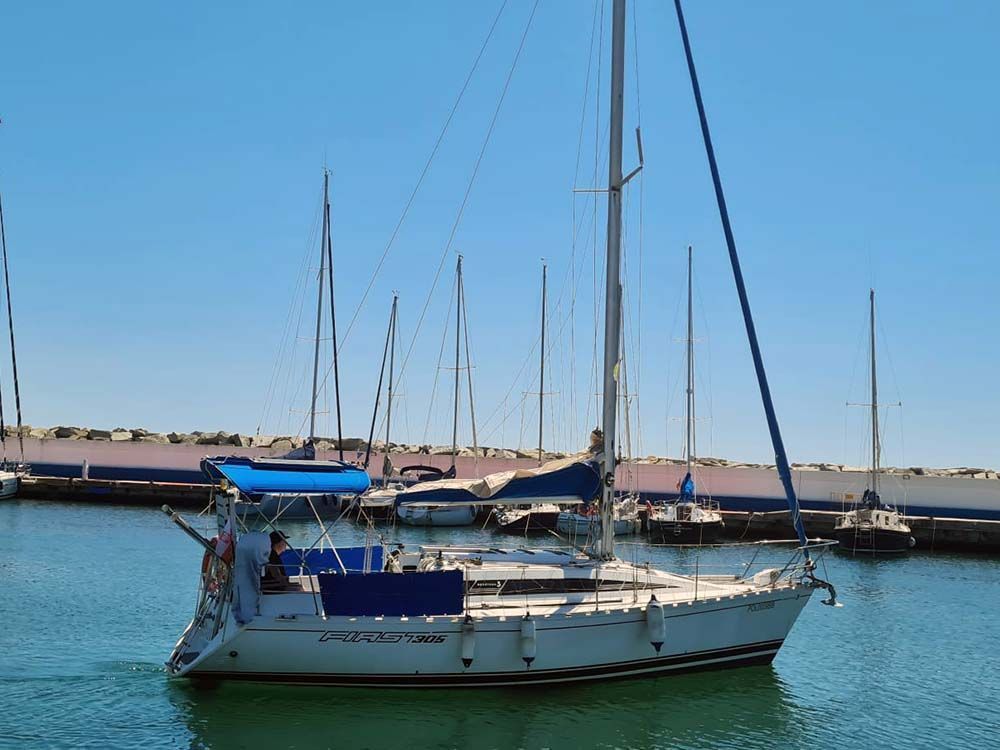
The Beneteau First 305 is a 30-foot sailboat launched in the mid-1980s by the French shipyard Beneteau, designed by Jean Berret. Conceived as a performance cruiser, it bridges the gap between competitive club racing and comfortable family cruising—a hallmark of the First series during that era. Its design responds to sailors seeking a versatile platform: nimble enough for regattas, yet forgiving and well-appointed for coastal cruising. Over the years, it has gained a steady following in the second-hand market, appealing to private owners and sailing schools alike. While not as common in charter fleets today, demand remains healthy among those looking for a well-built, all-arounder from a respected brand.
Design and Construction
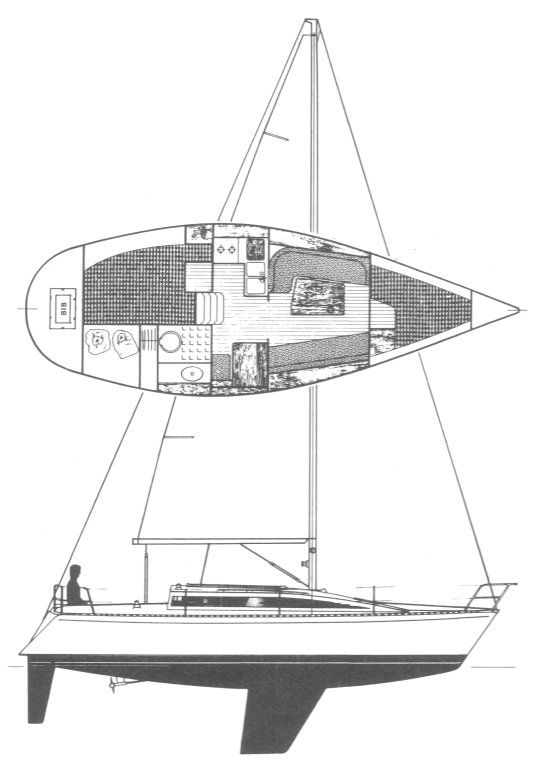
The First 305 features a moderate-displacement fiberglass hull with a fin keel and spade rudder, reflecting 1980s European performance design trends. The fin keel, often available in deep or shoal draft options, offers good lift and upwind performance, while the balanced spade rudder ensures responsive helm feedback. Its fractional sloop rig provides efficient sail control, particularly in variable coastal conditions.
Fiberglass layup was robust for its time, contributing to the boat’s longevity, and most interior structures are part of the molded liner, enhancing rigidity. This integrated approach reduces creaks and flexing but can make some structural repairs more complex. From a naval architecture standpoint, the design achieves a balanced compromise between sail-carrying power and form stability, resulting in predictable handling. Long-term, owners benefit from a boat that resists torsional fatigue, with maintenance largely focused on deck fittings and hardware rather than the hull itself.
Performance
Under sail, the First 305 performs well across a range of wind strengths. In light airs, the fractional rig and relatively generous sail area help maintain momentum. In moderate breezes, the boat’s balance shines, delivering crisp tacking and solid pointing ability. In heavier weather and formed seas, the fine entry and moderate freeboard help cut through waves without excessive pounding. Compared with similar 30-footers of its time, it offers better upwind performance and a livelier helm feel than heavier cruising designs like the Catalina 30, while remaining more forgiving than pure racer-cruisers. Its stability, aided by ballast ratio and hull form, makes it a dependable platform for weekend or week-long passages.
Comfort and Accommodations
Below deck, the First 305 offers a two-cabin layout with a forward V-berth, an aft double cabin, a main saloon with convertible seating, a compact galley, and a head to port. Ventilation is good thanks to opening ports and a foredeck hatch. Storage is adequate for coastal cruising, with lockers thoughtfully placed for easy access. Ergonomics in the galley and navigation area are well considered for a boat of its size. While comfortable for a couple or small family, extended living aboard is possible but tight by modern standards. Interiors, finished in teak veneer, age gracefully when maintained; however, on the used market, many examples show partial refits with updated upholstery or added LED lighting to refresh the feel.
Safety and Practicality
On deck, the side decks are reasonably wide for a 30-footer, with shrouds set inboard to facilitate movement forward. The cockpit is secure and allows comfortable steering from the tiller, even in rough conditions. Lifeline height and stanchion placement meet coastal cruising expectations, though offshore safety upgrades—such as jacklines and upgraded non-skid—are advisable for bluewater passages. Systems access is straightforward, especially for the engine beneath the companionway steps. Single- or short-handed sailing is realistic thanks to the fractional rig, well-placed winches, and manageable sail sizes.
Known Issues with Beneteau First 305
Commonly reported issues include:
- Electronics obsolescence, as original installations are now outdated.
Popular upgrades include feathering or folding props for reduced drag, upgraded navigation electronics, and reinforced chainplate areas. Owners also frequently install lazy jacks or a stack pack for easier mainsail handling. - Osmosis on older hulls if not previously treated.
- Engine wear on original Volvo Penta or Yanmar units, especially in boats with high engine hours from training or charter use.
- Deck hardware leaks, particularly around stanchions and chainplates, due to aging sealant.
Market Availability and Pricing in the U.S.
The Beneteau First 305 is no longer in production and is only available on the second-hand market. Built between the mid-1980s and early 1990s, it remains a recognizable model in the “First” series, blending cruising amenities with a performance-oriented hull. In the United States, these boats are most commonly found in New England and the Mid-Atlantic, where French imports and performance cruisers were popular during the 1980s, though listings also appear in Florida and on the West Coast. Condition varies significantly: some examples are well-maintained by private owners, while others show signs of deferred upkeep, with occasional restorations reflecting upgraded rigs and electronics. Ex-charter units are uncommon compared to larger Beneteau models.
On the used market, asking prices in the U.S. typically range between $25,000 and $40,000, depending on condition, upgrades, and location. This positions the First 305 competitively against comparable cruisers from Catalina, Hunter, and Jeanneau of the same era. It offers good value for sailors seeking a balance between performance and cruising comfort, though resale demand is somewhat niche: its European pedigree attracts knowledgeable buyers but makes it slightly less mainstream than domestic Catalina or Hunter models.
Below is a comparison with similar 1980s-era coastal cruisers.
| Model | LOA | Years Built | Typical U.S. Price | Key Differences |
|---|---|---|---|---|
| Catalina 30 | 29.9 ft | 1975–2000 | $18,000–$35,000 | More spacious interior, less performance-oriented, abundant on the U.S. market. |
| Hunter 31 (1983) | 31 ft | 1983–1987 | $20,000–$32,000 | Simpler rig and layout, popular as an affordable coastal cruiser. |
| Jeanneau Sun Dream 28 | 28.7 ft | 1984–1990 | $22,000–$35,000 | Compact cruiser with similar European styling, slightly smaller and lighter. |
Beneteau First 305 vs Catalina 30

The Catalina 30 offers more volume and headroom, with an interior layout aimed at families seeking weekend comfort. In contrast, the First 305 was designed with performance in mind, featuring a slimmer hull and deeper keel options, which make it livelier under sail but slightly less forgiving in heavy seas. Buyers looking for interior comfort and a strong resale market may lean toward the Catalina, while those prioritizing sailing feel and responsiveness will appreciate the First 305.
From a maintenance perspective, Catalina parts are abundant in the U.S., making ownership easier and cheaper. The First 305 may require sourcing European components or adapting equivalents, which can add complexity. However, its stronger build quality and more modern lines appeal to buyers willing to trade accessibility for sailing performance.
► Learn more about de Catalina 30
Beneteau First 305 vs Hunter 31

The Hunter 31 of the same era is a practical and affordable choice for coastal cruising, with a simple rig and easy handling that appeals to newer sailors. The First 305, by contrast, feels sportier, with better upwind ability and stronger offshore capability thanks to its performance heritage. Comfort-wise, the Hunter emphasizes open spaces and straightforward systems, while the Beneteau’s design reflects a balance between compact cruising and club racing.
For ongoing ownership, the Hunter tends to have lower maintenance costs due to widely available parts and straightforward systems. The First 305, while slightly more expensive to maintain, retains value with sailors who appreciate its balance of cruising and performance. This distinction makes the Hunter a “budget-friendly family cruiser” and the Beneteau a “sailor’s boat” within the same length bracket.
► Learn more about de Hunter 31
Beneteau First 305 vs Jeanneau Sun Dream 28

The Jeanneau Sun Dream 28 and the First 305 share a European design ethos, but they occupy different niches. The Sun Dream is compact and lighter, favoring easy handling and coastal hops, while the First 305 stretches into a more capable dual-purpose platform, suitable for longer passages or performance-minded cruising. Owners often highlight the First 305’s stronger offshore potential, while the Jeanneau is praised for agility and low operating costs.
Interior space is another differentiator: the Sun Dream offers good ergonomics for its size, but the First 305’s layout is more refined for extended cruising. In terms of resale, the Sun Dream appeals to entry-level buyers looking for an affordable step into European sailboats, whereas the First 305 attracts sailors who prioritize durability and performance, even at a slightly higher price point.
► Learn more about de Jeanneau Sun Dream 28
Maintenance Costs of a Beneteau First 305 in the U.S.
Annual ownership expenses for a First 305 in the U.S. typically fall in the mid-range for a 30-foot performance cruiser. Costs vary depending on whether the boat is kept in high-cost regions like New England or California, or lower-cost areas like the Gulf Coast.
- Mooring/Slip Fees: $3,000–$7,000 annually, higher in metropolitan marinas.
- Insurance: $800–$1,500 per year depending on coverage and region.
- Engine Servicing: $600–$1,200 annually for a small diesel.
- Antifouling Paint: $1,200–$2,500 depending on haul-out and paint choice.
- Standing Rigging Inspection/Replacement: $2,000–$4,500 every 10–12 years.
- Running Rigging: $500–$1,000 every few years depending on use.
- Sails: Replacement sets cost $4,000–$6,500, with cruising sails lasting 8–12 years.
Significant one-time expenses often include electronics upgrades ($3,000–$8,000), interior refits, or keel bolt inspections. The First 305 can be partially owner-maintained, particularly for cosmetic and routine tasks, though professional services are recommended for rigging and engine work.
Overall, maintenance costs are medium within its size class. While not as inexpensive to own as a Hunter or Catalina of the same era, the First 305 compensates with solid build quality, attractive sailing performance, and a resale market that, while narrower, remains stable among performance-oriented buyers.
Conclusion
The Beneteau First 305 delivers a rare balance between performance and cruising comfort in the 30-foot range. Its strengths lie in its responsive sailing characteristics, solid build quality, and enduring design appeal. On the downside, prospective buyers should budget for upgrades typical of a 35–40-year-old boat and pay close attention to hull and deck integrity. For sailors seeking a versatile coastal cruiser with a touch of racing pedigree—and who appreciate the feel of a lively tiller—the First 305 remains an underrated choice. With stable resale value and a well-earned reputation, it is a model worth considering for those who want both sailing enjoyment and practical cruising capability.
Specifications
| Hull Type | Fin w/spade rudder |
|---|---|
| Rigging Type | Masthead Sloop |
| LOA | 30.50 ft / 9.30 m |
| LWL | 26.75 ft / 8.15 m |
| S.A. (reported) | 410.00 ft² / 38.09 m² |
| Beam | 10.50 ft / 3.20 m |
| Displacement | 8,242.00 lb / 3,739 kg |
| Ballast | 2,976.00 lb / 1,350 kg |
| Max Draft | 5.58 ft / 1.70 m |
| Construction | FG |
| First Built | 1985 |
| Builder | Beneteau |
| Designer | Jean Berret |
| Make | Volvo |
| Model | 2002 |
| Type | Diesel |
| Fuel | 9 gals / 34 L |
| Water | 30 gals / 114 L |
| S.A. / Displ. | 16.13 |
| Bal. / Displ. | 36.11 |
| Disp: / Len | 192.23 |
| Comfort Ratio | 19.94 |
| Capsize Screening Formula | 2.08 |
| S# | 2.69 |
| Hull Speed | 6.93 kn |
| Pounds/Inch Immersion | 1,003.60 pounds/inch |
| I | 39.33 ft / 11.99 m |
| J | 11.38 ft / 3.47 m |
| P | 33.58 ft / 10.24 m |
| E | 11.08 ft / 3.38 m |
| S.A. Fore | 223.79 ft² / 20.79 m² |
| S.A. Main | 186.03 ft² / 17.28 m² |
| S.A. Total (100% Fore + Main Triangles) | 409.82 ft² / 38.07 m² |
| S.A./Displ. (calc.) | 16.12 |
| Est. Forestay Length | 40.94 ft / 12.48 m |
Disclaimer
The considerations and analyses presented regarding the Beneteau First 305 sailboat are of a general nature and are based on the available information and technical data on this model, interpreted to the best of our knowledge and understanding. It is important to note that the specific characteristics of any particular sailboat may vary due to custom modifications, maintenance performed, and conditions of use over time, among other factors. Therefore, the details and performance of the boat you are considering may not exactly match the information provided here.
We strongly recommend that, before making any purchasing or usage decisions, you conduct a detailed inspection of the boat in question, consult with nautical professionals and other sailors, and consider your personal needs, expectations, and capabilities. Each sailboat may have unique particularities that affect its performance and suitability for different types of sailing and sailors.
The information contained in this analysis should be used as a general guide and not as a definitive reference. Professional evaluation and personal inspection are essential to ensure that the boat meets your specific requirements and expectations.