



The Catalina 315 arrived as Catalina Yachts’ answer to owners who wanted a modern, easy-to-handle pocket cruiser with larger-boat fit-and-finish. Conceived in the early 2010s and launched into the marketplace around 2012, the design by Gerry Douglas follows the company’s 5-Series thinking: robust structure, a low-profile cabinhouse for reduced windage and a comfortable, teak-trimmed interior aimed at cruising couples and small families rather than pure racers. From its debut the model earned industry attention (Cruising World named it Best Inshore Cruiser), and today you see it most often marketed to coastal cruisers and private owners looking for a well-appointed 31–33-foot boat; it also appears in the brokerage market for training fleets and occasional charter inventory but primarily remains a private-owner cruiser.
Design and Construction
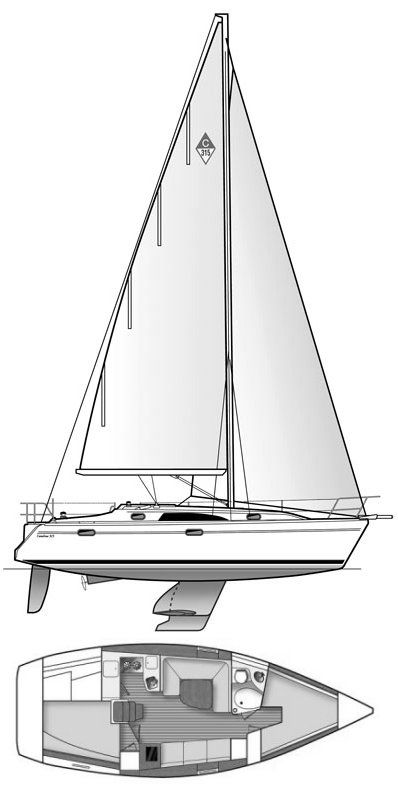
The 315 is built around a fiberglass hull with modern engineering details carried over from Catalina’s larger 5-Series: a lead-ballast fin or optional wing keel, a spade rudder (DeepDefense® rudder concept) and a deck-stepped mast supported by Catalina’s reinforced mast-step system. Beam is carried aft for volume and form stability (Catalina lists an 11′7″ beam), and the ballast/displacement ratio—roughly 39–41% depending on keel choice—gives a predictable, stiff feel under sail without requiring excessive ballast. The deck layout emphasizes safe movement forward and a cockpit organized for short-handed sailing: lines are led to winches in the cockpit, and the traveler and winches are sized for comfortable single- or double-handed trimming. From an ownership perspective these construction choices mean straightforward fiberglass repairability, a layout that ages gracefully if the teak and varnish are maintained, and a residual value that benefits from obvious, serviceable systems and a recognized designer/builder pedigree.
Performance
When judged against its mission—coastal cruising with occasional club racing—the 315 sails with a pleasantly balanced temperament. Test sails and owner reports note it accelerates in the boat’s apparent sweet spot and points reasonably well to windward for a boat of this beam and displacement; the standard 21-hp Yanmar will comfortably motor the hull at around 6 knots at cruising revs, enough for practical passages and close-quarters maneuvering. In short, it’s not a light-air sprinter like some ultra-modern 30-footers, but it is nimble, forgiving and predictable in a blow, which is exactly what many cruising couples value when passing shoals or threading into an anchorage. For buyers who sail both evenings and weekend passages the performance is a practical blend of speed, stability and low-stress handling.
Comfort and Accommodations
Belowdecks the 315 punches above its length: Catalina stretched usable hull volume into a roomy forward cabin, a comfortable saloon and thoughtful galley and chart-area ergonomics. The teak interior and real mattresses (called out in early reviews) make time aboard more comfortable than what you’d expect from many boats in this size range, and owners commonly praise the quality of the joiner work and the generous lockers and access panels for systems. For a couple the boat is ideal for extended weekends and multi-week coastal cruising; for a small family it works well for summer vacations though long-term liveaboard comfort is limited by tankage and storage compared with larger cruisers (water and fuel capacities are modest). The interior also tends to age gracefully if regular maintenance is kept up, though many used boats show common owner upgrades such as refrigeration improvements, electronics packages and cushion replacements.
Safety and Practicality
The 315’s deck ergonomics—wide side decks, effective handholds, and a cockpit engineered for visibility from the helm—make moving on deck in a seaway straightforward, and the cockpit layout supports short-handed sailing with easy access to sheets and the traveler. Access to the water (swim platform/teak cockpit seat layouts) is practical for cruising and tender use, and engine access is deliberately addressed by Catalina with multiple inspection hatches. While the boat is intended primarily for coastal and inshore cruising, the structure, lead ballast and systems package mean a well-prepared 315 can handle offshore passages if upgraded for bluewater work (additional tankage, storm sails, redundant electronics and professional rig checks). Routine systems—engine, tanks, through-hulls and electrics—are generally accessible, which keeps maintenance tasks reasonable for an owner who wants to do much of the work themselves.
Known Issues with the Catalina 315
As with many modern production boats, the most frequent problems reported are not unique to the 315 but affect the broader Catalina fleet: water intrusion around deck fittings, chainplate and mast-base attention, and care with bedding compounds to avoid eventual deck-core softening. Owners’ forums and general Catalina maintenance guides regularly warn prospective buyers to inspect chainplate areas, hull-to-deck joinings and window seals for evidence of past leaks, and to check for early signs of crevice corrosion at fittings. Regular attention to bedding, proactive replacement of stainless fastenings if pitting is found, and an early investment in upgrade items—fresh sail inventory (or a better headsail), a folding/feathering prop for reduced drag, and modern electronics—are common and relatively inexpensive ways to extend value and reduce long-term repair bills. These are mostly preventive maintenance items rather than design-fatal flaws, but they should be on every surveyor’s checklist.
Market Availability and Pricing in the U.S.
The 315 remains an active model in Catalina’s lineup and appears both as new inventory and in the used market; brokers list recent new and late-model boats while the used market shows a steady supply of well-kept examples and dealer-maintained trades. Typical used examples in U.S. brokerage listings over the last few years cluster in the $130,000–$200,000 range depending on year, equipment and condition, while new or factory-equipped models can move significantly higher depending on options (factory base pricing and “sailaway” packages reported in dealer listings and new-boat quotes vary widely). You’ll see the boat across major U.S. sailing regions—Florida and the Southeast, the Great Lakes and inland lakes, New England and California—with condition ranging from lightly used owner boats to broker-refreshed demonstrations; it is less common as a large charter-fleet workhorse and more common as a private family cruiser or club-racer/cruiser.
Below is a comparison with similar sailboats from the same era:
| Model | LOA | Year (approx.) | Typical used price (U.S.) | Main differences |
|---|---|---|---|---|
| Catalina 315 | 33′ 0″ | 2012–present | $130,000–$200,000 | Roomy interior for LOA, solid fin/wing keel options, teak joinery, designed as a comfortable coastal cruiser. |
| Jeanneau Sun Odyssey 349 | 33’11” | 2014–present | $150,000–$230,000 | Twin rudders, modern hull sections, lighter displacement—leans a little more performance-oriented while staying comfortable. |
| Marlow-Hunter / Hunter 33 (E33) | ~33’6″ | 2011–2018 (various) | $70,000–$140,000 | Very cockpit-friendly, B&R fractional rig options, usually aggressive value pricing; simpler interiors but easy handling. |
| Dufour 310 Grand Large | 31’8″ | 2013–2020 | $80,000–$115,000 | European build, dual rudders on some, modern open interior—often lighter and aimed toward performance cruising. |
Catalina 315 vs Jeanneau Sun Odyssey 349

The 315 and the Jeanneau 349 both aim at the cruising family market, but they approach it from different packaging philosophies: the Catalina emphasizes conservative stability, a traditional interior and deck ergonomics for comfortable short-handed cruising, while the Jeanneau pushes modern hull shapes and lighter displacement with twin rudders for control at higher heel angles. In practice that means the 349 will often feel quicker in light to moderate airs and may appeal to an owner who prioritizes pace; the 315 will appeal to buyers who value a more forgiving motion, simpler systems and slightly more traditional joinery.
From a maintenance and ownership standpoint the Catalina’s American-style build and emphasis on serviceable systems favors owners who want easy local support and straightforward repairs, while Jeanneau’s European systems and tighter tolerances can deliver performance but sometimes require more specialized service or parts sourcing for long-term care.
► Learn more about de Jeanneau Sun Odyssey 349
Catalina 315 vs Marlow-Hunter 33

Compared to the Hunter 33 family the 315 feels more oriented toward comfort and seakeeping at rest rather than squeezed performance numbers; Hunter’s designs often emphasize cockpit space and a lively hull that rewards planing potential and club racing attributes. That means a Hunter can offer more aggressive pricing and an easier first-time purchase, but the Catalina trades some of that upfront cost advantage for apparent system robustness, better joinery finish and, in many cases, higher resale expectations.
For a buyer focused on low-maintenance cruising and a boat that presents well at broker showings, the Catalina’s conventional keel options and well-documented systems are an advantage; for owners who want the most cockpit space for day sailing and club handicap racing, the Hunter’s deck-forward layouts and lighter feel may be preferable.
► Learn more about de Marlow-Hunter 33
Catalina 315 vs Dufour 310 Grand Large

The Dufour 310 Grand Large represents the European take: tight, modern interior packaging, often a higher sail-area-to-displacement ratio and features like twin rudders or more performance-leaning underwater sections. The 315, by contrast, offers a roomier traditional interior, heavier displacement options and an emphasis on a comfortable motion and simple systems that suit long weekends and coastal cruising without the thin-margin tuning demands of lighter boats.
Practically, a buyer who races weekends and wants the best beats-per-dollar may favor the Dufour’s livelier hull and lighter displacement; someone prioritizing owner-servicing, comfortable joinery and a forgiving handling envelope will find the Catalina easier to live with and maintain.
► Learn more about de Dufour 310 Grand Large
Maintenance Costs of a Catalina 315 in the U.S.
- Mooring / Slip or Storage — Seasonal slips in high-demand areas (New England, California) can run $3,000–$10,000+ annually; marina berth prices drop in the Gulf and Great Lakes but expect $1,200–$4,000 in most regions.
- Insurance — Typical liability/comprehensive coverage for a 31–33′ cruiser is approximately $800–$2,500 per year, depending on cruising area, claims history and chosen deductible.
- Engine servicing — Annual service (filters, impeller, belts) runs $300–$900 if done professionally; major service intervals and heat-exchanger work will be higher.
- Bottom painting & haul-out — Expect $400–$1,500 every 1–2 years for antifouling paint plus haul-out and blocking costs of $600–$2,500 depending on yard and region.
- Standing rigging replacement — Every 10–15 years; plan $1,500–$4,000+ depending on hardware and whether chainplates are removed and inspected.
- Running rigging & sail care — Routine rope replacement and hardware: $200–$800 per season; a full sail replacement (main or genoa) is a significant one-time cost—$3,000–$8,000 depending on cloth and cut.
- Electronics & batteries — Batteries, chargers and basic electronics upgrades: $800–$6,000 depending on scope (chartplotter, AIS, radar).
- Survey, winterization & miscellaneous — Annual survey/inspections, shrinkwrap/winter storage and small repairs: $500–$3,000.
Regional variation is material: boatyards and haul-out labor are most expensive on the U.S. West Coast and parts of New England; Florida is typically cheaper for haul-outs but you may pay more for hurricane-grade insurance and higher marina rates in desirable areas. Significant one-time costs that commonly appear on Catalina 315s include new sails, a standing-rigging job, electronics refits or a targeted deck-core repair if neglected bedding has allowed water intrusion. Many owners can and do perform routine service (oil changes, filter swaps, antifouling prep) themselves, but keel bolts, major rigging work and structural repairs normally require professional services—these choices materially affect annual cashflow. Overall the 315 sits in a medium maintenance-cost band for a 31–33′ fiberglass cruiser: neither bargain-basement nor unusually costly, and its reasonably common parts and straightforward systems help keep life-cycle costs predictable.
Conclusion
The Catalina 315 is a mature, well-balanced coastal cruiser that blends thoughtful construction, comfortable interiors and user-friendly deck ergonomics in a 31–33-foot package. Its strengths are predictable handling, roomy accommodations for its size, accessible systems and a brand aftercare network that helps buyers manage long-term ownership. Weaknesses are typical production-boat caveats—vigilance around bedding, chainplates and deck fittings—and the fact that truly performance-oriented buyers will find livelier alternatives in the Jeanneau or Dufour lines.
If your goal is a comfortable, low-stress boat for weekend sailing, family coastal cruising and occasional club events, the 315 is worth serious consideration; it strikes a solid balance between comfort and seaworthiness and tends to retain resale value reasonably well for its class. For buyers prioritizing pure speed or those who plan extended bluewater voyaging as routine, plan on targeted upgrades (sail inventory, electronics, tankage) before committing. Overall the Catalina 315 is a smart, practical choice for the typical American coastal cruiser—an investment that usually rewards owners who buy with a survey, maintain bedding and rigging proactively, and fit the boat to their cruising style.
Specifications
| Hull Type | Fin w/bulb & spade rudder |
| Rigging Type | Masthead Sloop |
| Construction | Fiberglass (FG) |
| Ballast Type | Lead |
| First Built | 2012 |
| Builder | Catalina Yachts (USA) |
| Designer | Gerry Douglas |
| LOA | 31.92 ft / 9.73 m |
| LWL | 26.51 ft / 8.08 m |
| Beam | 11.58 ft / 3.53 m |
| Displacement | 10,201 lb / 4,627 kg |
| Ballast | 3,999 lb / 1,814 kg |
| Max Draft | 6.27 ft / 1.91 m |
| Auxiliary Power | Yanmar 3YM30 Diesel, 21 HP |
| Fuel Capacity | 27 gal / 102 L |
| Water Capacity | 41 gal / 155 L |
| I | 42.75 ft / 13.03 m |
| J | 9.88 ft / 3.01 m |
| P | 38.75 ft / 11.81 m |
| E | 13.75 ft / 4.19 m |
| S.A. Fore | 211.19 ft² / 19.62 m² |
| S.A. Main | 266.41 ft² / 24.75 m² |
| S.A. Total | 477.60 ft² / 44.37 m² |
| Mast Height from DWL | 48.25 ft / 14.71 m |
| Est. Forestay Length | 43.88 ft / 13.37 m |
| S.A. / Displ. | 16.32 |
| Bal. / Displ. | 39.20 |
| Disp. / Len. | 244.44 |
| Comfort Ratio | 21.47 |
| Capsize Screening Formula | 2.14 |
| S# | 2.16 |
| Hull Speed | 6.90 kn |
| Pounds/Inch Immersion | 1,096.89 lb/in |
Disclaimer
The considerations and analyses presented regarding the Catalina 315 sailboat are of a general nature and are based on the available information and technical data on this model, interpreted to the best of our knowledge and understanding. It is important to note that the specific characteristics of any particular sailboat may vary due to custom modifications, maintenance performed, and conditions of use over time, among other factors. Therefore, the details and performance of the boat you are considering may not exactly match the information provided here.
We strongly recommend that, before making any purchasing or usage decisions, you conduct a detailed inspection of the boat in question, consult with nautical professionals and other sailors, and consider your personal needs, expectations, and capabilities. Each sailboat may have unique particularities that affect its performance and suitability for different types of sailing and sailors.
The information contained in this analysis should be used as a general guide and not as a definitive reference. Professional evaluation and personal inspection are essential to ensure that the boat meets your specific requirements and expectations.