



The Hallberg-Rassy 37 is a modern classic in the premium cruising category: a purpose-built bluewater cruiser conceived to prioritize safety, comfort and build quality over racing performance. Designed by Germán Frers for Hallberg-Rassy and launched as part of the house line that emphasizes robust offshore capability, the 37 targets serious cruisers and couples or small crews planning extended coastal passages or ocean legs rather than club racers or charter fleets. Its reputation for solid construction and seakindly motion has created steady, if specialist, demand on the used market—buyers tend to be experienced private owners and passagemakers who value documented refits and conservative engineering.
Design and Construction
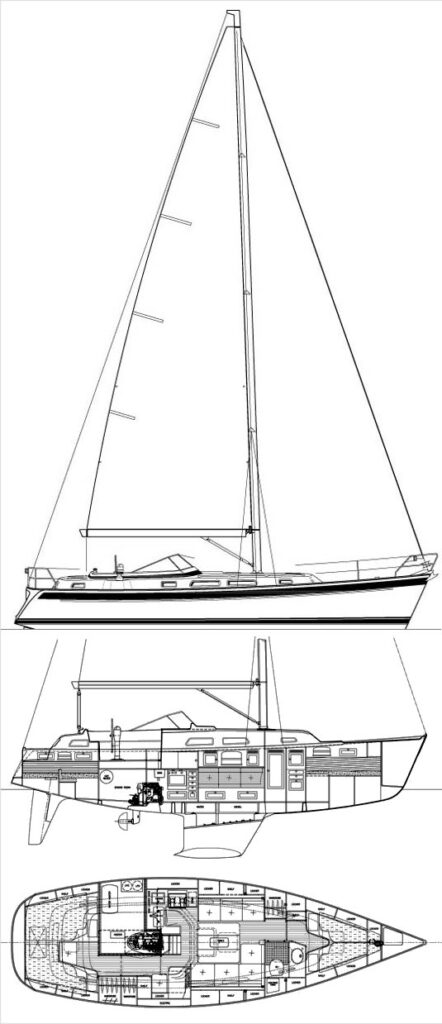
The HR 37 follows Hallberg-Rassy’s well-known formula: a relatively narrow, easily driven hull with moderate overhangs, a substantial lead keel and a skeg-supported rudder for protected steering. Germán Frers’ lines give the boat a waterline-length advantage when heeled and a hull form that balances directional stability with reasonable pointing ability; Hallberg-Rassy’s factory data show a displacement around 7.5 tonnes and a heavy keel (roughly 3.2 tonnes), which explains the boat’s comfortable righting tendencies and seakindly motion. Construction is conservative and high-quality—a hand-laid solid fiberglass hull with carefully specified deck cores and, in later production runs, improved laminates and vinylester first coats to reduce the risk of osmotic blistering—choices that favor long-term durability and straightforward survey work. Buyers should view the HR 37 as an engineered, premium production boat: repairs to the solid hull are generally simple for competent yards, whereas any deck-core work or non-factory refits deserve careful inspection.
From an architectural standpoint the 37’s moderate displacement/length, significant ballast and hull shape emphasize a comfortable seaway and predictable handling under load. That means less hobbyist fiddling and fewer structural surprises compared with lighter, more radical designs; the trade-off is modest light-air performance and greater weight to maintain and haul. For buyers this is a conscious choice: pay more up front and in maintenance for a vessel that errs on the side of safety and longevity.
Performance
On passage the Hallberg-Rassy 37 sails like a proper offshore cruiser: she tracks well to windward, handles confused seas with calm predictability, and rewards conservative sail plans—cutter or sloop configurations depending on owner fit—with comfortable, sustained speeds. She won’t outpace modern light-displacement cruisers in light airs, but in 12–20 knots of breeze a well-trimmed 37 will return reliable passage speeds and a motion that reduces crew fatigue on multi-day legs; owners consistently note that the boat’s reserve buoyancy and keel weight translate into steady mainsail carriage in heavier conditions. The skeg-protected rudder and balanced underwater profile make short-handed steering and autopilot work more forgiving than many full-keel heavy cruisers, giving the 37 a nice middle ground between extreme heavy-weather boats and sporty cruisers.
Compared with contemporaries such as Najad or Island Packet designs of similar LOA, the HR 37 tends to feel more modern in hull lines and deck ergonomics while retaining a distinctly conservative seakeeping character; compared with true performance cruisers it sacrifices sprint speed for comfort and predictability—precisely the trade most long-distance couples prefer.
Comfort and Accommodations
Interior design on the 37 emphasizes liveability and thoughtful systems access rather than open-plan salon theatrics. The joinery is robust and often handsome, headroom is generous for the class, and tankage/layouts supplied from the factory suit extended cruising (ample fuel and water options were factory-available). Storage and system placement reflect Hallberg-Rassy’s long experience with voyagers: seafaring conveniences such as secure galley arrangements, good lee cloth provision and sheltered pilothouse/mid-cockpit proportions make the boat comfortable for couples or small families on long trips. Most owners who buy later examples or professionally refitted boats report that the interiors age well when moisture control is managed, and many refits focus on modernizing electrics, refrigeration and nav-electronics rather than changing the geometry of the living spaces.
For full-time liveaboard use the 37 is a realistic platform—after sensible upgrades to heating, refrigeration and energy storage she supports long legs and extended stays without the cramped feeling of many performance cruisers. The solid joinery also makes DIY repairs practical for owners comfortable with basic woodworking and systems work.
Safety and Practicality
Safety is baked into the HR philosophy. High freeboard, secure toerails and generous cockpit coamings create a safe working environment on deck, while the skeg-protected rudder reduces vulnerability to impact damage. Factory-specified through-hulls and accessible engine rooms make routine maintenance and emergency access easier than on tightly packed contemporary yachts; combined with Hallberg-Rassy’s strong builder reputation, this accessibility reduces surprise costs at refit time and makes the 37 a practical choice for owners who expect to maintain much of the boat themselves. For oceangoing use, prudent owners will add modern communications and redundant safety kit, but the base configuration is well aligned to coastal and ocean passages without wholesale structural modification.
Known Issues with the Hallberg-Rassy 37
Because the Hallberg-Rassy 37 was produced across several years and in different specifications, problems are usually age-related or stem from non-factory refits rather than a single design fault. Historically reported items to watch for in surveys include:
- deck-core softening around poorly re-bedded fittings and chainplates (common to many boats of this era),
- evidence of older osmosis repairs on hulls that pre-date vinylester first coats, and
- routine rigging and engine aging—standing rigging replacement and engine servicing or repowers are common capital events.
Buyers typically budget for sensible improvements: re-bed deck hardware, replace standing rigging on age or condition, modernize navigation/electrical systems, and refresh sails for better light-air performance. These are predictable refit items that, when handled early, raise safety and resale value.
Market Availability and Pricing in the U.S.
The Hallberg-Rassy 37 is a used-market proposition in the U.S.; listings appear regularly through brokers and international dealers, and prices reflect year, equipment level and documented refit history. Recent listings on broker sites show examples commonly trading in the $120,000–$320,000 band depending on vintage and condition—well-equipped later builds and professional refits sit at the top of that range, while older or project boats are substantially less. Availability concentrates where serious cruising communities are active—Northeast (New England/Chesapeake), the Pacific Northwest and parts of Florida—with brokerage examples sometimes appearing in the mid-Atlantic and Great Lakes when owners reposition boats. Because Hallberg-Rassy models occupy a premium niche, resale tends to reward good documentation and professional refits.
Below is a comparison with similar sailboats from the same era:
| Model | LOA | Approx. Years Built | Typical U.S. Used Price | Main Differences / Notes |
|---|---|---|---|---|
| Hallberg-Rassy 37 | ~37.2 ft | Late 1990s–2000s (various runs) | $120,000–$320,000 | Frers lines, premium finish, solid hand-laid hulls, bluewater focus and strong dealer support in Europe. |
| Najad 373 (Najad 37) | ~37 ft | 1990s–2000s | $70,000–$220,000 | Swedish heavy-build bluewater boats with classical lines; generally similar offshore pedigree but varying equipment levels. |
| Island Packet 37 | ~37 ft | 1990s–2000s | $80,000–$200,000 | American full-displacement/cruising emphasis with heavy build and generous tankage; different motion and layout philosophy. |
| Hallberg-Rassy 36 | ~36 ft | 1990s–2000s | $90,000–$260,000 | Smaller sibling with similar build quality and systems; often closer in price due to overlapping buyer market. |
Hallberg-Rassy 37 vs Najad 373
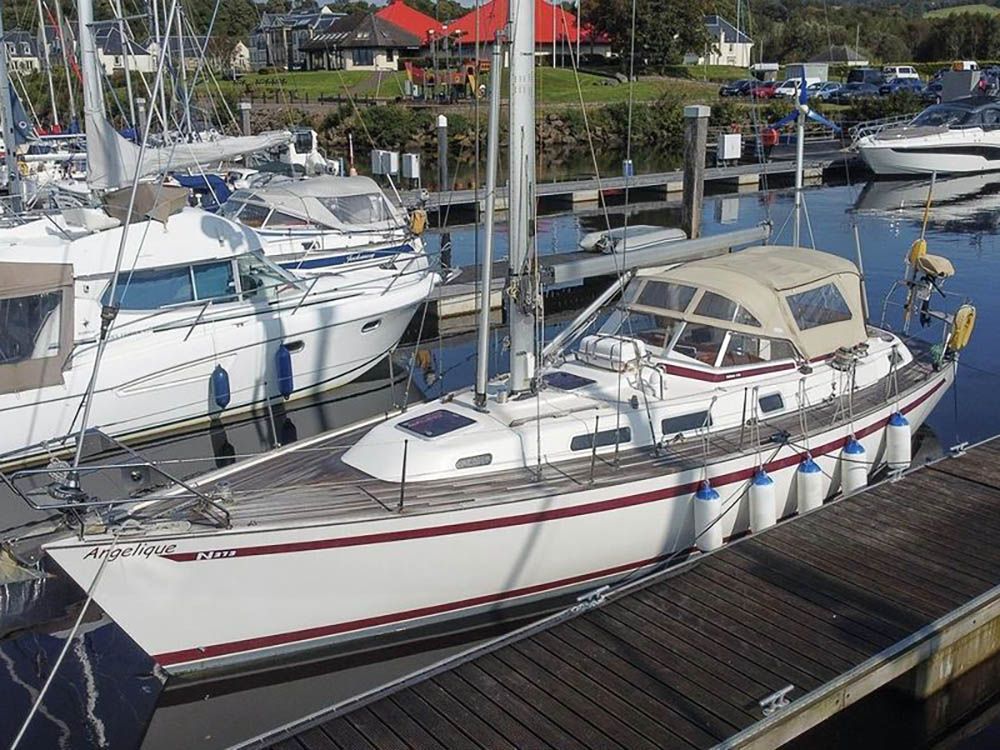
The Hallberg-Rassy 37 and the Najad family serve the same buyer: experienced couples seeking a rugged, comfortable offshore yacht. The HR 37 tends to present a slightly more modern hull profile and factory finish standards (Frers’ lines and a high factory fit-out), while Najads are celebrated for their extremely conservative layups and traditional seagoing manners.
Practically, the HR 37 often wins on ergonomics and resale in premium brokerage circles, whereas a Najad can be a better buy if the priority is the most conservative underbody and straightforward, heavy-section laminate work. Maintenance requirements are similar—both demand attention to rigging and systems—but refit costs and market liquidity will depend heavily on documented service history.
► Learn more about de Najad 373
Hallberg-Rassy 37 vs Island Packet 37

Both boats aim at offshore comfort, but they take different routes: the HR 37 is a European-styled, Frers-designed yacht that balances performance and seakeeping, while the Island Packet emphasizes full-displacement steadiness, maximum tankage and a fuller, gentler motion. For owners who prize internal volume and autonomous cruising (long stores, big tanks), Island Packet’s philosophy can be compelling; for those who want a slightly livelier hull and a more contemporary deck/helm ergonomics, the HR 37 is often preferred.
In ownership terms the Island Packet may offer simpler systems and huge tankage but at the cost of heavier handling and slower passages; the HR 37 asks for slightly more attentive sail trim to get the best performance but rewards owners with nicer passagemaking speeds and higher market desirability in some resale channels.
► Learn more about de Island Packet 37
Hallberg-Rassy 37 vs Hallberg-Rassy 36

Comparing within the brand highlights scale and accommodation trade-offs: the 37 extends waterline and tankage just enough to improve motion and seagoing autonomy, while the 36 is marginally tighter on interior volume but shares the same build philosophy and systems layout. Buyers choosing between them often weigh berthing costs and intended cruise length: the 37 gives slightly more tankage and a more comfortable saloon for long legs, the 36 can be a bit cheaper to maintain and may be easier to place at crowded marinas.
Mechanically and structurally they’re siblings—same factory standards and similar survey considerations—so the deciding factors usually boil down to condition, refit history and how much living space the buyer actually needs for their cruising plans.
► Learn more about de Hallberg-Rassy 36
Maintenance Costs of a Hallberg-Rassy 37 in the U.S.
Below is a practical, commented list of typical annual ownership costs and larger one-time investments to budget for; ranges draw on general ownership guides and market experience for 35–40-foot bluewater cruisers.
- Mooring / Slip fees: $4,000–$30,000 per year — major regional variance (premium New England or West Coast slips near the top end).
- Insurance: $800–$3,500 per year — depends on cruising area, declared value and cruising track record.
- Engine servicing and routine mechanicals: $800–$3,000 per year — includes scheduled servicing; major repower can be $10,000–$30,000+.
- Antifouling / haul-out and bottom paint: $1,200–$6,000 every 1–3 years — haul, power-wash, fairing and paint costs vary by yard and region.
- Standing and running rigging inspections / replacement: $300–$1,500 per year for inspections; full standing rig replacement $3,000–$8,000+ depending on mast complexity.
- Sails (maintenance / replacement): $500–$2,500 per year for servicing; a new main and working headsail commonly run $6,000–$15,000 together.
- Electronics and navigation upgrades: $0–$12,000+ (one-time) — modern chartplotter, AIS, autopilot and satellite communications are common refit items.
- Annual misc. (anodes, small plumbing/electrical): $400–$2,000.
Regional differences matter—New England and California push costs higher; Southeast and Gulf areas are often more moderate. Significant one-time refit items for a Hallberg-Rassy 37 are standing rig replacement, major deck-core repair if found, repower, and a full electronics/energy refit (generators, battery banks, solar). Many routine tasks (zincs, basic engine maintenance, small fiberglass repairs) can be owner-performed, but large composite, rigging or electrical works require professionals—shifting the ownership cost profile from medium to medium-high depending on how much the owner does themselves. As a premium, well-built cruiser the 37’s resale value often offsets sensible investments in safety and systems when documented properly.
Conclusion
The Hallberg-Rassy 37 is a premium, well-engineered cruising yacht that rewards buyers who prioritize seagoing confidence, high-quality construction and a comfortable live-aboard environment over maximum speed. Its strengths—Frers’ seakindly lines, solid laminates, protected steering and thoughtful factory fit-out—make it especially suited to couples or small crews planning extended coastal or offshore cruising and to owners who value a boat that will hold value when maintained and documented. The trade-offs are straightforward: higher initial and maintenance costs than entry-level production boats and a willingness to accept conservative light-air performance in exchange for long-term durability.
For a buyer focused on safe, comfortable passagemaking and willing to invest in documented refits and sensible upgrades (rigging, electronics, sails), the Hallberg-Rassy 37 is worth actively searching for and is likely to repay that care with strong usability and market appeal. For those seeking a low-maintenance marina toy or club racer, a different, lighter design will probably be a better fit. In the premium bluewater cruiser segment the 37 remains a compelling and pragmatic choice.
Specifications
| Hull Type | Fin w/spade rudder |
| Rigging Type | Masthead Sloop |
| LOA | 37.14 ft / 11.32 m |
| LWL | 33.46 ft / 10.20 m |
| S.A. (reported) | 743.00 ft² / 69.03 m² |
| Beam | 11.65 ft / 3.55 m |
| Displacement | 16,534.00 lb / 7,500 kg |
| Ballast | 7,055.00 lb / 3,200 kg |
| Max Draft | 6.27 ft / 1.91 m |
| Construction | FG |
| First Built | 2003 |
| Last Built | 2012 |
| # Built | 200 |
| Builder | Hallberg-Rassy (SWE) |
| Designer | German Frers |
| Auxiliary Power (orig. equip.) | Yanmar or Volvo Diesel |
| Fuel | 91 gals / 344 L |
| Water | 107 gals / 405 L |
| S.A. / Displ. | 18.39 |
| Bal. / Displ. | 42.67 |
| Disp. / Len. | 197.04 |
| Comfort Ratio | 28.09 |
| Capsize Screening Formula | 1.83 |
| S# | 2.73 |
| Hull Speed | 7.75 kn |
| Pounds/Inch Immersion | 1,392.83 pounds/inch |
| Rig and Sail Particulars (I, J, P, E) |
I: 47.74 ft / 14.55 m J: 14.11 ft / 4.30 m P: 44.29 ft / 13.50 m E: 15.58 ft / 4.75 m |
| S.A. Fore | 336.81 ft² / 31.29 m² |
| S.A. Main | 345.02 ft² / 32.05 m² |
| S.A. Total (100% Fore + Main Triangles) | 681.83 ft² / 63.34 m² |
| S.A./Displ. (calc.) | 16.87 |
| Est. Forestay Length | 49.78 ft / 15.17 m |
| Mast Height from DWL | 54.95 ft / 16.75 m |
Disclaimer
The considerations and analyses presented regarding the Hallberg-Rassy 37 sailboat are of a general nature and are based on the available information and technical data on this model, interpreted to the best of our knowledge and understanding. It is important to note that the specific characteristics of any particular sailboat may vary due to custom modifications, maintenance performed, and conditions of use over time, among other factors. Therefore, the details and performance of the boat you are considering may not exactly match the information provided here.
We strongly recommend that, before making any purchasing or usage decisions, you conduct a detailed inspection of the boat in question, consult with nautical professionals and other sailors, and consider your personal needs, expectations, and capabilities. Each sailboat may have unique particularities that affect its performance and suitability for different types of sailing and sailors.
The information contained in this analysis should be used as a general guide and not as a definitive reference. Professional evaluation and personal inspection are essential to ensure that the boat meets your specific requirements and expectations.