



The Hallberg-Rassy 36 is a purpose-driven coastal and bluewater cruiser conceived to offer seaworthy, comfortable passagemaking rather than racing performance. Designed by Germán Frers and built by Hallberg-Rassy between 1989 and 2003, the 36 was produced in large numbers for a premium yard that prioritized quality fit-out and conservative naval architecture; about 600+ hulls were completed across Mk I and Mk II variants, which explains why the model is widely available on the used market. The boat was aimed at couples or small families who wanted a manageable yacht with solid offshore capability, and today it attracts private cruisers and liveaboards more than charter fleets—buyers looking for a well-built, comfortable boat for serious coastal cruising or occasional offshore passages form the core demand.
Design and Construction
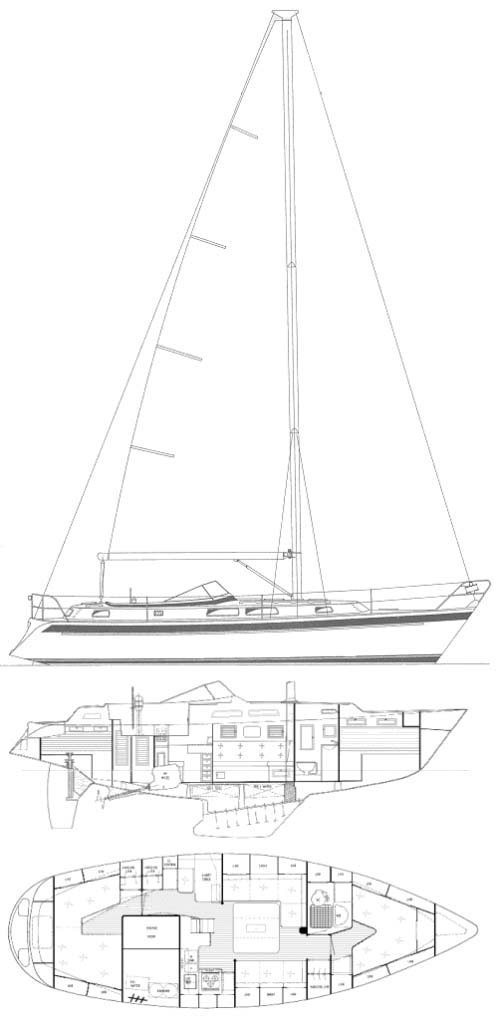
The Hallberg-Rassy 36 uses a moderate-aspect fin keel with a skeg-protected rudder and a masthead sloop rig—an arrangement that balances pointing ability with directional security and straightforward steering. The hull and deck are hand-laid GRP with insulated decks (sandwich construction in deck areas) and a bolted lead keel; that method and material choice favor durability, low maintenance of core structure, and relatively predictable long-term behaviour compared with novel composites. Internally the yacht has the full-length structural bulkheads and sturdy mast support typical of Frers designs, so loads are carried into engineered foundations rather than into furniture alone—this matters for longevity and for the ease of undertaking structural repairs years later. Practically, that means the 36 resists flex and leaks better than many light-production boats, but owners should still expect periodic attention to deck-to-hull joints, hatches and through-hulls as part of regular upkeep.
Performance
On the water the 36 sits in the middle ground: faster and more responsive than heavy full-keel cruisers, but more conservative and comfortable than modern light-displacement racers. The hullshape and skeg-rudder give predictable tracking and a steady motion in waves, and many owners report comfortable passage speeds in a working breeze while accepting that the boat is not a light-air sprinter. Upwind angles are generally respectable for a cruising hull of its era, though discussions among owners sometimes note the boat can be less forgiving when trying to claw off a lee shore in marginal conditions—something to weigh if your sailing area includes confined, tidal coasts. Compared with mass-market 36-footers built for coastal performance, the HR 36 trades a bit of outright speed for better control and a drier, more comfortable motion in confused seas.
Comfort and Accommodations
A major selling point of the 36 is the interior: high-quality joinery, sensible galley and chart table ergonomics, and good stowage make extended time aboard realistic. The layout flows well fore-to-aft and the joinery and hardware are sized to withstand real use—these are not light production finishes but crafted details that help the interior age gracefully if maintained. For a couple planning liveaboard cruising the 36 often feels larger than its length suggests; a small family can be comfortable on shorter trips, though the boat is optimized primarily for two-up cruising. Many older boats you’ll see for sale have modest modernizations—electronics, heating, refrigeration—that improve habitability but also represent expected refit costs for buyers.
Safety and Practicality
Deck layout, moderate freeboard and secure handholds contribute to a practical and safe working environment aboard; the skeg and robust rudder arrangement plus quality keel fixing make grounding incidents less likely to produce catastrophic rudder damage. Access to machinery is generally good for routine checks and diesel servicing, and systems are straightforward enough that an owner with mechanical aptitude can manage a great deal of routine work. That said, like any boat of its age, inspection of chainplates, seacocks and deck/hatch seals is critical at survey—these are the parts that most often account for surprise costs. For planned offshore work the 36’s construction and layout need few structural changes, though buyers who seek to push into serious bluewater voyaging will commonly invest in updated communications, redundancy for bilge and steering systems, and a modern sail inventory.
Known Issues with the Hallberg-Rassy 36
Hallberg-Rassy boats have a reputation for solid build quality, but owners and forums call out recurring maintenance points rather than design failures. Reported issues include occasional gelcoat blistering or localized osmosis on older boats, leaks around deck hardware and hatches when seals age, and the usual wear-and-tear items such as corroded stainless fittings or buried chainplates that are labor-intensive to repair if neglected. Diesel engines (typically Volvo Penta on many hulls) are durable but require standard diesel care—neglected cooling systems and fuel polishing are common sources of trouble on older listings. Practical upgrade paths recommended by experienced owners include rigging inspection/replacement on a regular 10–15 year cycle, modernising electrical/electronics to reduce failure risk, and checking/refreshing deck-seal bedding to avoid water ingress. These are predictable costs for older yachts and not unique to the 36, but they reward attention at survey and during ownership.
Market Availability and Pricing in the U.S.
The Hallberg-Rassy 36 is no longer produced and is a used-market model; steady numbers of MK I and MK II examples show up in East Coast listings (Florida, Mid-Atlantic, New England) and intermittently on the West Coast, often imported from Europe or sold after long local ownership. Current U.S. asking prices for well-kept Mk II examples commonly sit in the $115,000–$175,000 band, with lower figures for boats needing systems work and higher numbers for refitted, lightly-used examples with documented upgrades. Compared with mass-market 36-foot cruisers the 36 typically commands a premium because buyers pay for finish quality, reputation and long-term durability, though turnover can be slower—Hallberg-Rassys are sought by a narrower buyer profile which means patient sellers often achieve the best price.
Below is a comparison with similar sailboats from the same era:
| Model | LOA | Approx. Years Built | Typical US Used Price | Main Differences |
|---|---|---|---|---|
| Hallberg-Rassy 36 | ~35.7 ft | 1989–2003 | $115,000–$175,000 | Premium joinery, Frers hull, fin keel with skeg, built for comfortable offshore cruising. |
| Catalina 36 (Mk I/II) | ~36.3 ft | 1982–2008 (various marks) | $30,000–$120,000 | Mass-market production, lighter displacement, lower acquisition/ownership cost, large spare-parts market. |
| Beneteau Oceanis 373 / 373 Clipper | ~36.9 ft | Early–mid 2000s | $80,000–$120,000 | Lighter, more volume-oriented modern production hull; faster in light airs but less heavy-weather comfort. |
| Jeanneau Sun Odyssey 36.2 | ~36.0 ft | Mid-1990s–early 2000s | $60,000–$80,000 | Balanced coastal cruiser with contemporary amenities; generally lighter and more performance-oriented than HR 36. |
Hallberg-Rassy 36 vs Catalina 36

The Hallberg-Rassy 36 is built to a higher finish standard and favors a heavier, stiffer hull with a skeg-supported rudder, which translates into a more composed motion and better confidence in rough water compared with the Catalina 36’s lighter, fin-keel pedigree. Owners choosing a Catalina frequently do so for lower purchase and mooring costs and easier local servicing; by contrast the HR 36 appeals to buyers who prioritize long-term durability, superior fit-out and a more reassuring offshore platform.
While the Catalina often represents the economical, highly available choice for coastal cruising and club sailing, the Hallberg-Rassy is the better match when extended passages, interior finish and resale to a bluewater buyer are the priority.
► Learn more about de Catalina 36
Hallberg-Rassy 36 vs Beneteau Oceanis 373

The Beneteau 373 and similar Oceanis models emphasize interior volume, lighter displacement and performance in light winds—traits that make them attractive for coastal cruising and family comfort in moderate conditions—whereas the Hallberg-Rassy 36 trades some of that light-air speed for a more substantial, sea-kindly hull form and higher-grade finishing. Practically, a Beneteau will feel more spacious per square foot and accelerate sooner in a light sea breeze; the HR 36 will carry momentum better in confused seas and give a drier, more controlled ride that many owners value on longer passages.
For a buyer focused on weekend coastal hops and maximum interior volume per dollar, the Beneteau is compelling; for someone whose priority is offshore confidence and longevity of the core structure, the Hallberg-Rassy is generally the smarter long-term choice.
► Learn more about de Beneteau Oceanis 373
Hallberg-Rassy 36 vs Jeanneau Sun Odyssey 36.2
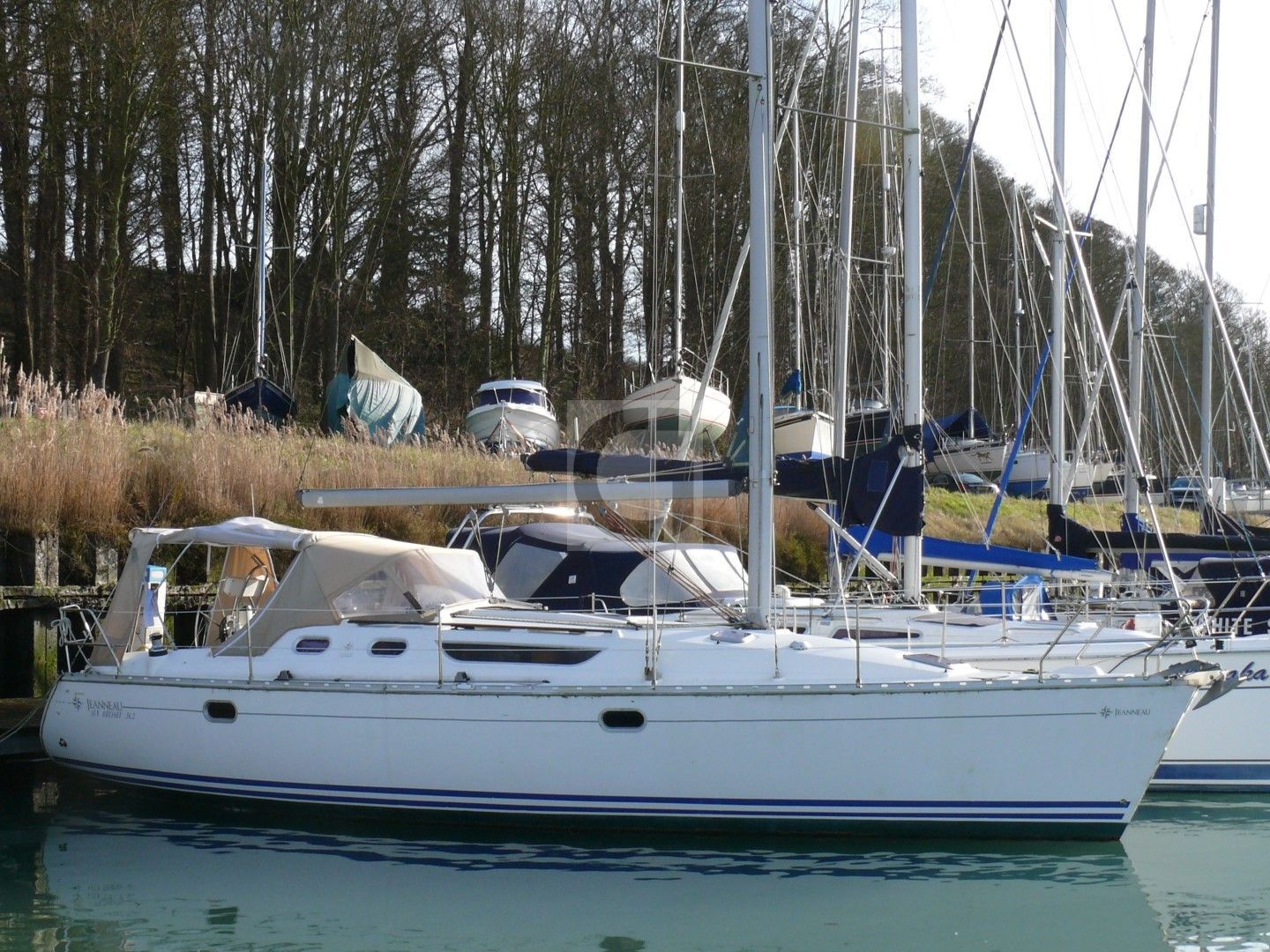
The Jeanneau Sun Odyssey 36.2 is a competent cruiser that leans toward ease of handling, economical operation and contemporary ergonomics, while the Hallberg-Rassy 36 emphasizes finish quality, structural conservatism and seakindly behaviour. The Jeanneau will usually be lighter, easier to trailer/ship and have lower day-to-day costs, but the HR 36 keeps its value among buyers seeking a more robust platform for occasional offshore work.
If your sailing is dominated by local bays, club weekends and tight budgets, the Jeanneau offers an efficient and practical choice; if you aim for offshore passages, value a premium interior and want a boat that resists structural surprises, the Hallberg-Rassy better aligns with those priorities.
► Learn more about de Jeanneau Sun Odyssey 36.2
Maintenance Costs of a Hallberg-Rassy 36 in the U.S.
Below are typical annual ownership costs presented as an annotated list (each item in bold followed by typical ranges or notes):
- Mooring/Slip: $2,000–$12,000 per year, highly dependent on region and marina facilities.
- Insurance: $700–$3,000 annually, varying with cruising range, insured value and claims history.
- Engine servicing (annual): $300–$1,200 for routine service; major diesel work costs significantly more.
- Antifouling (haul/paint): $800–$3,000 every 1–3 years depending on yard and bottom condition.
- Standing & running rigging (inspection & minor work): $200–$1,000 per year for inspections/repairs; full standing rig replacement $4,000–$12,000 when due.
- Sails (care & replacement): $200–$1,000 annual repairs; replacement sails typically $3,000–$10,000 each depending on cut and cloth.
- Winterization/commissioning: $300–$1,500 depending on systems and storage.
- Surveys/haulouts: $1,000–$4,000 for surveys and routine haulouts; structural or osmosis repairs add thousands more.
- Electronics & upgrades (periodic): $1,500–$20,000 depending on scope (chartplotter/autopilot/AIS/house battery upgrades).
Regional variation is strong: California and New England typically cost more for yard labour and slip fees than the Southeast. Significant one-time costs to budget include rigging replacement, major rewiring or re-plumbing, and significant teak or deck-core work—items that can push a refit well into five figures. Many owners can manage routine mechanical and cosmetic work themselves, but structural, rigging and major electrical tasks generally require professionals; that mix tends to place real ownership costs in the medium to high bracket for 36-foot cruisers. Overall, resale values for well-maintained HR 36s are solid within the premium used market, which helps offset the higher maintenance baseline over time.
Conclusion
The Hallberg-Rassy 36 is a thoughtfully executed, conservatively engineered cruiser that rewards owners who value build quality, seakindly behaviour and a refined interior. Its compromises—less emphasis on light-air speed and higher acquisition/upkeep costs than mass-market 36-footers—are intentional tradeoffs for durability, easier long-term maintenance of the core structure, and a more comfortable life at sea. For buyers aiming at serious coastal cruising, occasional offshore passages, or long-term liveaboard use, the 36 is often worth seeking out; for those whose priority is maximum interior volume per dollar or minimal marina expense, modern production 36-footers may be a better fit. In short: if your priority is a comfortable, dependable cruising platform with a reputation for quality, the Hallberg-Rassy 36 remains a strong and defensible purchase with stable resale value inside its niche.
Specifications
| Hull Type | Fin with rudder on skeg |
| Rigging Type | Masthead Sloop |
| LOA | 35.66 ft / 10.87 m |
| LWL | 28.61 ft / 8.72 m |
| S.A. (reported) | 677.00 ft² / 62.90 m² |
| Beam | 11.65 ft / 3.55 m |
| Displacement | 16,534.00 lb / 7,500 kg |
| Ballast | 7,496.00 lb / 3,400 kg |
| Max Draft | 6.14 ft / 1.87 m |
| Construction | FG |
| Ballast Type | Lead |
| First Built | 1989 |
| Last Built | 2003 |
| # Built | 602 |
| Builder | Hallberg-Rassy |
| Designer | German Frers |
| Auxiliary Power | Volvo Penta MD22 Diesel, 57 HP |
| Fuel | 90 gals / 341 L |
| Water | 108 gals / 409 L |
| S.A. / Displ. | 16.75 |
| Bal. / Displ. | 45.34 |
| Disp. / Len. | 315.19 |
| Comfort Ratio | 31.61 |
| Capsize Screening Formula | 1.83 |
| S# | 1.54 |
| Hull Speed | 7.17 kn |
| Pounds/Inch Immersion | 1,190.94 pounds/inch |
| Rig Dimensions (I, J, P, E) | I: 47.24 ft / 14.40 m; J: 13.25 ft / 4.04 m; P: 41.40 ft / 12.62 m; E: 15.58 ft / 4.75 m |
| S.A. Fore | 312.97 ft² / 29.08 m² |
| S.A. Main | 322.51 ft² / 29.96 m² |
| S.A. Total (100% Fore + Main) | 635.48 ft² / 59.04 m² |
| S.A. / Displ. (calc.) | 15.72 |
| Est. Forestay Length | 49.06 ft / 14.95 m |
Disclaimer
The considerations and analyses presented regarding the Hallberg-Rassy 36 sailboat are of a general nature and are based on the available information and technical data on this model, interpreted to the best of our knowledge and understanding. It is important to note that the specific characteristics of any particular sailboat may vary due to custom modifications, maintenance performed, and conditions of use over time, among other factors. Therefore, the details and performance of the boat you are considering may not exactly match the information provided here.
We strongly recommend that, before making any purchasing or usage decisions, you conduct a detailed inspection of the boat in question, consult with nautical professionals and other sailors, and consider your personal needs, expectations, and capabilities. Each sailboat may have unique particularities that affect its performance and suitability for different types of sailing and sailors.
The information contained in this analysis should be used as a general guide and not as a definitive reference. Professional evaluation and personal inspection are essential to ensure that the boat meets your specific requirements and expectations.