



The San Juan 21 is a compact cruiser-racer first introduced in 1970 and built by the Clark Boat Company to serve owners who wanted trailerability without giving up honest offshore capability for short coastal trips. Designed by Don Clark, the boat was conceived as a versatile pocket cruiser with a centerboard (swing keel) and a fractional sloop rig that allowed both family weekenders and club racers to get good performance from a modest package. The model sold well in its day—several thousand hulls were built—and it remains common on the used market because of that production volume and a still-active owner community; today these boats turn up most often in private-owner listings, local one-design fleets and inland/coastal classifieds.
Design and Construction
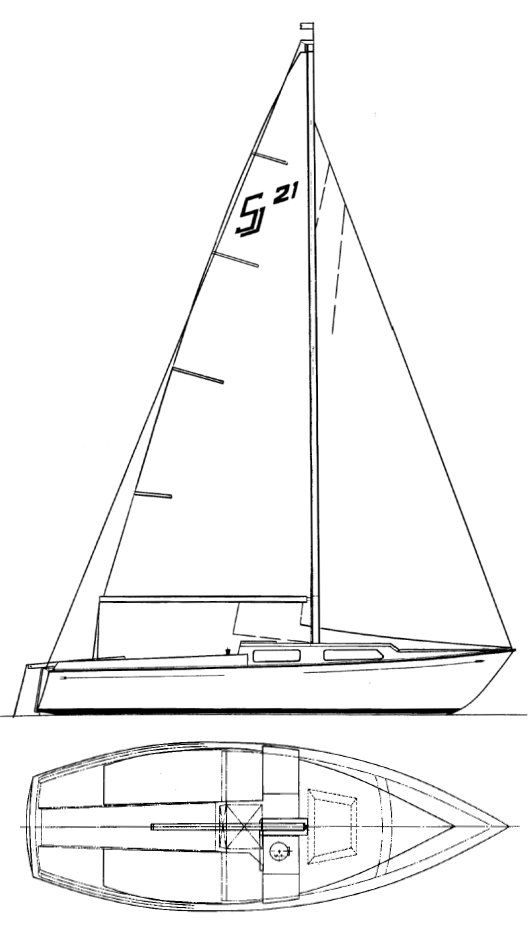
The San Juan 21’s hull is a relatively narrow, long-ended shape for its length with a swing/centerboard keel and a transom-hung rudder, which gives it the flexibility to reduce draft for trailering and shoal cruising while retaining a deeper foil for pointing when lowered. Construction is conventional fiberglass with a balsa-cored cabin and wood trim in many early examples—an approach that keeps weight down and makes interior joinery pleasant, but which also requires buyers to inspect core areas carefully for water intrusion.
The fractional sloop rig simplifies headsail handling and keeps working sails smaller, a deliberate choice to make short-handed sailing easier and to reduce sail inventory costs; from a naval-architecture perspective, the combination of modest ballast, low displacement and a centerboard produces nimble acceleration and good light-air performance but also a more lively motion in confused seas. For prospective owners this design philosophy means generally straightforward repairs (fiberglass repairs, simple rig work) are possible for a competent DIYer, but items like keel-trunk seals and core repairs can become shop jobs if neglected.
Performance
On the water the San Juan 21 is best described as lively rather than heavy-weather comfortable: its light displacement lets it accelerate quickly in light to moderate breeze, and the centerboard lowered gives respectable pointing ability for a trailerable boat. In building chop or confused seas the boat can feel tender compared with heavier fixed-keel 23–25 foot cruisers, and owners commonly recommend reefing earlier in stronger winds to preserve a comfortable motion and avoid excessive weather helm.
Compared with modern trailerable sport-sloops it sits between pure racers and cruiser-heavy designs—faster than many economy cruisers of similar length but not as stable or roomy as a dedicated small cruising keelboat—so buyers should match expectations to intended use (daysails and coastal hops versus extended offshore passages). The boat has a reputation among owners for rewarding active trimming and for being a fun club racer or family dayboat when handled within its limits.
Comfort and Accommodations
Interior accommodations are compact but intelligently laid out for the era: a V-berth forward, modest settee space, simple galley provisions on some examples and limited headroom make the San Juan 21 suitable for short overnights or weekend cruising for a couple. Storage is adequate for cruising light, but the small volume means two-adult liveaboard comfort quickly becomes cramped—most owners treat the cabin as weather shelter and sleeping space rather than full-time living quarters. Trim and joinery on well-kept boats give a cozy feel, but many used examples show the cosmetic wear typical of 40- to 50-year-old pocket cruisers, and buyers who value interior finish should factor modest refitting or reupholstery into the purchase plan.
Safety and Practicality
Deck lay-out and the centerboard arrangement give practical advantages: shallow-water access, simple trailering and the ability to beach or explore coves that deeper keelboats cannot. However, the swing keel system introduces service points—keel trunk integrity, pivot hardware and trunk sealing—that directly affect safety and maintenance; a leaking keel trunk can permit water ingress and damage core materials if not addressed.
Systems on the San Juan 21 are generally simple (outboard engine, basic electrical), which makes routine maintenance accessible to owner-mechanics and helps keep running costs down, but owners planning extensive coastal cruising should inspect and, if necessary, upgrade safety gear, through-hull fittings and communications before pushing into more exposed waters.
Known Issues with the San Juan 21
Owners and forum threads repeatedly point to the keel trunk and swing-keel hardware as the most frequent long-term maintenance concern: slapping or movement in rough conditions can stress the keel well and produce micro-cracks, while internal wood supports and seals can swell or degrade if water intrusion is left unchecked. Because many early boats used balsa core in the cabin structures, sellers and buyers should verify core condition around high-load areas, chainplates and the keel trunk; deferred repairs here are a common source of costly refits.
Other recurring items include aging rudder pintles/hinges, dated or minimal electronics and the usual suspects for older boats—worn sails, rigging age and cosmetic gelcoat wear. Practical upgrades owners often recommend are renewed keel seals and pivot hardware, a modern electrical and navigation package, and refreshment of sails and standing rigging as part of a sensible pre-purchase plan.
Market Availability and Pricing in the U.S.
The San Juan 21 is long out of production but abundant on the used market due to production numbers in the thousands; because many were built, listings appear regularly and prices vary widely with condition and region.
Examples for sale commonly range from low-end project boats at roughly $1,000 to dirt-cheap fixer-uppers up to well-prepared, recently-refitted boats asking $6,000–$7,500; typical ready-to-sail examples most often trade in the $2,000–$5,000 band depending on local demand and gear. These boats are especially visible in inland and coastal regions where trailerability is prized—Pacific Northwest and Great Lakes listings and owner groups are active—but you can find them nationwide because owners value their mix of trailerability and cruising potential.
Compared with the Capri 22, Hunter 216 and Precision 23, the San Juan 21 usually undercuts them on purchase price but often requires more attention to keel-trunk and core issues; in value terms it is attractive for budget buyers who are willing to trade time or modest investment for a usable pocket cruiser.
Below is a comparison with similar sailboats from the same era:
| Model | LOA | Approx. first built | Typical U.S. used price | Main practical differences |
|---|---|---|---|---|
| San Juan 21 | ~20.5 ft | 1970s | $1,000–$7,500 | Trailerable centerboard cruiser-racer with large production run; cheap entry price but common keel-trunk and core maintenance items. |
| Catalina Capri 22 | ~22.0 ft | 1980s–2000s (various) | $9,000–$25,000 | More interior volume and modern parts availability; heavier fiberglass construction and better weekend-cruising comfort at higher purchase cost. |
| Precision 23 | ~23.4 ft | 1980s–1990s | $8,000–$18,000 | Sturdier cruiser orientation with deeper ballast/centerboard options, more comfortable cabin for weekend cruising but generally pricier than an average SJ21. |
| Hunter 216 | ~21.5 ft | 2000s | $4,000–$10,000 | Modern trailerable daysailer with thermoformed hull and simplified systems—lighter, sportier and often easier to keep cosmetically current than older SJ21s. |
San Juan 21 vs Catalina Capri 22

The San Juan 21 emphasizes trailerable versatility and a race-capable centerboard hull that rewards active crews and budget-minded owners, while the Capri 22 trades slightly more speed for greater interior volume and a heavier, more traditional fiberglass structure that better supports weekend cruising luxury. From an ownership standpoint, a buyer preferring minimal initial outlay and the ability to trailer and beach will lean to the San Juan, but someone prioritizing roomy accommodations, class support and easier parts sourcing will find the Capri’s slightly higher price justified.
In terms of handling, the Capri’s fuller underbody and ballast yield a steadier motion in gusty or confused seas, making it easier for family cruising, whereas the San Juan’s lighter feel offers quicker acceleration and more rewarding light-air sailing but a livelier motion. Maintenance tradeoffs are clear: older San Juans often require attention to core and keel-trunk items, while Capris typically incur higher cosmetic or bottom-maintenance costs but have fewer centerboard-specific service issues.
► Learn more about de Catalina Capri 22
San Juan 212 vs Precision 23
Compared with the Precision 23, the San Juan 21 is the more economical, trailerable choice aimed at owners who accept tighter accommodations for lower purchase price and simpler systems. The Precision’s heavier displacement and cruiser-biased layout give it better motion comfort and storage for family weekending, translating into fewer compromises on extended trips.
When it comes to sailing, the San Juan can feel more immediate and responsive in light airs but requires more attention in heavy or gusty conditions; the Precision tends to feel steadier and point more reliably when carrying more sail in brisk conditions. For buyers deciding between them, the Precision suits those seeking a small but comfortable coastal cruiser, while the San Juan remains the practical pick for club racers and budget-savvy trailer sailors.
► Learn more about de Precision 23
San Juan 21 vs Hunter 216

The Hunter 216 is a modern, thermoformed daysailer that prioritizes low-maintenance surfaces and easy trailering, while the San Juan 21 reflects 1970s production-boat thinking with a balsa-cored cabin and swing-keel that require more checklist vigilance. For a buyer who wants a “grab-and-go” daysailer with fewer cosmetic headaches, the Hunter’s contemporary materials and simpler systems are attractive; conversely, a buyer wanting a low-cost cruiser that can be campaigned in one-design fleets or used for small coastal passages may prefer the San Juan.
Sailing differences show in feel: the Hunter often feels more forgiving and geared toward casual performance, the San Juan more athletic and sensitive to trim—so the San Juan rewards an attentive crew but asks more in terms of maintenance of keel-trunk and older core areas. These practical contrasts make the Hunter easier to own cosmetically, while the San Juan often wins on purchase price and classic pocket-cruiser versatility.
► Learn more about de Hunter 216
Maintenance Costs of a San Juan 21 in the U.S.
Below are typical annual and periodic expenses for a San Juan 21, expressed as a commented list with each item in bold followed by a practical note.
- Mooring or slip fees: $600–$4,000 per year — inland slips and municipal moorings cost much less than high-demand coastal marinas; if you trailer and store on land seasonally you can reduce this substantially.
- Insurance: $150–$600 per year — small boat policies are generally inexpensive but vary by state, harbor risk, usage and agreed value selection.
- Engine servicing (outboard): $100–$450 per year — routine owner-done service is inexpensive; professional shop service for a multi-point yearly check can cost more.
- Antifouling paint and bottom maintenance: $100–$1,200 per year — freshwater owners or hauled boats will pay little or nothing, while saltwater, kept-in-the-water boats face higher paint and haulout bills.
- Standing and running rigging inspection/replacement: $75–$400 per year for inspections/repairs; a full standing-rigging replacement every 8–12 years may cost $1,000–$2,500.
- Sails (repairs/replace): $100–$500 per year for repairs and maintenance; a full sail replacement typically runs $1,200–$3,000 depending on cloth and whether you opt for basic cruising cuts or performance sails.
- Keel-trunk and structural checks: $0–$4,000+ as needed — localized repairs or resealing are often minor, but if water intrusion has degraded core or internal supports you may face a larger repair bill; this is a specific risk on older San Juan 21s.
- Trailer maintenance and winterization (if trailered): $100–$1,200 per year — trailer tires, bearings and winterizing/winter storage are real recurring costs for owners who trailer.
Region matters: Great Lakes and inland owners often save on antifouling and slip fees because of seasonal hauling and municipal ramps, while coastal owners—especially in high-demand areas—face higher marina and maintenance bills. Typical one-time or periodic costs to budget for include sail replacement ($1,200–$3,000), electronics upgrades ($500–$2,000), and keel trunk/core repairs ($500–$4,000 or more depending on severity). Many routine tasks (outboard service, bottom cleaning, basic rig checks, sail repair) are owner-doable and that keeps costs down; structural repairs around the keel trunk or serious core work normally require a professional yard and push overall ownership costs higher. Considering purchase price, trailering potential and the simplicity of most systems, the San Juan 21’s ongoing costs are typically low to medium for its size and intended coastal/day-cruising use, though large one-time refit bills for neglected structural problems can change the calculation for resale value.
Conclusion
The San Juan 21 remains a pragmatic choice for sailors who want a trailerable pocket cruiser with genuine club-racing history and the ability to explore shallow waters without the expense of a larger boat. Its strengths are affordability, a lively sail plan and wide availability of hulls on the used market; its limitations are compact accommodations and the recurring maintenance items associated with swing-keel construction and older core materials.
For buyers who enjoy hands-on ownership, like to trailer and launch, or want a low-cost entry into coastal cruising and club racing, the San Juan 21 is often worth hunting down—provided the pre-purchase inspection clears the keel trunk and core areas. For those prioritizing roomy weekend comfort, modern systems and minimal centerboard servicing, a heavier-built 22–24 foot cruiser will likely offer better long-term convenience, albeit at a higher purchase price. Overall, when purchased in good condition and maintained, the San Juan 21 offers a strong value proposition for coastal and inland sailors and generally holds resale value proportional to the modest investments required to keep one shipshape.
Specifications
| Hull Type: | Swing Keel |
| Rigging Type: | Fractional Sloop |
| LOA: | 20.50 ft / 6.25 m |
| LWL: | 17.00 ft / 5.18 m |
| S.A. (reported): | 190.00 ft² / 17.65 m² |
| Beam: | 7.00 ft / 2.13 m |
| Displacement: | 1,250.00 lb / 567 kg |
| Ballast: | 400.00 lb / 181 kg |
| Max Draft: | 4.00 ft / 1.22 m |
| Min Draft: | 1.00 ft / 0.30 m |
| Construction: | Fiberglass (FG) |
| Ballast Type: | Lead |
| First Built: | 1970 |
| Last Built: | 1977 |
| # Built: | 2,600 |
| Builder: | Clark Boat Co. (USA) |
| Designer: | Don Clark |
| S.A. / Displ.: | 26.25 |
| Bal. / Displ.: | 32.00 |
| Disp. / Len.: | 113.58 |
| Comfort Ratio: | 8.01 |
| Capsize Screening Formula: | 2.60 |
| S#: | 5.35 |
| Hull Speed: | 5.52 kn |
| Pounds/Inch Immersion: | 425.20 pounds/inch |
| I: | 22.50 ft / 6.86 m |
| J: | 8.00 ft / 2.44 m |
| P: | 23.00 ft / 7.01 m |
| E: | 8.75 ft / 2.67 m |
| S.A. Fore: | 90.00 ft² / 8.36 m² |
| S.A. Main: | 100.63 ft² / 9.35 m² |
| S.A. Total (100% Fore + Main Triangles): | 190.63 ft² / 17.71 m² |
| S.A./Displ. (calc.): | 26.34 |
| Est. Forestay Length: | 23.88 ft / 7.28 m |
Disclaimer
The considerations and analyses presented regarding the San Juan 21 sailboat are of a general nature and are based on the available information and technical data on this model, interpreted to the best of our knowledge and understanding. It is important to note that the specific characteristics of any particular sailboat may vary due to custom modifications, maintenance performed, and conditions of use over time, among other factors. Therefore, the details and performance of the boat you are considering may not exactly match the information provided here.
We strongly recommend that, before making any purchasing or usage decisions, you conduct a detailed inspection of the boat in question, consult with nautical professionals and other sailors, and consider your personal needs, expectations, and capabilities. Each sailboat may have unique particularities that affect its performance and suitability for different types of sailing and sailors.
The information contained in this analysis should be used as a general guide and not as a definitive reference. Professional evaluation and personal inspection are essential to ensure that the boat meets your specific requirements and expectations.