



The Jeanneau Sun Odyssey 42 DS arrived as Jeanneau’s compact deck-saloon answer to cruisers who wanted more light, a roomier feel below and sensible passagemaking performance in a 42-foot package. Launched in the late 2000s and designed by Marc Lombard, the 42 DS (first built 2007) carries the hallmark of modern production cruising yachts of that era: a moderate-displacement hull, a fractional sloop rig and an emphasis on comfortable liveaboard ergonomics rather than racing polish. It was aimed squarely at couples and small families who wanted a boat able to do extended coastal cruises and occasional offshore legs without the heavier upfront cost or systems complexity of true blue-water yachts. Over the past decade the 42 DS has carved out a steady presence on the used market: it’s popular with private owners and is occasionally found in charter fleets or as ex-school boats, which means you’ll see a mix of well-kept examples and higher-use trade-ins.
Design and Construction
Jeanneau built the 42 DS with a fairly modern hull form for its time: a fin keel with a bulb for ballast, moderate beam carried well aft, and an internally mounted spade rudder — a recipe that balances pointing ability with interior volume and accessible maintenance. The deck-saloon profile brings a higher coachroofline and large “cat’s-eye” windows that flood the saloon with light; structurally, the hull is hand-laid fiberglass with a one-piece structural grid and resin-injected deck, which improves stiffness and helps control weight. The standard rig is a fractional sloop, which simplifies sail handling and makes reefing or short tacking less work for a short-handed crew. These choices trade a bit of racing-oriented performance for easier single- or double-handed control and lower upkeep.
From a naval-architecture standpoint the 42 DS follows proven principles: concentrated ballast low in a bulb keel for a lower center of gravity and righting moment, a relatively long waterline for the length to promote hull speed, and a broad cabin trunk for usable interior volume. For owners that matters practically — the solid fiberglass hull and structural grid make for straightforward repairs (laminate patches, keel bolt inspections, localized reinforcement if needed), while the injection-molded deck and integrated fittings reduce the number of through-deck joints that commonly lead to leaks. Long-term maintenance is generally predictable, but buyers should be aware that typical wear points (deck fittings, chainplate bonds and companionway seals) need close inspection on older boats.

Performance
On the water the 42 DS is a purposeful cruiser: it performs respectably in light airs thanks to a clean underwater profile and a sailplan sized for an easy balance between power and manageability. In moderate to fresh conditions it tracks well, heels progressively and carries sail without abrupt handling quirks — qualities that make it comfortable for family passagemaking and coastal hops. The standard deep keel gives better upwind pointing and a firmer feel in a chop; the shoal-draft version is a good compromise for shallow cruising areas but sacrifices a little pointing ability and ultimate stiffness. Owners often report that the boat is more comfortable and predictable than sporty boats of similar length, though it won’t outpace racer-cruisers in light, flat conditions. Typical PHRF numbers place it in a moderate cruiser bracket, reflecting that it is tuned to safe, efficient speed rather than aggressive racing.
Comparatively, the 42 DS is not the fastest 42-footer you can buy, but its balance of handling, interior comfort and ease of reefing makes it a strong practical choice for real-world cruising where passage comfort and low-stress handling matter more than winning club races.
Comfort and Accommodations
The whole point of the DS variant is interior liveability, and Jeanneau delivers. The raised saloon brings headroom and panoramic light that make the main cabin feel airy compared with older, lower-profile cruisers. Typical layouts offer two or three cabins with a generous owner’s cabin aft, a well-sized forward cabin and a sociable saloon with a functional linear or L-shaped galley. Storage and locker space are generally well thought out for a coastal to semi-extended cruising profile: you’ll find roomy cockpit lockers, sensible pantry spaces below and well-integrated sail lockers. Ventilation can be good when hatches and dorade vents are combined with the DS windows, though owners cruising in very hot climates often add screens or extra fans.
For a couple or a family, the 42 DS supports multiday cruising comfortably and can be adapted for liveaboard use with sensible upgrades (insulation, water-maker, larger refrigeration). That said, some owners refurbish finishes and joinery after years of charter use — the modular production joinery is easy to update, and many boats you’ll see on the market have been modernized to suit the buyer (new upholstery, diesel heater installs, electronics upgrades). The layout ages well because the core ergonomics (galley near the companionway, good sea berths, accessible head) were designed with cruising realities in mind.
Safety and Practicality
Safety aboard the 42 DS emphasizes practical features: a low-effort cockpit layout with good handholds, twin cockpit lockers for quick access to safety gear, and a cockpit that offers decent protection when heeled. The step in the cockpit seating near the companionway (noted by reviewers) is something to be mindful of in heavy weather because it concentrates foot traffic; good nonskid and sensible lifelines mitigate it. Boarding and water access are generally straightforward thanks to a reasonably sized transom and swim platform options on some variants, which also simplifies man-overboard recovery in calmer seas.
Systems accessibility is pragmatic but not generous: the engine (typically a Yanmar 4-cylinder) sits in a conventional space that can be tight for major overhauls, so routine servicing access should be part of any survey negotiation. For coastal cruising and island hopping the boat is ready with factory systems; for extended offshore work owners commonly add redundancy in navigation, communications and sometimes upgrade the fuel/water capacity. With typical care the 42 DS is absolutely capable of offshore legs, but buyers seeking serious blue-water capability should budget for system upgrades and add redundancy.
Known Issues with the Jeanneau Sun Odyssey 42 DS
Owners and technical forums point to a handful of recurring issues that any buyer should inspect carefully:
- Bonding/lamination and older sealant failures around chainplates and deck fittings — some owners have reported aged bonding or soft spots that required reinforcement.
- Engine access and certain Yanmar exhaust elbow/water intrusion problems that are common to many older installations; regular inspection and replacement of rubber/bronze elbows is prudent.
- Typical cabinetry and upholstery wear in ex-charter boats; cosmetic refits are common and expected.
- Electrical and electronics obsolescence on older boats — many are updated during resale.
Recommended practical upgrades often include replacing the propeller with a more efficient three-blade folding unit for better sailing performance under way, updating navigation electronics to modern chartplotter/ADS-B/MFD systems, and proactively re-sealing or re-bonding critical deck hardware. These are not catastrophic problems — they are common wear-and-tear or upgrade items that experienced surveyors look for on any ten-to-fifteen-year-old production cruiser.
Market Availability and Pricing in the U.S.
The Sun Odyssey 42 DS is no longer in current production and is found only on the used market; U.S. listings show boats commonly offered in coastal hubs — New England, the mid-Atlantic (including New Jersey/Long Island), Florida and the U.S. West Coast (California and the Pacific Northwest). Available inventory ranges from well-kept private-owner boats to ex-charter or broker-refit yachts; as with many popular production models, condition varies significantly with history and maintenance. Current advertised prices for U.S. listings in recent years cluster broadly around $110,000–$190,000, depending on year, spec and refit level. Expect boats on the lower end to be earlier 2006–2008 models with higher hours or cosmetic work needed, while late-model or fully refitted examples approach the higher end of that band.
Overall, the 42 DS sits competitively in value for buyers prioritizing interior comfort and a predictable cruising experience; it tends to hold resale reasonably well among similar production cruisers because Jeanneau is a recognizable brand and the DS concept remains appealing.
Below is a compact HTML table you can copy which compares the Sun Odyssey 42 DS with three broadly comparable used cruisers (similar LOA, era and cruising purpose). All cells and headers are left-aligned in the code as requested.
Here is a comparison with three similar sailboats from the same era and size range:
| Model | LOA | Approx. Years Built | Typical Used Price (U.S.) | Main Differences |
|---|---|---|---|---|
| Jeanneau Sun Odyssey 42 DS | 42.4 ft | ~2007–2011 | $110,000–$190,000 | Deck-saloon layout, modern interior light, fractional rig, moderate displacement; emphasis on liveability. |
| Catalina 42 (MkII / similar) | ~42 ft | 1990s–2000s | $60,000–$140,000 | Heavier displacement hulls, conservative design; very popular in North America, simpler systems, often lower price. |
| Hunter 420 / 42 models | ~42 ft | Late 1990s–2000s | $70,000–$150,000 | Raised coachroof or deck saloon variants, emphasis on cockpit comfort and user-friendly systems; often lighter build. |
| Beneteau Oceanis 423 | ~42 ft | 2003–2007 | $85,000–$170,000 | Similar production-boat philosophy: focus on interior volume and coastal cruising performance; comparable resale profile. |
Jeanneau Sun Odyssey 42 DS vs Catalina 42 MkII

The 42 DS leans into modern lines and a deck-saloon aesthetic that prioritizes light and open living spaces, while the Catalina 42 family tends to favor a more conservative, heavier design with simpler styling and fewer glazed coachroof elements. In practice this means the Jeanneau feels airier below and often commands a price premium for that comfort, whereas a Catalina typically offers a rugged, straightforward layout that can be cheaper to maintain and repair; for buyers focused on long, comfortable coastal cruising with a refined interior, the 42 DS is appealing, but those prioritizing a lower purchase price and easier DIY maintenance may prefer Catalina’s conservative construction.
Performance-wise the Jeanneau’s fractional rig and finer underwater sections give slightly better light-air and upwind behavior compared with many Catalina iterations, but the Catalina’s heavier displacement can feel more docile in confused seas. For resale and marketability, Catalinas remain well supported in U.S. marinas, whereas the 42 DS pulls buyers who specifically want the DS style and modern amenities.
► Learn more about de Catalina 42 MkII
Jeanneau Sun Odyssey 42 DS vs Hunter 420
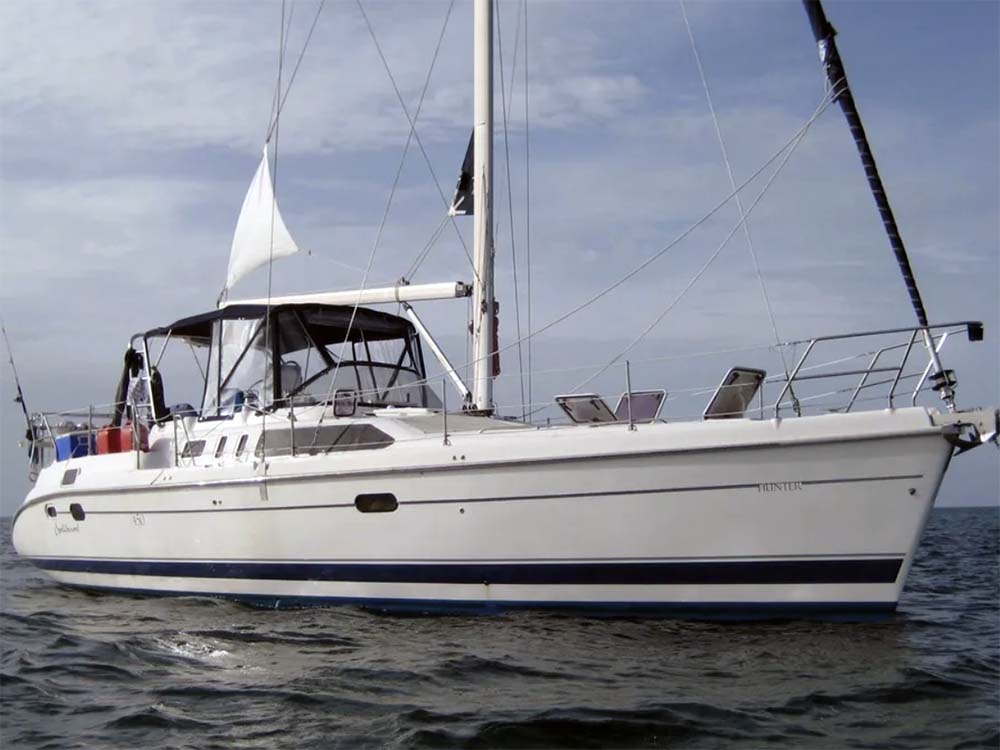
Both boats aim at comfortable family cruising, but Hunter variants often emphasize cockpit ergonomics and user-friendly sail controls aimed at short-handed handling, sometimes at the expense of the panoramic saloon experience the 42 DS delivers. The Jeanneau typically offers a more refined interior finish and better natural light, while many Hunters present a more utilitarian finish that is easy to live with and maintain; accordingly, Hunters can be attractive to owners who want low-complexity ownership and generous cockpit lounging space.
Under sail, Hunters and Jeaneaus both cruise comfortably at similar speeds, though hull and keel differences mean specific handling nuances: the 42 DS will usually feel tighter to windward with the deep keel, while Hunter setups may be slacker but forgiving. Maintenance expectations are similar — routine systems work and planned refits — but Hunters are often priced slightly lower for comparable ages, which can free budget for upgrades.
► Learn more about de Hunter 420
Jeanneau Sun Odyssey 42 DS vs Beneteau Oceanis 423
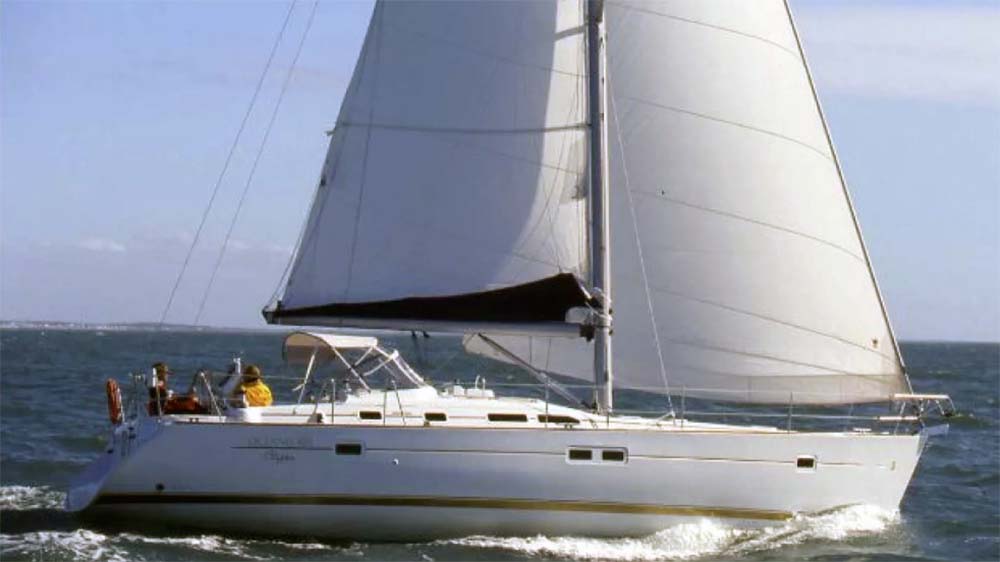
These two are close cousins in philosophy: production French builders aiming to maximize interior volume and cruising comfort within a ~42-foot hull. The 42 DS differentiates itself with the deck-saloon styling and the particular feel of its Marc Lombard hull; the Oceanis tends to offer a variety of interior layouts and is noted for economical construction choices that keep purchase prices competitive. For buyers, the Jeanneau frequently wins on natural light and a more modern look below, while the Oceanis can be slightly more conservative on finish but often offers comparable sailing behavior.
In practical ownership terms both boats require similar upkeep and offer similar offshore capability when properly outfitted; the decision often comes down to taste in interior ambiance, and the availability/condition of local used examples.
► Learn more about de Beneteau Oceanis 423
Maintenance Costs of a Jeanneau Sun Odyssey 42 DS in the USA
- Mooring/Marina fees: $3,000–$12,000/year depending on region (Florida/California/NE are higher; inland/coastal small marinas cheaper).
- Insurance: $800–$3,000/year depending on cruising range and coverage.
- Engine servicing: $400–$1,200/year for routine service; more for major repairs or replacements.
- Antifouling paint: $500–$2,500 every 1–2 years depending on haulout and paint type.
- Standing & running rigging: inspection costs modest annually; expect $3,000–$8,000 for full replacement every 10–15 years.
- Sails: routine repairs modest; full replacement (main + headsail) can be $6,000–$18,000 depending on material and cut.
Regional differences: New England and California typically push mooring/yard costs to the upper range, while Gulf and smaller southeastern yards can be less costly; insurance and survey requirements also vary by cruising area. Significant one-time costs buyers should budget for include a major electronics refit ($3,000–$15,000), rig replacement or major refastening ($3,000–$12,000+) and a comprehensive refit (interior, systems, bottom work) which can exceed $30,000 depending on scope.
Owner-maintenance: many routine tasks (winterization, basic engine checks, varnish/touch-up, bottom paint if hauled nearby) can be managed by competent owners, but major systems (rigging removal/replacement, complicated structural work, advanced electronics installations) require professionals. Overall, the Jeanneau 42 DS sits in the medium cost band for a 42-foot cruiser: not bargain-cheap to run, but not unusually expensive for her size and intended use. Good resale prospects and a recognisable brand help recover some of the maintenance investment at sale if the boat is kept in sound condition.
Conclusion
The Jeanneau Sun Odyssey 42 DS is a pragmatic, well-rounded cruiser that puts comfort and liveability at the center of its design. Its strengths are abundant natural light, sensible cruising performance, and a production-boat reliability that makes surveys and routine maintenance predictable for the experienced owner. Weaknesses are typical of its class: some systems are tight for access, ex-charter examples may show cosmetic wear, and certain bondings or exhaust components deserve careful inspection on older boats. For a couple or family seeking a comfortable coastal cruiser that will also handle occasional offshore passages with sensible upgrades, the 42 DS is a compelling option and—given current market listings—represents reasonable value for money. Its resale prospects are solid within the production-boat segment because the DS aesthetic remains desirable and Jeanneau support is widespread; for buyers prioritizing pure racing performance or minimal systems complexity at the lowest possible price, other older designs (some Catalina or Hunter models) may be more attractive, but they trade off the modern interior experience the DS offers. In short: if you want a 42-foot boat that favors comfort, light and straightforward cruising capability, it’s worth hunting for a well-surveyed Sun Odyssey 42 DS and budgeting for the routine upgrades that make it a dependable, enjoyable platform for cruising.
Specifications
| General Specifications | |
|---|---|
| Hull Type: | Fin w/bulb & spade rudder |
| Rigging Type: | Fractional Sloop |
| LOA: | 42.42 ft / 12.93 m |
| LWL: | 38.06 ft / 11.60 m |
| S.A. (reported): | 768.00 ft² / 71.35 m² |
| Beam: | 13.55 ft / 4.13 m |
| Displacement: | 19,676 lb / 8,925 kg |
| Ballast: | 5,628 lb / 2,553 kg |
| Max Draft: | 6.99 ft / 2.13 m |
| Construction: | Fiberglass (FG) |
| First Built: | 2007 |
| Builder: | Jeanneau (France) |
| Designer: | Marc Lombard |
Auxiliary Power / Tanks (Original Equipment) | |
| Engine Make: | Yanmar |
| Engine Model: | 4JH4AE |
| Engine Type: | Diesel |
| Fuel Capacity: | 34 gals / 129 L |
Accommodations | |
| Water Capacity: | 94 gals / 356 L |
Sailboat Calculations | |
| S.A. / Displ.: | 16.92 |
| Bal. / Displ.: | 28.60 |
| Disp. / Len.: | 159.32 |
| Comfort Ratio: | 24.01 |
| Capsize Screening Formula: | 2.01 |
| S#: | 3.23 |
| Hull Speed: | 8.27 kn |
| Pounds/Inch Immersion: | 1,842.70 lb/inch |
Rig and Sail Particulars | |
| I: | 51.71 ft / 15.76 m |
| J: | 15.94 ft / 4.86 m |
| P: | 48.82 ft / 14.88 m |
| E: | 14.60 ft / 4.45 m |
| S.A. Fore: | 412.13 ft² / 38.29 m² |
| S.A. Main: | 356.39 ft² / 33.11 m² |
| S.A. Total (100% Fore + Main): | 768.52 ft² / 71.40 m² |
| S.A. / Displ. (calculated): | 16.94 |
| Estimated Forestay Length: | 54.11 ft / 16.49 m |
Disclaimer
The considerations and analyses presented regarding the Jeanneau Sun Odyssey 42 DS sailboat are of a general nature and are based on the available information and technical data on this model, interpreted to the best of our knowledge and understanding. It is important to note that the specific characteristics of any particular sailboat may vary due to custom modifications, maintenance performed, and conditions of use over time, among other factors. Therefore, the details and performance of the boat you are considering may not exactly match the information provided here.
We strongly recommend that, before making any purchasing or usage decisions, you conduct a detailed inspection of the boat in question, consult with nautical professionals and other sailors, and consider your personal needs, expectations, and capabilities. Each sailboat may have unique particularities that affect its performance and suitability for different types of sailing and sailors.
The information contained in this analysis should be used as a general guide and not as a definitive reference. Professional evaluation and personal inspection are essential to ensure that the boat meets your specific requirements and expectations.