



The MacGregor 26X was introduced in the mid-1990s as a deliberate “powersailer” — a trailerable, multi-role boat that tries to merge efficient sailing with credible high-speed motoring. Roger MacGregor’s firm built the X as an evolution of the long-running MacGregor 26 line, fitting a centerboard/double-rudder hull and generous water-ballast system to a hull designed to plane under a powerful outboard; production ran through the late 1990s into the early 2000s and the type remains common on the used market. That design intent shaped the buyer the 26X sought: people who want a single boat for varied missions — fast transfers and family daysails, overnight coastal trips, trailer-to-different-waters flexibility — rather than a pure club racer or a committed blue-water cruiser. On the used market the 26X still attracts owners who prize versatility and low entry price, and it shows up frequently in regional listings where trailer-sailers and powersailers are popular.
Design and Construction
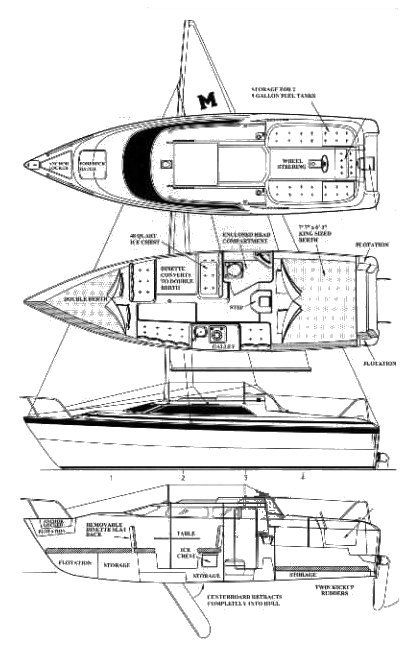
Structurally the 26X is a fiberglass monohull with a centerboard (trunk), water ballast and transom-mounted outboard — a recipe that lowers towing weight while allowing deep draft and lift when sailing or powering. The hull shape and relatively light displacement are optimized to plane with significant outboard horsepower, so the boat carries a much larger engine capacity than a conventional cruiser its size. Water ballast and the lifting centerboard change the naval-architecture tradeoffs: stiffness under sail comes from added weight distributed in tanks rather than concentrated lead low in a keel, so you trade a lighter trailering mass and shallow-water access for reduced ultimate righting moment and increased system complexity. Overall the materials and production-boat construction make routine gelcoat and deck repairs straightforward for a competent owner, but the ballast plumbing, rudder linkage and transom/engine pad are system-level items that benefit from periodic professional attention.
Performance
The 26X occupies a middle ground: under sail it accelerates quickly in light air because of its low wetted surface and ample sail area for displacement, but it is comparatively tender in strong breeze compared with a fixed-keel pocket cruiser — the water ballast helps but cannot fully substitute for deep lead. Where the design really distinguishes itself is under power: with a large outboard the hull will plane and deliver much higher transit speeds than similarly sized pure sailboats, which makes it exceptionally practical for owners who value fast hops between anchorages. Upwind pointing and heavy-sea manners are modest; owners routinely reef earlier and respect the boat’s limits in chop rather than pushing for maximum windward VMG. For buyers who split their time between motoring and relaxed coastal sailing, the 26X’s blended performance is a persuasive tradeoff; sailors seeking tight windward performance or offshore comfort should expect compromises.
Comfort and Accommodations
Interior packaging is one of the 26X’s stronger practical virtues: the cabin offers sensible berths, a small galley area and usable stowage for a family-weekend profile, and the light displacement keeps the structure simple to maintain. Ventilation and headroom are typical for a trailerable 26-footer — comfortable for short cruises but limited for long-term liveaboard use unless the owner invests in modest retrofits. Because the design targets versatility over luxury, many boats on the market show owner upgrades (new cushions, modern electronics, improved galley fittings) rather than factory-original trim, which is an advantage: a motivated buyer can prioritize the interior changes that matter for their use. Practically, the 26X works best for couples or small families who value day-boat performance and occasional overnights versus owners who expect full-time liveaboard comfort.
Safety and Practicality
Shallow draft with the board up, easy trailering and the ability to beach are core practical strengths that widen cruising options and reduce marina costs when owners elect to store ashore. At the same time, the water-ballast plumbing, fill/vent valves and rudder/daggerboard hardware require disciplined inspection — failures in valves or leaks into the cabin are a known risk and must be part of routine checks before launch. The transom and engine mount see unusual loads on a powersailer that uses a sizeable outboard, so confirm transom integrity during survey; steering linkages and rudder condition are also items to examine because kick-up hardware and linkage wear are recurring service points. With sensible upkeep the 26X is a safe and highly practical coastal boat; without that attention, the same systems that give it versatility can create avoidable reliability problems.
Known Issues with the MacGregor 26X
Owners and forum threads consistently highlight a handful of repeat topics: ballast-tank leaks or valve failures that allow water to enter the accommodation area, factory rudder geometry or hardware that many owners elect to replace or modify, and wear or damage to rudder blades and linkage if the kick-up arrangements are not correctly maintained. Transom and engine-pad stresses are another practical concern on boats used aggressively under power; owners upgrading to larger outboards sometimes reinforce the transom or re-engineer engine mounts. These are largely repairable or preventative matters — common fixes include replacing or upgrading the rudder, servicing or fitting better ballast valves, and reinforcing the transom — but a careful pre-purchase inspection that focuses on ballast integrity, the rudder system and the transom will distinguish a clean boat from one that will need near-term investment.
Market Availability and Pricing in the U.S.
The 26X is out of production and circulates on the used market in substantial numbers; it frequently appears on major listings and broker sites, typically priced below equivalent fixed-keel cruisers because buyers accept its hybrid compromises. Recent listing samples show many X models offered in the $10,000–$20,000 band depending on year, engine, trailer and upgrades, with tidy examples commanding more and older or neglected boats at the low end. These boats are commonly found where trailer-sailers are popular — inland lakes, Chesapeake/Delaware Bay region, and parts of the Southeast — and condition ranges from well-equipped, carefully maintained examples to boats that need rudder or ballast attention. Versus comparable fixed-keel 25-foot cruisers, the 26X generally offers a compelling value for owners who prize its motoring capability and trailering freedom; resale depends strongly on condition and documented maintenance of the ballast and steering systems.
Below is a comparison with similar sailboats from the same era:
| Model | LOA | Year (approx) | Typical US used price | Principal differences |
|---|---|---|---|---|
| MacGregor 26X | 25.8 ft | 1995–2003 | $10,000–$20,000 | Powersailer hybrid with water ballast and centerboard; planes under a large outboard and trades windward stiffness for motoring speed and trailerability. |
| Catalina 250 | 25.0 ft | 1995–2007 (various marks) | $11,000–$20,000 | Conventional pocket cruiser with fixed or wing/centerboard keels; heavier displacement, stiffer under sail and generally more traditional cruising comfort. |
| Hunter 240 | 24.1 ft | 1997–2005 | $8,000–$14,000 | Trailerable water-ballast centerboard cruiser with B&R rig focused on easy ramp launching and weekend comfort; more sail-boat centric than the MacGregor powersailer. |
| MacGregor 26M | 25.8 ft | 2003–2014 | $12,000–$30,000 | Later evolution of the 26 series with daggerboard/rotating spar options and higher factory power capability; improved systems but still a hybrid compromise. |
MacGregor 26X vs Catalina 250

The 26X is built around versatility: a light, planing hull and water-ballast system let it double as a fast dayboat under outboard power and a usable coastal sailer, so owners who value quick transits and trailer mobility will find its mixed nature rewarding. The Catalina 250, by contrast, is a conventional pocket cruiser with heavier displacement and a deeper fixed or wing keel, which gives it stronger righting moment and better windward performance — characteristics that favor confident family cruising and a steadier motion in chop.
From a maintenance and ownership viewpoint the 26X requires attention to ballast plumbing, rudder linkages and transom mounting because those systems are central to its performance-as-a-powersailer; the Catalina’s simpler keel and fewer mechanical systems trade a bit of flexibility for lower systemic complexity. Practically, choose the 26X if you prioritize planing speed, trailerability and multi-purpose use; choose the Catalina if you want a stiffer, more traditional sailing platform better suited to regular coastal cruising and higher resale recognition in fixed-keel markets..
► Learn more about the Catalina 250
MacGregor 26X vs Hunter 240
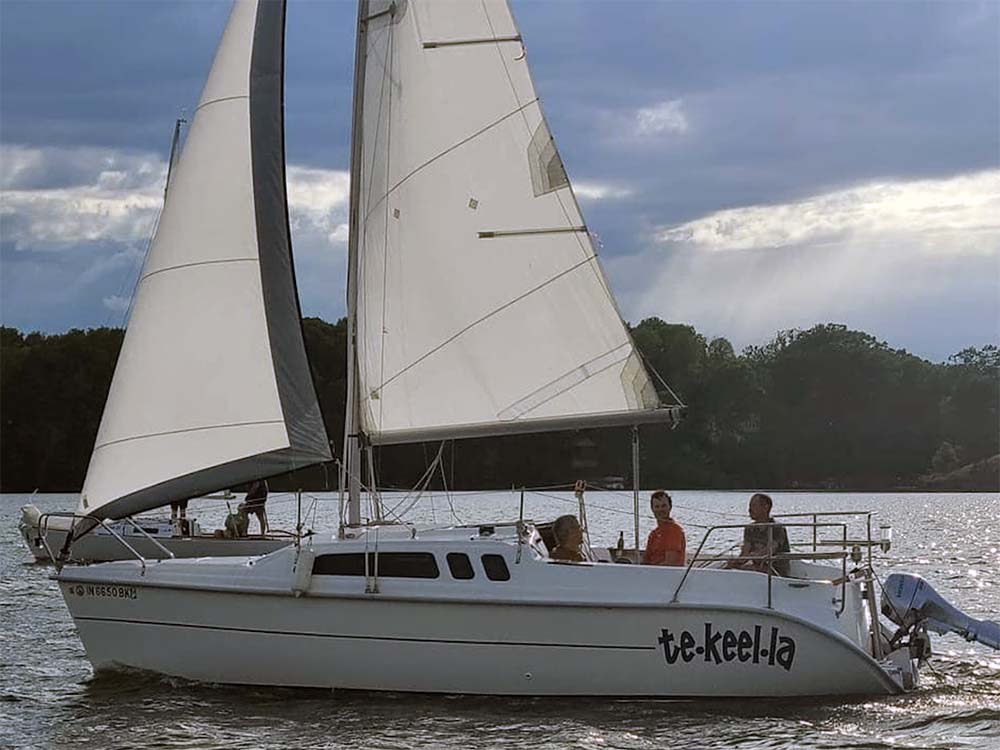
Both the 26X and the Hunter 240 were designed to give owners trailerability and easy ramp handling, but their compromises differ: the Hunter emphasizes simple weekend cruising with a B&R fractional rig and a focus on deck/cabin comfort, while the 26X leans toward higher outboard power and planing capability. That means the 240 feels more like a “true” small sailboat under sail—more forgiving and geared to easy family weekends—whereas the 26X will reward owners who want fast motor transfers and the flexibility to run at speed when conditions or schedules demand it.
Maintenance patterns reflect those priorities: Hunters tend to need routine sail, rig and outboard care but fewer complex ballast-system repairs, while MacGregors bring ballast valves, rudder/linkage and transom load checks into routine inspection lists. For an owner focused on pure sailing comfort and lower systemic complexity the Hunter often wins; for someone who places equal value on motoring speed and trailer mobility, the 26X is the more practical daily-use tool.
► Learn more about the Hunter 240
MacGregor 26X vs MacGregor 26M

The 26M is the logical successor that tightened many of the 26X’s details: stiffer options to handle higher power, revised daggerboard/rudder arrangements and more factory focus on reducing the X’s known handling quirks, so the M often feels more refined at speed. The 26X, however, is still very capable and is often available more cheaply; it’s a proven platform for owners willing to DIY improvements (rudder upgrades, valve replacements) to tune the boat to their mission.
When comparing ownership realities, the 26M can represent fewer immediate retrofit costs and sometimes higher asking prices because it addressed some of the X’s ergonomic and steering complaints; conversely, a well-sorted 26X bought at a discount can deliver identical real-world utility for owners who inspect and correct ballast and rudder issues. For buyers, the question is whether they prefer a later factory refinement (26M) with a higher purchase tag or the bargain-plus-upgrade route of the 26X.
► Learn more about de MacGregor 26M
Maintenance Costs of a MacGregor 26X in the U.S.
Typical annual maintenance expenses (each item bolded then commented for clarity):
- Mooring or Slip Fees: $800–$4,000+ per year depending on region and whether you keep the boat on a seasonal slip or store ashore; marina fees in busy coastal markets are at the high end.
- Insurance: $250–$900 annually depending on state, hull value and coverage; coastal states and high-risk regions push premiums higher.
- Engine Servicing (outboard): $150–$700 per year for routine tune, impeller and winterization if you use a small outboard regularly; costs rise with engine horsepower and shop labor rates.
- Antifouling / Haulout & Paint: $300–$2,500 per haulout/paint cycle depending on yard rates and number of coats; trailer-stored owners often pay much less because they dry-store.
- Standing & Running Rigging / Small Parts: $100–$600 annually for inspections, new lines and small hardware; expect periodic larger rigging or block replacements in the $1,000+ range as parts age.
- Sails (repairs and replacement): $100–$500 per year for care and repairs; a full mainsail or genoa replacement for a 26-ft sloop commonly falls in the $1,200–$3,500 range depending on cloth and style.
Significant one-time costs to budget for: rudder replacement or rebuild ($800–$3,000) if blades or linkages are damaged; ballast valve/tank repairs ($500–$2,000) when leaks or access issues occur; and electronics or trailer refreshes ($1,000–$5,000) for modern charting, battery systems or trailer brakes. Owners comfortable with mechanical work can handle many routine tasks (outboard service, valve replacements, trailer maintenance) and significantly reduce labor costs; however, plumbing inside the ballast tank, transom reinforcement, or complex electrical upgrades commonly require professional yards. Regional variation is substantial: owners who trailer and store ashore face much lower annual haulout and slip costs than those who keep the boat in a full-service coastal marina.
Overall assessment: ownership costs for a MacGregor 26X sit in the low-to-medium band for 26-foot boats if the owner does most maintenance and avoids expensive yard labor; if the boat requires major ballast, rudder or transom work the near-term outlay can push first-year expenses notably higher. Given the model’s steady used-market presence, sensible investments in rudder integrity, ballast valves and a reliable outboard typically pay dividends at resale and help the boat remain a good value relative to similarly sized fixed-keel cruisers.
Conclusion
The MacGregor 26X is a purposeful compromise: it trades some pure-sailing attributes (windward stiffness, ultimate heavy-sea comfort) for rapid motoring, trailerability and mission flexibility. Its strengths are accessibility and versatility — owners who want fast bay crossings, easy ramp launching, or a single boat that can serve as a dayboat and a weekend cruiser will find its design compelling. Its weaknesses are predictable and manageable: water-ballast plumbing, rudder hardware and transom loads must be inspected and occasionally upgraded to keep the boat performing and safe. For buyers seeking an economical, multi-role 25–26-foot boat for coastal cruising, lake sailing and fast transfers, the 26X is worth serious consideration; for sailors who prioritize windward performance, offshore capability or a low-system-complexity platform, a conventional fixed-keel pocket cruiser will better match expectations. In short: the MacGregor 26X rewards pragmatic owners who value function and flexibility and who will give the ballast, rudder and engine fit-up the attention they require — in that ownership niche the boat represents strong value and a clear, defensible purchase option.
Specifications
| General Specifications | |
| Hull Type: | Centerboard (Trunk) |
| Rigging Type: | Fractional Sloop |
| LOA: | 25.82 ft / 7.87 m |
| LWL: | 23.00 ft / 7.01 m |
| Sail Area (reported): | 281.00 ft² / 26.11 m² |
| Beam: | 7.83 ft / 2.39 m |
| Displacement: | 3,750 lb / 1,701 kg |
| Ballast: | 1,400 lb / 635 kg |
| Max Draft: | 5.50 ft / 1.68 m |
| Min Draft: | 0.75 ft / 0.23 m |
| Construction: | Fiberglass (FG) |
| Ballast Type: | Water |
| First Built: | 1995 |
| Last Built: | 2003 |
| # Built: | 5,000 |
| Builder: | MacGregor Yachts Inc. (USA) |
| Designer: | Roger MacGregor |
Auxiliary Power / Tanks (Original Equipment) | |
| Fuel Capacity: | 18 gals / 68 L |
Accommodations | |
| Water Capacity: | 10 gals / 38 L |
| Headroom: | 5.92 ft / 1.80 m |
Sailboat Calculations | |
| S.A. / Displ.: | 18.68 |
| Bal. / Displ.: | 37.33 |
| Disp. / Len.: | 137.59 |
| Comfort Ratio: | 15.67 |
| Capsize Screening Formula: | 2.02 |
| S#: | 3.40 |
| Hull Speed: | 6.43 kn |
| Pounds/Inch Immersion: | 643.48 lb/in |
Rig and Sail Particulars | |
| I: | 23.00 ft / 7.01 m |
| J: | 9.67 ft / 2.95 m |
| P: | 25.00 ft / 7.62 m |
| E: | 10.38 ft / 3.16 m |
| S.A. Fore: | 111.21 ft² / 10.33 m² |
| S.A. Main: | 129.75 ft² / 12.05 m² |
| S.A. Total (100% Fore + Main Triangles): | 240.96 ft² / 22.39 m² |
| S.A./Displ. (calculated): | 16.02 |
| Estimated Forestay Length: | 24.95 ft / 7.60 m |
Disclaimer
The considerations and analyses presented regarding the MacGregor 26X sailboat are of a general nature and are based on the available information and technical data on this model, interpreted to the best of our knowledge and understanding. It is important to note that the specific characteristics of any particular sailboat may vary due to custom modifications, maintenance performed, and conditions of use over time, among other factors. Therefore, the details and performance of the boat you are considering may not exactly match the information provided here.
We strongly recommend that, before making any purchasing or usage decisions, you conduct a detailed inspection of the boat in question, consult with nautical professionals and other sailors, and consider your personal needs, expectations, and capabilities. Each sailboat may have unique particularities that affect its performance and suitability for different types of sailing and sailors.
The information contained in this analysis should be used as a general guide and not as a definitive reference. Professional evaluation and personal inspection are essential to ensure that the boat meets your specific requirements and expectations.