


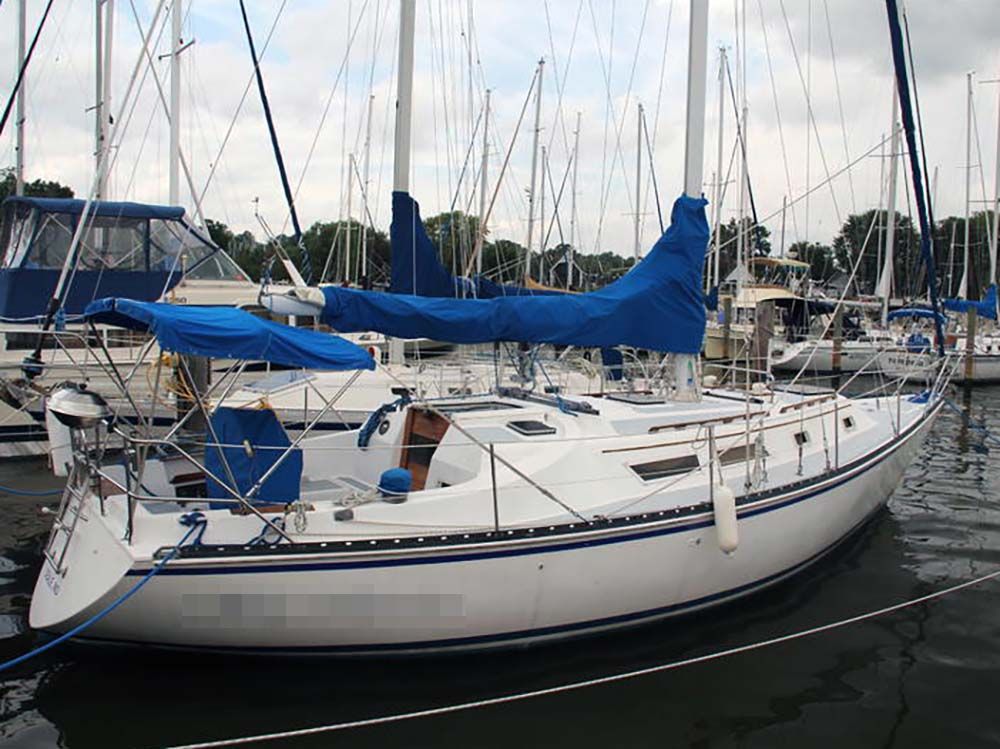
The Hunter 37 Cutter is a late-1970s/early-1980s blue-water–capable cruising design from Hunter Marine intended for serious coastal cruising and offshore passages—designed by John Cherubini and built with solid, conservative seakeeping in mind. The design was developed for owners who wanted a robust, traditional-lined 37-foot cruiser that could carry stores and sail comfortably on longer hops rather than chase club trophies; production ran from the late 1970s into the mid-1980s and the boat has since remained a steady presence on the used market. Because several hundred hulls were built and many were outfitted for real cruising, the model enjoys a small but loyal following of liveaboards, cruising couples and owners who value solid construction and comfortable motion; you’ll also see examples listed by brokers, yards and owner sellers across the U.S. rather than in dealer stock.
Design and Construction
The Cherubini-designed Hunter 37 is a moderate-to-heavy displacement monohull with a fin keel and an internally mounted spade rudder; it was commonly rigged as a cutter so owners could carry a staysail and reduce headsail size for easier balance in heavy weather. The hull and deck were built in fiberglass with traditional interior joinery—many boats show attractive teak work—and the structure and tank locations reflect a blue-water mindset: heavy ballast (roughly 6,800–6,900 lb) low in the keel and a displacement near 17,800 lb give the boat stiffness and load-carrying ability. Those construction choices trade light-air zip for seakindliness and the ability to carry stores and gear without a dramatic loss of comfort, a useful attribute for buyers who plan longer cruises or liveaboard use.
From a maintenance/ownership perspective the boat’s simple, conservative build is a mixed blessing: fiberglass hull repairs are straightforward and parts for classic systems are widely understood, but some production shortcuts in areas of layup and deck core sealing reported by owners mean a careful survey is essential. Chainplates, deck-to-hull joints, portlight seals and areas under large deck fittings are the usual places a surveyor will focus; structurally, however, the boats respond well to routine preventive work and targeted repairs, which preserves value for conscientious owners.
Performance
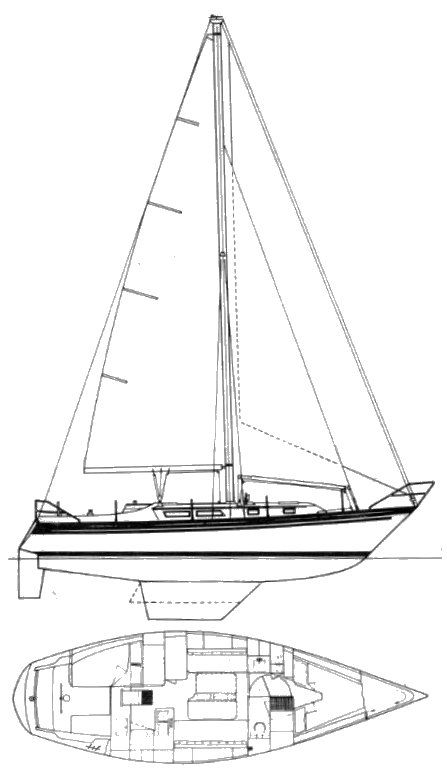
Measured against modern 36–38-foot production cruisers the Hunter 37 is not a lightweight flyer: its hull speed calculates in the mid-7 knot range (about 7.34 kn using the 30′ LWL). In practice the boat excels at comfortable, predictable passage-making rather than outright racing—she accelerates moderately, points respectably for a full-bodied cruiser, and carries sail area well when reefed progressively. The cutter rig is a practical performance choice for coastal and offshore work: it lets the helm balance the sailplan in a wide range of conditions and simplifies short-handed sail changes by keeping smaller working sails forward. Owner reports and forum experience emphasize that the design is forgiving in confused seas and comfortable on long legs, with enough wetted surface to be steady but not so much as to make low-wind progress impossible.
Compared with lighter European production cruisers the 37 will typically feel heavier and slower in light airs, but the heavier motion and reserve stability pay off when the sea builds—exactly the compromise many blue-water-minded buyers expect and accept. For buyers focused on reliable coastal passages and occasional offshore work, the boat’s sailing character is commonly described as “honest” and manageable for a couple.
Comfort and Accommodations
The interior of the Hunter 37 reflects Cherubini’s focus on functionality: sturdy joinery, logical tank placement and a layout that accommodates a couple or a small family on extended cruises. Typical arrangements include a sizable forward cabin, a roomy salon with settees that double as sea berths, and usable galley and head spaces; the woodwork and cabinetry generally age well and many owners opt for modest cosmetic updates (cushions, galley appliances, electronics) rather than wholesale structural refits. Tankage and storage capacity are generous for the era, which makes the 37 attractive to cruisers who want autonomy between stops.
Ergonomically the boat suits a couple or small family: cockpit size and protected helm make short-handed sailing comfortable, while below decks the circulation and stowage support multi-day voyaging. Full-time liveaboard use is possible with some modernizations (ventilation, refrigeration, shore power upgrades), and because a strong owner community exists, buyers frequently find examples that have been tastefully upgraded without losing the original structural integrity.
Safety and Practicality
Deck layout on the Hunter 37 prioritizes safe crew movement and storm management: moderate freeboard, secure handholds and a cutter rig that allows smaller working sails forward help keep sail area manageable in worsening conditions. Access to systems—engine, tanks, through-hulls—is generally straightforward, which matters for owners who plan to do much of their own maintenance. The design’s weight and ballast provide a reassuring righting moment compared with lighter racers: that contributes both to comfort and to safety in short, steep seas.
That said, practical safety for serious offshore passages will usually require owner investment: modern electronics, inspection and likely renewal of standing rigging, routine checks or replacement of through-hulls and an upgraded ground tackle are typical pre-offshore items. With those common upgrades the hull and rig configuration of the 37 makes it entirely reasonable as a coastal and limited offshore platform.
Known Issues with the Hunter 37 Cutter
Owners’ groups and survey threads call out a handful of recurring maintenance items rather than a single fatal design flaw. The most frequent issues reported are portlight and hatch leaks leading to localized core rot or delamination, holding-tank location/access problems and occasional marginal wiring or piecemeal electrical upgrades that benefit from professional review. Rudder-bearing support points and chainplate backing have been noted as areas to inspect carefully on older boats; some owners also reference the need to check mast step and base for corrosion or poor bedding. These are all manageable if identified in a pre-purchase survey and repaired correctly.
Recommended buyer improvements commonly include re-bedding/replace of deck fittings and chainplates, replacement or service of standing rigging if age-worn, modernizing navigation electronics, and addressing any portlight or core issues the survey turns up. Replacing or repacking through-hulls and investing in a reliable self-contained holding tank or pump-out plumbing are also typical checklist items on Cherubini Hunters. Taken together these upgrades reduce ownership risk and are widely regarded as sensible investments by the owner community.
Market Availability and Pricing in the U.S.
The Cherubini Hunter 37 is out of production (last hulls built in the mid-1980s), so all availability is on the used market. Because the run produced several hundred hulls, examples appear across U.S. regions—Florida and the Southeast, the mid-Atlantic and Chesapeake, New England and parts of the Great Lakes and West Coast—which gives buyers options when searching for a well-maintained hull versus a project boat. Asking prices for usable, cruiser-equipped examples typically sit in the low-to-mid tens of thousands, while turnkey refitted boats can command higher figures depending on upgrades and location. Recent listings and broker pages show asking and sold figures that cluster between roughly $15,000 for a project hull and around $50,000–$60,000 for clean, refit examples; many active listings and historical sales fall comfortably inside $15,000–$60,000.
Below is a comparison table placing the Hunter 37 Cutter alongside three commonly considered alternatives in the same cruising niche. The price ranges below are typical U.S. used-market figures and will vary by year, condition and region.
| Model | LOA | Years Built (approx.) | Typical U.S. Used Price | Main Differences |
|---|---|---|---|---|
| Hunter 37 Cutter (Cherubini) | ~37.0′ | 1978–1984 | **$15,000–$60,000** | Heavier, blue-water–oriented hull, cutter rig, traditional joinery; strong motion and load capacity. :contentReference[oaicite:11]{index=11} |
| Catalina 36 (Mk I / Mk II) | ~36.3′ | 1982–2005 | $25,000–$100,000 | US-built cruiser with roomy interior and widely available parts; generally lighter and more numerous on U.S. market. :contentReference[oaicite:12]{index=12} |
| Jeanneau Sun Odyssey 36.2 | ~36.1′ | Late 1990s–2000s | $50,000–$75,000 | European hulls with lighter displacement and generally sportier feel; often brighter, more modern interiors. :contentReference[oaicite:13]{index=13} |
| Beneteau Oceanis 361 | ~36.1′ | Late 1990s–early 2000s | $60,000–$95,000 | Lighter, roomier interiors for the length and slightly better light-air performance; often favored in charter markets. :contentReference[oaicite:14]{index=14} |
Hunter 37 Cutter vs Catalina 36

The Hunter 37’s hull and rigging philosophy favor blue-water reliability and heavy-load tolerance; its heavier displacement and deep ballast give a steady, seakindly motion when loaded for cruising. The Cutter rig and solid tankage were intended for serious cruising, and many owners prize the boat’s ability to carry stores and remain balanced under reduced sail without excessive helm effort. In contrast, the Catalina 36 tends to be a slightly lighter, more modern-production cruiser with a focus on interior volume and ease of handling for coastal couples—its widespread market presence also means parts and local experience are often easier to find. For a buyer who plans long, gear-heavy cruises or values a “solid ship” feeling, the Hunter’s Cherubini lines and cutter gear are an advantage; for owners who want maximum interior comfort for weekend sailing and a very large used market, the Catalina typically offers better liquidity and more recent MkII refinements.
Below decks the Hunter’s traditional joinery and tank placement reward owners who want a practical liveaboard layout and are comfortable performing modest refits; the Catalina often trades a bit of structural mass for additional cabinlight and slightly different ergonomics that appeal to family cruisers. Maintenance on both is manageable by an owner-mechanic, but the Hunter’s older systems and occasional production-era shortcuts make a thorough survey essential—buyers should budget for chainplate, portlight and through-hull inspections. Resale-wise, the Catalina’s sheer numbers and name recognition often make it easier to sell quickly; the Hunter holds value among a narrower market of buyers who specifically seek Cherubini-designed blue-water types.
► Learn more about de Catalina 36
Hunter 37 Cutter vs Jeanneau Sun Odyssey 36.2
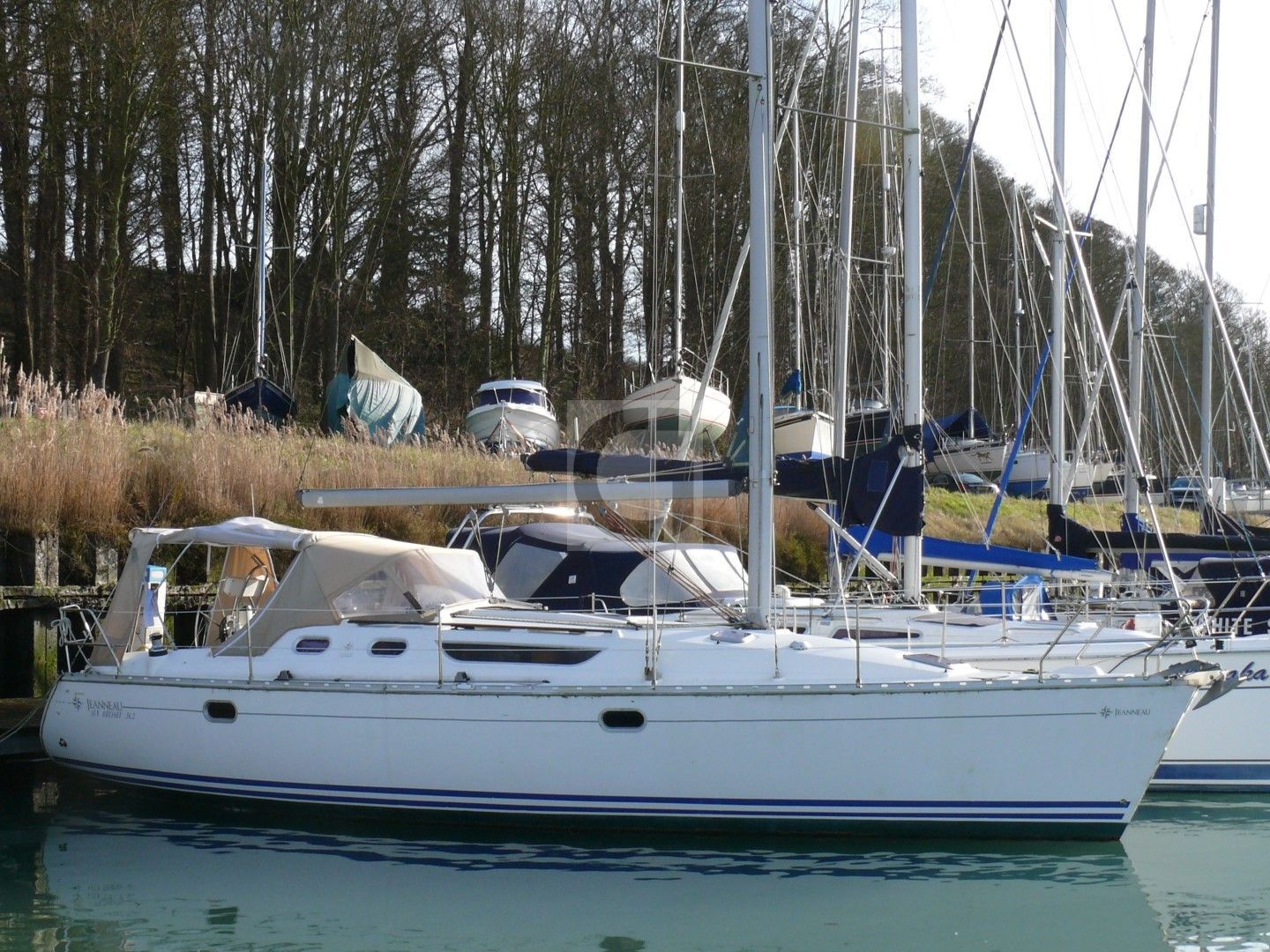
Comparing the Cherubini Hunter with a Jeanneau Sun Odyssey 36.2 highlights differing design priorities: the Hunter leans toward robustness and seakindliness, while the Jeanneau favors lighter displacement, roominess and more modern European hull shapes that often translate to better light-air performance. On passage the Jeanneau will generally feel livelier in moderate winds and accelerate more readily on reaches, whereas the Hunter keeps a steadier motion when loaded and will feel more predictable in confused seas. For a buyer whose sailing area is light-air coastal cruising and who values contemporary interior styling, the Jeanneau will be attractive; for someone prioritizing heavy-weather tolerance and straightforward mechanical access, the Hunter is the safer, more conservative pick.
From an ownership perspective the Jeanneau may require different spare-parts sourcing and a comfort with European systems and suppliers, whereas the Hunter’s U.S. build and long domestic history make parts and experienced yards easier to locate in many American ports. Interior comfort on the Jeanneau tends to be brighter and more modern, but the Hunter’s joinery and practical tankage still outperform in raw capacity for long cruises. Maintenance philosophies differ too: the Jeanneau owner often budgets for replacements suited to newer systems, while the Hunter buyer budgets for traditional rigging, portlight and deck-core attention.
► Learn more about de Jeanneau Sun Odyssey 36.2
Hunter 37 Cutter vs Beneteau Oceanis 361

When placed against a Beneteau Oceanis 361, the Hunter 37 reads as the more conservative, sea-stable platform and the Beneteau as the more volume-efficient, performance-leaning cruiser. The Oceanis 361’s hull form and modern deck arrangements tend to offer larger interior volume and a lighter feel on the helm, which shows up as slightly better performance in light to moderate conditions; the Hunter’s heavier displacement rewards load-carrying and provides a calmer motion in heavier seas. Buyers who want modern ergonomics, easy light-air sailing and resale appeal in charter or coastal markets will often prefer the Beneteau; buyers focused on durability, simple systems and the ability to carry heavy stores for extended cruising will find the Hunter’s compromises more appealing.
Maintenance and upgrade expectations differ: Beneteau parts and service follow European supply chains and sometimes command different pricing, while Hunter replacement parts and the broad domestic owner base mean knowledge and spares are often locally available. In resale terms the Oceanis models can command firm prices in markets that prize interior volume and modern lines, while the Hunter trades on a niche reputation for seaworthiness among classic cruiser buyers—each has a clear owner profile and corresponding market.
► Learn more about de Beneteau Oceanis 361
Maintenance Costs in the U.S.
Typical annual or periodic costs (ranges are approximate and region-sensitive):
- Slip / Mooring — $2,500–$12,000+ per year. Marina pricing varies widely by region (New England and California at the high end; smaller Gulf/Southeast marinas are often much cheaper). Expect seasonal or annual contracts to dominate the bill.
- Insurance — $300–$1,200 per year. Basic hull and liability coverage for an older 37′ cruiser commonly falls in this band, with hurricane/named-storm exposure or high agreed values pushing premiums higher. Typical insurer ranges support a mid-hundreds baseline.
- Engine & Mechanical Service (annual) — $300–$1,500. Routine diesel service, impellers, filters and small repairs are owner-doable in many cases; major repower or gearbox work is much higher.
- Antifouling & Haul/Bottom Work — $800–$4,000 every 1–3 years. Full haulout, pressure wash and paint on a 37′ hull varies with prep work and whether blister repair is needed.
- Rigging & Sails (averaged) — $200–$3,000/year averaged. Routine running-rigging, sail repairs and annual inspections are relatively affordable; full standing-rig replacement or new cruising sails are major periodic costs ($3k–$8k+ depending on cloth).
- Survey / Repairs / Miscellaneous — $500–$4,000. This covers electronics upgrades, canvas, survey remediation work, winter storage and unexpected items; older production boats often need targeted repair budgets on purchase.
How much you can DIY: A motivated owner with moderate mechanical skills can handle a large share of routine maintenance—oil changes, regular rig checks, sail repair patches, and many cosmetic upgrades. Structural work (core repair, standing rigging replacement, major engine repairs) typically requires professionals and materially raises costs. As a rule of thumb, budgeting 5–10% of boat value per year averaged across maintenance cycles is sensible; for older Cherubini Hunters the absolute dollar figure sits in the medium band for a 37′ cruiser. Overall maintenance cost for a Hunter 37 is medium for a boat of its size and capability: higher than small pocket cruisers, but lower than much larger or more complex yachts, and the boat’s resilience and straightforward systems mean value can be recovered at resale with sensible upkeep
Conclusion
The Hunter 37 Cutter is a well-proven, purpose-built cruising boat that suits buyers who prioritize seakindliness, carrying capacity and a conservative, repairable platform. Its strengths are solid motion offshore, practical cutter sailplan flexibility, traditional joinery and a community of owners who keep knowledge and parts circulating—qualities that make it an excellent choice for couples or small families planning extended coastal cruising with occasional offshore hops. Its weaknesses are the typical quirks of a production-era boat: areas where deck-core sealing, portlight bedding and chainplate detail were handled conservatively and thus deserve careful survey attention; older electrics and systems may also need modernization.
For a buyer willing to invest in a proper pre-purchase survey and to make targeted upgrades (rigging, portlight seals, electronics), the Hunter 37 is a worthwhile platform that often represents good value for serious cruising at a reasonable life-cycle cost. It is especially attractive if you want a classic-styled boat that will take a load and stay comfortable; resale remains solid within its niche, though the market is narrower than for newer, volume-built European cruisers. In short: if your priority is a practical, seaworthy 37-footer built for real cruising rather than style-first performance, the Hunter 37 Cutter is worth seeking out.
Specifications
| Hull Type | Fin w/ spade rudder |
| Rigging Type | Cutter |
| LOA | 37.00 ft / 11.28 m |
| LWL | 30.00 ft / 9.14 m |
| S.A. (reported) | 710.00 ft² / 65.96 m² |
| Beam | 11.85 ft / 3.61 m |
| Displacement | 17,800.00 lb / 8,074 kg |
| Ballast | 6,850.00 lb / 3,107 kg |
| Max Draft | 5.08 ft / 1.55 m |
| Construction | Fiberglass (FG) |
| First Built | 1978 |
| Builder | Hunter Marine (USA) |
| Designer | John Cherubini |
Auxiliary Power/Tanks (original equipment) | |
| Make | Yanmar |
| Model | 2QM20H |
| Type | Diesel |
| Fuel | 60 gals / 227 L |
Accommodations | |
| Water | 100 gals / 379 L |
Sailboat Calculations | |
| S.A. / Displ. | 16.73 |
| Bal. / Displ. | 38.48 |
| Disp. / Len. | 294.31 |
| Comfort Ratio | 31.84 |
| Capsize Screening Formula | 1.82 |
| S# | 1.65 |
| Hull Speed | 7.34 kn |
| Pounds/Inch Immersion | 1,270.24 pounds/inch |
Rig and Sail Particulars | |
| I | 46.16 ft / 14.07 m |
| J | 17.00 ft / 5.18 m |
| P | 39.50 ft / 12.04 m |
| E | 13.00 ft / 3.96 m |
| S.A. Fore | 392.36 ft² / 36.45 m² |
| S.A. Main | 256.75 ft² / 23.85 m² |
| S.A. Total (100% Fore + Main Triangles) | 649.11 ft² / 60.30 m² |
| S.A./Displ. (calc.) | 15.29 |
| Est. Forestay Length | 49.19 ft / 14.99 m |
| Mast Height from DWL | 50.00 ft / 15.24 m |
Disclaimer
The considerations and analyses presented regarding the Hunter 37 Cutter sailboat are of a general nature and are based on the available information and technical data on this model, interpreted to the best of our knowledge and understanding. It is important to note that the specific characteristics of any particular sailboat may vary due to custom modifications, maintenance performed, and conditions of use over time, among other factors. Therefore, the details and performance of the boat you are considering may not exactly match the information provided here.
We strongly recommend that, before making any purchasing or usage decisions, you conduct a detailed inspection of the boat in question, consult with nautical professionals and other sailors, and consider your personal needs, expectations, and capabilities. Each sailboat may have unique particularities that affect its performance and suitability for different types of sailing and sailors.
The information contained in this analysis should be used as a general guide and not as a definitive reference. Professional evaluation and personal inspection are essential to ensure that the boat meets your specific requirements and expectations.