


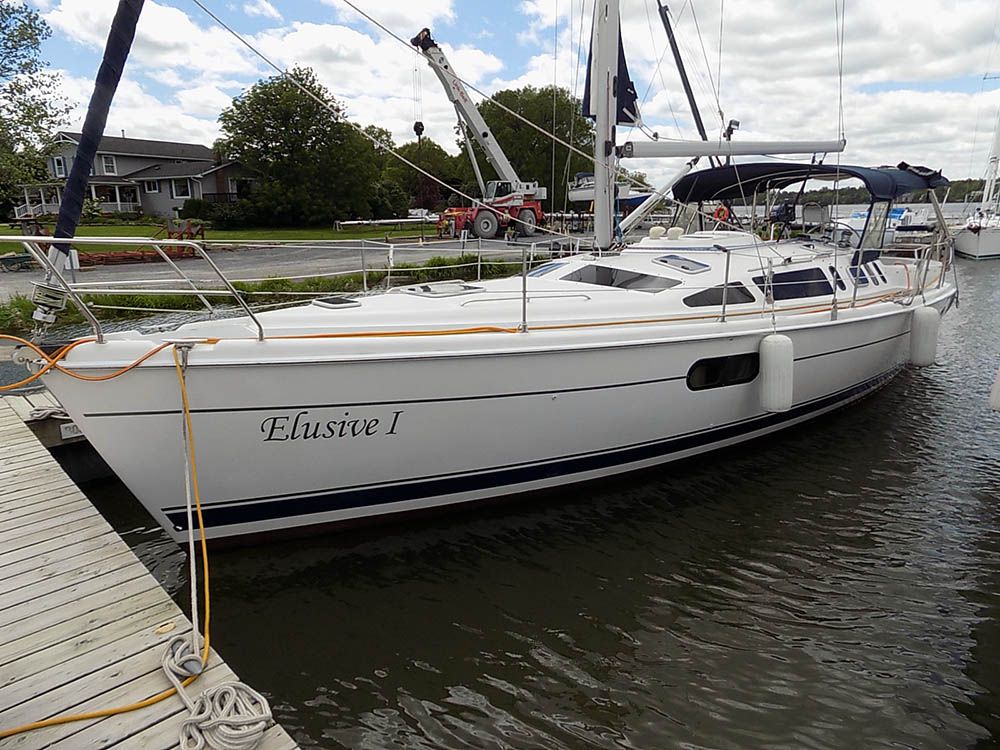
The Hunter 410 is a late-1990s/early-2000s production cruising yacht from Hunter Marine intended primarily as a comfortable offshore-capable cruiser with an emphasis on liveaboard comfort rather than racing performance. Designed in the Hunter Design Team tradition and introduced around 1998–2002, the 410 followed the company’s move toward larger, roomier boats with innovations such as the B&R rig and a relatively shallow wing or fin keel option to suit varied U.S. cruising grounds. The boat was aimed at the owner-cruiser who values interior volume, easy handling for short-handed crews, and a forgiving motion at sea rather than peak performance on the racecourse. On the used market the model has steady demand among couples and small families looking for a comfortable coastal cruiser or affordable offshore platform; it appears frequently in U.S. broker listings, and is commonly bought by private owners and sometimes by charter operators who retrofit interiors for rental use.
Design and Construction
The hull of the Hunter 410 is a moderate-displacement fiberglass monohull with a relatively broad beam carried well aft; typical production examples show a beam near 13.8 feet and a waterline elongated for hull speed. Keel configurations include a winged and a deeper fin option (draft around 5.0 ft for many boats), while the steering is a balanced spade rudder that gives responsive helm feel at cruising speeds.
The standard rig is a fractional B&R sloop, which reduces backstay complexity and supports a large roach mainsail and smaller headsails—an arrangement that simplifies sail handling for short-handed crews but changes tuning expectations compared with a traditional masthead rig. Construction is conventional hand-laid or molded fiberglass with glassed-in structural liners and lead ballast; Hunter’s production choices favor interior volume and cost control over exotic materials. These design and material decisions translate into a yacht that is easy to keep afloat and repair: fiberglass hulls are straightforward for surveyors to inspect and for yards to gelcoat or repair, but the broad topsides and large openings (hatches, windows) mean owners should pay attention to deck-to-hull joints and through-hull fittings during surveys.
From a naval-architectural standpoint the 410 trades off ultimate pointing ability for comfort and interior volume—longer LWL and ample ballast give good cruising stability and predictable motion, while the wing keel option reduces draft for shoal waters at the expense of slightly degraded upwind VMG and more complicated grounding/inspecting scenarios.
Performance
Under sail the 410 is generally described as a steady, forgiving cruiser rather than a lively racer. The fractional B&R rig and relatively large mainsail mean the boat accelerates well in light to moderate airs and is easy to balance by trimming the mainsail; in heavy wind the smaller headsail area reduces the need for frequent headsail changes. Pointing will typically be a few degrees lower than contemporary performance-oriented designs, and the wing keel variants show slightly more leeway upwind than a deep fin, but the overall stability and displacement deliver comfortable passage-making in a seaway.
Maneuverability under power in marinas is adequate—twin rudder feel is not present here, so careful throttle and helm work are required in crosswinds—and many owners report the boat tracks well on long passages. Compared with similar-era family cruisers (Catalina 380, Beneteau 393, Dufour 385) the 410 sits squarely in the middle: faster than many heavy traditional cruisers in light air because of its sail plan, but behind sporty performance cruisers when breeze increases. Reputation among owners emphasizes reliability and easy handling for shorthanded crews rather than outright speed.
Comfort and Accommodations
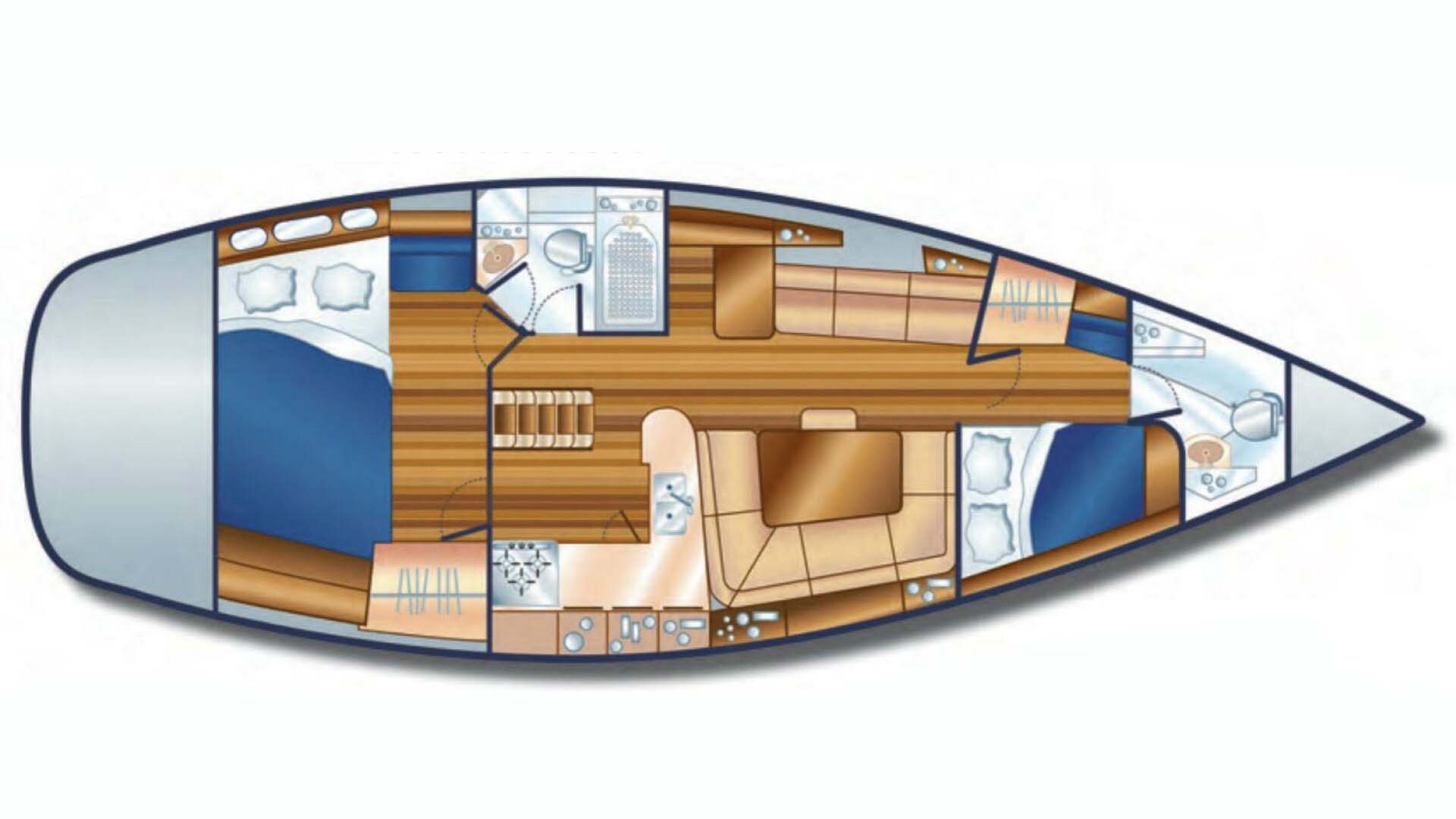
Hunter designed the 410 with an emphasis on liveability: the interior uses the hull’s beam to provide spacious cabins, a large saloon with settees that can double as berths, and generous storage lockers. Typical layouts offer two staterooms and a roomy aft cabin, making the 410 a good match for a cruising couple who occasionally bring family or friends aboard. Ventilation and natural light tend to be better than older boat designs thanks to multiple opening ports and large deck hatches, and ergonomics below are aimed at comfortable living—wide companionway steps, accessible galley, and a centerline chart table on many boats.
That said, long-term liveaboard suitability depends on systems condition: watermaker, refrigeration, insulation, and heating upgrades are common if owners plan extended bluewater time. Many hulls of this vintage have received cosmetic refits; cabinetry and fabrics often get updated while structural joinery remains serviceable if maintained. In practice, the 410 is well suited to couples and families who want comfortable weekend and coastal cruising, and with careful outfit and system upgrades can handle longer voyages.
Safety and Practicality
Deck layout and cockpit ergonomics on the 410 favor safe, practical sailing: wide, secure sidedecks, a walk-through cockpit with high coamings, and accessible handholds make movement around deck easier in inclement weather. The fractional rig and sizable mainsail allow reefing early and limiting headsail size, which improves control for short-handed crews and increases safety margin. Access to the water—boarding ladders and cockpit steps—is conventional; owners who anticipate heavy offshore work often add stronger jacklines and replace original lifelines to modern standards.
Regarding whether the boat is ocean-ready out of the yard: many hulls have been cruised offshore, but prudent buyers should expect to budget for upgrades to standing rigging, seacocks, electronics, and perhaps structural reinforcement if a bold bluewater program is intended. Systems accessibility is generally good—engine spaces were designed for maintenance—but as with many production boats, routing of wiring and plumbing can be tucked behind cabinetry which may complicate DIY repairs. Overall, the 410 is practical and safe for coastal and limited offshore cruising if surveyed and upgraded appropriately.
Known Issues with the Hunter 410
Owners and forum discussions point to several recurring themes that prospective buyers should inspect carefully. The most common items raised are decking and hardware wear (including deck-to-hull joint checks), aging standing rigging and furler systems, and routine engine/service items consistent with boats 20+ years old. Some owners report occasional problems with water ingress around large windows or hatches if sealants have not been maintained, and like many fiberglass boats of the era there are isolated reports of osmotic blisters where maintenance was deferred. Electronics and interior systems vary widely by owner; many used boats show piecemeal upgrades, so expect some electronics modernization and possible replacement of aging refrigeration or heating systems.
Commonly recommended improvements on purchase include replacing standing and running rigging if inspection shows age, upgrading navigation electronics for reliability, fitting a modern propeller or shaft service if vibration is present, and attending to any deck hardware reinforcement or resealing before extended passages. These are practical, manageable issues rather than design-fatal flaws—most can be budgeted for and executed in a standard refit.
Market Availability and Pricing in the U.S.
The Hunter 410 is no longer in production and is available only on the used market. Recent broker listings and classified advertisements show active inventory across the U.S., with concentrations in traditional cruiser hubs such as Florida, New England, and California; many listings indicate boats in varied condition from well-maintained owner boats to ex-charter or cosmetically tired examples. Pricing in recent U.S. listings typically falls in the range $80,000–$120,000, depending on year, equipment, and condition—boats with fresh refits, updated electronics, or well-documented maintenance command the upper end, while project boats trend lower. Against contemporaries, the 410 offers strong interior volume and owner-friendly systems for the price, which usually makes it a competitive option for buyers prioritizing comfort and ease of handling over outright performance.
Here’s how it compares to similar models:
| Model | LOA (approx) | Typical Years | Typical used price (US) | Main differences |
|---|---|---|---|---|
| Hunter 410 | ~41–43 ft | 1998–2005 | **$80,000–$120,000** | Roomy interior, B&R fractional rig, moderate displacement; strong liveaboard focus. |
| Catalina 380 | ~38 ft | 1996–2004 | $70,000–$100,000 | Traditional masthead sloop feel, strong dealer support in U.S., slightly lighter handling. |
| Beneteau 393 | ~39–40 ft | 2001–2006 | $90,000–$130,000 | European build sensibility, somewhat sportier under sail, popular for coastal cruising and charters. |
| Dufour 385 Grand Large | ~38–39 ft | 2000–2008 | $75,000–$120,000 | Contemporary European layout, often lighter displacement and slightly higher sail area-to-displacement ratios. |
Hunter 410 vs Catalina 380
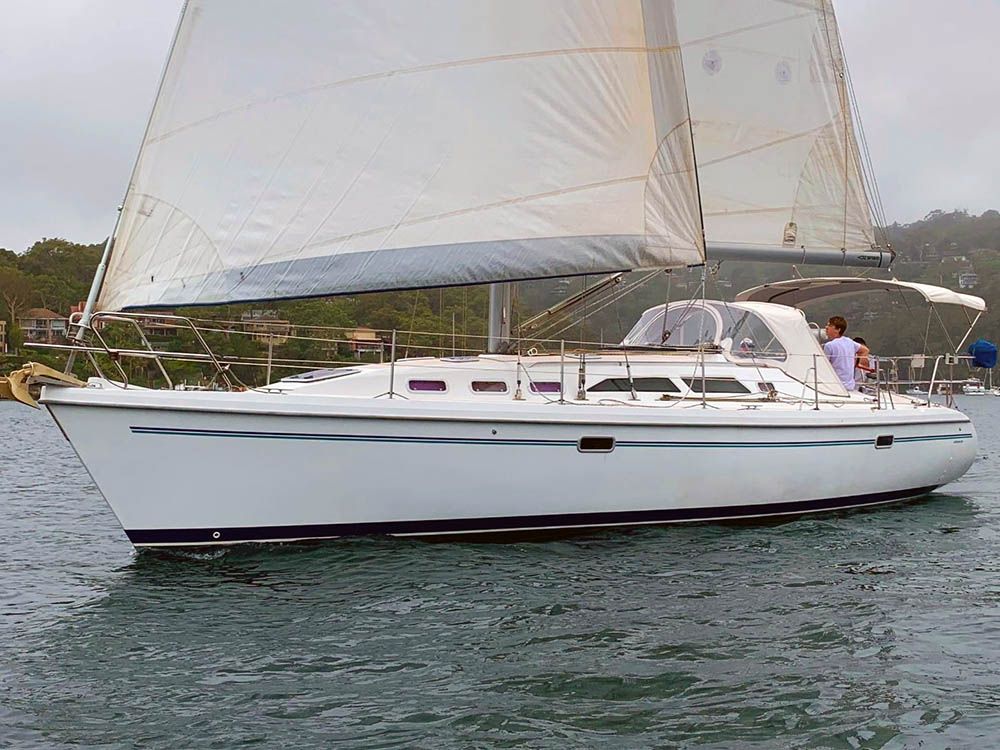
The Hunter 410 emphasizes internal volume and a fractional B&R rig that simplifies mainsail-driven sail handling, while the Catalina 380 is more of a traditional American masthead sloop with slightly simpler rigging and a reputation for conservative, dependable performance. For a buyer who values comfortable liveaboard space and modern deck hardware, the 410 often feels roomier; for someone who prefers a familiar sailplan and potentially lower-cost used parts/market support, the Catalina can be easier to maintain.
In practical ownership terms the 410 can offer a better onboard living experience for cruising couples at a similar price point, but Catalina’s simpler systems and broad owner base can lower long-term operating surprises and make resale in some U.S. regions more straightforward.
► Learn more about de Catalina 380
Hunter 410 vs Beneteau Oceanis 393
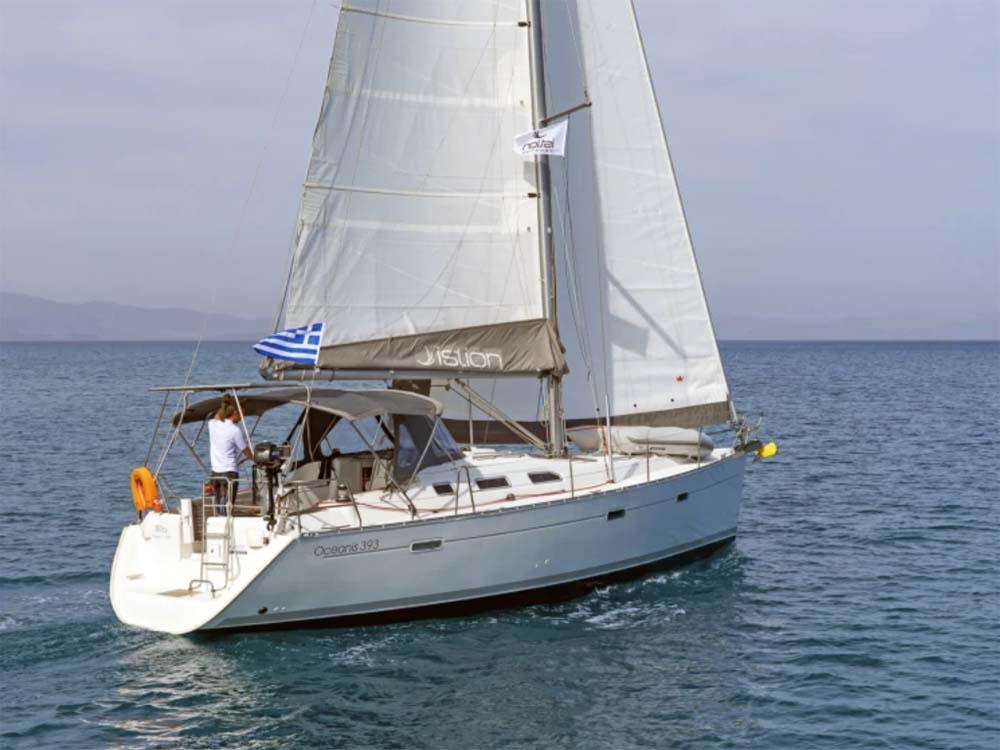
Compared with the Beneteau 393, the Hunter 410 trades a touch of Beneteau’s European sailing finesse for a more American approach to interior comfort and easy handling; the 393 often scores slightly better in sporty handling and pointing, while the 410 offers larger accommodations and user-friendly sail controls. For a buyer focused on coastal passagemaking with occasional club racing, the Beneteau may feel livelier and more efficient under sail, but the Hunter is frequently the choice for those prioritizing roomy, practical living spaces and simpler short-handed sail management.
Maintenance expectations differ too: Beneteaus of this era may have more variability in European system standards (electrics, water systems), while Hunters are commonly praised for accessible systems and straightforward repairs—an important consideration for owners who plan to DIY much of the upkeep.
► Learn more about de Beneteau Oceanis 393
Hunter 410 vs Dufour 385 Grand Large
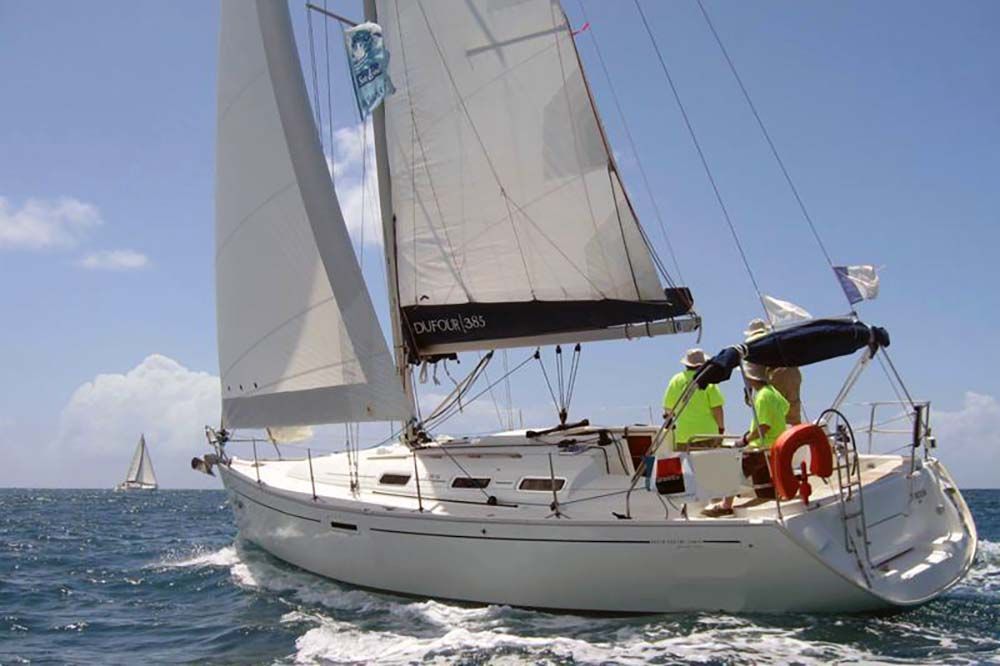
The Dufour 385 leans toward a modern European hull and deck design with comparatively higher sail area-to-displacement figures, giving it a peppier feel in moderate wind; the Hunter 410 leans the opposite way, toward comfort and softer motion in a seaway. A buyer deciding between them should weigh sailing priorities: the Dufour rewards those seeking sportier performance and lighter displacement, while the Hunter rewards those who want interior volume and a forgiving ride for family cruising.
From an ownership perspective the Dufour may require a bit more attention to performance tuning (rigging, sail shape) to extract its best, while the Hunter’s simpler, robust systems often make it a lower-stress platform for cruisers who want easy, dependable weekends and extended coastal trips.
► Learn more about de Dufour 385 Grand Large
Maintenance Costs of a Hunter 410 in the USA
Below is a practical, itemized list of typical annual maintenance and recurring ownership costs; each line shows the category and a realistic U.S. range influenced by region and condition.
- Mooring/Slip/Storage: $2,000–$10,000+ per year (marinas in Florida and California at the high end; seasonal haul/yard storage in colder regions adds cost).
- Insurance: $800–$3,000 per year depending on coverage, cruising area, and owner experience.
- Engine servicing (annual): $400–$1,200 (annual oil/service, impeller, filters; higher if injectors or major service needed).
- Bottom paint/antifouling (biennial typical): $800–$3,000 depending on haulout location and paint choice.
- Standing rigging inspection/replacement: Inspection ~$200–$600; full replacement $3,000–$8,000 (age-dependent; essential every 10–15 years).
- Running rigging and sail maintenance: $200–$2,500+ annually depending on repairs; sails replacement $3,000–$12,000+ for a set (headsail + main) if needed.
- Electronics and navsys updates: $500–$6,000 (small chartplotter replacement to full suite refit).
- General maintenance and spare parts: $1,000–$4,000 (seacocks, through-hulls, pumps, plumbing, small electrical jobs).
- Survey and haulouts (periodic): Survey $500–$1,500; haulout/yard charges $300–$1,500 depending on region and time of year.
Significant one-time costs buyers should expect include sail replacement, major electronics refits, standing rigging replacement, and any structural deck or through-hull work uncovered in a survey. Whether an owner can DIY much of this depends on personal skill and available workshop space — basic servicing and cosmetic work are often owner-doable, but major rigging, engine overhauls, and composite repairs typically require professional yards. Region matters: marina and yard labor rates on the U.S. West Coast and Northeast are generally higher than in many parts of the Southeast and the Gulf. Overall, for a 41-ft cruiser the Hunter 410’s ongoing costs are medium compared with similar boats: not the cheapest to maintain because of its size, but not unusually expensive either, and a well-kept 410 tends to hold reasonable resale value that offsets part of the investment for owner-cruisers.
Conclusion
The Hunter 410 is a practical, roomy cruiser that appeals to owners who prioritize comfortable liveaboard spaces, easy short-handed sailing, and straightforward systems over racing performance. Its strengths lie in interior volume, sensible deck ergonomics, and an approachable fractional rig; its weaknesses are predictable for a production cruiser of its vintage—some systems age, and upwind pointing and racing performance are modest compared with more performance-oriented European designs. For couples or small families seeking a reliable platform for coastal cruising and periodic offshore passages (with sensible upgrades), the 410 is worth serious consideration and often represents good value on the used market. Resale value tends to be stable for well-maintained examples because the model is familiar to brokers and buyers, especially in popular U.S. cruising regions; however, as with any older yacht, the deciding factor will be maintenance history and the quality of any refits. In short: for comfortable coastal cruising with occasional longer trips, the Hunter 410 is generally a sound buy—practical, comfortable, and reasonably economical to own when purchased after a careful survey and with a realistic refit budget.
Specifications
| Hull Type | Wing Keel |
| Rigging Type | B&R |
| LOA | 43.42 ft / 13.23 m |
| LWL | 37.83 ft / 11.53 m |
| S.A. (reported) | 822.00 ft² / 76.37 m² |
| Beam | 13.83 ft / 4.22 m |
| Displacement | 20,200 lb / 9,163 kg |
| Ballast | 7,400 lb / 3,357 kg |
| Max Draft | 5.00 ft / 1.52 m |
| Construction | Fiberglass (FG) |
| Ballast Type | Lead |
| First Built | 1998 |
| Builder | Hunter Marine (USA) |
| Designer | Hunter Design Team |
Auxiliary Power / Tanks (original equipment) | |
|---|---|
| Make | Yanmar |
| Model | 4JH2E |
| Type | Diesel |
| Horsepower | 50 HP |
| Fuel Capacity | 51 gal / 193 L |
Accommodations | |
| Water Capacity | 147 gal / 556 L |
Sailboat Calculations | |
| S.A. / Displ. | 17.80 |
| Bal. / Displ. | 36.63 |
| Disp. / Len. | 166.57 |
| Comfort Ratio | 23.90 |
| Capsize Screening Formula | 2.04 |
| S# | 3.24 |
| Hull Speed | 8.24 kn |
| Pounds/Inch Immersion | 1,869.41 lb/inch |
Rig and Sail Particulars | |
| I | 47.77 ft / 14.56 m |
| J | 16.16 ft / 4.93 m |
| P | 45.25 ft / 13.79 m |
| E | 19.25 ft / 5.87 m |
| S.A. Fore | 385.98 ft² / 35.86 m² |
| S.A. Main | 435.53 ft² / 40.46 m² |
| S.A. Total (100% Fore + Main) | 821.51 ft² / 76.32 m² |
| S.A./Displ. (calc.) | 17.79 |
| Estimated Forestay Length | 50.43 ft / 15.37 m |
Disclaimer
The considerations and analyses presented regarding the Hunter 410 sailboat are of a general nature and are based on the available information and technical data on this model, interpreted to the best of our knowledge and understanding. It is important to note that the specific characteristics of any particular sailboat may vary due to custom modifications, maintenance performed, and conditions of use over time, among other factors. Therefore, the details and performance of the boat you are considering may not exactly match the information provided here.
We strongly recommend that, before making any purchasing or usage decisions, you conduct a detailed inspection of the boat in question, consult with nautical professionals and other sailors, and consider your personal needs, expectations, and capabilities. Each sailboat may have unique particularities that affect its performance and suitability for different types of sailing and sailors.
The information contained in this analysis should be used as a general guide and not as a definitive reference. Professional evaluation and personal inspection are essential to ensure that the boat meets your specific requirements and expectations.