


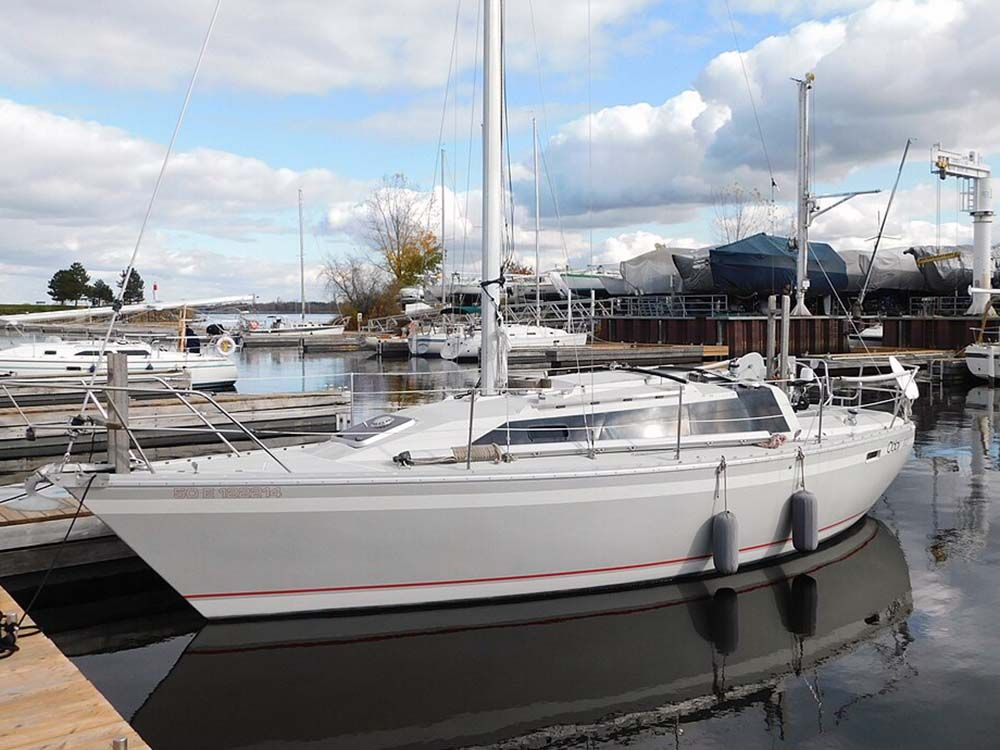
The O’Day 302 is a 30-foot family cruiser conceived as a comfortable coastal passagemaker rather than a club racer. Designed by C. Raymond Hunt Associates and introduced in the late 1980s, it arrived toward the end of O’Day Corporation’s production run and reflects a period when U.S. builders were seeking roomy interiors and forgiving handling in a compact hull. The 302’s mission was straightforward: give couples and small families a spacious, easy-to-sail boat with enough tankage, a protected cockpit and sensible systems for weekend cruising and occasional longer hops. On the used market the model occupies a modest but steady niche — appealing to owners who prize interior volume and a straightforward keel/wing configuration over the last word in light-air performance — and demand is strongest where inexpensive, well-equipped coastal cruisers are sought.
Design and Construction
The 302 is a conventional fiberglass monohull with a fixed wing or fin/wing keel and an internally mounted spade rudder driven from a wheel. That keel choice (often marketed by O’Day as a “Hydrokeel” on some models) gives the boat a shallower draft than a deep fin while preserving reasonable righting moment and trailerable-like access to shallow anchorages. The hullform leans toward a fairly beamy profile for the boat’s length, which is how the widely noted roomy saloon and aft-cabin accommodations are achieved; structurally it’s typical late-20th-century production GRP — solid hull laminate with a molded deck and production interior joinery. Those construction choices make the 302 straightforward to survey and to repair at a typical U.S. yard, but they also mean the boat will reflect the usual production-boat caveats (laminate checks at hull/deck joints, deck hardware backing inspection and attention to keel bolts) as it ages. For a prospective owner, that balance — conservative, repairable construction with above-average interior volume — largely explains the model’s practical appeal.
Performance
Sailing performance of the 302 is best described as coastal-cruiser oriented: she accelerates comfortably in moderate breeze, points respectably for her class, and gives a stable, predictable ride when reefed appropriately. Owners report she can be tidy in light airs but becomes noticeably tender if left unreefed above moderate winds; like many moderate-beam cruisers of the era this makes reefing early a sensible habit to preserve comfort and control. The wing keel softens grounding and provides a reasonable compromise between draft and upwind performance, but the 302 is not a design that will out-sail purpose-built racers — her strengths are seaworthiness at cruising speeds and a forgiving helm rather than outright speed. That practical personality has earned positive owner comments for coastal passages and protected-water cruising, with several sailors reporting solid offshore behavior when properly prepared.
Comfort and Accommodations
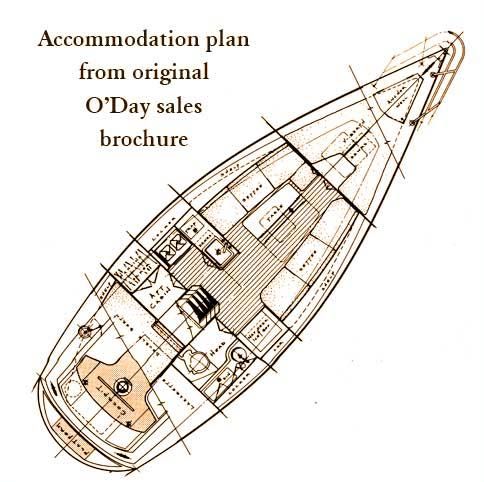
Below decks the O’Day 302 is intentionally roomy: the designer used hull beam and coachroof volume to create a saloon with generous headroom and light, an aft cabin that often sleeps two comfortably, and a layout that favors storage and liveability. Many owner accounts highlight the open feel and practical galley layout, plus the value of having an aft head or separate shower in certain configurations — features that make weekend family cruising and short-term liveaboard use genuinely comfortable for couples and small families. That said, tankage and systems on many original examples are conservative by modern standards, so buyers planning extended cruising often budget for freshwater capacity and refrigeration upgrades; cosmetically, the interior tends to be updated by owners (cushions, galley equipment, chartplotters) rather than replaced, which keeps refit costs manageable.
Safety and Practicality
The cockpit and deck layout emphasize sheltered handling and simple sail management: a protected wheel station, moderate coaming height and reasonable walkway clearances make deck work and mooring straightforward for a short-handed crew. Because the 302 is relatively beamy and often lightly canvassed compared with heavy displacement cruisers, prudent reefing practices and good seamanship are important in stiffening conditions; however, owner reports show that when properly ballasted and reefed the boat tracks steadily and can handle offshore squalls. Systems access (engine under companionway, accessible thru-hull fittings and conventional plumbing runs) generally follows familiar production patterns, which simplifies maintenance and survey checks. For buyers focused on coastal cruising and weekend passages, the boat is practical and easy to maintain; serious offshore voyagers should plan equipment upgrades (heavy-weather sails, ground tackle, and communications) to broaden the safety margin.
Known Issues with the O’Day 302
Problems reported by owners tend to be the kind you expect from a late-1980s production cruiser rather than unique design defects. Common threads include: water ingress around deck fittings or chainplates where bedding has failed, wear at keel/hull joints and keel-bolt inspection needs, and the usual aging items (rigging refresh, seacocks, and sail wear). Some owners who cruised in heavy conditions remarked on tenderness if not reefed in stronger winds, which is a sailing-practice issue tied to sail area and ballast ratio rather than a structural fail-safe fault. Practical upgrades commonly recommended by experienced owners include renewing standing rigging on an age-based schedule, replacing or servicing keel bolts and packing, and updating navigation/electronic packages; these actions tend to resolve the majority of owner concerns and preserve resale value.
Market Availability and Pricing in the U.S.
The O’Day 302 is out of production and appears only on the used market; it was one of the later O’Day designs built around 1988–1989 before the company’s closure and the molds’ brief transfer to other yards. Availability is sporadic but consistent: boats show up in coastal resale hubs and in Great Lakes/Atlantic markets where older family cruisers are commonly traded. Asking prices vary widely with condition, gear and region — recent listings and completed sales suggest a practical U.S. market range of roughly $8,000–$30,000 depending on mechanical condition, location and upgrades, with tidy, well-equipped examples selling toward the top of that band. The 302 generally offers good value for buyers seeking interior volume and a comfortable weekend cruiser; liquidity is moderate — easy within owner/used-cruiser circles, slower if insisted on selling to performance-oriented buyers.
Below is a comparison with similar sailboats from the same era:
| Model | LOA | Approx. years | Typical used price (US) | Main differences |
|---|---|---|---|---|
| O’Day 302 | ~29.6 ft | 1988–1989 | $8,000–$30,000 | Spacious interior for length, wing/fin keel options, comfortable coastal cruiser. |
| Catalina 30 | ~29.9 ft | 1974–2008 | $5,000–$40,000 | Long production run, huge parts/owner community; proven and inexpensive entry-level cruiser. |
| Hunter 30 (classic) | ~30.4 ft | 1973–1983 | $5,000–$35,000 | Heavier displacement varieties, traditional U.S. production cruiser feel and broad availability. |
| Beneteau First 305 | ~30.5 ft | Mid-1980s | $12,000–$30,000 | Racer-cruiser leaning; lighter displacement and more performance bias than the O’Day 302. |
O’Day 302 vs Catalina 30

The O’Day 302 and the Catalina 30 both target family coastal cruisers, but they approach the brief differently: the 302 emphasizes a modern late-1980s hull with a wing/fin keel option and an interior that pushes volume aft, while the Catalina’s decades-long lineage focuses on robust, easily serviced construction and a vast owner network. In practice that means the Catalina often offers simpler long-term ownership due to parts availability and lower entry prices, while the 302 trades slightly more modern interior ergonomics and a softer motion in some sea states.
For sailors focused on resale liquidity and the lowest ongoing hassle, the Catalina’s ubiquity is an advantage; for buyers who value interior daylighting and a slightly more contemporary layout at the same length, the 302 can be the more comfortable weekend/home-port cruiser.
► Learn more about de Catalina 30
O’Day 302 vs Hunter 30 (Classic)

Both boats are 30-foot-class cruisers, but the classic Hunter 30 variants are generally heavier and more conservative in hull form, yielding a different feel under sail: Hunters often feel steadier in a seaway at the cost of interior cubic feet, whereas the O’Day 302 was designed to reclaim interior space and present livelier accommodations. The Hunter’s older designs also come with large support communities and parts familiarity, which can simplify refits and long-term maintenance for owners who prize conventional systems.
Buyers who plan to prioritize blue-water confidence and a workmanlike systems layout will often prefer a Hunter; those wanting a brighter interior and a slightly more modern silhouette for coastal cruising will find the 302 an attractive alternative.
► Learn more about de Hunter 30
O’Day 302 vs Beneteau First 305
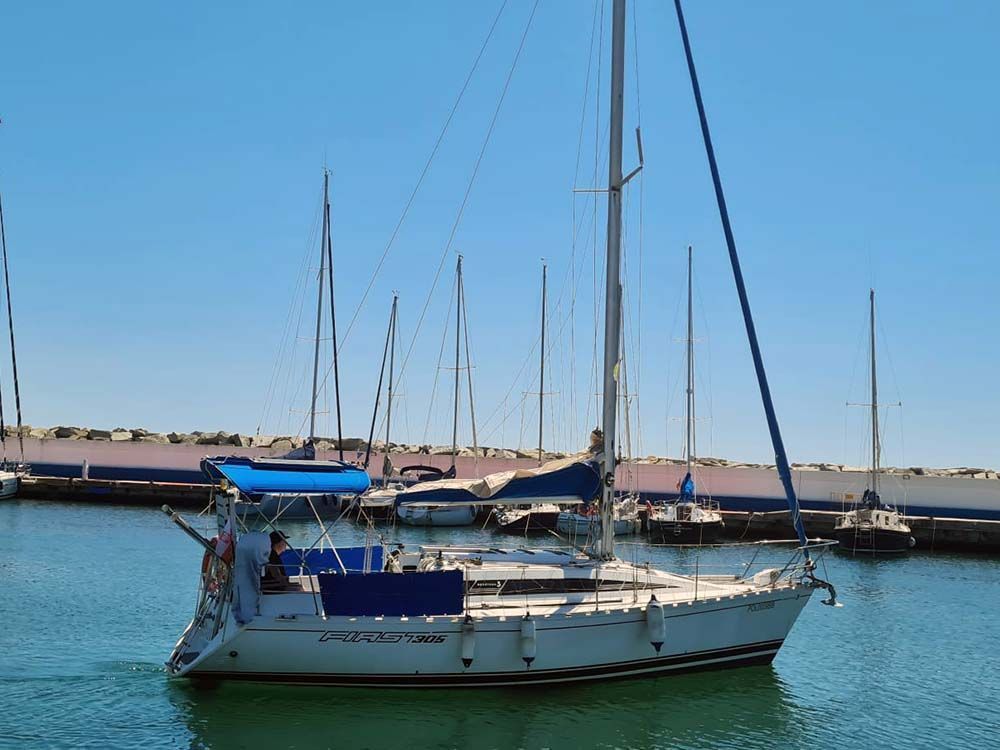
The First 305 is pitched toward the performance-minded cruiser-racer buyer, and that intent shows in its lighter displacement and more performance-oriented deck gear and sailplan; by contrast, the O’Day 302 leans toward comfort and ease of handling for families. On the water the Beneteau will generally accelerate quicker and point better in a breeze, making it preferable for owners who want spirited weekend club racing or brisk passages, while the 302’s strengths are interior comfort and forgiving helm balance.
Consequently, maintenance and outfitting choices diverge: Beneteau owners may invest earlier in sail and performance upgrades, while 302 owners typically focus on systems reliability, interior comfort, and corrosion-proofing at keel/hull joins — matching each boat to a different set of ownership priorities.
► Learn more about de Beneteau First 305
Maintenance Costs of an O’Day 302 in the U.S.
Below are the typical annual and periodic costs to budget for, presented as a commented list with each item in bold followed by a short practical note. Ranges vary by region (New England/California at the high end; Gulf/Southeast often cheaper). As a rule of thumb, expect $2,500–$9,000 per year for routine maintenance, slip and consumables on a well-kept 30-ft cruiser; one-off refits will push totals higher.
- Mooring / Slip / Storage: seasonal slips or marina moorings commonly run $1,000–$8,000/year depending on location; winter haul, shrinkwrap or rack storage adds to costs.
- Insurance: typical hull/liability for a 30-ft coastal cruiser runs $400–$1,500/year, higher if cruising in hurricane zones or carrying charter liability.
- Engine servicing (inboard) / outboard maintenance: routine service (annual oil, filters, belts, impeller) $300–$1,200/year; expect higher bills if major work or injection servicing is needed.
- Antifouling / haul-out / bottom paint: a professional haul, prep and two-coat antifoul job typically sits in the $600–$4,000 range depending on yard and prep scope.
- Standing & running rigging: inspections annually; partial running-rigging refresh is modest while a full standing-rig replacement can be $1,500–$6,000 depending on materials and labor.
- Sails: mains and working headsail replacement for a 30-ft cruiser generally falls in $2,000–$8,000 depending on cloth and loft; plan for staggered replacements.
- Hull/keel/structural checks: periodic haul and keel-bolt/keel-hull joint inspections are critical for an older production boat — budget $500–$3,000 over multiyear cycles for repairs/refastening if needed.
- Electronics / batteries: replacement and upgrades for chartplotter, AIS, VHF and batteries can range $500–$5,000 depending on scope.
- Miscellaneous consumables (zincs, hoses, seacocks, paint, rigging hardware): $300–$1,500/year typical.
Significant one-time events to reserve cash for include major standing-rig replacement, keel-bolt/keel-joint works, a full sail inventory replacement, or a substantial electronics refit — each of these can run several thousand to tens of thousands of dollars depending on severity and choices. Many owners find much of the routine work is approachable for competent DIYers (zincs, paint prep, simple electrical swaps), but structural, rigging and engine work is usually best left to professionals — that tradeoff changes both cash outlay and schedule. Overall, maintenance for a 30-ft production cruiser like the O’Day 302 is medium within its size class: not as inexpensive as a minimal daysailer, but far more affordable than larger offshore yachts, and solidly compensated by decent used-boat value when the boat is well maintained
Conclusion
The O’Day 302 is a pragmatic, roomy coastal cruiser that favors liveability and straightforward ownership over racing pedigree. Its principal strengths are a comfortable, well-lit interior, a forgiving hull form for family cruising and conventional systems that most yards can service; its compromises are predictable for the class — earlier-generation systems, the need for diligent bedding/keel inspections on older examples, and a performance envelope that rewards early reefing in wind. For buyers seeking a comfortable weekend platform with decent coastal-passage capability at an attractive used price, the 302 is a sound choice; for those prioritizing speed, offshore self-sufficiency, or the lowest possible ongoing maintenance, other 30-foot designs may be preferable. In short: if you value interior comfort, a sensible layout and an easy-to-live-with coastal cruiser, the O’Day 302 is worth looking for — just insist on a thorough pre-purchase survey (keel/hull, chainplates and rigging) and budget for sensible upgrades to electronics and tankage to match your cruising ambitions.
Specifications
| Hull Type | Wing Keel |
| Rigging Type | Masthead Sloop |
| LOA | 29.58 ft / 9.02 m |
| LWL | 24.17 ft / 7.37 m |
| S.A. (reported) | 374.00 ft² / 34.75 m² |
| Beam | 10.75 ft / 3.28 m |
| Displacement | 7,200.00 lb / 3,266 kg |
| Ballast | 2,400.00 lb / 1,089 kg |
| Max Draft | 3.92 ft / 1.19 m |
| Construction | FG |
| Ballast Type | Lead |
| First Built | 1988 |
| Builder | O’Day Corp. (USA) |
| Designer | C. Raymond Hunt Associates |
| Auxiliary Power (orig. equip.) | Yanmar 2GMF, Diesel, 18 HP |
| Fuel | 24 gals / 91 L |
| Water | 30 gals / 114 L |
| S.A. / Displ. | 16.10 |
| Bal. / Displ. | 33.33 |
| Disp. / Len. | 227.64 |
| Comfort Ratio | 18.25 |
| Capsize Screening Formula | 2.23 |
| S# | 2.30 |
| Hull Speed | 6.59 kn |
| Pounds/Inch Immersion | 928.39 pounds/inch |
| I | 36.00 ft / 10.97 m |
| J | 11.25 ft / 3.43 m |
| P | 30.50 ft / 9.30 m |
| E | 11.25 ft / 3.43 m |
| S.A. Fore | 202.50 ft² / 18.81 m² |
| S.A. Main | 171.56 ft² / 15.94 m² |
| S.A. Total (100% Fore + Main Triangles) | 374.06 ft² / 34.75 m² |
| S.A./Displ. (calc.) | 16.10 |
| Est. Forestay Length | 37.72 ft / 11.50 m |
| Mast Height from DWL | 41.33 ft / 12.60 m |
Disclaimer
The considerations and analyses presented regarding the O’Day 302 sailboat are of a general nature and are based on the available information and technical data on this model, interpreted to the best of our knowledge and understanding. It is important to note that the specific characteristics of any particular sailboat may vary due to custom modifications, maintenance performed, and conditions of use over time, among other factors. Therefore, the details and performance of the boat you are considering may not exactly match the information provided here.
We strongly recommend that, before making any purchasing or usage decisions, you conduct a detailed inspection of the boat in question, consult with nautical professionals and other sailors, and consider your personal needs, expectations, and capabilities. Each sailboat may have unique particularities that affect its performance and suitability for different types of sailing and sailors.
The information contained in this analysis should be used as a general guide and not as a definitive reference. Professional evaluation and personal inspection are essential to ensure that the boat meets your specific requirements and expectations.