



The Tartan 30 emerged in the early 1970s as a response to the growing demand for versatile sailboats that could perform well in club racing yet remain comfortable for family cruising. Designed by Sparkman & Stephens and built by Tartan Marine in Ohio, the model quickly found a loyal following thanks to its blend of performance and practicality. At just under 30 feet, it struck a balance between affordability and seaworthiness, appealing to sailors looking for a manageable yet capable boat. Today, it remains a popular choice on the used market, particularly among private owners and sailing schools seeking a reliable platform for instruction and coastal cruising.
Design and Construction
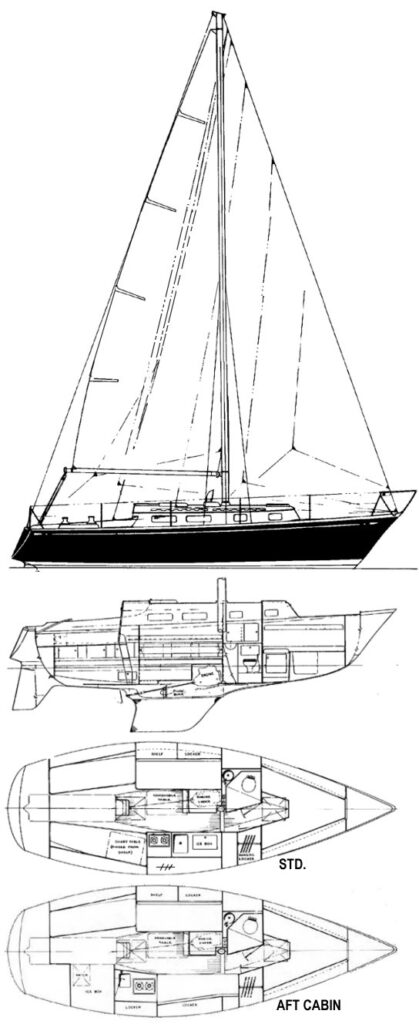
The Tartan 30 features a fin keel and a spade rudder, a design that was considered progressive at the time and remains efficient for performance-oriented sailors. Its masthead sloop rig provides simplicity and adaptability, making it suitable for both beginners and experienced skippers. Construction is solid fiberglass with a balsa-cored deck, a combination that balances strength with weight savings. From a naval architecture perspective, the relatively narrow beam and moderate displacement give it a seaworthy profile, while the robust layup has contributed to its long service life. Owners appreciate that fiberglass hulls of this era are relatively easy to repair and maintain, which helps preserve residual value even in older examples.
Performance
On the water, the Tartan 30 has a reputation for being responsive and forgiving. Its displacement-length ratio positions it in the middle range for coastal cruisers, offering stability without feeling sluggish. Upwind, it points well and maintains speed in moderate breezes, while downwind it tracks smoothly thanks to its balanced rudder. In rougher seas, it remains controllable, though like many boats of its size, comfort declines in prolonged heavy weather. Compared with contemporaries like the Pearson 30 or Catalina 30, it often feels slightly livelier and more efficient, making it a favorite among sailors who enjoy club racing in addition to cruising.
Comfort and Accommodations
Below deck, the Tartan 30 offers a surprisingly practical layout for its length. It typically sleeps four to five, with a V-berth forward, settees in the main cabin, and an enclosed head. Storage is adequate for weekend cruising and short coastal trips, though limited for extended liveaboard use. Ventilation is decent, with hatches and opening ports, but some owners choose to retrofit additional ventilation for warmer climates. Interiors tend to age gracefully thanks to wood trim, though many boats on the market today feature partial refits to update upholstery, galley equipment, and cabin lighting. For families or couples, the interior strikes a good balance between function and comfort without excessive maintenance demands.
Safety and Practicality
On deck, the Tartan 30 is straightforward and secure. Wide side decks and sensible handholds make moving about relatively safe, and the cockpit is well-proportioned for both sailing and relaxation. With its simple rig, the boat can be handled comfortably by a couple or even singlehanded, an important factor for prospective owners. While primarily a coastal cruiser, it is capable of longer passages in the right hands, though most owners use it within nearshore waters. Systems are generally accessible, particularly the engine and steering gear, which helps reduce maintenance costs compared with larger or more complex designs.
Known Issues with the Tartan 30
As with many boats of its vintage, buyers should watch for deck core moisture, especially around fittings where water intrusion can lead to soft spots. Osmosis in the hull is occasionally reported but typically manageable. The original Atomic 4 gasoline engine is often still found in these boats, though many have been repowered with small diesels; prospective owners should weigh the cost of an engine replacement if necessary. Standing rigging may be original in some cases and should be inspected closely. Upgrades commonly recommended include modern electronics, new sails, and occasionally structural reinforcement in the chainplate areas.
Market Availability and Pricing in the U.S.
The Tartan 30 is no longer in production and is available only on the used market. Listings are most common in the Great Lakes region, the Northeast, and along the East Coast, though examples appear nationwide. Condition varies, but many are privately owned and well-maintained rather than ex-charter vessels. Typical asking prices range from $8,000 to $18,000 depending on condition, location, and upgrades. Compared to the Catalina 30, it tends to be slightly less expensive but offers a sportier sailing experience. Against boats like the Pearson 30 or Hunter 30 of the same era, it holds its value well due to the reputation of Tartan’s build quality.Below is a comparison with similar sailboats from the same era:
| Model | LOA | Years Built | Typical Price (U.S.) | Key Differences |
|---|---|---|---|---|
| Tartan 30 | 29.79 ft | 1971–1981 | $8,000–$18,000 | Balanced design, solid build, good for racing and cruising |
| Catalina 30 | 29.9 ft | 1974–2006 | $12,000–$25,000 | Roomier interior, higher production numbers, more parts availability |
| Pearson 30 | 29.9 ft | 1971–1981 | $7,000–$15,000 | Similar era, slightly lighter build, less durable interiors |
| Hunter 30 | 30.4 ft | 1973–1983 | $9,000–$17,000 | More emphasis on cruising comfort, less performance-oriented |
Tartan 30 vs Catalina 30

The Tartan 30 and Catalina 30 occupy similar size ranges but reflect different design priorities. The Tartan 30, designed by Sparkman & Stephens, is aimed at sailors seeking a balance between cruising comfort and performance. Its narrower, sportier hull and deeper keel give it a more responsive helm and superior pointing ability upwind compared to the broader, more voluminous Catalina 30. While the Catalina excels in interior space, storage, and family-friendly layouts, the Tartan rewards sailors with a more connected feel under sail and smoother handling in heavier seas. For buyers, the decision often hinges on whether performance and spirited sailing outweigh cabin volume and cruising convenience.
► Learn more about de Catalina 30
Tartan 30 vs Pearson 30

Both the Tartan 30 and Pearson 30 were introduced in the 1970s as capable coastal cruisers, but they diverge in sailing characteristics and interior focus. The Tartan 30 offers a stiffer, better-balanced hull and a performance-oriented sail plan, making it more agile in varied wind conditions. The Pearson 30, with a slightly lighter displacement and more conservative hull design, provides predictable handling and a straightforward cruising experience. Interiors differ as well: the Tartan’s layout is efficient and well-finished, while the Pearson tends to prioritize practical space but with less refinement. Sailors who enjoy performance sailing with occasional racing may prefer the Tartan, whereas those seeking simplicity and moderate handling may lean toward the Pearson.
► Learn more about de Pearson 30
Tartan 30 vs Hunter 30

The comparison between the Tartan 30 and the Hunter 30 emphasizes contrasts in performance and design philosophy. The Tartan 30 combines a solid, Sparkman & Stephens hull with a balanced, performance-oriented rig, giving it responsiveness and good seakeeping abilities. The Hunter 30, particularly the Cherubini-era models, emphasizes comfort and forgiving handling, with slightly less focus on pointing ability or windward performance. Inside, the Hunter offers a practical and comfortable layout, but the Tartan’s interior, while somewhat narrower, is solidly built and supports both cruising and spirited sailing. Sailors who prioritize handling, agility, and versatility will often favor the Tartan, while those who value ease of use and cabin comfort for family cruising may choose the Hunter.
► Learn more about de Hunter 30
Maintenance Costs of a Tartan 30 in the U.S.
Annual upkeep for a Tartan 30 is moderate compared to other boats in its class. Typical expenses include:
- Dockage or Mooring: $2,000–$6,000 annually depending on location (East Coast urban marinas at the high end, Great Lakes moorings at the low end).
- Insurance: $400–$1,000 per year, influenced by cruising area and coverage.
- Engine Maintenance: Around $500 annually for routine servicing; more if repowering is needed.
- Bottom Paint/Antifouling: $800–$1,500 per year, depending on whether the owner applies it personally or hires a yard.
- Standing and Running Rigging: Inspections every year; replacement of standing rigging may cost $3,000–$5,000 every 15–20 years.
- Sails: A new mainsail or genoa typically costs $2,000–$3,500; lifespan averages 8–12 years depending on use.
- Electronics and Upgrades: Periodic refits can range from $1,000 for basic instruments to $10,000 for full modern packages.
Many Tartan 30s are owner-maintained, which helps reduce overall costs compared with larger yachts requiring more yard work. Overall, the cost of ownership is considered medium within its size range, and the solid resale market helps offset long-term investmentate within the 30-foot coastal cruiser class, and resale value generally balances out long-term expenses.
Conclusion
The Tartan 30 combines solid Sparkman & Stephens design with durable Tartan construction, resulting in a boat that continues to appeal decades after its launch. Its strengths lie in responsive sailing performance, manageable size, and a reputation for quality. While not the most spacious 30-footer on the market, it provides a balanced platform for sailors who value handling and seaworthiness over maximum interior volume. For buyers seeking an affordable coastal cruiser with the pedigree of a performance-oriented design, it remains a compelling option. Its resale market is stable, and while some upgrades may be necessary, the investment is often worthwhile. For coastal cruising and club racing, the Tartan 30 still holds its place as one of the most versatile classics in its class.
Specifications
| Hull Type | Fin with rudder on skeg |
| Rigging Type | Masthead Sloop |
| LOA | 29.92 ft / 9.12 m |
| LWL | 24.25 ft / 7.39 m |
| S.A. (reported) | 449.00 ft² / 41.71 m² |
| Beam | 10.00 ft / 3.05 m |
| Displacement | 8,750 lb / 3,969 kg |
| Ballast | 3,600 lb / 1,633 kg |
| Max Draft | 4.92 ft / 1.50 m |
| Construction | Fiberglass (FG) |
| Ballast Type | Lead |
| First Built | 1970 |
| Last Built | 1978 |
| Number Built | 606 |
| Builder | Tartan Marine (USA) |
| Designer | Sparkman & Stephens |
| Auxiliary Power (original) | Universal Atomic 4, Gas, 30 HP |
| S.A./Displ. | 16.97 |
| Bal./Displ. | 41.14 |
| Disp./Len. | 273.92 |
| Comfort Ratio | 24.26 |
| Capsize Screening Formula | 1.94 |
| S# | 1.96 |
| Hull Speed | 6.60 kn |
| Pounds/Inch Immersion | 866.48 lb/inch |
| I | 39.00 ft / 11.89 m |
| J | 13.00 ft / 3.96 m |
| P | 34.00 ft / 10.36 m |
| E | 11.50 ft / 3.51 m |
| S.A. Fore | 253.50 ft² / 23.55 m² |
| S.A. Main | 195.50 ft² / 18.16 m² |
| S.A. Total | 449.00 ft² / 41.71 m² |
| S.A./Displ. (calc.) | 16.97 |
| Est. Forestay Length | 41.11 ft / 12.53 m |
Disclaimer
The considerations and analyses presented regarding the Pearson 30 sailboat are of a general nature and are based on the available information and technical data on this model, interpreted to the best of our knowledge and understanding. It is important to note that the specific characteristics of any particular sailboat may vary due to custom modifications, maintenance performed, and conditions of use over time, among other factors. Therefore, the details and performance of the boat you are considering may not exactly match the information provided here.
We strongly recommend that, before making any purchasing or usage decisions, you conduct a detailed inspection of the boat in question, consult with nautical professionals and other sailors, and consider your personal needs, expectations, and capabilities. Each sailboat may have unique particularities that affect its performance and suitability for different types of sailing and sailors.
The information contained in this analysis should be used as a general guide and not as a definitive reference. Professional evaluation and personal inspection are essential to ensure that the boat meets your specific requirements and expectations.